Lately we've been working at a lot of concrete plants on stormwater permit related issues. One thing that I keep seeing over and over again, and my clients keep asking me about, is a poorly designed settling basin.
For those outside of the concrete industry, or for those that are new to it, you might wonder what I mean.
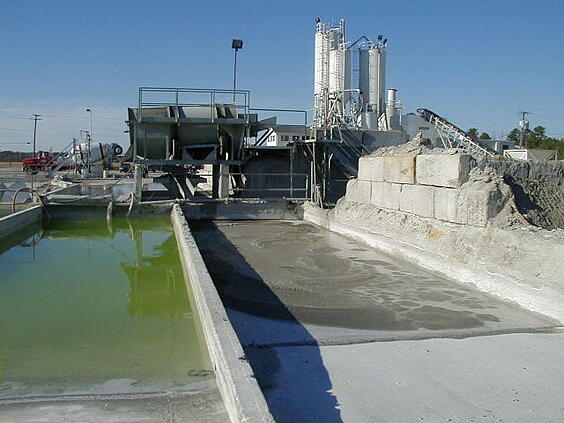
First, let's talk about what a settling basin is. You can call them basins or pits, and they're pretty common at a redi mixed concrete plant. They're the place where most process water winds up. Simple enough, right? While some settling basins seem to work well, others always seem to look like a mess. What's the difference?
These are my 6 most important things to consider about a settling basin.
-
Settling basins need to be big enough! In fact, they almost can’t be made too big. The more storage, the better. The more they can store, the better the chances you can do something constructive with the water before it overflows from regular use or heavy rains. Make them as large as you can. Be able to accommodate several days of process water generation in each basin system. However, their size needs to be balanced against the available room on the site. Most sites don't have enough room for a concrete lined lake! It's a balancing act of available size versus needed volume. Also, do yourself a favor and restrict overland flow of stormwater into the basin. This conserves necessary volume, unless you specifically want to commingle stormwater and process water for use such as plant production water.
-
They have to be designed well. Settling basin design is incredibly important! A settling basin needs to to inhibit water flow from one "cell" within the settling basin to the next, to allow for adequate settling of solids. A well-designed system of graduated weirs works best to allow a designed flow from one cell to the next. In fact, if you can actually see a difference between water quality from one cell to the next, the system is working well (such as going from cloudy water to relatively clear water). If all the water looks the same in all cells in the pit system, the flow-through characteristics aren't working right.
-
Don't make settling basins too deep. Broad, shallow pit systems work better than narrow deep ones. They allowing slower, more gradual flow and settling. Also, they’re easier to clean if they’re shallow, and don’t place as much wear and tear on your loader than a deep pit would. Again, this needs to be balanced with available room on the site. I try to avoid pit designs that are more than a few feet deep if possible.
-
Make sure you're in compliance with all applicable regulations. Don’t get yourself in trouble! Some states regulate settling basins and can impose additional strict requirements on their design and use. You don't want to build the settling basin wrong the first time and risk having to tear it out and rebuild it. This can be costly, and time consuming, so do it right the first time.
-
Think safety. A pit system can be a dangerous place, particularly for those who might not know how to swim. Consider this, and think about adding security fencing, lighting, and appropriate warning signage at a minimum. You don’t want to turn this small body of water into a large liability.
-
The settling basin will require maintenance. For instance, settled solids need to be cleaned out regularly, or else they will consume precious volume in the pit system. Systems that don't get the proper amount of maintenance have a habit of filling up and not functioning as designed. Don't let this happen to your pit system - clean it out regularly, and so something appropriate with the solids removed.
Ever see a settling basin that looked bad, or wasn’t working as it should? Chances are pretty good that it got that way by being undersized, unmaintained, or both. The simple rules above will help you design a settling basin and implement a concrete pit system that will be a valuable operations tool at your concrete plant, saving you time, money, and headaches.
If you're struggling at your concrete plant to handle process water or stormwater, click here to contact us, or give us a call at 609-693-8301 to discuss your settling basin needs today.