Who's enjoying their summer so far? I know I am. I've taken a two week hiatus while I've been enjoying the weather, and I thought I'd return to one of my favorite subjects: concrete recycling.
I spent some time the other week with a good buddy of mine who happens to be really passionate about reclaimers, and we got to talking about the state of recycling and general sustainability in the concrete industry.
First off, we we're talking about recycling concrete. Let me make a distinction right her: I consider recycling concrete to be the action of taking hardened concrete and using it again. Whether it's returned, hardened, and crushed, or material from a road or building, the process of using that hardened material again is what I consider recycling.
I'm really talking about recycled concrete aggregate. It's a sustainable practice, just like using process water in your mix design vs. potable or fresh water.
That's all great, but what about concrete that hasn't hardened? Returned concrete, excess concrete, whatever you have, what are you supposed to do with it?
Another good friend of mine delivers a state of the industry speech every year, and by his estimates (and if anyone should know this, it's him), approximately 2 to 10 percent of all batched concrete ends up back at your site annually. When you factor in the US produces millions of yards of concrete a year, we're talking about a fairly large problem.
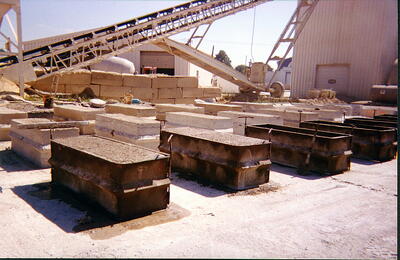
So what to do with it? Here's a quick rundown of the options me and my buddy discussed for what to do with using unhardened concrete.
- Reuse it onsite. Paving, curbs, water management, etc. Great idea, provided you have the need for that much returned material. Not a real long-term solution when it comes to reusing or recycling concrete.
- Give it away. Why do this? Aren't concrete producers in the job of selling concrete? And what about lost sales, quality concerns, etc. Another bad idea, and certainly not a long-term solution. I've never met anyone who does this, and I don't advise doing this.
- Make concrete blocks. Not a bad idea - but do you really have the market for blocks? Are you selling them to cover the costs of handling, storage, etc? Many do, but a lot of sites accumulate a lot of blocks, hoping for sales that never come. Seems to be a decent idea for a small volume of returned concrete, but not for most producers in the long run.
- Batch on top of old material. Take that 2 yards of returned concrete, add 8 yards on top, and then sell 10 yards. Certainly this isn't viable for spec concrete, colored concrete, or other specialized types of concrete, but for batching standard 3000 psi concrete, this isn't a terrible idea, although in practice I don't see many doing this either.
So what's a producer to do? The options aren't great. In my next blog article on Concrete Recycling & Concrete Reclaiming - Part 2, I'll cover some better choices - hydration control admixtures, hardened concrete recycling, and the use of concrete reclaimers.
Whatever choice is made, concrete should be recycled and reused in a positive, environmentally friendly, and sustainable manner, and hopefully one that provides a good financial return. In the meantime - what are you doing with returned concrete? Leave a comment below to let us know what your best practice is. For everyone else, if you're struggling with returned concrete click here to contact us or give us a call at 609-693-8301 to discuss how we can help your operation today.