Environmental Audits vs. Regulatory Reviews (And why choosing wrong creates BIG problems!)
If you’ve been around environmental compliance long enough, you’ve probably heard people use “audit” as a catch-all term. Someone says, “We should probably do an audit,” when what they really mean is, “Let’s make sure we’re not totally off the rails.”
That confusion is extremely common, and honestly, it’s understandable. Both environmental audits and regulatory reviews involve site visits. Both look at permits, plans, and compliance programs. And maybe most importantly... both are meant to find gaps before you get a fine or vilation from the government!
But they are not the same thing. And in some cases, calling something an "audit" when it’s really just a "review" can increase your risk instead of reducing it.
Before we dive in - if you ever want help sorting through this, you can always reach out to us here. We have this conversation all the time and would be happy to talk you through it. Now, let’s break it down in plain English.
Table of Contents
Start Here: What Are You Trying to Accomplish?
Before we talk about audits or reviews, we ask one simple question: what are you actually trying to accomplish?
Sometimes the goal is basic. You want a quick gut check before an inspection, a customer visit, or a corporate review. You want to know if anything obvious is missing or outdated.
Other times, the goal is more serious. Maybe you haven’t looked at compliance in years. Maybe you’re buying or selling a facility. Maybe you suspect there are issues and you want to find them before the government does.
That difference in intent is what usually determines whether you need a regulatory review or a true environmental audit.
What a Regulatory Review Really Is
A regulatory review is a practical, surface-level look at compliance. Think of it as a snapshot, not a deep dive.
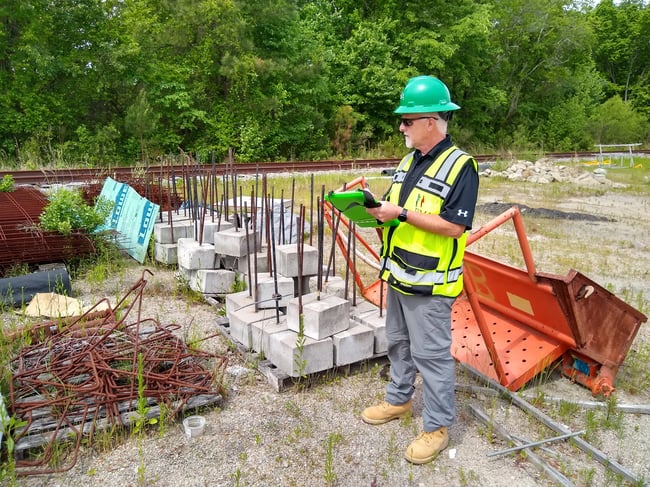
During a regulatory review, we focus on the things that most often cause trouble. We walk the site, look at how materials are stored and handled, review key documents like SPCC plans and NPDES permits, and check whether the basics are being followed in the real world, not just on paper.
The goal is speed and clarity. You should walk away knowing what looks good, what needs attention, and what could become a problem if it’s ignored.
Regulatory reviews are often the right fit if you’re preparing for an inspection, responding to a customer request, onboarding a new EHS manager, or just trying to make sure nothing has quietly slipped through the cracks.
They are intentionally limited in scope, and that’s not a bad thing. In many cases, it’s exactly what a facility needs.
What an Environmental Audit Actually Is
An environmental audit is a much heavier lift.
A true audit is structured, formal, and designed to dig deep. It usually involves a detailed review of records, interviews with staff, closer inspection of operations, and a comprehensive report that documents findings and corrective actions.
The purpose of an audit isn’t just to say whether you’re compliant or not. It’s to identify why problems exist and what needs to change to fix them long-term.
Audits are commonly used when companies want a defensible, documented evaluation of compliance. That might be during mergers and acquisitions, major corporate compliance initiatives, or situations where management believes violations may exist and wants a controlled way to uncover them.
This is also where audits start to intersect with legal frameworks, which leads us to the part most people don’t think about until it’s too late!
How They Come Back to Bite You: Liability, Self-Reporting, and Terminology
Here’s where things get real. A regulatory review is not meant to trigger "self-reporting obligations". An environmental audit very well might.
Here's the short version: under the EPA Audit Policy (and some state self-audit laws), companies that voluntarily discover, disclose, and fix violations can receive reduced or even eliminated penalties. That protection is a big reason audits exist, and a great reason to have one done!
BUT... that protection only applies if the audit is handled correctly.
If you conduct something you call "an audit", document violations, and then do nothing with that information, you may have just created a formal record of noncompliance with no protection attached to it. And that's the opposite of what most people intend!
We see facilities assume that “doing an audit” automatically puts them in a safer position. In reality, a poorly managed audit can increase liability. A documented problem that goes unfixed looks a lot worse than an issue that was never formally identified.
This is why terminology matters a LOT when it comes to this topic. Calling a quick compliance check an “audit” doesn’t magically give you audit privilege. In some cases, it creates confusion about intent and expectations if regulators, attorneys, or third parties ever request or discover those records.
What Do You (or SHOULD You) Get at the End?
Another common question we hear is, “What does this turn into? Are we getting a report?”
The short answer is yes, both a regulatory review and an environmental audit can result in a written report. But they don’t have to, and the level of detail (and risk!) those documents carry is very different.
For regulatory reviews, this part is usually pretty straightforward. Because reviews are smaller in scope, many facilities are perfectly comfortable just talking through the results. We’ll walk you through what we saw, what matters, and what needs attention. That’s often enough to give people clarity and direction.
That said, written reports for regulatory reviews are very common and totally doable. When there is a report, it’s usually shorter and higher-level. It focuses on key gaps and recommended next steps, not documenting every possible issue in detail. For most facilities, the liability risk there is pretty low, so either approach works fine.
Audits are where things get more nuanced.
A true environmental audit is designed to find problems. That’s the whole point. And once findings are written down, they become a record. Whether that record helps you or hurts you depends on what you plan to do next.
If you’re committed to fixing everything you find and potentially using audit protection and self-reporting, you’ll probably want a fully documented audit report. That level of documentation is often necessary to support disclosures, corrective actions, and conversations with regulators or corporate stakeholders.
But not everyone is ready for that!
Plenty of companies choose to have audit findings discussed verbally instead. Maybe they’re not sure what’s going to be found. Maybe they’re still deciding whether they’re ready to fix everything. In those cases, avoiding a detailed written record can be the safer move while you figure out next steps.
Some clients take it even further and have audit findings delivered directly to their attorney. That way, the attorney reviews the results with them under attorney-client privilege, adding another layer of protection. That approach is completely valid too.
At the end of the day, this all comes back to one question: are you actually willing and ready to buckle down and fix what might be found? If the answer is yes, formal documentation and self-reporting may make sense. If the answer is “maybe” or “not yet,” a verbal rundown is often the smarter place to start.
If you’re not sure which approach fits your situation, that’s normal. We’re happy to talk through your project and help you decide what level of documentation makes sense before anything gets locked in. Just reach out to us here, and we'll walk through it together.
What About Cost? Audit vs. Regulatory Review Pricing
This usually comes up pretty quickly, so let’s not dance around it.
In general, environmental audits cost more than regulatory reviews. That’s because audits are deeper, more formal, and take more time. There’s more record review, more documentation, and more internal work on our end.
As a very rough rule of thumb:
- Regulatory reviews often land in the $3,000 to $7,500 range for a single facility
- Environmental audits more commonly fall in the $6,000 to $25,000+ range, depending on complexity
Those numbers can move up or down based on things like facility size, number of permits, types of operations, how organized your records are, and whether you’re up against any strict deadlines.
To make this easier, we built a pricing calculator you can use just below! It asks a few quick questions about your facility and gives you a ballpark estimate based on similar projects we’ve done. No email required, no pressure, and no sales pitch baked in.
If you know you’re looking for a full environmental audit, the calculator results above should be a reasonable planning range.
If you think you’re probably looking for a regulatory review instead, you should still use the calculator! Just assume the real number will probably come in a bit lower than what you’re seeing. It’s not exact, but it’s close enough to budget without guessing.
And if you’re stuck in that gray area between the two, that’s a good sign you should talk it through before picking a scope. You can always reach out to us here and we’ll help you right-size the work instead of overspending or under-scoping it.
So Which One Do You Actually Need?
Here’s a simple way to think about it.
- Regulatory Review: If you want to know how you’re doing right now and catch obvious gaps.
- Environmental Audit: If you need a thorough, formal evaluation designed to uncover issues, document findings, and potentially support voluntary disclosure.
In the real world, many facilities do both, just not at the same time. We often see clients start with a review, then move into an audit if the review suggests deeper or systemic problems. Or the opposite - they'll start with an audit to get their program back on track, and use regular reviews every year or so to keep tabs on things.
At RMA, we perform both environmental audits and regulatory compliance reviews, and we’re very intentional about which tool we use and how it’s documented.
If a true audit is the right move, we follow the correct protocols and talk through self-reporting and disclosure considerations upfront, not after the fact. If a regulatory review is the better fit, we keep it focused and practical so you get answers without creating unnecessary exposure.
Either way, the goal is the same: reduce risk, improve compliance, and give you a clear plan that actually works in the real world. If you’re unsure which approach fits your facility, industry, or timeline, reach out to us here. We’ll help you make the call before small decisions turn into expensive ones.