Why Used Cooking Oil Storage Triggers Tier II Reporting
If you work in an industry that handles used cooking oil, whether you're a recycler, a restaurant maintenance company, a large event space with bulk UCO storage, or anything similar, you already know environmental regulations can feel like a never-ending maze.
You might also know that if you store over 1,320 gallons of oil on site, you need an SPCC Plan. What most people do not realize is that if you qualify for an SPCC Plan, there is a very good chance you also need Tier II Community-Right-to-Know Reporting.
This is one of those areas where facilities get tripped up constantly. They think, “It’s cooking oil, it's food! It's not dangerous! What’s the big deal?!”
Unfortunately, that’s not how regulations work. Used cooking oil can be classified as a hazardous waste, a recyclable material, a food waste, or treated just like used motor oil. It's not about what the material is. It's about volume, weight, hazard classification, and making sure emergency responders have the information they need to keep themselves and the community safe.
Before we go too far, just know if you ever want a hand, you can reach out to RMA here and we'll take care of Tier II reporting for you! Okay, let’s break this down in a way that actually makes sense.
Table of Contents
How Tier II and SPCC Thresholds Connect
By this point, you probably already know that SPCC plans apply to facilities that deal with cooking oil.
SPCC applies when you store 1,320 gallons or more of oil (in above-ground containers 55 gallons or larger). If your used cooking oil is stored in totes, drums, tanks - plastic, steel, or any other type - and the total volume is 1,320 gallons or more, you need an SPCC Plan. It’s a relatively black-and-white requirement.
Tier II Community Right to Know Reporting applies when you store 10,000 pounds or more of a hazardous material. Some chemicals have even lower thresholds, and some cities or counties impose their own lower reporting limits.
When Does Tier II Apply to Cooking Oil? Let's do some math real quick.
Cooking oil (used or new) weighs about 7.5 pounds per gallon. So, using the standard 10,000-pound Tier II reporting threshold:
10,000 pounds ÷ 7.5 pounds per gallon ≈ 1,333 gallons
In other words:
- You need an SPCC Plan at 1,320 gallons
- You need Tier II reporting at roughly 1,333 gallons
The difference is about 13 gallons! These two regulations line up almost perfectly. If you cross the SPCC threshold, you have only a few gallons to spare before Tier II starts kicking in.
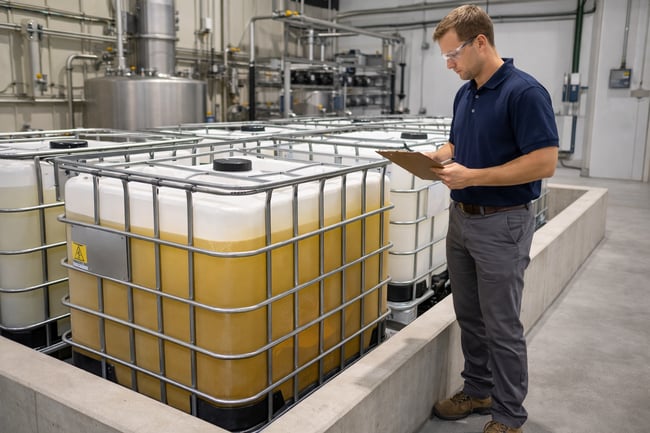
“Cooking Oil Doesn’t Have an SDS & Isn’t Hazardous! Right?!”
No. That’s incorrect.
Both new and used cooking oil count as hazardous chemicals under EPCRA (the federal program behind Tier II Community-Right-to-Know Reporting) because they have Safety Data Sheets (SDS). That’s not the full technical explanation, but it’s close enough to get you in the right mindset.
If you're collecting UCO from restaurants, storing it because you generate it yourself, or collecting it in bulk for transportation or processing, you likely aren’t creating your own SDS. So you’re off scot-free, right? Nope.
There are cooking oil SDSs available online. Google it: “used cooking oil SDS pdf.” You’ll find several. Pretending they don’t exist is not an argument state or federal regulators accept.
When Tier II Reporting Isn’t Triggered for Cooking Oil, But an SPCC Plan Is
This situation comes up more often than people expect.
Some facilities have an SPCC Plan not because of cooking oil alone, but because they store other oils onsite too. That might include new (virgin) cooking oil, diesel fuel, hydraulic oil, lubricants, or waste oils from equipment.
For SPCC purposes, the EPA takes a very broad view of oil. All oil types count toward the total, regardless of whether the oil is new, used, food-grade, or industrial.
For example, a facility might have:
- One 500-gallon used cooking oil tank
- One 500-gallon tank of new cooking oil
- One 500-gallon tank of diesel fuel
All together, that would be 1,500 gallons of oil onsite, which means an SPCC Plan is required, even though the cooking oil by itself is under 1,320 gallons.
Tier II reporting is where the confusion usually starts.
Tier II does not look at oil the same way SPCC does. Instead of total oil volume, Tier II focuses on individual materials, based on their Safety Data Sheets, and whether each one exceeds the reporting threshold. Because used cooking oil and new cooking oil have different SDSs, they are generally treated as separate materials, not lumped together.
So for our example above: 500 gallons x 7.5 pounds per gallon = 3,750 pounds of each oil. That’s significantly less than the 10,000 pound threshold. So in the example above, you would likely need an SPCC Plan, but not Tier II reporting for those oils, because no material exceeds the Tier II threshold on its own.
That said, regulators do have some flexibility in how they interpret reporting. If an inspector ever required oils to be combined and that pushed you over the threshold, Tier II could apply. It is not common, but it can happen.
Real-World Examples That Make This Clear
Example 1: The Small Facility With a Few Totes
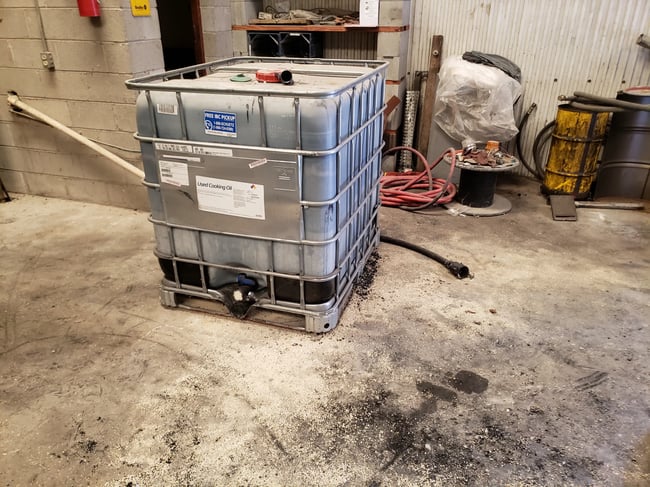
Let’s say you have five 275-gallon totes of used cooking oil. Maybe you’re a small business, or maybe you only collect oil from clients occasionally. Those five totes don’t seem like much. But:
- 275 gallons × 5 = 1,375 gallons
- 1,375 gallons × 7.5 pounds per gallon = 10,312 pounds
You’re over both thresholds! You need an SPCC Plan AND you need to do Tier II Community-Right-to-Know Reporting! Even if UCO isn’t your primary business, the law still applies.
Example 2: A Large Biofuel or Processing Facility
If you refine UCO or produce biofuels, staying below the thresholds is nearly impossible. You likely have:
- Thousands or tens of thousands of gallons of UCO
- Chemical additives
- Forklift batteries
- Cleaning and processing chemicals
These operations almost always trigger Tier II (and SPCC) for multiple substances.
Example 3: Restaurants, Schools, Churches, Stadiums, and Event Venues
Odd grouping, but follow along because Tier II isn’t industry-specific. If you store used cooking oil in large bins or tanks, even if it’s simply a byproduct of cooking operations, you may trigger the thresholds.
Most UCO bins behind restaurants can hold 100–300 gallons each. A handful of UCO bins, and suddenly you’re in SPCC territory... and inches away from Tier II reporting.
We’ve done this for years, and you’d be surprised how many restaurants, universities, entertainment venues, and institutional kitchens qualify for both.
Why Tier II Matters: Public Safety, Transparency, and Your Responsibility
This is the part people overlook, even though it’s the whole point of Tier II. Tier II is not pointless paperwork. It's not a meaningless regulation. Tier II Reporting protects the people who respond to emergencies. Firefighters, police, EMTs, and hazmat teams rely on Tier II information to understand:
- What chemicals are on your property
- How much you store
- Where they are stored
- What hazards they may face
Without that information, responders walk into emergencies blind. The public has a right to know what hazardous materials are in their community. If there’s an incident, they deserve accurate information.
And if you fail to report... and a responder is injured... nothing good happens next. Think lawsuits. Think insurance denial. Think large penalties. You might feel like, “It’s nobody’s business what I have here.” And that's all good and well, provided you're committing to never calling the police or fire department. But skipping Tier II means withholding information that protects innocent people.
Tier II Violations, Fines, and Penalties Under EPCRA
EPCRA violations are some of the most serious in environmental law because they involve public safety. Here's a fairly typical scenario:
-
A fire or emergency happens. Maybe someone gets injured, or worse.
-
Investigators learn the facility never filed Tier II Reports.
-
Environmental regulators throw the book at them. They face lawsuits from other agencies and individuals. Business is hectic, life is stressful, and it costs you a ton of money.
We aren’t trying to scare you, we’re being honest. EPCRA penalties are issued every day to businesses big and small. Nobody wants to be responsible for a responder’s injury because “Tier II felt stupid.”
How to File Tier II Community-Right-to-Know Reports for Cooking Oil and UCO Operations
The good news is that Tier II reporting is usually pretty simple. You generally have two options, and we like to describe it like evaluating whether or not you need an account to do your taxes.
Some people can easily file their own taxes, while others have complex taxes and hire a professional (an accountant). There is no right or wrong answer.
1. Do Tier II Community-Right-to-Know Reporting Yourself
Some people feel comfortable handling it on their own. If you are familiar with:
- Chemical inventories
- Reporting thresholds
- State reporting portals
- EPCRA terminology
...then you may be able to submit your own annual filings. For smaller sites with straightforward inventories, it is doable! But conversely, for smaller operations, it may not be worth your time to figure it out. It all depends on your availability and level of interest in getting it done.
Some states use online Tier II reporting portals that guide you through reporting. Sometimes those are easy, sometimes those aren't. It's just like any other government website and portal - you get what you get, and it's different across the country.
This is similar to doing your taxes with online software. If you have time and patience, you can get through it.
2. Hire an Environmental Professional to Do Your Tier II Reporting
This is the easiest option, especially if:
- You do not have a clean inventory
- You have multiple materials that trigger reporting
- You operate in multiple states
- Your storage changes throughout the year
- You want to avoid mistakes
- You don't have the time
- You just don't want to do it yourself
Most facilities choose to outsource Tier II because it removes stress, reduces risk, and ensures accuracy. Or, maybe you outsource for a year or two, get a feel for what the experts do, and then try tackling it on yourself. Going this route is going to be more expensive, but like hiring an attorney, you know you're getting an expert to handle things for you.
Reach out to us here if you want to discuss our Tier II reporting services - we'll handle the whole thing for you!
How Much Does Tier II Reporting Cost?
For professional help, you can expect about $1,500 to $5,000 per year, per facility. Some might be a little more, some a little less, but that should be a solid ballpark.
The exact cost depends on:
- How many chemicals you store that trigger Tier II
- How many containers or locations need mapping
- Whether you also need SPCC, TRI, or other services
- Overall project scope
To make things easier, we created the pricing calculator below. It'll give you an instant snapshot of what you can expect to spend on hiring RMA to conduct your Tier II reporting!
And keep in mind, in almost every case, this cost is tiny compared to the penalties and risks of noncompliance.
Final Thoughts: If You Store Used Cooking Oil, Check to See If Tier II Applies
To recap, SPCC requirements apply once you store 1,320 gallons or more of oil, including used cooking oil. This threshold is based on total oil volume in containers 55 gallons or larger.
Tier II reporting begins at roughly 1,315 gallons of used cooking oil, since that amount weighs about 10,000 pounds, which is the federal reporting threshold under EPCRA.
Because these two thresholds line up almost perfectly, if you meet one requirement, you very likely meet the other, even if you did not intend to.
Tier II exists to protect emergency responders and your community, giving firefighters and local officials the information they need to respond safely and effectively during an emergency.
Violations can lead to major fines and serious consequences, especially if responders are injured because a facility failed to report its materials.
The good news is that Tier II reporting is relatively easy to complete, especially when you have expert help, and getting it right brings far more peace of mind than skipping it. Reach out for Tier II reporting help here, and we'll take care of the rest!