A practical, no-BS look at what environmental help really includes
If you’re thinking about hiring an environmental consultant, there’s a question you’re probably asking, even if you haven’t said it out loud yet: What am I actually paying for? And that’s a fair question. From the outside, environmental work can look like a handful of documents and some emails back and forth. It’s easy to wonder where the real value is, especially when you’re trying to run a business and watch costs at the same time.
We hear this question all the time, and honestly, we’re glad people ask it. Environmental consulting shouldn’t feel mysterious or vague. You should understand what you’re getting, why it matters, and how it actually helps you sleep better at night. So let’s walk through this in plain English and talk about what you’re really paying for when you bring in environmental help.
And just to get this out of the way early, if you want help figuring out what kind of environmental support makes sense for your situation, you can always reach out to RMA here. Even if the answer is “you don’t need us right now,” we’ll tell you that.
Table of Contents
You’re not paying for paperwork. You’re paying to NOT have to figure this out yourself.
The easiest way to understand environmental consulting is to compare it to hiring an accountant. When you hire an accountant, you’re not paying them to type numbers into a tax form. You’re paying so you don’t have to learn tax law, guess which rules apply to you, stress over software, or worry that you messed something up and won’t find out until the IRS sends a letter.
Environmental consulting works the same way. Most of the time, you’re not paying for a document. You’re paying so you don’t have to untangle environmental regulations on your own, guess what applies to your site, or hope you interpreted something correctly. You’re paying for experience, judgment, and confidence that it’s being handled the right way by someone who deals with this stuff every day.
The paperwork is just the end result. It’s not where the real work happens.
Let’s look at a few common examples, and what really goes into them
There are a lot of different ways businesses get environmental help. Permits, plans, systems, inspections, training, audits, reporting, and ongoing support all fall under that umbrella. We’re not going to cover everything here, but we are going to walk through a few common examples to give you a realistic picture of what you’re actually paying for.
The big thing to keep in mind is this: you’re almost never paying a consultant for the thing itself. You’re paying for the entire world of work that has to happen for that thing to be correct, defensible, and useful in real life.
Here’s what that looks like in practice.

Example #1: Environmental permits
What people think they’re paying for: A permit application. Some forms filled out and submitted to an agency.
What you’re actually paying for: Before anyone touches a form, a good consultant has to understand your site. That usually means a site visit or detailed walkthrough to see how materials are stored, how equipment is used, how oil or chemicals move through the facility, and how things actually operate day to day. Not how they were designed to operate, but how they really work now.
From there, it’s about interpreting regulations to determine whether a permit is required at all and, if it is, which permit applies. That’s rarely obvious. Rules overlap, thresholds aren’t always intuitive, and small details can change the answer entirely. This is where experience and judgment matter.
Once it’s clear a permit is needed, there’s data gathering, measurements, calculations, reviewing drawings, estimating volumes, and pulling records together. Then comes navigating online agency platforms that are often clunky, unforgiving, and easy to mess up if you don’t know what you’re looking at. One wrong answer can send an application back or delay it for weeks.
After submission, there’s almost always follow-up. Clarifying questions, revisions, phone calls, emails, and explaining to regulators why something was answered a certain way. You’re not paying for a permit application. You’re paying for someone to own that entire process so you don’t have to guess, redo work, or worry you missed something important.
Example #2: Required plans and environmental documents
What people think they’re paying for: A document. A binder. Something to show an inspector if they ask for it.
What you’re actually paying for: A good consultant isn’t just creating a document that technically meets a requirement. They’re creating something your team can actually use. That starts with understanding the site in detail, often through a site visit where containment areas are walked, tanks and equipment are measured, drainage paths are traced, and real conditions are compared to drawings and assumptions.
Then comes the analysis. Calculations, volume determinations, worst-case scenarios, and decisions about which rules apply and which don’t. There are judgment calls involved, especially in gray areas where regulations aren’t crystal clear. A good consultant documents those decisions so they make sense not just to regulators, but to you.
The most important part is how all of that turns into the final plan. A usable plan doesn’t read like a regulation. It reads like a roadmap. It’s written clearly, organized logically, and includes practical procedures your staff can actually follow. It spells out who does what, when to act, and how to respond instead of leaving people guessing or relying on tribal knowledge.
That means if there’s a spill, someone can open the plan and know what to do. If there’s a new hire, the plan helps train them. If an inspector shows up, the plan matches reality instead of a fictional version of your site. The document is the deliverable, but the value is that it actually works in the real world.
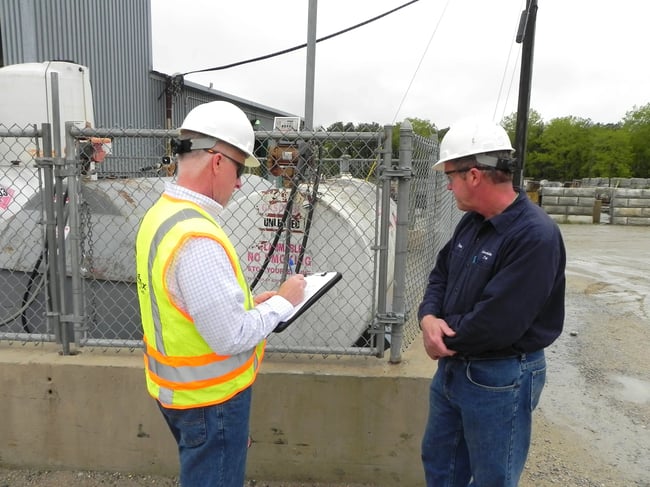
Example #3: Environmental systems and bigger-picture programs
What people think they’re paying for: A formal system. A big binder. A set of procedures that looks impressive.
What you’re actually paying for: This kind of work usually starts by stepping back and looking at how things are actually managed today. What’s documented, what lives in people’s heads, what’s done consistently, and what depends on who’s working that day.
From there, it’s about designing a system that fits your operation. That means identifying gaps, aligning procedures, clarifying responsibilities, and building processes that make sense for your size, industry, and risk profile. Not something that looks great on paper and quietly falls apart six months later.
There’s also a lot of coordination involved. Making sure procedures don’t contradict each other, that expectations are realistic, and that people understand how the system works in practice. You’re not paying for a “system.” You’re paying for structure, clarity, and fewer surprises over time.
Example #4: Ongoing environmental support and access
What people think they’re paying for: Nothing specific. Maybe a few calls or emails here and there.
What you’re actually paying for: In ongoing support situations, you’re paying for access to someone who already understands your site, your operation, and your history. That means when a question comes up, you’re not starting from scratch or trying to explain your facility to someone new every time.
This often includes answering questions when things change, helping prepare for or respond to inspections, sanity-checking decisions before they turn into problems, and helping interpret new or updated regulations as they apply to your operation. Sometimes it’s a quick call. Sometimes it’s walking through a scenario and talking through options before you act.
You’re not paying for one task. You’re paying to not guess. You’re paying for judgment, context, and continuity. That kind of access can prevent small issues from becoming expensive ones and saves a lot of internal time and stress.

So what are you really paying for?
No matter the project, environmental consulting almost always includes someone learning how your operation works, interpreting rules that aren’t black and white, making judgment calls in gray areas, documenting decisions in a defensible way, and explaining things so you’re not left confused.
The paperwork captures that work, but it isn’t the work itself.
At RMA, we’re very upfront about this. We explain exactly what you’re getting, what success looks like, and where the real value is. Sometimes that value is a permit. Sometimes it’s a plan. Sometimes it’s ongoing support. And sometimes it’s simply having someone you can call who already understands your facility.
So when you ask, “What am I actually paying for?” the short answer is this: you’re paying to not have to figure this out yourself. You’re paying to know it’s being handled correctly by people who do this every day, so you can focus on running your business instead of worrying about environmental compliance.
And if you’re not sure what kind of environmental help makes sense for you, reach out to RMA here. We’ll help you sort that out first, no pressure, no fluff, and no guessing.