The Federal Answer Is No. But Some States Add Their Own Twist!
We hear this question all the time: “Are used oil and waste oil considered universal waste?” Under federal EPA rules, the answer is simple: No. Used oil and waste oil are not universal waste.
But environmental compliance is rarely that simple once you start crossing state lines. Some states expand universal waste categories. Others use different terminology. And in places like Pennsylvania, the language itself causes complete confusion.
So, let's take a few minutes to review what the laws actually say, and help you decide what you should be calling YOUR oil. And, if you want to talk through how your facility is managing oil streams, we’re always happy to help, reach out here! Okay, let's dive in and clear this up.
Table of Contents
Under Federal Rules: Used Oil Is Not Universal Waste
Let's start out by being extremely clear. Federally (as ruled by the Environmental Protection Agency, or USEPA), universal waste includes ONLY:
-
Batteries
- Mercury-containing equipment
- Lamps (which are really more like "light bulbs")
- Certain pesticides
- Aerosol cans
And as you can see, used oil is not on that list. Instead, used oil is regulated under its own section of the Resource Conservation and Recovery Act (or RCRA) at 40 CFR Part 279. Totally different set of regulations.
If you need a broader refresher on how these programs fit together, our article Everything You Need to Know About Waste & Hazardous Waste Management is a good place to start. Under RCRA, used oil is defined as oil that:
- Has been refined from crude oil or synthetic oil
- Has been used
- Has become contaminated from that use
Okay, simple enough so far. Whether it's motor oil, hydraulic oil, gear oil, compressor oil - whatever - if it's been used and is now "dirty" and you're finished using it, it's "used oil" under federal law. Nothing else.
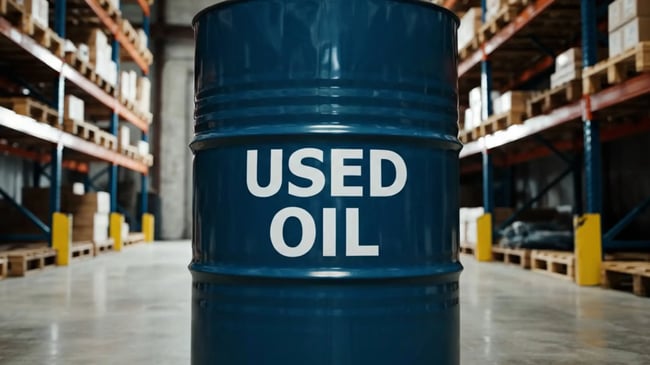
Under those RCRA regulations, used oil has its own storage, labeling, transport, and recycling standards. It must be labeled clearly as “Used Oil.” It cannot simply be dumped. And big caveat here - if mixed improperly, it can become fully regulated hazardous waste.
But to be clear: it is not universal waste under federal EPA rules.
If you want a deeper look at labeling requirements across waste types, see Your Complete Guide to Waste Labels: Hazardous, Used Oil, Universal, & More!
“Waste Oil” Is Not a Federal Regulatory Category
Here is where things get messy.
There is no official federal category called “waste oil.” When someone says “waste oil,” they might mean:
- Oil that is currently in use and actively nearing the end of its life
- Used oil that has been fully used and is now ready for disposal
- Oil that has been mixed with some other hazardous waste (and is now considered hazardous waste itself)
- Spill response or other materials contaminated with oil
Whatever they meant, they probably should not be using the term "waste oil", since that is (almost always) not an official category. Under federal rules, the only defined category is “used oil.” And again, if used oil is mixed with hazardous solvents or other regulated waste streams, it may no longer qualify as used oil, and may instead become "hazardous waste" (which can be its own headache to deal with). For more on this distinction specifically, we also break it down in Used Oil vs. Waste Oil: What’s the Difference?!
Maybe you're asking yourself "who cares?". Well, you should, because calling something “waste oil” does not reduce regulatory obligations. In some cases, it increases them!
Specific States: Where Terminology Causes Confusion
Ready for things to get even more complicated? Pennsylvania is a good example of why state-specific knowledge matters when it comes to oil terminology.
Here it is: Pennsylvania historically required "oil destined for disposal rather than recycling" to be labeled and managed as “waste oil.” That's right, even though I just wrote 3 paragraphs about why to never say "waste oil", you might actually need to use that term if you're in PA.
Okay, so in Pennsylvania, just swap the terms "used oil" for "waste oil"? Not exactly! In Pennsylvania:
- Oil intended for recycling follows used oil management standards and should be called "used oil"!
- Oil that cannot be recycled and is being discarded may be regulated differently and fall under hazardous waste rules depending on characteristics, and may need to be called "waste oil!".
Understandably, the terminology difference has led to many facilities mislabeling drums or misunderstanding disposal pathways. This is exactly why relying on federal definitions alone can create compliance gaps. That is also why having a solid Waste & Hazardous Waste Management Program matters more than most facilities realize.
Do Any States Regulate Used Oil as Universal Waste?
Okay, so if Pennsylvania breaks the mold on "waste oil", do any states break the mold on whether... whatever you call it... is classified as universal waste? If you can believe it, it's complicated.
Some states do have the power to enforce their own universal waste laws, and have expanded universal waste programs beyond federal categories. For example:
- California has one of the broadest universal waste programs in the country. It regulates many electronic wastes and certain other materials under universal waste rules.
- Florida and a few other states have adopted expanded universal waste categories for items like paint or additional materials beyond the federal baseline.
However, most states still regulate used oil under separate used oil rules rather than universal waste standards. But these laws can change at the drop of a hat - so be sure to check your specific state's requirements (or reach out to us)!
In other words: yes, some states do expand what qualifies as universal waste. But very few treat used oil as universal waste in the same way batteries or lamps are treated. Most keep used oil under its own regulatory framework.
That means you can't assume used oil qualifies as universal waste simply because your state expanded other categories.
If you need a better overview of what does count as universal waste, our post What is Universal Waste? Regulations and Requirements Explained! helps frame the differences.
Does It Really Matter What I Call My Oil?
You might again be thinking, "Okay, it's complicated. But WHO CARES??" We would again say, you should! Because misclassifying oil streams can affect:
- Your hazardous waste generator status
- Your reporting thresholds
- Your inspection exposure
- Your spill response obligations
- Your liability
If you label a drum “Universal Waste – Oil” in a state that does not recognize that as category, you have just created a violation. If you mix used oil with hazardous solvents, you may convert it into fully regulated hazardous waste. If you use the term “waste oil” without understanding how your state defines it, you may unintentionally trigger stricter disposal requirements.
If you are unsure how those classifications affect your overall generator category, take a look at Hazardous Waste Generator Status Explained (And a Free Estimator to Figure Yours Out).
Where to Get Help with Oil Regulations
Under federal EPA regulations, used oil is not universal waste. Waste oil is not a defined regulatory category. Used oil is regulated separately under its own RCRA standards.
Some states expand universal waste categories. A few states use terminology that differs from federal language. Pennsylvania is a good example where labeling and terminology matter. But in most cases, used oil remains regulated under used oil rules, not universal waste rules.
The safest approach is to:
- Classify oil streams carefully
- Understand your specific state’s terminology
- Avoid assuming federal rules tell the whole story
If you're unsure whether your oil streams qualify as used oil, hazardous waste, or fall under an expanded state universal waste program, it is far easier to clarify now than during an inspection. And if your facility is trying to strengthen its overall waste program, articles like Quick Guide: 5 Steps to Better Waste Management at Your Business and 10 Signs It’s Time for a Waste Management Overhaul can help you spot weak points before regulators do.
If you’d like help reviewing your oil management practices in your specific state, we’re happy to walk through it with you, contact us here. Because in environmental compliance, the difference between two words can mean the difference between compliance and a citation.