How to Know If Your Concrete Plant is Required to Submit Toxic Release Inventory (TRI) Reports
Ever feel like environmental compliance is one big alphabet soup? SPCC, SWPPP, NPDES, PM10. Just when you think you’ve got a handle on things, another acronym shows up and throws you off again.
We see this all the time with concrete producers. You’re busy running operations, keeping production moving, and the last thing you want is to dig through complicated regulations trying to figure out what applies to you. But there’s one acronym that tends to catch people off guard, and getting it wrong can get expensive fast. If you’re even a little unsure where you stand, it’s worthreaching out to our team early so you’re not guessing.
We’re talking about TRI reporting, or the Toxic Release Inventory. Some plants spend time and money filing when they don’t actually need to. Others skip it entirely, not realizing they should have been reporting all along. And because the rules aren’t exactly written in plain English, it’s easy to see how that happens.
Table of Contents
What TRI reporting is and why it exists
The Toxic Release Inventory, or TRI, comes from the Emergency Planning and Community Right-to-Know Act (EPCRA). The idea behind it is pretty straightforward. The EPA wants transparency around what chemicals are being used and released in local communities.
If your facility meets certain criteria, you’re required to report how much of each listed chemical you manufacture, process, or otherwise use each year. That information doesn’t just sit in a file somewhere. It goes into a public database that regulators, competitors, and even nearby residents can access.
This is one of those programs that feels simple at a high level but gets complicated quickly once you’re actually applying it. If you want a full breakdown of how it works, this guide to TRI reporting walks through the details in plain English.
Does TRI reporting apply to concrete plants?
Short answer: yes, it can. Concrete plants (whether it's ready-mix, precast, brick & block, etc.) all fall under the NAICS code qualifier. So that's one box checked automatically.
But being in a covered industry doesn’t automatically mean you have to file. You also need to meet a few other criteria. Generally, that includes having 10 or more full-time employees and exceeding certain chemical thresholds during the reporting year (more on those thresholds shortly).
This is where things start to get a little less obvious. A lot of producers assume TRI doesn’t apply to them because they don’t think of themselves as “chemical facilities.” But TRI isn’t about how you label your operation. It’s about what’s actually in your materials and how much of it you’re using.
If you’re not even sure whether your operations put you in scope, it’s worth double-checking your classification against which NAICS codes are subject to TRI reporting. We’ve seen more than a few facilities make the wrong call right at this first step.
The chemicals most concrete producers overlook
This is usually the moment where things click for people. We’ll ask, “Are you tracking TRI chemicals?” and the answer is often, “We don’t use any.” That’s almost never the full story.
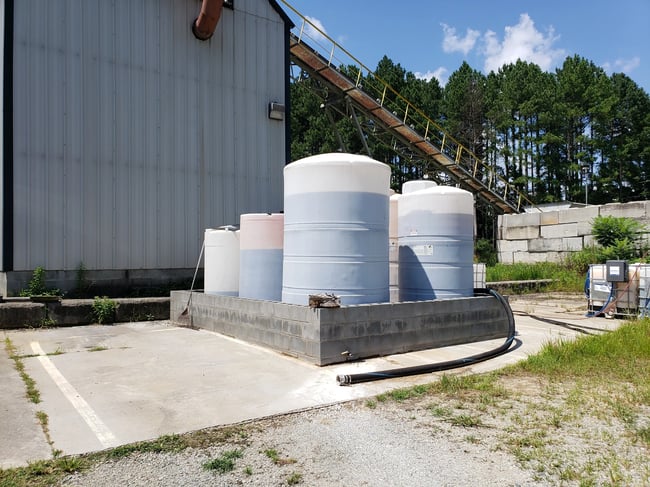
Concrete production involves materials that contain TRI-listed substances, even if you’re not intentionally handling “chemicals” in the traditional sense. Cement, admixtures, curing compounds, and additives can all contain reportable substances like chromium, lead, nitrates, formaldehyde, and other metals.
These aren’t abnormal cases. They’re actually common ingredients in most normal concrete operations. The challenge is that they’re often present in concentrations that don’t jump out unless you’re actively looking for them and calculating totals across the entire year.
If your TRI evaluation doesn’t include a detailed review of your raw materials and Safety Data Sheets, there’s a good chance you’re missing part of the picture. And if the analysis is incomplete, the filing decision probably is too. That’s why understanding what actually needs to be reported for TRI is such a critical step.
TRI reporting thresholds explained simply
Once you’ve identified the chemicals, the next question is how much you’re using. TRI thresholds are where a lot of confusion happens, especially in the concrete industry.
For most listed chemicals, the thresholds are 25,000 pounds per year if you manufacture or process the chemical, or 10,000 pounds per year if you otherwise use it. Those numbers can sound high at first, but they add up faster than you’d expect when you’re working with bulk materials over a full year.
Then there are certain chemicals, like lead and mercury, that fall into a more stringent category. For those, the threshold can drop as low as 100 pounds per year. That’s where trace metals in cement can quietly push a facility over the limit without anyone realizing it.
And this is why guessing doesn’t work. You have to run the numbers based on actual usage and actual concentrations. If you’re unsure how to approach that, or how long the process typically takes, this breakdown of the TRI reporting process can help set expectations.
What happens if you get TRI reporting wrong
This is the part most people don’t love hearing, but it’s important. TRI reporting isn’t a low-risk, “close enough” type of requirement. The EPA takes it seriously, and the penalties reflect that.
Violations can exceed $64,000 per day, per violation. And that applies whether the issue is failing to file when required or submitting incorrect information. Not knowing isn’t considered a valid excuse, and neither is making a reasonable guess without doing the actual analysis.
We’ve seen companies get into trouble simply because they assumed their situation hadn’t changed, or because they relied on outdated information from years ago. These are preventable problems, but only if you take the time to verify your status properly.
If you want to see where companies typically slip up, it’s worth reviewing the most common TRI reporting mistakes. There’s a pattern to these issues, and concrete plants show up in that pattern more often than you might expect.
When it makes sense to bring in help for TRI reporting
There’s a point where trying to figure this out internally starts costing more time and creating more risk than it’s worth. If you’re unsure about your chemical inventory, your thresholds, or whether you should have been filing in previous years, it usually makes sense to get a second set of eyes on it.
At RMA, we work with concrete producers across the country to take this off their plate. We review your materials, calculate your chemical usage, document your TRI status, and handle the reporting if it’s required. It’s a fixed, predictable process, and you end up with documentation you can actually stand behind.
If you’re trying to budget for this or compare it to handling it in-house, you can even use our TRI reporting pricing calculator to get a quick estimate.
And if you’re on the fence about whether you need help at all, just reach out to our team. We’ll give you a straight answer and help you figure out the next step without overcomplicating it.
So, does your concrete plant need to file a TRI report?
It depends on your specific operations, your materials, and your actual chemical usage. But here’s the honest takeaway. A lot of concrete plants assume they don’t need to file without ever running the numbers. And that’s where problems start.
If you’re not sure, don’t roll the dice. TRI reporting is one of those areas where being wrong can get expensive quickly, and getting clarity is usually faster and cheaper than dealing with the fallout later.
If you want help figuring it out, contact RMA. We’ll help you make sense of it, document your position, and keep you out of trouble without turning it into a bigger headache than it needs to be.