The Top 7 Most Common SPCC Mistakes That Make Us Say "Yikes!"
Spill Prevention, Control, and Countermeasure (SPCC) Plans are required for facilities that store large quantities of oil and oil‑based products. They're meant to prevent oil discharges into navigable waters or adjoining shorelines, a serious environmental threat that can lead to massive cleanup costs, legal violations, and reputational damage.
Yet even though SPCC Plans are a federal requirement, we still regularly see plans that fall short in ways that could have real‑world consequences. Whether it’s out of laziness or ignorance, many facilities are unknowingly out of compliance.
As environmental consultants, we’ve been in the field and seen it all—outdated binders collecting dust, broken containment berms, and employees who have no idea what an SPCC Plan even is. These aren’t just common technicalities, they’re red flags that could land your facility in serious trouble during an inspection or emergency situation.
Let’s walk through the most common SPCC Plan issues we encounter—and why they’re such a big deal. Each one has the potential to trigger a violation, delay response during a spill, or fail to protect your site and the environment.
1. The SPCC Plan Is a Mess—or Doesn’t Exist at All
This one’s simple: If your facility meets the threshold (1,320 gallons of oil aboveground or 42,000 gallons underground), you're required by federal law to have an SPCC Plan. And not just any plan, it must be site‑specific, accurate, and certified by a Professional Engineer (for most facilities).
We’ve encountered facilities that “have” an SPCC Plan, but it’s missing key sections, still contains another facility’s name, or was cobbled together from an online template without any customization. Worse, some businesses don’t have a plan at all, assuming it doesn’t apply to them. This is a major compliance risk that can result in serious fines and enforcement actions.
If you’re not sure whether your plan meets regulatory requirements, reach out now for a quick review.
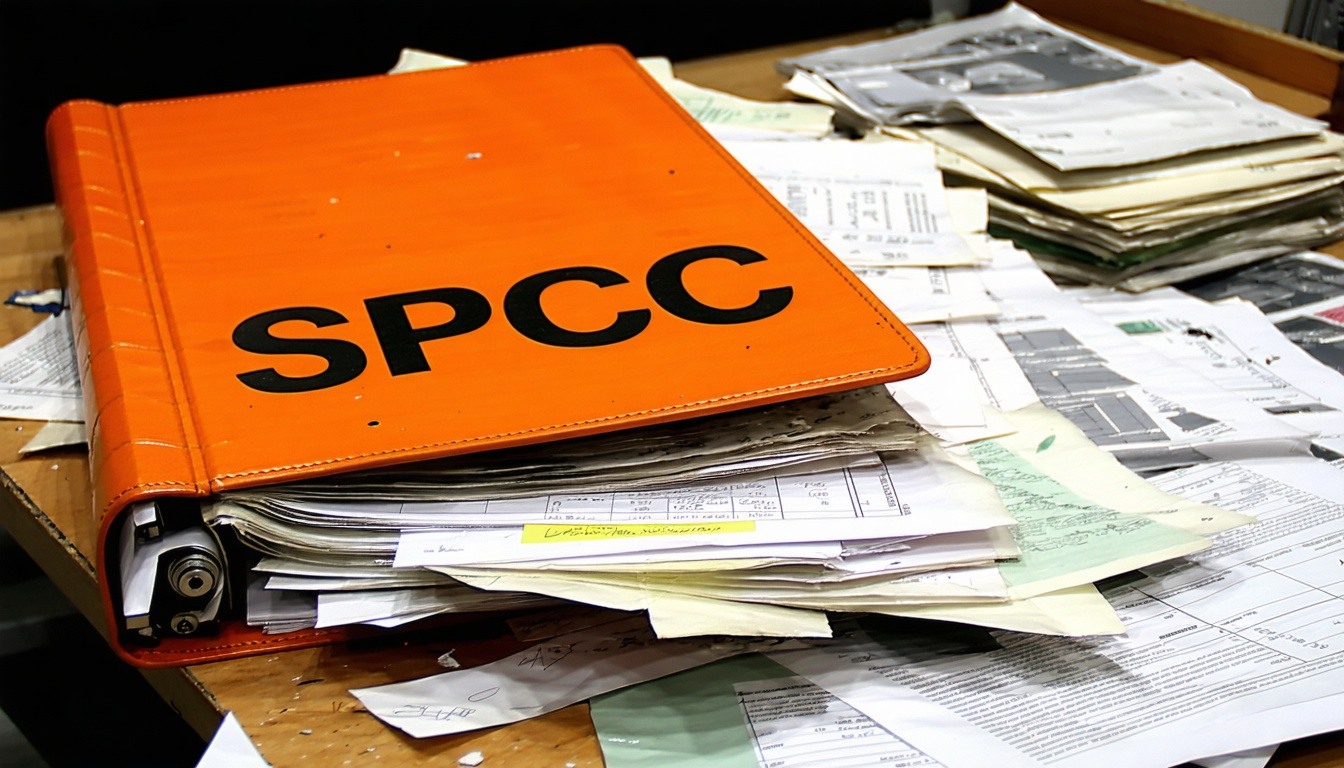
2. The Plan Is Outdated and No Longer Reflects the Facility
SPCC Plans must be reviewed and updated every five years, or sooner if changes are made at your facility (new tanks, removed equipment, site layout changes, etc.). But in practice, many facilities go years without touching the plan. Staff turnover, reorganizations, or plain old forgetfulness can cause updates to fall through the cracks.
We’ve seen SPCC Plans that reference tanks that were removed years ago, omit new equipment, or include names and phone numbers of employees who haven’t worked there in ages. In an emergency, this kind of outdated info can stall your response and result in non‑compliance enforcement actions like fines or worse.
If your SPCC Plan hasn't been updated recently, it's time to fix that.
3. Poor or Missing Recordkeeping
Recordkeeping is one of the most misunderstood, but heavily scrutinized parts of SPCC compliance. Facilities are required to maintain documentation of:
- Monthly and annual SPCC inspections
- Annual SPCC training records
- Fuel transfer logs
- Spill reports, cleanup actions, and more
Yet, at many sites, these records are either missing entirely or hastily filled out right before an inspection. Regulators know what this looks like, and they’ll call it out. Beyond that, if a spill does happen and you don’t have records showing that you were inspecting and maintaining your systems, your liability skyrockets.
4. No or Inadequate Spill Response Materials On‑Site
It’s one thing to say you’re prepared for a spill, it’s another to actually be prepared. Your plan should list what spill response equipment is needed on‑site (like absorbent socks, booms, PPE, etc.), and that equipment must be present, accessible, and in usable condition.
We often find dusty, half‑empty kits shoved in corners or locked in rooms no one has access to. In a real spill, every second counts, and if your staff can’t find or use what they need, the damage will escalate quickly. So, be sure you have a spill kit, you know what's in it, you know how to use it, and it's reflected in your SPCC plan.
Spill kits and response tools are your first line of defense.
5. Visible Signs of Spills or Leaks Are Ignored
If you walk around your site and see oil stains on the ground, sheens in storm drains, or cracked containment areas—and your SPCC Plan doesn’t address them, that’s a problem. These are clear signs that your spill prevention program is not being implemented or enforced.
Unaddressed stains or leaks can be considered evidence of actual discharges, and the EPA and other regulators take that seriously. Inspectors will assume that if you're not cleaning up small leaks, you're probably not ready for a big one either.
If there are visible signs of trouble, it's time for a real assessment.
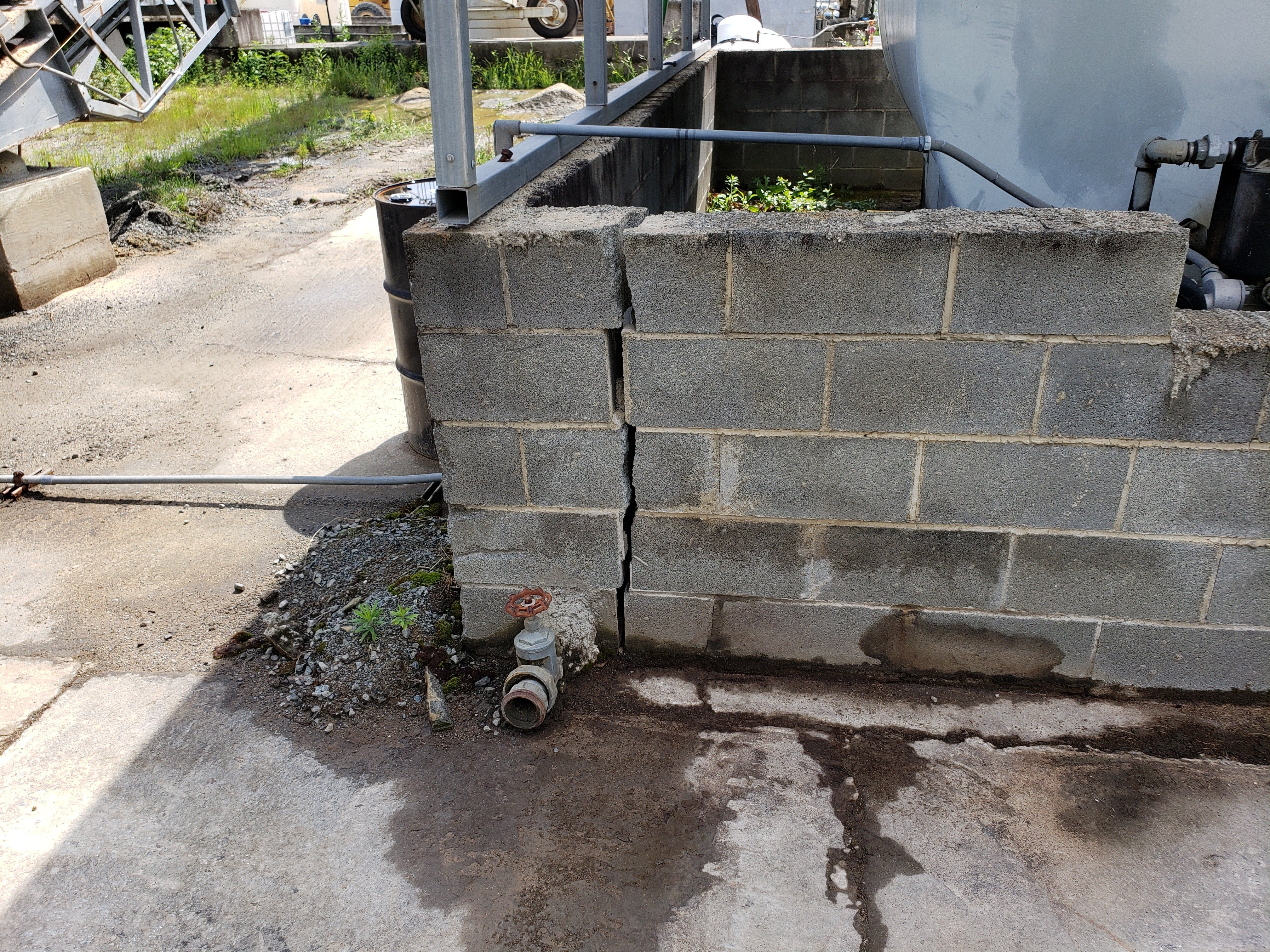
6. Improper or Insufficient Secondary Containment
This is one of the most critical, and commonly mishandled SPCC requirements. Each oil storage container must have adequate secondary containment that can hold the full volume of the container plus freeboard for rainfall (if it's outdoors). But we often see:
- Containment areas that don’t hold enough volume
- Open valves or drains (a spill will pour right out!)
- Containment areas full of trash, leaves, or rainwater
None of these situations are compliant, and they can render your entire plan meaningless in the eyes of an inspector, or in the middle of a spill event.
Containment issues are low‑hanging fruit for enforcement.
7. Employees Have No Idea What the SPCC Plan Is
This is a surprisingly common issue: your employees are the first responders in the event of a spill, yet many don’t know what the SPCC Plan is, what it contains, or what their responsibilities are.
We’ve asked simple questions on‑site like “Where’s your SPCC Plan kept?” or “Do you know where the nearest spill kit is?” and gotten blank stares. That’s a huge red flag. Annual SPCC training is required, and your staff must understand how to respond effectively.
And "not knowing how to train" is no excuse, since you can even take online SPCC training these days.
If your team isn't trained, your plan isn't effective. Ask us about SPCC training options here.
Don’t Let an Overlooked SPCC Requirement Become Your Next Violation
At the end of the day, it doesn’t really matter whether you need a brand-new SPCC plan or just need to update an existing one. The bigger issue we usually see comes down to one of two things. Either there’s a lack of awareness, or there’s a lack of effort. And those are two very different situations.
If someone just doesn’t care, they’re not going to maintain their plan, they’re not going to do inspections, and they’re not going to stay in compliance. There’s only so much we can do in that situation. We can build a great plan, set up procedures, and give you everything you need to succeed, but at a certain point, it’s up to you to follow through.
But that’s not most people. Most of the clients we work with actually want to do the right thing. They just don’t fully understand what’s required, or they’ve never been shown how to manage their SPCC plan properly. And that’s where noncompliance usually starts. Not from negligence, but from a lack of education.
That’s why we approach SPCC a little differently. Every project we take on, whether it’s a new plan or an update, includes training. We don’t just hand you a document and walk away. We make sure you understand your plan, your responsibilities, and what it actually takes to stay compliant long-term.
In most cases, that means we’re coming to your site, walking through your facility, updating or rebuilding your plan as needed, and then training your team so everyone is on the same page. We also help set up practical inspection procedures so you’re not guessing about what needs to be done month to month. The goal isn’t just to get you compliant today. It’s to give you something you can actually manage going forward.
If you’re ready to take a fresh look at your SPCC compliance, or you’re just not sure where you stand, we’re here to help. At RMA, we work with businesses like yours every day to make environmental compliance easier, clearer, and less stressful. So if you need help, contact us today for expert SPCC guidance and practical solutions that actually work in the field.