Exploring the dangers of bad (and even good!) environmental audits
What’s the most dangerous thing your facility could have? A leaking tank? A missing permit? That’s what most people assume. But honestly, one of the biggest risks we see isn’t something physical at all. It’s a bad environmental audit.
And here’s the part that tends to catch people off guard. Sometimes even a good audit can create problems if it’s not handled the right way afterward. If you’ve ever wondered whether your audit actually protected you or quietly exposed you, you’re not alone. We talk through this exact situation with clients all the time. If you’re not completely confident in your audit or what happened after it, it’s worth reaching out to our team before it turns into something bigger.
Environmental audits are one of the most powerful tools you have to stay compliant. But like most powerful tools, they can work for you or against you depending on how they’re done and what you do with the results.
Table of Contents
What a bad environmental audit looks like
Let’s start with the obvious issue. A bad environmental audit is usually done by someone who doesn’t fully understand your operations, your permits, or the regulations that apply to your facility. They rely heavily on generic checklists, move quickly through the site, and don’t spend much time verifying details.
On the surface, everything seems fine. You get a report back that says you’re in good shape. Maybe there are a few minor notes, but nothing that feels urgent or concerning. It’s easy to walk away thinking, “Alright, we’re covered.”
But here’s the problem. Compliance isn’t something you confirm with a quick walkthrough and a checklist. It requires digging into records, comparing actual operations to permit requirements, reviewing training logs, inspecting equipment, and asking the kinds of questions that take time to answer properly.
If that level of detail isn’t there, the audit isn’t telling you the truth. It’s just giving you a version of reality that feels convenient in the moment. If you want a clearer picture of what an audit should actually involve, this overview of environmental audits is a helpful starting point.
How a bad audit creates a false sense of security
The real danger of a bad audit isn’t just that it misses problems. It’s that it convinces you those problems don’t exist. That false sense of security is where companies get blindsided.
We’ve worked with facilities that thought they were fully compliant for years because they had “clean” audits on file. Then a regulator shows up and finds issues almost immediately. Missing documentation, outdated plans, incomplete inspections, or requirements that were misunderstood entirely.
None of those issues were new. They were just never identified properly. And when regulators find them instead of you, the conversation changes quickly.
This is why experience matters so much when it comes to audits. You need someone who knows what to look for, understands how regulations are applied in the real world, and isn’t afraid to point out problems. If you’re curious what typically gets missed, take a look at the most common environmental audit findings. Those are exactly the kinds of things a weak audit tends to overlook.
How even a good environmental audit can create risk
Now let’s flip the script. A good audit does the opposite. It digs deep, asks the right questions, and gives you a clear, honest picture of where you stand. It identifies gaps in your permits, your plans, your recordkeeping, and your day-to-day operations.
That’s exactly what you want. But it comes with an important responsibility that a lot of companies underestimate. Once those findings are documented, you can’t unknow them. You now have written evidence of where your facility is out of compliance or at risk of noncompliance. From that point forward, your responsibility is to act on that information.
This is where things can get uncomfortable. Because now it’s not about whether the issue exists. It’s about what you’re doing about it. And if that question ever comes up during an inspection, the answer matters.
If you’ve ever wondered how audit findings are treated or whether they need to be disclosed, this article on audit reporting obligations breaks it down in a way that’s easy to follow.
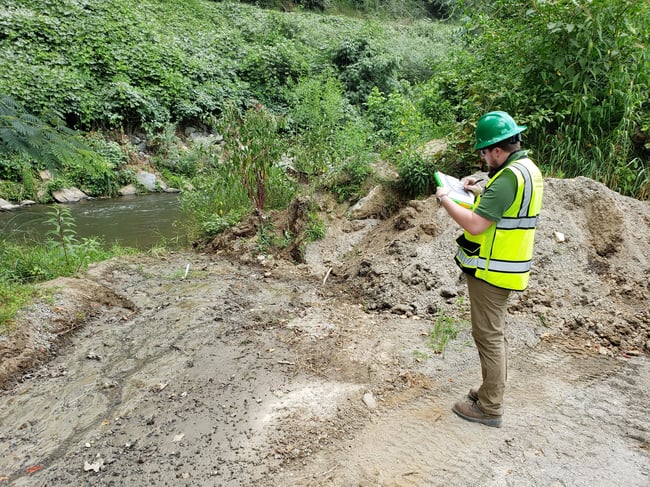
What happens when audit findings aren’t addressed
This is where we see good audits turn into real problems. A company gets a thorough audit. The findings are accurate, clearly documented, and completely fixable. The intention is to address them. But then reality sets in. Production demands take priority. Staffing is tight. Budgets get pushed around. A few weeks turn into a few months, and those findings sit on a shelf.
Then an inspector shows up. They identify the same issues. At that point, if there’s documentation showing the company already knew about those gaps and didn’t take action, it can escalate quickly. What could have been a manageable fix becomes a much bigger compliance issue.
That’s how a good audit becomes a liability. Not because it found something wrong, but because it created a record of known issues that weren’t addressed in a timely way.
How to actually use an environmental audit to protect your business
An environmental audit should never be treated as a checkbox or a one-time event. It’s a starting point. When it’s done right, it gives you a clear roadmap of what needs to be fixed, improved, or better documented.
The real value comes from what happens after the audit. Prioritizing findings, addressing gaps, updating plans, training staff, and making sure your documentation reflects what’s actually happening on site. That’s what turns an audit into protection instead of risk.
At RMA, that’s how we approach every audit. We don’t just identify problems and hand you a report. We work with you to fix them. We help you prioritize what matters most, move quickly on critical issues, and build systems that hold up when regulators show up.
If you’re trying to figure out whether you need an audit or what the investment looks like, this guide on whether you need an environmental audit and this breakdown of environmental audit costs will give you a realistic picture.
And if you’re not sure whether your last audit actually did what it was supposed to do, or whether anything important was missed, it’s worth getting a second opinion. You can always reach out to RMA and we’ll walk through it with you.
So what’s the real takeaway with environmental audits?
A bad environmental audit can leave you exposed without even realizing it. A good one can protect you, but only if you act on what it finds. Either way, the audit itself isn’t the end of the story.
The real question is what happens next. Do you have confidence in what was reviewed? Do you trust the findings? And more importantly, have you actually addressed the gaps that were identified?
If the answer to any of those questions is unclear, now’s the time to get ahead of it. Because once something is documented, you can’t undo that. But you can take control of what happens next. And that’s exactly where we help our clients every day.