How Ready Mix and Precast Facilities Can Get Inspection-Ready Long Before an Environmental Inspector Ever Pulls Into the Yard
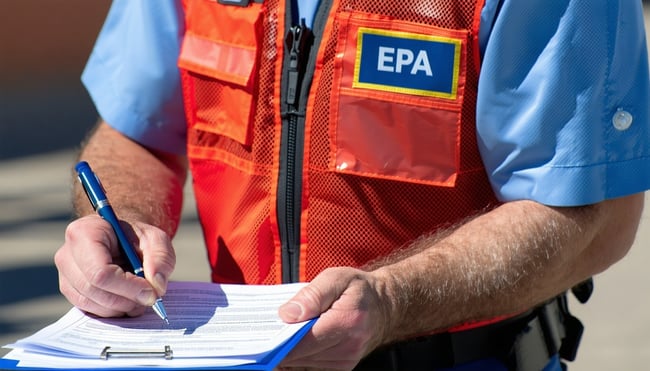
If you've never been through an environmental inspection at a concrete plant, you probably picture something an inspector showing up with a clipboard, asking for your permits, walking the yard, and writing down whatever looks wrong. That's part of it. But the inspection usually starts a lot earlier than most plant managers expect, and it covers a lot more than the stack of binders in the office. By the time an inspector asks for your Stormwater Pollution Prevention Plan (SWPPP), your Spill Prevention, Control, and Countermeasure (SPCC) Plan, or your air permit records, they've already formed an opinion about how your facility is run.
We've been helping ready mix producers, precast operations, and aggregate facilities get ready for environmental inspections since 1992, and we've helped producers get through plenty of them. In this article we'll walk through what inspectors notice before they even get out of the vehicle, which records they almost always ask for, why outdated plans cause so much trouble, where stormwater and process water issues trip up concrete plants, what air inspectors focus on, and what actually happens after the inspection ends. If you'd like a second set of eyes on your program before regulators show up, reach out to RMA and we'll help you figure out where you stand.
Table of Contents
TL;DR
Environmental inspectors at concrete plants start evaluating your operation the second they turn off the road, then spend a surprising amount of time on records before they ever walk the site. They're checking whether your SWPPP and SPCC Plan match the facility as it exists today, whether required inspections were actually performed and documented, whether process water is being kept out of your stormwater outfalls, and whether your air permit conditions are being met day in and day out. The facilities that have the smoothest inspections aren't perfect. They're organized, and their paperwork tells the same story their yard does.
Why Would an Environmental Inspector Show Up at Your Concrete Plant?
Before getting into what inspectors look at, it helps to understand why they're there in the first place, because that shapes the scope of the visit.
Some inspections are routine. Agencies run inspection programs by sector and by permit type, and concrete plants land in that rotation because they hold stormwater permits, air permits, and often both. Others are driven by something specific. A neighbor calls about dust or a discharge. A sampling result gets flagged in a database. A Discharge Monitoring Report shows up late, or doesn't show up at all. Sometimes an inspection is a follow-up to a previous visit that ended with open items.
Scope varies too. Some visits are single-media, meaning the inspector is only there for stormwater, or only for air. Others are multimedia, where one inspector or a team walks through water, air, waste, and reporting in the same visit. State inspectors do most of this work in authorized states, though EPA regional staff conduct inspections directly as well.
Announced or unannounced also varies. Plenty of inspections come with a phone call a few days ahead. Plenty don't. That's exactly why preparing for an inspection as a one-time event doesn't work at a concrete plant. You can't clean up a fueling area on Tuesday afternoon if the inspector arrived Tuesday morning.
What Inspectors Notice at a Concrete Plant Before They Get Out of the Vehicle
First impressions matter more than most producers realize. As an inspector drives onto the property, they're already gathering information that has nothing to do with permits or paperwork. They're looking for signs that you have your act together.
Can a visitor tell where to park? Is there signage pointing to the office? Are PPE requirements posted where a visitor can actually see them? Does the plant look clean, organized, and actively maintained, or does it look like nobody's been paying attention?
Then they start noticing the site itself. Are stormwater and process water controls in decent shape, or are the BMPs described in your SWPPP clearly not being maintained? Do stockpiles look managed? Is dust rolling off the haul road or the batch plant? Are dumpsters overflowing? Are there drums, old admixture totes, and truck parts scattered around the yard? Is the fueling area a mess, with no spill kit, no signage, and obvious petroleum staining on the ground?
And the big one: does this look like how the facility runs every day, or does it look like somebody scrambled to clean up yesterday afternoon?
None of these observations decide compliance on their own. But they set the tone for everything that follows, and they influence how hard an inspector looks at the rest of your program. We've watched this play out for decades. Plants that take housekeeping seriously usually have stronger environmental programs, because the same attention to detail carries into documentation, training, inspections, and corrective actions.
What Records Do Inspectors Ask For at a Concrete Plant Inspection?
One of the biggest surprises for a first-time inspection is how much time gets spent on records before anybody walks the yard. That's not the inspector stalling. Your documentation is the description of how your environmental program is supposed to work. The site walk is just verification that reality matches the paperwork.
It's also not optional. Recordkeeping is a firm requirement under nearly every program a concrete plant operates under. If the paperwork isn't there and isn't in order, that's usually a violation all by itself, separate from whatever's happening out in the yard.
At a typical concrete plant, expect an inspector to ask for some combination of the following:
- Your Stormwater Pollution Prevention Plan (SWPPP) and NPDES permit authorization
- Your SPCC Plan
- Quarterly stormwater visual inspection reports
- Stormwater sampling results, lab reports, and monitoring records
- Monthly SPCC inspection records
- Air permit inspections, operating logs, and monitoring records
- Employee environmental training records
- Corrective action documentation
- Tier II Community Right-to-Know submittals
- TRI reports, if your facility meets the thresholds
- Permit files and correspondence with the agency
Having the documents isn't the whole test. Inspectors want to see that they're current, complete, organized, and available right now. If it takes twenty minutes to find the SWPPP, or nobody in the room is sure which version is the active one, that raises questions about whether the program is being managed at all. This is a big part of why your environmental documentation system matters so much, and it's one of the easiest things to fix ahead of time.
Why Outdated SWPPPs and SPCC Plans Cause Concrete Plant Inspection Problems
The most common problem we run into isn't that a concrete plant doesn't have environmental plans. It's that the plans no longer describe the plant. They were written years ago, filed on a shelf, and never touched again.
Your SWPPP and SPCC Plan are supposed to evolve with the operation. If you've added tanks, moved material storage, regraded the yard, changed drainage, installed a new reclaimer, expanded production, or shifted how trucks move through the site, those plans need to be reviewed to see whether updates are required.
Inspectors routinely compare what your plan says against what they're looking at. If your SWPPP shows an aggregate storage area that moved two years ago, or your SPCC Plan still references a tank that got pulled out, that's an immediate signal to start questioning the rest of the program. In a lot of cases, an outdated plan is a regulatory problem in its own right, not just a bad look.
SPCC has a built-in schedule for this. Facilities are required to review the plan at least every five years, and to amend it when there's a change in facility design, construction, operation, or maintenance that materially affects the potential for a discharge. If you're not sure where you stand, we've written about when to update your SPCC Plan and whether you can do it yourself, and separately about what a five-year review actually involves.
If Your Concrete Plant Inspections Weren't Documented, They Didn't Happen
This is the simplest rule in environmental compliance and the one facilities break most often. From an inspector's point of view, an inspection with no record is an inspection that never occurred. It doesn't matter that your plant manager walks the yard every Monday. If nothing was written down, there's nothing to review.
At a concrete plant, the recurring items usually include quarterly stormwater visual inspections required by your permit, monthly SPCC inspections, air permit equipment inspections and monitoring, stormwater sampling events, employee environmental training, and any corrective actions or follow-ups. Each one needs a record with a date, a name, and enough detail to show what was actually looked at.
Inspectors aren't only confirming that inspections happened. They're reading the records for a story. Were deficiencies identified? Did anything get fixed? Did the same problem show up in six consecutive reports with no action taken? A stack of forms where every box is checked "OK" for three straight years is its own red flag, because no operating concrete plant is perfect for three straight years.
If your visual inspections feel like a box-checking exercise right now, it's worth reading how to do a stormwater visual inspection the right way, along with the top 10 things to cover during monthly SPCC inspections. Training records matter here too. Both stormwater training and annual SPCC training come up regularly, and our online environmental training library handles both with a certificate you can drop straight into the binder.
Stormwater and Process Water at Concrete Plants Are Not the Same Thing
This is where concrete plant inspections spend the most time, and where the most serious findings tend to come from.
Most concrete facilities are authorized to discharge stormwater under an NPDES stormwater permit, as long as they follow permit conditions and implement the BMPs in the SWPPP. Process water is a different animal. Water from truck washout, drum and chute rinsing, equipment cleaning, mixer washdown, reclaimer systems, and production activities generally is not authorized to leave the site through a permitted stormwater outfall. If you haven't sorted out where the line falls at your plant, our breakdown of the difference between stormwater and process water is the place to start.
Inspectors will spend real time evaluating whether those two streams stay separate. They'll look at washout areas, settling basins, reclaim systems, site grading, drainage patterns, secondary containment, and anywhere process water could escape during a heavy rain. High pH is the classic tell at a concrete plant. Cement contact water pushes pH up fast, and a sample coming out of an outfall at 11 or 12 is a strong indicator that process water found its way into the stormwater system.
The most common version we see isn't deliberate. It's a berm that eroded, a basin that filled with solids and stopped working, or a washout area that migrated fifty feet over the years until it drained the wrong direction. Good drainage design, honest routine inspections, and proactive maintenance catch those things while they're still housekeeping problems instead of violations. And if your numbers have already been coming back high, it's worth understanding the difference between benchmarks and limits before you decide how worried to be.
What Do Air Inspectors Look For at a Concrete Plant?
If your plant operates under an air permit, having the permit is the beginning of the conversation, not the end. Inspectors are looking for evidence that permit conditions are being met consistently, and concrete plants have a lot of conditions.
Expect review of required equipment inspections, preventive maintenance records, baghouse maintenance and filter replacement logs, opacity or visible emissions observations where applicable, fugitive dust control practices, operating logs, production records, and whatever specific recordkeeping your permit spells out. Permit conditions vary widely by state and by plant configuration, so the permit itself is the checklist.
During the site walk, they're also just using their eyes. Visible dust coming off a conveyor transfer point, truck traffic kicking up clouds on an unpaved road, uncontrolled stockpiles, sprinklers or water trucks that clearly aren't being used, or emissions from the batch plant will all prompt follow-up questions. Even when visible emissions don't turn into a violation on the spot, they usually send the inspector back into your maintenance logs and inspection records with more interest than before.
The time to deal with dust isn't the morning an inspector is standing in your yard. It's through routine maintenance, consistent housekeeping, working dust suppression, and inspections you actually perform throughout the year.
Tier II and TRI Reporting Come Up During Concrete Plant Inspections Too
Depending on what you store and how much of it, inspectors may also look at your reporting under the Emergency Planning and Community Right-to-Know Act (EPCRA). That usually means Tier II Community Right-to-Know reports, and for some facilities, TRI reporting as well.
Concrete plants get caught here more often than you'd think. Diesel in an aboveground tank, admixtures, fuel oil, and other stored chemicals can push a facility over Tier II thresholds without anyone thinking of it as a "chemical" issue. If the programs apply, inspectors may confirm that reports went in on time, that the chemical inventory on the report matches what's actually on site, and that supporting documentation exists.
These programs tend to get less day-to-day attention than stormwater or air, which is exactly why they expand inspections. A missing Tier II filing is a discrete, easy-to-prove finding, and it invites the inspector to keep pulling threads. If you're not sure whether either applies to you, our full TRI reporting guide walks through thresholds, and we handle both Tier II reporting and TRI reporting for producers who'd rather not.
What Inspectors Expect Your Concrete Plant Manager to Know
Here's something that doesn't get talked about enough. The person meeting the inspector at your plant matters, and it's usually not the corporate environmental manager, because that person is three hours away.
Whoever is on site should know what the environmental documents are, where they're kept, and roughly what they're for. Nobody expects a plant manager to recite permit conditions from memory or explain benchmark monitoring statistics. But they should be able to produce the SWPPP without a search party, know that monthly SPCC inspections happen and who does them, and know who to call for the technical questions.
Two practical pieces of advice. First, answer what you know and don't guess. "I'm not sure, let me get you the person who handles that" is a completely acceptable answer and it's far better than a wrong one that ends up in the report. Second, take your own notes during the visit. Write down what the inspector asked for, what they photographed, and what they commented on. When a letter shows up eight weeks later, that record is worth a lot.
What Happens After a Concrete Plant Environmental Inspection?
Most inspections end with a closing discussion where the inspector walks through what they observed. That conversation is usually informal and is not the official outcome. The official outcome comes later in writing, and the timeline varies quite a bit by agency and by how complicated the visit was.
Outcomes generally fall into a few buckets. The visit closes with no findings. You get a letter listing deficiencies with a deadline to correct them and document the fixes. Or, for more serious issues, it escalates into a formal enforcement action with penalties attached.
Penalty exposure is real, and the numbers are bigger than most people assume. Under 40 CFR Part 19, the current federal statutory maximums run to $68,445 per day for Clean Water Act violations, $124,426 per day under the Clean Air Act, and $71,545 per day for EPCRA violations, for penalties assessed on or after January 8, 2025. Actual penalties are almost always well below the statutory maximum and get calculated case by case, factoring in the seriousness of the violation, good faith efforts to comply, and any economic benefit gained by not complying. States that run their own programs have their own penalty schedules. The point isn't the ceiling number, it's that these are per-day, per-violation figures, and an issue that sat uncorrected for two years is priced accordingly. Our violation cost calculator can give you a rough sense of exposure, and we've written more about the costs of non-compliance that go beyond the fine itself.
Whatever comes back, respond in writing, meet the deadlines, and document the corrections. Agencies respond well to facilities that fix things and prove it. They respond much less well to silence.
How RMA Helps Concrete Plants Prepare for Environmental Inspections
The biggest mistake we see is facilities preparing for an inspection instead of preparing every day. Experienced inspectors can tell the difference, and the goal was never to look good on one particular morning. The goal is a concrete plant where inspection day feels like any other day, because the SWPPP and SPCC Plan are current, the inspection records are complete, the air permit documentation is up to date, housekeeping is normal, and the dust controls run whether or not anybody official is coming.
We work with ready mix, precast, and aggregate producers to review environmental programs, update SWPPPs and stormwater permits, write or revise SPCC Plans, run environmental audits that find problems before regulators do, handle reporting, and in some cases run the whole environmental program for producers who don't have anyone in-house. If you just want a fast read on where you stand, an audit is usually the quickest path, and we've published what environmental audits cost so you're not guessing. Most run in the $3,000 to $7,500 range depending on facility size and how many programs are in play.
We'll also tell you when you don't need us. Plenty of concrete plants are in decent shape and just need a few records tightened up, and if that's your situation we'll say so. If you'd like to talk it through, give us a call, send an email, or fill out the form on our site and reach out to RMA. There's no pressure and no obligation, and it's almost always easier and cheaper to find these issues yourself than to have an inspector find them for you.