When We See Recycling Approvals Get Approved... and Denied!
If you’re thinking about applying for a recycling approval in New Jersey, there’s one question we know is sitting at the top of your mind: What are the chances I actually get approved?
And right behind that…
- What could cause my application to get denied?
- If it does get denied, then what?
- And more importantly... what can I do now to avoid that outcome?
You’re not alone in asking these. In fact, these are some of the first questions we hear from anyone serious about starting a recycling business in New Jersey. The good news? You’re asking the right questions (and not everyone does).
At RMA, we've probably helped more businesses in NJ get recycling approvals than any other firm - and if you want a hand, we can help you too, just reach out. But as much as we’d love to tell you this process is quick, predictable, and painless… it’s not.
Is a New Jersey recycling approval guaranteed?
Short answer: No. Absolutely not. There are zero guarantees in this process - not from the DEP, not from the county, and not from any consultant you hire. If someone tells you otherwise, they’re either inexperienced or dishonest.
We’ve helped dozens of businesses secure General Recycling Approvals and other recycling approvals across the state, from concrete and asphalt recyclers to mulch yards and construction debris processors. And while we’re proud of our track record, we’ve also seen great projects denied. Sometimes for reasons that had nothing to do with the application, planning, past compliance, or frankly, common sense.
3 Real Times We Were Denied
Yes. And we’ll be honest about it. Our team has handled dozens of recycling approvals in New Jersey over the years. We’ve had a strong success rate (less than 5% have been denied!). But the ones that were denied? Well, they stung. They also taught us a lot. Here are a few real examples:
Example 1:
Everything was lined up. The location was great. The plan was strong. The county staff supported it.
But when it came time for a final vote, a single commissioner said no. Why? They didn’t want trucks near their road. That’s all it took. Crazy, right?!
Example 2:
A clean industrial property. A good fit for the type of materials being proposed. But the municipality simply didn’t want another recycling businesses in town. No support, no approval. And no real way to have seen it coming.
Example 3:
Similar story to the last one. A county decided they didn’t want any new recycling facilities. No technical issues. Just “not interested.” Unfair? Yeah, we thought so too!
The pattern? Local politics. County resistance. Zoning or location issues. And those are not things you can fix with a better application.
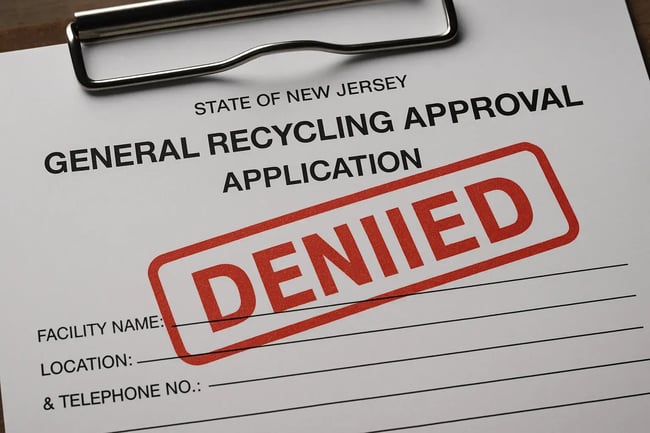
So what actually causes applications to get denied?
Here's what we've seen most often:
- Wrong location. If your site is too close to homes, schools, parks, or isn’t zoned correctly, it’s a non-starter.
- Lack of municipal or county support. If the town or county isn’t on board (even if the DEP would approve you), you’re stuck.
- Weak operations plan. If your plan isn’t realistic, well-written, or tailored to your site, it signals bigger problems.
- Poor site conditions. If the property is a mess or not being maintained, expect it to be flagged.
- Reputation issues. If your business has a history of violations or community complaints, that catches up with you.
Where in the process do most denials happen?
Almost always before it gets to the NJDEP. In most cases, if your application makes it to DEP and checks all the boxes, you’ll be in decent shape.
The real gatekeepers are your town and county. If you don’t get local support, your application won’t even make it to the state. That’s why local strategy matters more than technical paperwork.
But Wait… Isn’t Recycling a Good Thing?
We know what you're thinking... Recycling is good for the environment. Shouldn’t everyone be in favor of it? In theory, yes. But in practice? It’s a little more complicated.
Over the years, we’ve learned that recycling isn’t always seen as a “win-win” by towns and counties. In fact, one of the most surprising things for new applicants is discovering just how much local resistance there can be. And not because anyone is against the idea of recycling itself, but because of what comes with it.
Here’s what we mean:
Traffic and Truck Concerns: Recycling businesses often mean trucks. And for a lot of towns, that’s a red flag. Local officials worry about road wear, noise, safety near residential areas, and complaints from neighbors who don't want "loud, smelly dump trucks" driving past their homes or schools. Even if your trucks are clean and quiet, the perception is often enough to cause hesitation.
Perceived Nuisance or Risk: Some towns lump all recycling operations into the same category along with other heavy industry - imagining dust, odors, litter, or fire hazards, even if your facility will be well-managed and nothing like that. Once a bad impression is formed (whether it's accurate or not), it’s hard to shake.
Political Pressure: No one wants to be the official who “let in” a controversial project. If there’s community pushback, or even just one vocal resident who rallies others, local officials may vote no just to avoid drama. We’ve seen great projects go down this way.
Conflicts of Interest: Here’s one most people don’t expect: the county or municipality may already run its own recycling program. And in some cases, that means they see you - a private recycler - not as a partner, but as competition. We’ve seen situations where approvals were denied not because the project wasn’t good, but because it threatened an existing county-run facility or disrupted a contract they had in place.
The Need Is Already Met: In some towns or counties, the existing recycling infrastructure is already enough to handle the local waste stream. If they feel there’s no unmet need, they may see your project as redundant, or worse, disruptive to the status quo. We've had counties outright tell us, “We just don’t need another one.”
No Suitable Industrial Space Available: Even when a municipality might be open to the idea of a new recycling facility, they may simply not have the right kind of industrial-zoned land available. And rezoning? That’s a long, uphill battle most towns don’t want to take on. If there’s no viable location, it’s a non-starter from the beginning.
They Just Don’t Want It: Sometimes, it’s that simple. A town might feel they’ve already “done their part” with existing recycling centers. Or they may be prioritizing residential growth, tourism, or other commercial development. If more recycling doesn’t fit their long-term vision, they’re not going to be eager to approve new facilities.
So while recycling is a good thing, it’s not always viewed as the right thing for every town or county. That’s why your local strategy matters more than any one piece of paperwork. If we sense early signs of resistance, we’ll help you pivot, adjust, or relocate your efforts to maximize your chances of success.
So how do I improve my odds?
Here’s what we recommend, and what we do for every client who comes to us early enough:
- Build the right team. This isn’t a DIY process. You need people who’ve done this before and know how to navigate the politics and pitfalls.
- Pick your location carefully. Some towns welcome recycling. Others want nothing to do with it. We know which counties and municipalities are "open"... and which ones are not worth the fight.
- Clean up your site (and your record). A clean, well-managed property sends the right message. If you’ve had compliance issues in the past, start addressing them now.
- Write a clear, realistic operations plan. Don’t overpromise. Don’t copy-paste from someone else’s template. Your plan needs to match your site, your operations, and your facility’s layout.
- Start the conversation early. Hire a consultant (like us!). Approach the town. Talk to the county. Get a sense of the temperature before you file anything. If support isn’t there, pivot early.
So... will my recycling approval be approved in New Jersey?
We’ve said it before, and we’ll say it again... there are no guarantees when it comes to recycling approvals in New Jersey. But if there’s one thing we can say with confidence, it’s this:
No consultant has helped more businesses successfully navigate this process in New Jersey than we have. We’ve seen what works. We’ve seen what doesn’t. And we’ve helped dozens of clients turn ideas into real, permitted businesses.
So if you’re serious about starting a recycling facility in New Jersey, don’t roll the dice. Reach out here to get started - let’s build a strategy that gives you the best possible shot, backed by the team that’s been there, seen it all, and knows how to get it done.