The Short Version: Tier I SPCC Plans are intended for smaller qualifying facilities with no more than 10,000 gallons of aggregate aboveground oil storage capacity, no individual aboveground oil container larger than 5,000 gallons, and a qualifying oil discharge history.
For many Pennsylvania businesses, Tier I is the simplest SPCC option. These facilities may include smaller manufacturers, repair shops, agricultural operations, maintenance yards, and other businesses that store oil in relatively modest quantities.
Qualifying for Tier I doesn't mean your facility is exempt from SPCC requirements. You still need a facility-specific plan that addresses your oil storage, spill prevention measures, containment, inspections, employee responsibilities, and emergency procedures.
The main difference is that qualifying facilities may use EPA's streamlined Tier I plan template and self-certification provisions, subject to applicable state requirements. That can simplify plan development and eliminate the need for federal PE certification in qualifying circumstances.
RMA helps Pennsylvania facilities confirm Tier I eligibility, document their oil storage, evaluate spill risks, prepare usable SPCC Plans, and establish the inspection and training procedures needed to keep the plan working.
Even when you're allowed to prepare a plan yourself, you can still hire us to handle the technical work.
The Short Version: Tier II SPCC Plans are for qualifying facilities with no more than 10,000 gallons of aggregate aboveground oil storage capacity that meet the applicable spill history criteria but have at least one individual aboveground oil container larger than 5,000 gallons.
Tier II facilities qualify for the federal self-certification option but cannot use the simplified Tier I template. Their plans generally require more detailed facility-specific documentation.
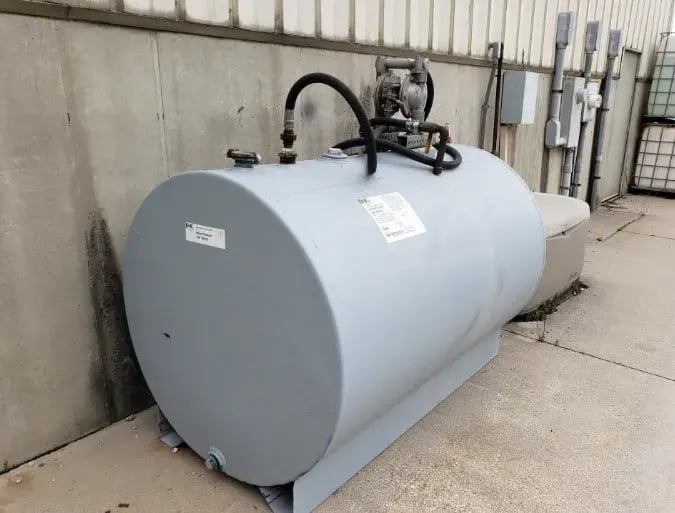
A Pennsylvania facility with a 6,000-gallon diesel tank, for example, might qualify for Tier II if its total aboveground oil storage capacity is no more than 10,000 gallons and it meets the other requirements.
The SPCC Plan must address the facility's actual oil storage and handling operations, potential discharge pathways, secondary containment, inspections, testing, training, and spill response procedures.
While a qualifying facility's owner or operator may self-certify under federal SPCC provisions, preparing a complete and technically sound Tier II Plan still takes a careful understanding of the regulations and the facility itself.
RMA can handle the evaluation, containment review, site documentation, plan development, and implementation guidance. We can also help determine whether Professional Engineer involvement is appropriate or necessary based on the facility's circumstances.
The Short Version: Facilities that don't meet EPA's Tier I or Tier II qualified facility criteria generally need an SPCC Plan certified by a licensed Professional Engineer.
This often applies to Pennsylvania facilities with more than 10,000 gallons of aggregate aboveground oil storage capacity. Certain facilities with a history of significant qualifying oil discharges may also be ineligible for self-certification, even when their storage capacity is below that level.
PE-certified SPCC Plans are commonly needed at larger manufacturing facilities, industrial plants, bulk storage operations, distribution sites, and businesses with more extensive oil storage and transfer systems.
These projects can involve more detailed evaluations of tanks, piping, containment, potential spill pathways, transfer procedures, and site-specific engineering considerations.
RMA manages the development of these plans, including coordinating the required engineering review and certification with an appropriately licensed Professional Engineer.
We don't simply attach an engineer's stamp to an incomplete or unverified document. The plan needs to accurately represent the facility and meet the applicable technical requirements.
Our goal is to deliver a complete SPCC Plan that your team can actually understand, implement, and maintain.
One important distinction for New Jersey businesses is that a federal SPCC Plan isn't the same thing as a New Jersey Discharge Prevention, Containment, and Countermeasure (DPCC) Plan.
Federal SPCC regulations are administered by EPA under 40 CFR Part 112. New Jersey also has separate discharge prevention and response planning requirements under N.J.A.C. 7:1E, administered by the New Jersey Department of Environmental Protection (NJDEP).
These state requirements generally affect certain larger facilities, including those with 20,000 gallons or more of regulated non-petroleum hazardous substances or 200,000 gallons or more of regulated hazardous substances when petroleum products are included, subject to the regulatory definitions and exemptions.
Facilities subject to New Jersey's program may need DPCC and Discharge Cleanup and Removal (DCR) Plans, along with other state-specific requirements.
Most smaller businesses that need federal SPCC Plans won't automatically need a state DPCC Plan. However, larger facilities should evaluate both programs.
Having one plan doesn't automatically satisfy the requirements of the other. In some cases, documents can be coordinated to address overlapping requirements, but the applicable federal and state obligations still need to be met.
RMA can help identify which requirements may apply to your operation and determine whether additional state-level planning needs to be addressed.