Breaking Down 40 CFR Part 110, the National Response Center, and What Actually Triggers a Reportable Oil Discharge
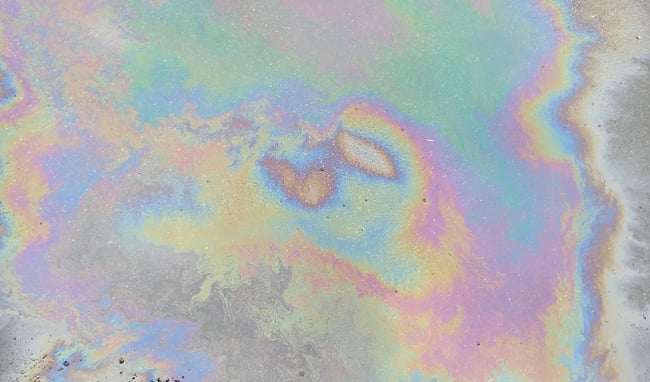
If you've ever walked past a drainage ditch, a retention pond, or a stretch of river and noticed a rainbow-colored film on the surface, you've probably asked yourself the same question a lot of facility managers ask: is that oil, and if it is, do I have to report it? The answer lives in a federal regulation known informally as the Sheen Rule, and it's a lot stricter (and a lot less forgiving) than most people expect.
In this article, we'll walk through what the Sheen Rule actually says, how regulators decide whether a discharge is reportable, what to do the moment you spot a sheen, and why state and local rules can turn what feels like one incident into two separate reporting obligations. If you want help figuring out how spill reporting, SPCC compliance, or stormwater permitting applies to your specific facility, reach out to RMA and we'll walk through it with you.
Table of Contents
TL;DR
The Sheen Rule (40 CFR Part 110) says any oil discharge that creates a visible sheen, film, discoloration, sludge, or emulsion on water is reportable to the National Response Center at 1-800-424-8802, no matter how small it is. There's no minimum gallon threshold. You have to report as soon as you discover the sheen, not once you know the cause or the volume. States often layer on their own reporting rules for spills that never even reach water, so one incident can mean two separate calls to two separate agencies. Reporting on its own usually doesn't automatically get you in trouble. Failing to report, and later getting tied to a discharge that should've been called in, almost always does.
What to Do If You're Looking at an Oil Sheen Right Now
Before we get into the regulatory details, if you're reading this because there's an active spill or you're standing next to a sheen on the water right now, here's what matters immediately. If there's a fire, an injury, or any other immediate safety threat, call 911 first. Once that's handled, or if it's just the spill itself, call the National Response Center at 1-800-424-8802. That's the federal hotline for oil and hazardous substance spills, and it's staffed 24 hours a day, seven days a week. After that, find your state environmental agency's spill reporting hotline, and call that next.
If your facility has an SPCC Plan, this is precisely the scenario it was written for, so follow it!
What Is the Sheen Rule Under 40 CFR Part 110?
The Sheen Rule is a federal standard under the Clean Water Act, codified at 40 CFR Part 110. It defines when a discharge of oil into navigable waters (or onto an adjoining shoreline) is considered harmful to public health or welfare, which is the trigger that makes it reportable. The rule says a discharge is harmful if it does any of the following on the surface of the water: creates a visible sheen or film, causes discoloration, produces a sludge or emulsion, or results in a deposit of oil beneath the surface or on adjoining shorelines.
Notice what's missing from that list. There's no gallon threshold. There's no percentage concentration. There's no "if it's under X amount, you're fine" exemption written into the regulation. If oil reaches water and it's visible in one of those ways, the person in charge of the facility or vessel is required to notify the National Response Center as soon as they become aware of it.
How the Sheen Rule Actually Determines a Reportable Discharge
It helps to think of the Sheen Rule less like a measuring stick and more like a smoke alarm. A smoke alarm doesn't tell you how big a fire is, only that something is burning somewhere and needs to be found. A sheen works the same way. It tells regulators that oil reached the water. It doesn't tell them where it came from, how much is involved, or whether it's still ongoing.
That sheen could be a few drops from a leaky fitting on equipment near a drainage swale. It could also be the first visible sign of a much larger release happening upstream, off site, or somewhere you haven't found yet. Reporting is what gets someone qualified out there to confirm which one it is. That's the entire logic behind why the rule doesn't build in a size exemption. Regulators would rather have people report small sheens that turn out to be nothing than have people quietly assume a sheen is minor and skip the call on something that isn't.
Telling an Oil Sheen Apart From Pollen, Bacteria, and Other Natural Films
Not every film on the surface of a pond or drainage channel is oil. Pollen, decaying vegetation, and certain naturally occurring bacteria can all create surface films that look a lot like an oil sheen from a distance, especially in warmer months near retention ponds and slow-moving water.
There's a simple test you can use to get a quick read on if a sheen is oil or not before you decide how to proceed. Take a stick or similar object and disturb the surface of the water where the film is. A natural film, from pollen or organic material, will typically break apart into separate pieces and won't reform into a continuous sheen. Oil behaves differently. It tends to swirl together and produce that rainbow-colored sheen almost immediately.
If you disturb it and you're still not sure, the safest approach is to treat it as oil and report it!
Do You Have to Report Every Sheen You See?
Yes. Reporting is required as soon as the discharge is discovered.
You don't need to know the exact cause, source, or volume before you make that call. The NRC's job is partly to gather that information, not to have it handed to them fully resolved when you call them up.
Here's where things can genuinely turn gray, and it's worth being honest about this instead of pretending the sheen rule is perfectly clean in practice.
Technically, a single drop of oil can spread across the surface of water and create a tiny, temporary sheen. Does the EPA realistically expect a facility to report a microscopic drop that shows up and disappears in seconds? Well yeah, they do. The rule is, is there a sheen? Remember, the regulation also doesn't hand you a written exemption that says minor or trace sheens don't count. There's no bright line in the rule itself that tells you exactly where "reportable" starts.
That's not a determination you want to be making for the first time in the middle of an actual incident, with a supervisor asking you what to do and a clock already running. This is exactly the kind of judgment call where having someone who deals with these regulations regularly, ahead of time, makes a real difference. Facilities that have already thought through their spill response procedures and reporting thresholds handle these moments far more smoothly than facilities working it out on the fly.
How State and Local Rules Add a Second Layer to Sheen Rule Reporting
The Sheen Rule itself is federal, and it's specifically about oil reaching water. But most states layer their own reporting requirements on top of it, and some state rules apply to spills that never reach water at all! A release contained entirely on soil, with no sheen and no connection to a waterway, might still trigger a state reporting obligation depending on the volume, the material, and where you're located.
This creates a situation a lot of facility (or regional) managers don't expect. Reporting to your state environmental agency does not satisfy the federal Sheen Rule requirement, or vice versa. They're two different triggers, tied to two different agencies, and one physical spill can genuinely require two separate phone calls. If your facility operates in New Jersey or another state with its own discharge reporting rules, it's worth knowing both thresholds well before you ever need them.
What Happens If You Don't Report a Reportable Discharge
Reporting a spill doesn't automatically mean your facility is in trouble. What happens next depends on a long list of variables: who caused the discharge, whether it was intentional or negligent, how much was released, and how quickly it was addressed, what's your compliance level like, how helpful are you working with government regulators, etc. Plenty of reported spills result in nothing more than a follow-up conversation and a confirmation that the situation was handled correctly.
The path that tends to go badly is the other one. Not reporting, and later being identified as responsible for a discharge that should have been called in, is where facilities run into real trouble. At that point, regulators aren't just looking at the spill itself, they're looking at the fact that it wasn't reported, and enforcement in those cases tends to be a lot less forgiving.
The Sheen Rule rarely exists in isolation. It ties in closely with a handful of other environmental programs your facility may already be subject to, and the two biggest are your SPCC Plan and your NPDES stormwater permit.
Your SPCC Plan is what governs how oil is stored, contained, and managed on site, and it's supposed to include the specific notification procedures your facility follows the moment a discharge occurs, including who calls whom and in what order. If you're unclear on how your SPCC Plan and your stormwater program fit together, our article on whether SWPPP and SPCC plans belong in one book is a good place to start. Your NPDES permit, meanwhile, governs what can legally leave your site through stormwater discharge points, and an oil sheen showing up in that discharge can raise separate compliance questions under that permit as well.
How RMA Helps With Spill Reporting, SPCC, and Stormwater Compliance
We develop SPCC Plans, handle industrial NPDES permitting, map facility drainage, evaluate spill scenarios, and build practical response and notification procedures around the federal, state, and local rules that actually apply to your facility. A lot of our work is helping people navigate the gray areas, like the ones we talked about above, where the regulations don't give you a clean yes-or-no answer and you need someone who's dealt with the question before.
If you want to dig deeper on your own first, our SPCC Learning Center and our NPDES Learning Center cover a huge range of related questions, and there's a good chance whatever comes up next for your facility is already answered there.
If you've got questions about the Sheen Rule, spill reporting, SPCC compliance, or stormwater permitting, there's no pressure and no obligation. Reach out to RMA and we'll help you figure out where you stand.