How to Find Out If Your Facility Qualifies, What Separates Tier I From Tier II, and When a Professional Engineer Has to Get Involved
If your facility stores oil, you've probably heard two things about the paperwork. One is that you can write and sign your own SPCC plan, short for Spill Prevention, Control, and Countermeasure plan, the written oil spill plan the federal rule requires once a facility can store more than 1,320 gallons of oil above ground (counting containers of 55 gallons or larger). The other is that an engineer has to certify it. Both are true, and which one applies to you depends on how much oil you can store and whether you've had a spill that reached water. Under EPA's rules, a facility with 10,000 gallons or less of aboveground oil storage and a clean spill record over the past three years can self-certify, as far as the federal rule goes. Everyone else needs a licensed professional engineer.
This article covers EPA's qualified facility criteria, how spill history can take away your eligibility, the difference between Tier I and Tier II plans, and every situation that brings in a professional engineer. We also cover what Pennsylvania adds to the federal rule, why an engineer almost never agrees to simply certify a plan your facility wrote itself, and what each route costs. If you'd rather talk through your own facility, you can reach out to RMA and we'll tell you where you land, including when you don't need us.
Table of Contents
TL;DR
Yes, in many cases. A facility with 10,000 gallons or less of aboveground oil storage and no large spill to water in the past three years can sign its own plan. A container over 5,000 gallons moves you from Tier I to Tier II, which is still self-certified but takes more work, and going over 10,000 gallons, having a qualifying spill, or departing from the rules brings in a professional engineer. The federal test is the same in Pennsylvania, but state engineering boards can restrict self-certification, and an engineer will almost never stamp a plan your facility wrote on its own.
What Are the EPA Qualified Facility Criteria for SPCC Self-Certification?
The federal SPCC rule, 40 CFR Part 112, says a licensed professional engineer must review and certify an SPCC plan for it to count. The exception is the qualified facility: a smaller facility with a clean spill record, whose owner or operator may prepare and self-certify the plan instead. Self-certification is optional, and a qualified facility can still hire an engineer. EPA lays out the criteria on its qualified facility page.
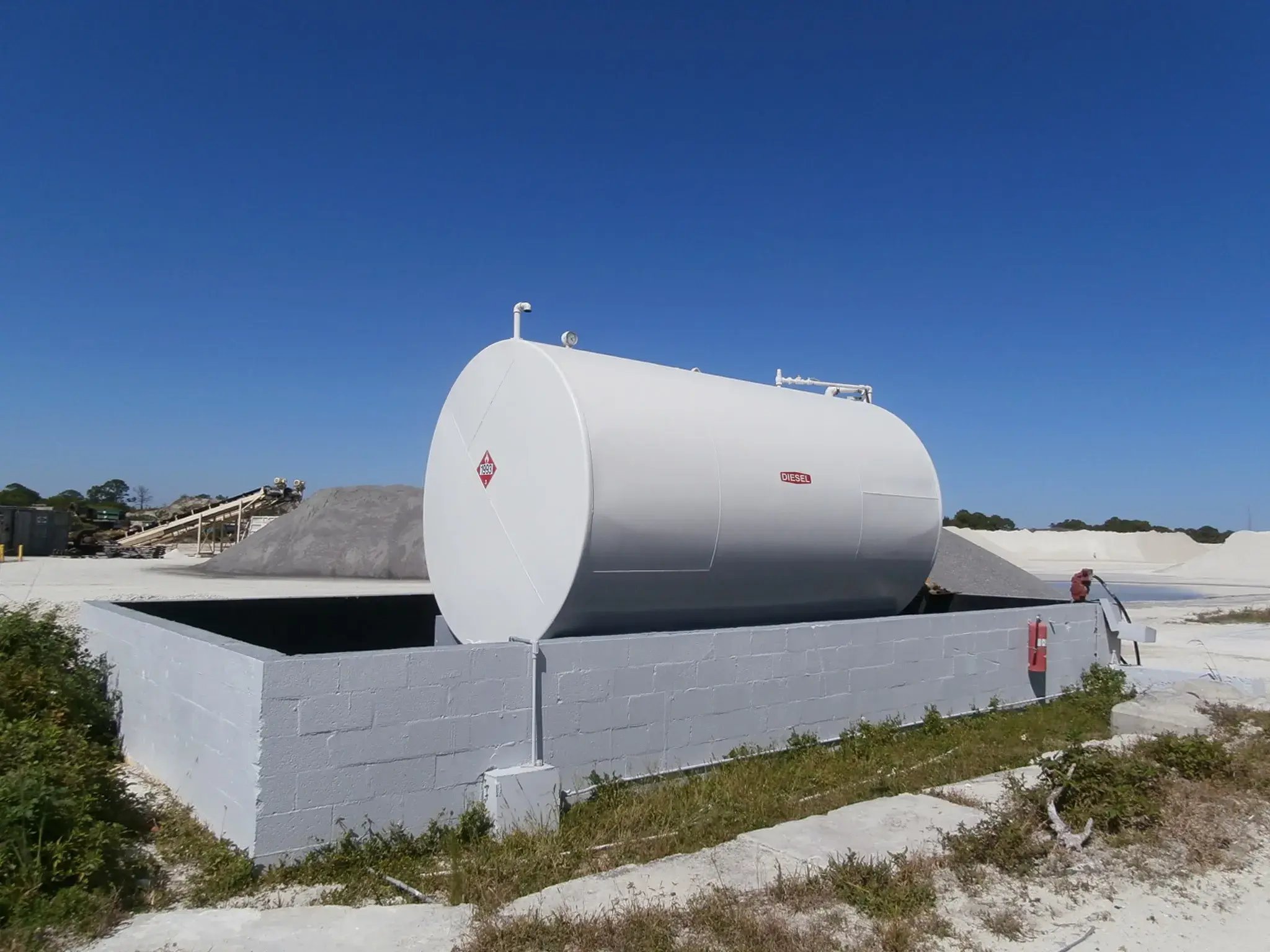
Qualifying comes down to two tests. The first is size: the combined capacity of your aboveground oil containers has to be 10,000 gallons or less. Capacity is what the containers can hold, not what's in them, so an empty 5,000-gallon tank counts in full. Only containers of 55 gallons or more count, oil-filled equipment like transformers is included, and permanently closed containers are left out. Fuel tanks on vehicles and equipment (motive power containers) are exempt, but a fuel trailer or skid tank isn't. The second test is spill history, covered next.
| Test |
Tier I Qualified Facility |
Tier II Qualified Facility |
| Total aboveground oil storage capacity |
10,000 gallons or less |
10,000 gallons or less |
| Largest single aboveground container |
No container over 5,000 gallons |
At least one container over 5,000 gallons |
| Spill history in the three years before you certify |
No single discharge over 1,000 gallons and no two over 42 gallons each within any 12 months |
Same |
Signing isn't a formality. A self-certifier states, among other things, that they visited and examined the facility, prepared the plan following sound industry practice, put inspection and testing procedures in place, and have management's approval and the resources to carry the plan out. Those statements are yours if you sign. Carrying the plan out includes monthly inspections and training for the people who handle oil, and our online training library covers the training side.
How Does Spill History Affect SPCC Self-Certification?
A facility loses its qualified status if, in the three years before the date it certifies the plan, it had either a single discharge of more than 1,000 gallons or two discharges of more than 42 gallons each within any 12-month period. If the facility has been operating for less than three years, the lookback runs from the date it became subject to the rule. Discharges caused by natural disasters, acts of war, or terrorism don't count.
The word that trips people up is discharge. EPA says the 1,000 and 42 gallon figures refer to oil that reaches navigable waters or adjoining shorelines, not the total amount spilled. A release that stays inside a dike or containment pit generally isn't counted. Navigable waters can include streams, wetlands, and connected ditches.
| Example Scenario |
Counts Against Self-Certification? |
| A 400-gallon diesel overfill that stays inside the dike |
Generally no, it never reached water |
| A 1,200-gallon release that reaches a creek |
Yes, a single discharge over 1,000 gallons |
| A 50-gallon leak reaches a creek in March, and a 60-gallon leak in November |
Yes, two over 42 gallons within 12 months |
| A flood damages a tank and oil reaches a river |
No, natural disasters are excluded |
Because the lookback runs from the date you certify, a facility can regain eligibility once a discharge ages out of the three-year window. Reporting is a separate question. A release to water can trigger federal and state reporting duties whatever it does to your eligibility, and our sheen rule article covers when a report is due. If a release to water has already happened and enforcement is possible, an environmental attorney may be worth calling alongside the technical work.
What's the Difference Between Tier I and Tier II SPCC Plans?
Both tiers can self-certify. The difference is flexibility and workload. A Tier I facility, with no container over 5,000 gallons, can complete EPA's free Appendix G template and sign it, and the completed template is the plan. In exchange, it has to follow the template as written, with no alternative measures. A Tier II facility, with at least one container over 5,000 gallons, can't use the template. It writes a full plan that meets the rule's general requirements, much like a PE-certified plan, but it can still sign the plan itself. Our articles on Tier I self-certified plans and Tier II self-certified plans go deeper on each.
| Feature |
Tier I |
Tier II |
| Plan format |
EPA Appendix G template, completed and signed |
Full plan meeting the rule's general requirements, no template |
| Secondary containment |
Sized for the largest container plus rain, no exceptions |
Same, unless an engineer certifies it's impracticable |
| Alternative measures to the rule |
Not allowed |
Only with written engineer certification |
| Hybrid plan (self-certified, with engineer-certified portions) |
Not allowed |
Allowed |
A Tier I facility isn't locked in. It can choose a Tier II plan or a full PE-certified plan instead, which makes sense when the site has something the template can't handle. If a change pushes a container over 5,000 gallons, you have six months after preparing the amendment to move to a Tier II plan, or to a PE-certified plan if you've also gone over 10,000 gallons in total.
When Does an SPCC Plan Need a Professional Engineer?
A professional engineer comes in whenever you can't, or choose not to, self-certify. These are the situations.
| Situation |
What the Rule Requires |
| Aboveground capacity over 10,000 gallons |
Full plan certified by a licensed engineer |
| A discharge over 1,000 gallons, or two over 42 gallons within 12 months, in the past three years |
Not a qualified facility, so an engineer-certified plan until the lookback clears |
| Alternative measures in place of a rule requirement |
Written engineer certification of each (not available to Tier I) |
| Secondary containment determined impracticable |
Written engineer certification of the determination and substitute measures (not available to Tier I) |
| Changes that push a container over 5,000 gallons or the total over 10,000 gallons |
Six months to move to Tier II or, past 10,000 gallons, an engineer-certified plan |
| Technical amendments to an engineer-certified plan |
The engineer certifies the amendments, not the owner |
| State engineering rules |
Some states don't allow self-certification |
| Your own preference |
Always allowed, even when you qualify |
A technical amendment is a change to design, construction, operation, or maintenance that affects the potential for a discharge, such as adding, moving, or replacing containers or rebuilding piping. The rule gives you six months to amend the plan.
The engineer's certification under 40 CFR 112.3(d) explains why these triggers exist. The engineer attests to familiarity with the rule, that the engineer or an agent visited and examined the facility, that the plan follows good engineering practice, that inspection and testing procedures are established, and that the plan is adequate for the facility. Our articles on professional engineers and SPCC plans and PE-certified plans cover more.
Does Pennsylvania Allow SPCC Plan Self-Certification?
SPCC is a federal program, and in Pennsylvania it's enforced by EPA Region 3. The qualified facility test applies the same way here as anywhere else. See who enforces SPCC plans for how inspections work.
Pennsylvania adds a separate layer that people often mix up with SPCC. DEP's storage tank program runs under the Storage Tank and Spill Prevention Act, passed in 1989 after the 1988 Floreffe tank collapse, and 25 Pa. Code Chapter 245. In general, stationary aboveground tanks holding more than 250 gallons of regulated substances must be registered with DEP, and regulated tank work is done by DEP-certified installers and inspectors. Whether a particular tank is regulated depends on its size, type, and use, so check yours against DEP's program. Aboveground tank facilities with more than 21,000 gallons of regulated substances also submit a Spill Prevention Response Plan to DEP, a different document from an SPCC plan. A facility can self-certify an SPCC plan at 8,000 gallons and still have tanks that need DEP registration, so treat them as two checklists.
The part to check is who's allowed to sign. EPA says some states don't allow self-certification and points facilities to the state's engineering licensing board, which can take a stricter view than EPA. EPA keeps a list of board contacts for this question. We can't tell you what Pennsylvania's board will say, so get the answer for your facility and keep a record. If an engineer has to certify, the lowest-risk move is a plan built with an engineer involved, even though the federal rule wouldn't force it.
Will a Professional Engineer Certify an SPCC Plan Your Facility Wrote?
This comes up all the time. A facility manager drafts a plan, or has an AI tool generate one, and assumes an engineer can review it and add a stamp. In practice, a professional engineer is almost never going to certify a plan the facility built itself.
The reason is in what the certification says. The engineer attests that the plan is adequate for the facility, that it follows good engineering practice, and that the engineer or an agent visited and examined the site. That's a personal professional statement with a license behind it, and it can't be made by skimming a draft. To stand behind the plan, the engineer or the engineer's agent has to walk the site, verify container capacities, check the containment calculations, and look at overfill prevention, piping, loading areas, and the inspection program. Licensing rules generally expect an engineer to seal only work he or she prepared or directly supervised, and a finished draft from the facility fits neither. The stamp also doesn't move responsibility off you, since the rule says certification doesn't relieve the owner of the duty to prepare and fully implement the plan.
So what happens when you hand an engineer a plan you wrote? Most decline. Those who don't usually treat your draft as notes and build the plan from scratch after their own site visit, charging for the whole job, so you pay twice. A plan generated by AI hits the same wall, with the added problem that nobody who has seen your facility wrote it. Our article on whether ChatGPT can write an SPCC plan covers the AI side.
The routes that work are simple. If your facility qualifies, write the plan and sign it yourself, which is what self-certification is for. If you need a PE-certified plan, bring in the engineer, or a firm that works with one, before drafting starts, so the site visit, calculations, and review happen once. When a plan needs PE certification, we work with an outside engineer licensed in the plan's state. Our staff handle the site visit and develop the plan, and the engineer reviews, stamps, and seals it, a paid review that adds time.
What Does SPCC Plan Self-Certification Cost Compared to Hiring Help?
Cost is why many facilities try this themselves, so here are real numbers. Price depends on total capacity, the number of containers, whether secondary containment needs evaluating, and whether an engineer is needed.
| Route |
What It Costs |
What Moves the Price |
| Your staff completing EPA's free Tier I template |
No fee for the template, but staff time plus any containment calculations and inspections |
Number of containers, areas needing containment sized, your team's familiarity with the rule |
| Any SPCC plan from RMA |
About $1,500 to $15,000 |
Plan type, facility size, complexity |
| An engineer-certified plan |
Higher than a self-certified plan, since the engineer's review is a separate fee and adds time |
The engineer's review fee, which varies by engineer and facility |
If you're a straightforward Tier I facility, the free template is a legitimate route, and we'd tell you that. The risk is in calculations like sizing secondary containment, where a wrong answer means the plan doesn't comply even though you signed it, and our article on how big SPCC containment needs to be shows how they work. Our article on SPCC plan costs breaks pricing down further, and the calculator below shows what it would cost for us to help with your facility.
How Can RMA Help You Certify Your SPCC Plan?
We help facilities work out where they land: Tier I or Tier II, whether a past spill changes the answer, and whether an engineer is needed. If you qualify and want to handle it yourself, we'll say so. If you want the plan built for you, we do the site visit, develop the plan, and bring in an outside engineer when it calls for one.
If you're building or expanding a facility, construction-phase permits and tank installation are work we don't handle, and your engineer or contractor will lead that piece. Once the facility is running, the plan, DEP tank registration questions, inspections, and training are where we help.
There's no obligation. You can call or email us, or fill out the form on our website, and a member of our team will get back to you. If you're not sure which tier you fall in, or whether your state allows self-certification, contact RMA and we'll work through it with you.