How the SPCC Wastewater Treatment Exemption Works, Why It Doesn't Cover Your Generator Fuel, and Where Drinking Water Plants Stand
If you run a water or wastewater plant in New Jersey, you probably think of your facility as being about water, not oil. But treatment plants run on generators, pumps, blowers, and heated buildings, and that often means a lot of stored fuel and oil-filled equipment sitting on site. The federal oil spill prevention rule, known as SPCC (Spill Prevention, Control, and Countermeasure), can reach those plants, and whether it does depends on what kind of plant you have and what's stored on your property.
Wastewater plants get a specific exemption for the treatment system itself, but not for the generator fuel, heating oil, and other oil storage around it. Drinking water plants don't get that exemption at all. We'll walk through how each one works, what New Jersey adds on top of the federal rule, and how to figure out where your plant lands. If you'd rather talk it through with someone, you can reach out to RMA at any point.
Table of Contents
TL;DR
Maybe, and it comes down to how much oil you store. Wastewater treatment equipment like oil/water separators and clarifiers is exempt from SPCC, but the generator fuel tank, heating oil, hydraulic equipment, and other oil around the plant still counts. Drinking water plants have no exemption, so the normal rule applies: more than 1,320 gallons of aboveground oil in containers of 55 gallons or more, with a reasonable chance of reaching water, means you need a plan. New Jersey adds its own spill reporting and discharge prevention rules on top.
What Triggers an SPCC Oil Spill Plan at a Treatment Plant?
SPCC is EPA's rule requiring a written oil spill plan for facilities that store enough oil and could reasonably be expected to release it into navigable waters or onto adjoining shorelines. The storage trigger is more than 1,320 gallons of oil aboveground in total, counting only containers of 55 gallons or more. A facility can also be covered by more than 42,000 gallons of completely buried oil storage that isn't already regulated under the underground tank rules. In New Jersey, SPCC enforcement comes from EPA Region 2.
Two details trip people up. First, the count is based on the capacity of the container, not how full it is, so a 2,000 gallon generator tank that's half full counts as 2,000 gallons. Second, "oil" is broader than diesel. It includes fuel oil, lubricating oil, hydraulic oil, transformer oil, and the oil inside equipment, and vegetable oils count too. If you want the basics in plain terms before going further, our overview of what an SPCC plan is covers it.
The second test is the reasonable expectation of a discharge to water. Treatment plants are usually built next to rivers, streams, tidal marsh, or the outfalls they discharge to, and even a plant that's a few hundred feet away may have storm drains or ditches leading there. That call can't rely on man-made features like curbs, berms, or storm sewers to say oil would never get there. For most New Jersey plants, the realistic question is the storage count, not whether water is nearby.
What Does the SPCC Wastewater Treatment Exemption Cover?
The federal rule exempts any facility, or any part of a facility, that's used exclusively for wastewater treatment and isn't used to meet any requirement of the SPCC rule. The words "or any part of" matter, because EPA's inspector guidance treats the treatment process itself as exempt, including oil/water separators, clarifiers, and grease traps that intercept oil and grease from the wastewater stream. The capacity of those units doesn't count toward your 1,320 gallon total, and they don't need secondary containment or the rest of the plan requirements.
The exemption doesn't turn the whole plant into an exempt facility, though. EPA's guidance is direct that a plant with an exempt separator still has to count and manage its other oil. That includes bulk storage containers, hydraulic equipment tied to the treatment process, the tank feeding an emergency generator, and any slop tank or container holding oil that results from treatment. A separate container holding oil you've skimmed out of an exempt separator is treated as a bulk storage container, and it's subject to SPCC like any other. And if a separator is used to satisfy an SPCC requirement, such as part of a secondary containment system, it's not exempt, although it still doesn't count toward your storage capacity.
| Item at a wastewater plant |
Exempt under the wastewater exemption? |
Counts toward the 1,320 gallons? |
| Oil/water separator or clarifier used only to treat wastewater |
Yes |
No |
| Grease trap used only for wastewater pretreatment |
Yes |
No |
| Separator used as part of a secondary containment system |
No |
No |
| Emergency generator fuel tank |
No |
Yes |
| Hydraulic equipment tied to the treatment process |
No |
Yes |
| Container holding oil skimmed from a separator, or a slop tank |
No |
Yes |
| Heating oil tank, lube oil totes, and 55 gallon drums |
No |
Yes |
| Oil-filled transformers and other electrical equipment |
No |
Yes |
One more limit: the production, recovery, or recycling of oil isn't wastewater treatment under the rule, so a plant that also processes oil can't rely on the exemption for that activity. For a typical municipal or industrial wastewater plant, the practical takeaway is that the exemption protects the treatment train, and your oil inventory is what decides whether you need a plan. Our guide on whether 55 gallon drums count toward SPCC helps with the smaller containers that add up quickly.
Why Don't Drinking Water Treatment Plants Get the SPCC Exemption?
The exemption is written for wastewater treatment, and nothing in the rule gives drinking water treatment the same treatment. A potable water plant that stores oil gets evaluated the same way as any other industrial or commercial facility. You add up your aboveground containers of 55 gallons or more, you check the total against 1,320 gallons, and you ask whether a spill could reasonably reach water. There isn't a "treatment equipment is exempt" shortcut to lean on.
The oil at a drinking water plant tends to be less about the treatment process and more about keeping the plant running. Backup generators for pump stations and filtration buildings are the biggest items, followed by diesel-driven booster pumps, heating oil for the plant buildings, hydraulic power units, lubricating oil for large motors and compressors, and oil-filled transformers. Raw water intakes, reservoirs, and finished-water storage often sit right next to a stream or lake, which makes the reasonable-expectation question a short one.
The largest sites have one more layer to check. EPA's Facility Response Plan requirements can apply to facilities with total oil storage of one million gallons or more, if a spill could shut down a public drinking water intake or the facility has had a large reportable discharge in the past five years. Most water plants are nowhere near that storage level, so an SPCC plan is the realistic question, but a large water authority with multiple tank farms should check the FRP criteria against its inventory.
What Do New Jersey's Spill Act and Discharge Prevention Rules Add?
New Jersey's layer is broader than the federal one because it isn't limited to oil that reaches navigable water. The Spill Compensation and Control Act, usually called the Spill Act, makes it unlawful to discharge petroleum or other hazardous substances, and it covers treatment chemicals as well as fuel. NJDEP's rules under N.J.A.C. 7:1E add a planning requirement for "major facilities," which are facilities with a combined storage capacity of at least 20,000 gallons of non-petroleum hazardous substances, or at least 200,000 gallons of all hazardous substances including petroleum. A major facility prepares a Discharge Prevention, Containment and Countermeasure (DPCC) plan and a Discharge Cleanup and Removal (DCR) plan, which NJDEP reviews and approves. If you want to see how the state and federal pieces fit together, our article on SPCC plans in New Jersey lays out the basics.
Whether a particular water or wastewater plant counts as a major facility depends on its total storage capacity and what it stores, so check N.J.A.C. 7:1E against your own inventory rather than assuming either way. A few details in NJDEP's storage guidance matter here. Domestic sewage isn't treated as a hazardous substance under the Spill Act, but industrial wastewater can be if it contains one, and containers of five gallons or less and out-of-service tanks aren't counted toward capacity. Plants that store large volumes of treatment chemicals alongside fuel should run the numbers on both.
How Does Spill Reporting Work for Water and Wastewater Plants in New Jersey?
If a spill is an emergency, call 911 first, then NJDEP's hotline at 1-877-WARNDEP (1-877-927-6337). NJDEP's enforcement advisory on notification explains that most facilities call the hotline within 15 minutes of a discharge under the Spill Act, but drinking water and wastewater facilities have their own deadlines and triggers. For drinking water, the advisory points to 6 hours for an emergency affecting water quality or pressure. For wastewater, it points to 2 hours for effluent limit exceedances, unpermitted toxic or hazardous discharges, and upsets or bypasses. The advisory is clear that its table isn't a complete list, so your NJPDES permit conditions and the current rules decide what applies to you, and an oil release may also trigger federal reporting if a sheen reaches water. We cover that in our explainer on when you have to report an oil spill. For anything involving liability or enforcement exposure, an environmental attorney can give you legal advice we can't.
How Do Generator Fuel, Heating Oil, and Underground Tanks Count?
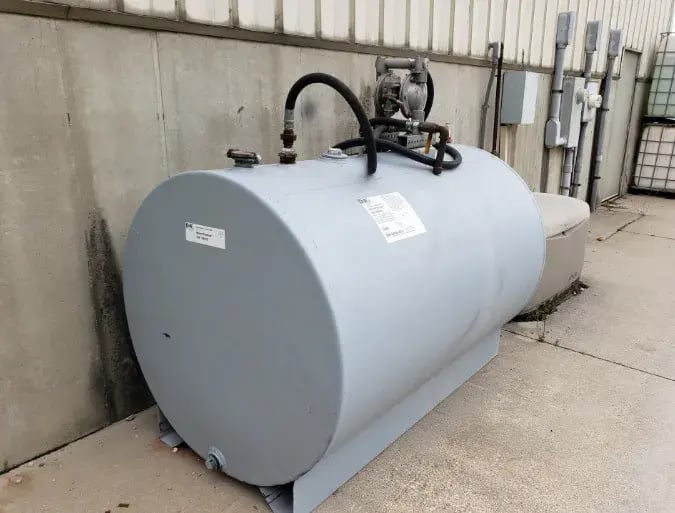
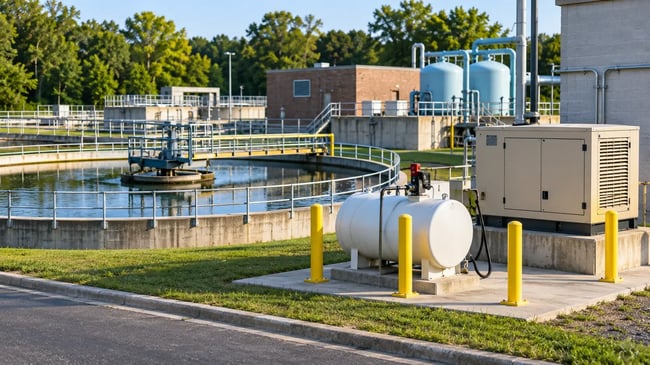
Generator fuel is where most treatment plants cross the threshold. A single 1,500 gallon sub-base tank under a standby generator already puts a plant over 1,320 gallons on its own, and plants with several generators or a day tank plus a main tank pile up capacity quickly. Aboveground generator tanks count in full, whether they serve a wastewater plant or a drinking water plant. Our post on emergency backup generators and environmental permits goes deeper on the generator side.
Underground tanks follow different rules. Completely buried tanks that meet the technical requirements of EPA's underground tank rules or an approved state program are exempt from SPCC, and New Jersey regulates underground tanks under N.J.A.C. 7:14B. That state program covers tanks storing motor fuel, waste oil, and other regulated substances, and it also regulates heating oil tanks above 2,000 gallons at non-residential sites. NJDEP's 2018 advisory added release detection requirements for existing emergency generator underground tanks that had previously been exempt. Buried tanks that sit outside those programs, like a small commercial heating oil tank, may still count toward SPCC capacity, so don't assume a buried tank is automatically out of the picture.
If you're adding a generator, a fuel tank, or a new underground system, the construction side has its own approvals. That includes construction permits, fire code review, and for underground tanks, NJDEP-certified installers. RMA doesn't prepare construction-phase permits and approvals, and your engineer or contractor handles that piece. Once the equipment is running, though, you'll likely need an SPCC plan or an amendment to your existing plan, spill reporting procedures, inspections, and training, and we can help with all of that.
What Does an SPCC Plan Cost for a Water or Wastewater Plant?
SPCC plans from RMA generally run from $2,500 to $15,000, and where a plant lands in that range depends on a handful of things. The big ones are total oil storage capacity, the number and type of containers, how many separate areas of the site need to be evaluated, whether secondary containment needs a closer look, and whether the plan needs a Professional Engineer's certification. Treatment plants with several generator tanks, hydraulic units, and transformers spread across a large site take more time than a single-building facility, which is why the spread is wide. We cover the cost factors in more detail in our breakdown of SPCC plan costs.
Plans that need certification should be reviewed and approved by a Professional Engineer, so the engineer's involvement matters as much as who writes the document. Some consulting firms keep engineers on staff and others work with a trusted outside engineer, and either way you'll want to know who's signing. Our article on Professional Engineers and SPCC plan requirements explains when it's required. A plan also has to be reviewed every five years, and our guide to SPCC plan five-year reviews covers what that review involves. Secondary containment is usually the cost driver people ask about next, and we cover it in how big your SPCC containment needs to be.
The calculator below gives you a ballpark for RMA's help with your plan. It isn't the cost of the plan itself or of any tank or containment work you may end up doing.
How Does RMA Help Water and Wastewater Plants With SPCC Plans?
We start with a plain question: how much oil do you have, and where is it? For many plants, that inventory is a one-afternoon exercise, and sometimes the answer is that you're under the threshold and don't need a plan. If that's your situation, we'll tell you so. When you are over it, we help you sort out what's exempt treatment equipment and what's counted storage, build the plan, and set up the inspections, training, and spill procedures that go with it. Because we're based in New Jersey, we also help you sort out where the state's rules overlap. Your operators can also take the online training library to cover the training piece.
There's no pressure and no obligation. You can call us, email us, or fill out the form on our website, and we'll give you a straight answer on whether your plant needs an oil spill plan. When you're ready, get in touch with RMA and we'll help you figure out your next step.