How Used Oil Tanks and Drums at New Jersey Shops, Fleets, and Manufacturers Count Toward Federal SPCC Capacity, Containment, and Inspections
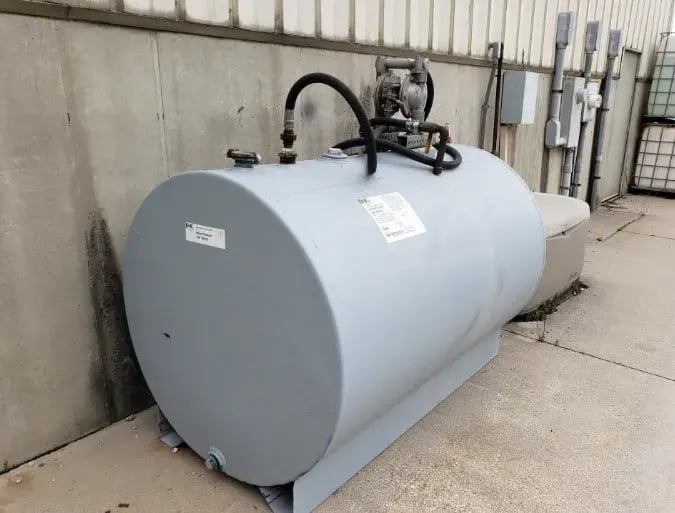
If you run an auto shop, a truck fleet, or a manufacturing plant in New Jersey, you probably have a used oil tank in the corner or a row of drums by the bay door waiting for the hauler. It's easy to assume oil on its way out doesn't count toward anything. It does. Under the federal oil spill prevention rule, known as SPCC (Spill Prevention, Control, and Countermeasure), used oil is oil, and every used oil tank or drum of 55 gallons or more counts toward your facility's storage capacity exactly the way a tank of new motor oil or diesel does. It can be what pushes a shop over the 1,320-gallon line where a written oil spill plan becomes mandatory.
Below we'll cover how used oil storage gets counted, what EPA expects for containment and inspections, how New Jersey's spill reporting rules and separate used oil program fit in, and what it all means for cost. If you'd like a second set of eyes on your own tank and drum inventory, feel free to reach out to RMA and we'll talk it through with you.
Table of Contents
TL;DR
Yes. Used oil counts toward the federal oil spill plan threshold just like new oil, so every aboveground used oil tank or drum of 55 gallons or more is added to your total, even when it's empty. If your total is over 1,320 gallons, those containers need containment, inspections, and a place in your spill plan. New Jersey adds immediate spill reporting to the NJDEP hotline and a separate set of used oil recycling rules covering labeling, container condition, cleanup, and who hauls it away.
Does Used Oil Count Toward SPCC Storage Capacity?
It does. The SPCC rule lives at 40 CFR Part 112, and it defines oil very broadly. The definition covers petroleum, fuel oil, synthetic oils, mineral oils, sludge, oil refuse, and oil mixed with wastes. Used motor oil, spent hydraulic fluid, old gear oil, drained transmission fluid, and spent cutting oils all fit inside it.
The rule applies to facilities that could reasonably be expected to discharge oil into navigable waters or adjoining shorelines and that have more than 1,320 gallons of total aboveground oil storage capacity (or more than 42,000 gallons in completely buried tanks). When you add up that 1,320 gallons, you count every container of 55 gallons or more, and you count its full shell capacity, not how much oil is in it today. So a 500-gallon used oil tank counts as 500 gallons whether it was just emptied by the hauler or it's three inches from the top.
The used oil rules point back the same way. EPA's federal used oil management standards in 40 CFR Part 279 say outright that used oil generators are subject to all applicable SPCC requirements in addition to the used oil rules, and New Jersey's version of those standards says the same thing and adds the state's discharge prevention rules at N.J.A.C. 7:1E. Both programs expect your used oil to show up in your spill plan.
How to Count Used Oil Tanks and Drums Toward the 1,320-Gallon SPCC Threshold
The counting method is simple. You walk the site and list every aboveground container that holds oil or could be used to hold oil and is 55 gallons or larger. That includes tanks, drums, totes, and oil-filled equipment like hydraulic reservoirs and transformers. You write down each one's rated capacity, add them all up, and compare the total to 1,320 gallons. Containers under 55 gallons, like 5-gallon pails and quart bottles, drop out of the count entirely.
The detail that catches used oil generators most often is empty drums. A shop might keep two or three empty 55-gallon drums on hand to swap in when the used oil drum fills up. Because they're there to hold oil, they count. The only way to take a container out of the count is to permanently close it, which has its own requirements under the rule. "We just haven't filled it yet" doesn't qualify.
Here's how that plays out at a typical New Jersey auto repair shop:
| Container |
Capacity |
Counts Toward SPCC? |
| Two bulk new motor oil tanks |
275 gallons each |
Yes, 550 gallons |
| Four drums (gear oil, ATF, hydraulic fluid, used oil) |
55 gallons each |
Yes, 220 gallons |
| Two empty drums staged for used oil |
55 gallons each |
Yes, 110 gallons |
| Ten pails of specialty lubricants |
5 gallons each |
No, under 55 gallons |
| Aboveground used oil tank |
500 gallons |
Yes, 500 gallons |
| Total aboveground capacity |
|
1,380 gallons |
Without the used oil tank, this shop sits at 880 gallons and the SPCC rule doesn't apply. With it, the shop is over the threshold and needs a written plan (assuming a spill could reasonably reach a storm drain, ditch, or waterway, which in most of New Jersey's developed areas it can). We see it often: a business buys a bigger used oil tank so the hauler comes less often, and nobody realizes it changed the facility's regulatory status. For more on how drums get counted, our article on whether 55-gallon drums are included in SPCC plans goes deeper.
Used Oil Storage That Doesn't Count Toward SPCC Capacity
A few kinds of used oil storage stay out of the aboveground count. The first is anything under 55 gallons. Drain pans, small parts washers, and the 5-gallon buckets techs carry to the main drum don't get added in, though the oil eventually lands in something that does.
The second is a completely buried used oil tank that's regulated under the federal underground storage tank rules (40 CFR Part 280) or an approved state program. Older New Jersey service stations and fleet garages often have one. Those tanks fall under the UST program instead, which in New Jersey is administered under N.J.A.C. 7:14B. They don't count toward the 1,320-gallon aboveground number, though you still have to show them on the facility diagram in your SPCC Plan if you need one. And the used oil rules say plainly that used oil in underground tanks is covered by the UST requirements whether or not the oil shows any hazardous waste characteristics.
The third is an oil-water separator used only to treat wastewater. A separator in a wash bay that exists purely to treat water before it's discharged is exempt from SPCC. That changes if the separator is also serving as part of your spill containment, so the details matter. Finally, oil inside the vehicles and equipment you're servicing doesn't count, and neither do fuel tanks on motor vehicles. Once the oil is drained out and put into a tank or drum, though, it's back in the count.
Secondary Containment for Used Oil Tanks and Drums Under SPCC
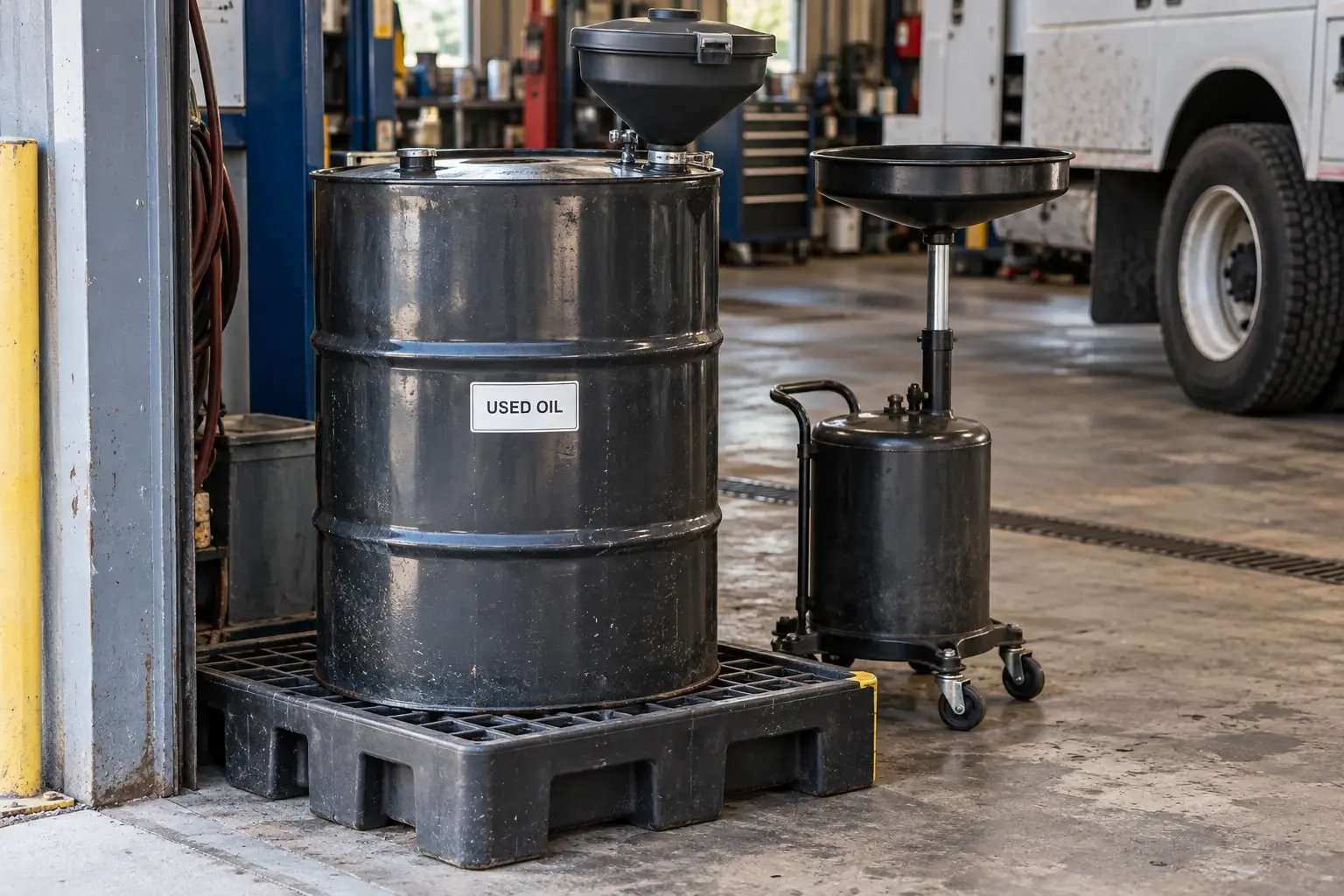
Once a used oil tank or drum is in your SPCC Plan, it needs secondary containment, meaning something that would catch the oil if the container failed. For a bulk storage container like a used oil tank or a 55-gallon drum, the rule calls for containment that holds the entire capacity of the largest single container plus enough freeboard for precipitation if it's outdoors. The containment also has to be impervious enough to hold the oil until you can clean it up. In practice, that usually means a double-walled tank, a concrete dike or curb, or a spill pallet with a sump sized for the largest drum on it.
Drums that move around get addressed under the rule's section on mobile and portable containers. They have to be positioned to prevent a discharge, and they need containment sized for the largest single container. Where we see used oil storage fall short most often is the overflow drum somebody set out "temporarily" when the main tank filled up, sitting on bare asphalt by the dumpster. Our guide on how big your SPCC spill containment needs to be walks through the sizing math.
The Used Oil Pickup Is a Transfer Area Too
When the hauler pumps out your used oil tank, that's an oil transfer, and your plan has to account for it. The general SPCC requirements call for containment or diversionary measures at areas where a discharge could happen, and a hose disconnect in a parking lot is a classic spot. Practical measures include spill kits at the pickup point, drain covers for nearby storm inlets, drip pans under the connection, and a rule that someone from your staff watches every pickup. The hauler's truck has its own rules, but the ground it's parked on is your facility.
SPCC Inspections and Overfill Protection for Used Oil Storage
Used oil tanks and drums get inspected on the same schedule as the rest of your oil storage. The SPCC rule requires you to test or inspect each aboveground container for integrity on a regular schedule set by industry standards, and to frequently inspect the outside of each container for signs of deterioration, leaks, or oil building up inside the containment. Most shop-built tanks and drums at small and mid-size facilities follow the Steel Tank Institute's SP001 standard, which sets monthly and annual visual inspections with checklists you keep on file. Larger or older tanks may also need periodic formal inspections by a certified inspector.
Overfill protection is the piece that trips up used oil tanks more than new oil tanks. A new oil tank gets filled by a delivery driver who's watching a gauge. A used oil tank gets filled a few gallons at a time by whoever drains the last oil change, often through a funnel or a pump from a drain cart, and nobody's watching the level. The rule requires each container installation to have at least one overfill safeguard, such as a high-level alarm, a direct-reading gauge with someone monitoring it, or a similar device, and you have to test those devices regularly. A simple sight gauge or float gauge on the used oil tank, plus a habit of checking it before every pour, goes a long way.
Inspections also catch a used oil problem new oil tanks rarely have: water. Rain getting into an outdoor drum or tank through a loose bung can push the level up faster than anyone expects. Our list of things to do during your SPCC plan monthly inspections is a good starting checklist, and the people pouring used oil every day should be part of your annual SPCC training. Our online environmental training library is one way to cover that.
How New Jersey's Spill Act Applies to Used Oil Spills
EPA enforces the SPCC rule in New Jersey through its Region 2 office, so the plan, containment, and inspection requirements above are federal. New Jersey adds its own layer through the Spill Compensation and Control Act, usually called the Spill Act. It covers discharges of hazardous substances, and in New Jersey that term includes petroleum and petroleum products. A used oil spill is a discharge under state law, not just a housekeeping issue.
The biggest practical difference is reporting. The Spill Act requires discharges to be reported to NJDEP immediately, through the 24-hour hotline at 1-877-WARNDEP (1-877-927-6337). NJDEP's own compliance materials describe "immediately" as within about 15 minutes. The discharge rules at N.J.A.C. 7:1E do carve out a few narrow exceptions, so check the rule against your situation before assuming a small spill doesn't need a call. If the oil reaches a waterway or storm system and could leave a sheen, the federal National Response Center (1-800-424-8802) may need a call too. Our article on when you have to report an oil spill under the sheen rule covers the federal side. If you're dealing with a spill right now, take care of safety first, call 911 if anyone's at risk or there's a fire hazard, and then make your reports.
The Spill Act also makes liability for cleanup strict, joint, and several, which in general terms means responsibility doesn't depend on fault and can reach more than one party. A spill that soaks into soil can turn into a site remediation project overseen by a Licensed Site Remediation Professional (LSRP). If you're facing a significant discharge or an enforcement question, talking to an environmental attorney is a smart move.
New Jersey also has its own spill plan program for "major facilities" under N.J.A.C. 7:1E, which requires Discharge Prevention, Containment and Countermeasure (DPCC) and Discharge Cleanup and Removal (DCR) plans. The threshold is high: 200,000 gallons or more of total hazardous substance storage including petroleum, or 20,000 gallons or more of non-petroleum hazardous substances. Very few shops or fleets come close, but a large manufacturer with significant chemical storage might, and used oil storage would generally be part of its total. Our overview of SPCC plans in New Jersey covers how the state and federal programs fit together.
New Jersey's Used Oil Recycling Rules: The Waste Side of Used Oil Storage
Separate from spill prevention, New Jersey regulates used oil as a recyclable material under its recycling rules at N.J.A.C. 7:26A-6, which mirror and build on EPA's used oil standards in 40 CFR Part 279. This is a different program with different inspectors, and complying with one doesn't cover the other. We won't go deep on it here, but every business storing used oil should know the basics.
| Topic |
SPCC Rule (40 CFR Part 112) |
NJ Used Oil Rules (N.J.A.C. 7:26A-6) |
| Who it applies to |
Facilities over 1,320 gallons of aboveground oil capacity |
Nearly every business that generates used oil, at any volume |
| Containers |
Secondary containment, integrity inspections, overfill protection |
Good condition, no visible leaks |
| Labeling |
Not specifically required for used oil |
Tanks, containers, and UST fill pipes marked "Used Oil" |
| Spills |
Planned response, countermeasures, and reporting |
Stop, contain, clean up, and repair before reuse |
| Paperwork |
Written plan, inspection records, training records |
Use transporters with an EPA ID number; records for on-spec fuel claims |
A few points cause most of the trouble. Labels need to say "Used Oil," not "Waste Oil." Don't mix solvents or other hazardous waste into the used oil drum, because used oil with more than 1,000 ppm total halogens is presumed to be hazardous waste unless you can show otherwise, and then the whole drum gets managed as hazardous waste. If you burn used oil in a space heater, New Jersey limits it to your own on-spec used oil (or oil from household do-it-yourselfers) in a heater no larger than 0.5 million BTU per hour, vented outdoors, and you need NJDEP air authorization before you run it. Our articles on the top things to know about used oil regulations and the difference between used oil and waste oil cover the waste side in more detail. Indoor tanks also fall under the Uniform Fire Code, which your local fire official enforces, so it's worth a conversation with them if you're adding storage.
What Used Oil Storage Means for SPCC Plan Cost in New Jersey
If your used oil storage is what put you over 1,320 gallons, the next question is what a plan costs. For many small shops and fleets, the honest answer is that it may not cost much at all. A facility with 10,000 gallons or less of total aboveground oil capacity, no single container over 5,000 gallons, and a clean spill history can usually qualify as a Tier I facility and self-certify its own plan using EPA's template. That's something a motivated owner or manager can often do without hiring anyone. Our article on what a Tier I self-certified SPCC plan is explains the qualifications.
When you'd rather have help, or your facility needs a Professional Engineer to certify the plan, SPCC Plans we prepare typically range from about $2,500 to $15,000. Where you land depends on total capacity, how many containers and storage areas you have, whether PE certification is needed, and whether your containment needs to be evaluated or sized. If you already have a plan and just added a used oil tank, that's a change that typically requires an amendment within six months. A simple Tier I update often runs about $1,500, while a complex PE-certified update can run $7,500 or more. Our guide on when to update your SPCC plan and whether you can do it yourself and our breakdown of SPCC plan costs go further. If you want a quick estimate of what our help would cost for your facility, try the pricing calculator below.
How RMA Helps New Jersey Businesses With Used Oil and SPCC Compliance
We're a family-run firm based in New Jersey, and we've been helping shops, fleets, and manufacturers sort out their oil storage since 1992. When used oil is part of the picture, we'll help you count your containers correctly, figure out whether you're over the threshold, and decide whether a self-certified plan makes sense or you need a PE-certified one. If you do need a plan or an update, our senior staff prepare it ourselves, including containment sizing, inspection checklists, and the transfer procedures for your used oil pickups. We can also look at how your used oil storage lines up with New Jersey's recycling rules while we're there.
If it turns out you don't need us, we'll tell you. There's no pressure and no obligation. You can call us, send an email, or fill out the form on our website, and one of us will get back to you. When you're ready, just contact RMA and tell us what you've got sitting in the corner of the shop.