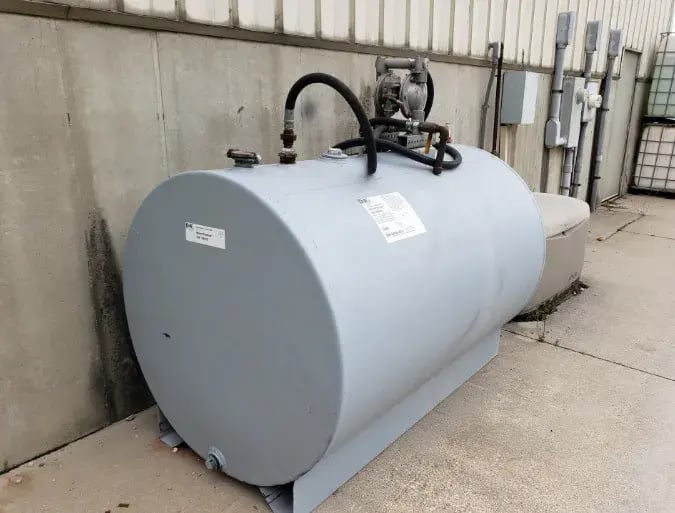
How Federal Oil Spill Rules Treat Fryer Oil, Shortening, Tallow, and Other Animal Fats and Vegetable Oils Compared With Petroleum
If your plant fries, bakes, blends, or renders with oil, you probably think of oil spill rules as something for gas stations and diesel tank farms. The federal oil spill prevention rule, known as SPCC (Spill Prevention, Control, and Countermeasure), doesn't see it that way. It covers vegetable oil and animal fat right alongside petroleum, and a New Jersey facility holding enough of it can need a written plan, secondary containment, regular inspections, and trained staff, even though nothing in the building is a fuel.
The short answer is yes, vegetable oil counts, and the rule gives it its own subpart with requirements that mostly mirror the ones for petroleum. This article walks through what's the same, what's different, the counting mistakes we see most often at food plants, and what New Jersey adds on top. If you'd rather talk through your own tanks and totes, feel free to reach out to RMA at any point.
Table of Contents
TL;DR
Yes. The federal SPCC rule treats vegetable oil and animal fat as oil, so a food plant with more than 1,320 gallons of total aboveground oil capacity (counting only containers of 55 gallons or more) that could reasonably send oil to a waterway needs an SPCC plan. The requirements for vegetable oil sit in their own subpart but mostly match petroleum, with a few adjustments such as the one for elevated stainless steel food tanks. The usual mistakes are leaving fryer oil, totes, used oil, and petroleum out of the capacity count. New Jersey adds its own spill reporting and liability rules under the Spill Act.
How Does the SPCC Rule Treat Vegetable Oil and Animal Fat?
SPCC lives in 40 CFR Part 112, and EPA enforces it. For New Jersey facilities, that means EPA Region 2. The rule's definition of oil is broad. It covers petroleum, synthetic oils, and oil mixed with waste, and it specifically names fats, oils, and greases of animal, fish, or marine mammal origin, along with vegetable oils from seeds, nuts, fruits, and kernels. Soybean oil in a bulk tank, shortening on a snack line, and tallow at a rendering plant all sit inside that definition, whether or not anyone at the plant would ever call it "oil" in the petroleum sense.
The rule is organized by oil type. Petroleum and other non-petroleum oils fall under Subpart B (Section 112.8), and animal fats and vegetable oils fall under Subpart C (Section 112.12). Both subparts send you back to the same general plan requirements in Section 112.7, and the technical sections read much alike. EPA has had a separate subpart for these oils since 2002, and its 2008 amendments adjusted a few requirements for food-grade oils without loosening the rest. If SPCC is new to you, our guide to everything you need to know about SPCC plans covers the basics before you go further here.
Does a New Jersey Food Plant Need an SPCC Plan for Cooking Oil?
It does if two things are true. First, the plant has more than 1,320 gallons of oil in aboveground containers in total. Only containers of 55 gallons or more count toward that number, and the number is based on the container's capacity, not on how full it happens to be. Second, the plant could reasonably be expected to discharge oil into or upon navigable waters or adjoining shorelines. That second test is decided by geography, such as how close you are to a creek, how the land slopes, and where your drains go. The rule says you can't take credit for man-made features like dikes or walls when you answer it. Completely buried capacity is counted separately, with a 42,000 gallon threshold, and tanks that are already covered by federal or approved state underground tank programs are left out of that number.
New Jersey makes the second test easy to meet. Creeks, tidal marshes, and storm sewer systems that empty into them run through nearly every industrial area in the state. After a vegetable oil release reached Overpeck Creek in Bergen County in 2006, NJDEP called in EPA, and one of the first questions EPA looked at was whether the suspected source was covered by SPCC, since the rule applies to vegetable oil as well as petroleum. That's the situation we want food plants to avoid, where the first time anyone asks about your plan is after oil has left the property.
The facilities that tend to cross the line are the ones you'd expect. Bakeries and snack makers with bulk fryer oil tanks, edible oil blenders and packagers, plants that hold shortening or tallow in heated tanks, renderers, and used cooking oil collectors all store large volumes. A few kinds of storage are exempt, including motive power containers (the fuel tank on a vehicle, for example) and milk and milk product containers. If your total comes in under the threshold, or you truly couldn't reach a waterway, you don't need a plan, and we'll tell you that. If you're not sure how the rule treats a particular container, our article on SPCC plans for cooking oil and used cooking oil goes deeper on that exact question.
What Is the Same for Vegetable Oil and Petroleum Under SPCC?
Most of it. If you've read about SPCC for diesel and hydraulic oil, you already know the shape of the requirements for vegetable oil, because the animal fat and vegetable oil subpart follows the petroleum subpart closely. The same thresholds decide who needs a plan, the same general plan elements apply, and the same field requirements show up in the same order: containment, drainage, tank inspections, overfill protection, piping, and transfer areas.
| Requirement |
Petroleum (Subpart B) |
Vegetable oil and animal fat (Subpart C) |
| Plan threshold |
Over 1,320 gallons aboveground (containers of 55 gallons or more) |
Same, and the totals from both subparts are added together |
| Bulk tank containment |
Secondary containment for the largest container plus freeboard for rain |
Same |
| Draining diked areas |
Manual valves, no flapper-type drains, inspect water before release |
Same |
| Mobile and portable containers |
Containment sized to the largest container or compartment |
Same |
| Overfill protection |
At least one engineered device, such as a high level alarm |
Same |
| Inspections and testing |
Regular integrity testing and inspection, with records |
Same, with one carve-out covered in the next section |
| Plan review and certification |
Five-year review, with Professional Engineer or self-certified paths depending on the facility |
Same |
Sizing the containment is where plans for food plants most often get tangled, because vegetable oil tanks are frequently clustered with petroleum tanks or share a dike with wastewater equipment. Our article on how big SPCC oil spill containment needs to be walks through the math. Smaller facilities may also qualify for a self-certified path, and our explainer on the different types of SPCC plans shows how to tell which one fits.
What Is Different About SPCC for Animal Fats and Vegetable Oils?
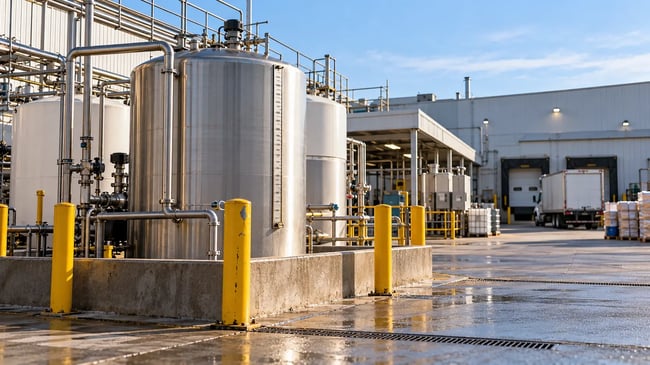
The biggest difference for a food plant is how certain tanks are inspected. For petroleum, every aboveground container needs integrity testing and inspection on a schedule that follows industry standards. For animal fat and vegetable oil, the rule carves out a group of containers that are elevated, made of austenitic stainless steel, shop-fabricated, and not externally insulated, and that are subject to FDA's food manufacturing regulations. Those tanks need a formal visual inspection on a regular schedule instead, along with frequent checks of the outside of the tank for deterioration, leaks, or oil collecting in the dike. The plan has to document who's qualified to do the inspections. The rule ties this carve-out to a specific set of tank characteristics, so we check each tank against the rule text instead of assuming a stainless tank qualifies.
Heating is the next difference you'll notice in practice, though it shows up in both subparts. Tallow, lard, and some vegetable fats solidify at room temperature, so renderers and edible oil plants often keep them warm in tanks with internal steam coils. The rule requires you to watch the steam return and exhaust lines for oil contamination, or route them through a settling tank, skimmer, or similar system, because a leaking coil can carry oil out through a line nobody thinks of as an oil line. Material compatibility is another item, since the container has to suit the product and the temperature it's held at.
Beyond the plan itself, EPA treats animal fats and vegetable oils as their own class when it comes to facility response plans, which apply only to larger facilities that meet specific criteria. Most food plants never reach that level. Even so, the reason the rule treats these oils seriously is the same reason it treats petroleum seriously. A vegetable oil or fat release doesn't vanish. It coats shorelines, vegetation, feathers, and fur, it can turn solid and rancid in cold water, and cleanup crews don't care whether the product was labeled food-grade.
What Counting Mistakes Do Food Processors Make With SPCC Oil Storage?
Nearly every problem we find at a food plant starts with the capacity count. The plan is only as good as the inventory behind it, and food plants tend to have oil in places that don't look like oil storage.
Fryer Oil, Totes, and Used Oil Often Get Left Out
Fresh oil arrives by tanker truck into a bulk tank, moves to a day tank or tote near the line, and leaves as used oil in a separate tank, tote, or drum for a recycler. That's three or more containers holding the same product, and each one of 55 gallons or more counts. We regularly see a plant tally its big outdoor tank and skip the totes parked along a wall, the drums at the dock, and the used oil container by the loading door. Containers used for standby, seasonal, or temporary storage count too, so a tote that's only there for a few weeks still goes in the total. Whether a particular fryer or cooker counts as a container depends on how it's built and used, so we evaluate each piece of process equipment individually. Our article on 55-gallon drums and SPCC plans is a good place to start on the drum question.
Petroleum Oil Hides in the Same Total
The threshold adds up every type of oil at the facility, so the vegetable oil never gets judged alone. Diesel for a backup generator, fuel oil for a boiler, lube oil, compressor oil, hydraulic reservoirs, and oil-filled electrical equipment all go in the same pile. A plant with 1,000 gallons of fryer oil can look comfortably under the line until the generator tank and hydraulic systems get added. Wastewater equipment gets misjudged too. The rule exempts facilities used exclusively for wastewater treatment, but oil recovery doesn't qualify as wastewater treatment, so a grease recovery tank needs a closer look instead of a quick assumption.
The other recurring problems are less about counting and more about upkeep. Plans don't get amended when a fryer line or a tank is added. Monthly inspections happen but nobody records them, which is a common finding in the top SPCC plan violations and fines we see. Oil-handling staff go without the annual discharge prevention briefing the rule requires, which our online environmental training library can cover. EPA has cited a rendering company's facilities for not documenting all oil-filled equipment, not fully describing secondary containment, and not describing an integrity testing standard that fit the tanks. Those are paperwork gaps, not spills, and they're the same ones we'd expect to find at a plant that hasn't taken a hard look at its plan since the day it was written.
What Does New Jersey Add to the Federal SPCC Rule for Vegetable Oil?
SPCC is the federal layer. New Jersey has its own, and it's stricter than most states' in how it treats spills. The Spill Compensation and Control Act, usually called the Spill Act, is the state's law on discharges, and NJDEP runs it through the Discharges of Petroleum and Other Hazardous Substances program under N.J.A.C. 7:1E. Under the Spill Act, a person who discharges a hazardous substance, or is in any way responsible for one, can be strictly liable, jointly and severally, for cleanup and removal costs, which means fault isn't the question. Anyone facing a real discharge should talk with an environmental attorney about how that applies to them.
Some of the state program applies only to larger operations. NJDEP says the majority of its requirements apply to facilities storing 20,000 gallons or more of regulated hazardous substances, not counting petroleum, or 200,000 gallons including petroleum. Those larger "major facilities" file discharge prevention, containment, and countermeasure plans with the state. Reporting is a separate matter, because the discharge notification rules apply to facilities of every size. Whether a given vegetable oil or animal fat counts as a hazardous substance under the state's list, and what exactly triggers a report, depends on what you store and how much, so check N.J.A.C. 7:1E against your own inventory, and look to NJDEP's website for the current spill hotline instead of relying on a number you saved years ago. Our article on SPCC plans in New Jersey explains how the federal and state pieces fit together, and our guide to when you have to report an oil spill covers the federal sheen rule.
How Much Does an SPCC Plan Cost for a Food Processing Facility?
A new SPCC plan from RMA generally runs from $2,500 to $15,000. A simple update to an existing plan can run about $1,500, while a complex plan that needs Professional Engineer certification can start at $7,500 and go up from there. The spread comes from a handful of things: your total storage capacity, how many containers and what types you have, whether the plan needs PE certification, whether your secondary containment needs to be evaluated, and how many separate areas of the plant hold oil. A plant with one outdoor oil tank and a clean dike sits at the low end. A plant with bulk tanks, heated fat storage, totes on several lines, a generator, and a shared dike sits at the high end. Our article on SPCC plan costs goes through each factor, and the pricing calculator below lets you put in your own details to see where we'd expect your plan to land.
How Can RMA Help With SPCC Plans for Vegetable Oil and Animal Fat Storage?
We're a family-run firm based in New Jersey, and we've been helping facilities with SPCC plans and oil storage questions since 1992. Senior staff do the work, we're upfront about price, and if it turns out your plant is under the threshold or can handle a self-certified plan on its own, we'll tell you that rather than sell you something you don't need. When a plan does make sense, we can walk the site, count the containers the way the rule counts them, and write a plan that matches what's on the floor, with a Professional Engineer reviewing and certifying it when the facility calls for that.
There's no obligation in talking it through. You can call us, send an email, or fill out the form on our website, and a member of our team will go over your oil storage with you. If you'd like to contact RMA about a plan, an update, or just a second opinion on your oil count, we're glad to help.