How New Jersey's Fire Code and EPA's SPCC Rule Overlap, Where They Differ, and What to Do When a Fire Inspector Raises Concerns About Your Tanks
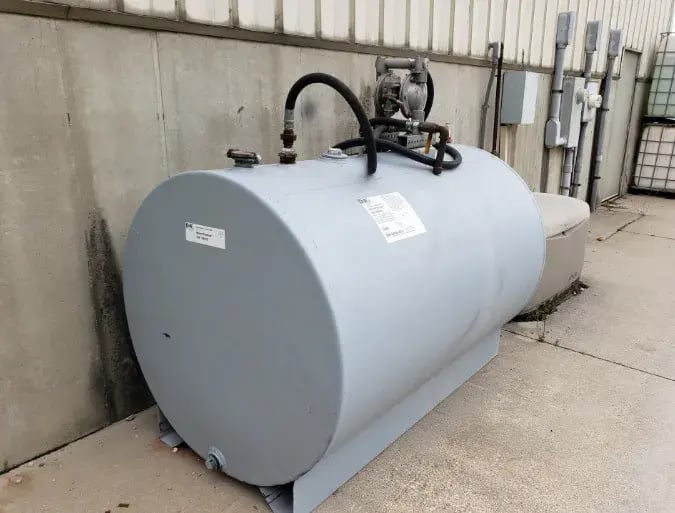
You've got a diesel tank behind the shop, a fuel tank feeding the generator, maybe a few drums of oil near the loading dock. You also have an SPCC Plan on the shelf, which is the federal Spill Prevention, Control, and Countermeasure plan EPA requires for facilities that store oil. Then a fire inspector walks the site and starts asking about tank spacing, venting, and whether the tank is listed, and you wonder how that squares with the plan you already paid for. The short answer is that both the fire official and EPA regulate your tanks, they do it for different reasons, and meeting one set of rules doesn't satisfy the other.
In this article we'll walk through how New Jersey's Uniform Fire Code and the SPCC rule work side by side, where their requirements overlap, where they pull in different directions, and what we'd do if a fire inspector raised concerns about your tanks. If you'd rather talk through your own site, you can reach out to RMA at any point, and we'll tell you plainly whether it's something you need help with.
Table of Contents
TL;DR
In New Jersey, both your local fire official and EPA regulate your oil tanks, for different reasons. The fire code is enforced locally and is about whether the tanks can burn or spread a fire: construction, spacing, venting, shutoffs, and permits. SPCC is enforced by EPA Region 2 and is about keeping oil out of waterways: containment, testing, inspections, and a certified plan. They overlap on tank condition, containment, and records, but meeting one doesn't satisfy the other. If a fire inspector raises a concern, get it in writing, fix real hazards first, check the fix against your SPCC plan, and amend the plan if your tanks change.
What Does the New Jersey Uniform Fire Code Require for Oil and Fuel Tanks?
The New Jersey Uniform Fire Code (N.J.A.C. 5:70) is the state's fire safety rulebook, written by the Department of Community Affairs, Division of Fire Safety, under the Uniform Fire Safety Act. Its State Fire Prevention Code adopts the International Fire Code with New Jersey modifications, and that model code leans on national standards like NFPA 30, the Flammable and Combustible Liquids Code. The question behind all of it is simple: could this liquid burn, and if it does, how do we keep the fire from reaching people and property?
The state writes the code, but local fire officials enforce it. Depending on your town, that might be a fire marshal, a fire prevention bureau, or an inspector working out of the fire department. Towns can also add their own ordinances and zoning limits, and some restrict outdoor aboveground fuel storage in certain districts, so what's allowed at a plant in one municipality isn't always allowed in the next.
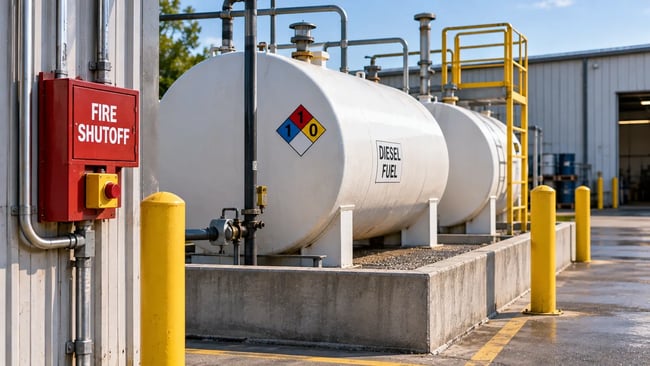
In practice, a fire official looks at how a tank is built and whether it's listed or made to a recognized standard, how far it sits from buildings, property lines, and other tanks, and whether it has normal and emergency venting so pressure can relieve safely. They'll also check fill and dispensing controls, emergency shutoffs, ignition sources nearby, extinguishers, and labeling. Storing flammable or combustible liquids above certain quantities typically requires an operational permit from the local fire official, and those quantities depend on the type of liquid and whether it's stored indoors or outdoors. Gasoline is treated as a flammable liquid, diesel as a combustible one, and heavier oils like lube and hydraulic oil sit lower on the hazard scale. Because the thresholds and permit fees vary, check N.J.A.C. 5:70 and your municipality's requirements against your own inventory.
What Does the SPCC Rule Require That the Fire Code Doesn't?
SPCC is part of 40 CFR Part 112, EPA's oil pollution prevention rule, written under the Clean Water Act. Its job is to keep oil from reaching navigable waters and adjoining shorelines, which in practice includes the storm drains, ditches, and creeks that lead to them. A facility generally needs an SPCC Plan when it stores more than 1,320 gallons of oil aboveground, counting containers of 55 gallons or more, measured by capacity rather than what's in them today, with a reasonable expectation that a spill could reach water. Oil-filled equipment and vegetable oils count, and propane doesn't. In New Jersey, EPA Region 2 enforces the rule. If you're new to it, our guides on what SPCC plans require and how SPCC applies in New Jersey cover the basics.
The rule doesn't care whether the oil burns. It cares about spills. That means a written plan, secondary containment sized to hold the largest container plus room for rainfall, regular inspections and integrity testing, overfill prevention, containment for loading and unloading, spill response procedures, and annual training for the people who handle oil. Many plans must be reviewed and certified by a Professional Engineer, and our article on Professional Engineers and SPCC plan requirements explains when that applies. We've also written about how big your SPCC oil spill containment needs to be, since sizing is a common trouble spot.
What the SPCC rule doesn't address is just as telling. It says nothing about how far a tank must sit from your building, how it must be vented, or where the emergency shutoff goes. That's why an SPCC Plan can be complete and current and still leave a fire official with questions.
Where Do Fire Code and SPCC Requirements Overlap?
Both programs want a tank in sound condition, protected from overfills and leaks, and watched by someone who knows what they're looking at. They get there for different reasons and measure different things, which is easiest to see side by side.
| Topic |
Fire Code (Local Fire Official) |
SPCC (EPA Region 2) |
| Main concern |
Fire and explosion hazards |
Oil reaching water |
| Tank construction |
Listed or built to a recognized standard, suited to the liquid |
Material and design suited to the oil, plus integrity testing on a regular schedule |
| Containment |
Diking or containment in some setups to limit the spread of liquid in a fire |
Secondary containment for the largest container plus rainfall, with controlled drainage |
| Filling and dispensing |
Fill controls, dispensing controls, and ignition source management |
Overfill prevention and containment at loading and unloading areas |
| Spacing and venting |
Separation distances, normal and emergency vents, shutoffs |
Not addressed |
| Records |
Operational permit and permit inspections |
Written plan, with inspection and test records kept for three years |
| People and response |
Extinguishers, labeling, and emergency procedures |
Spill response procedures and annual discharge prevention training |
Where the two overlap, one good practice can serve both. A listed, properly vented tank with sound containment, a clean inspection log, and trained staff gives a fire official and an EPA inspector very little to push back on. The SPCC rule also asks your plan to discuss how the facility conforms to applicable requirements, including any more stringent state rules, and EPA's own training materials tell plan preparers to consider the state fire code, so a good plan acknowledges it rather than ignoring it. Our list of the top things to check during your SPCC inspections is a useful walk-through for catching the issues a fire inspector would also notice, like a damaged vent or a corroded tank.
Where Can Fire Code and SPCC Requirements Pull in Different Directions?
Sometimes a fix that helps one program creates a question for the other. A roofed or enclosed containment area is a common way to keep rainwater out of a dike, which makes SPCC drainage simpler, but it can raise fire code questions about vapor buildup and ventilation. Moving a tank to meet a spacing requirement can put it closer to a storm drain or a different drainage path, which changes the containment reasoning in your plan and the facility diagram that goes with it. And tank styles that satisfy one reviewer don't always satisfy the other, so a double-wall tank bought to simplify containment still has to meet the fire official's expectations for venting, spacing, and listing.
The other difference is who gets the final say. A Professional Engineer's certification of your SPCC Plan tells EPA the plan follows good engineering practice. It doesn't approve your tank for fire code purposes, and a fire official's sign-off doesn't mean your plan is current. Neither one overrides the other, so the working rule is to meet the stricter requirement on each point and keep both sets of paperwork consistent.
Why Might an Oil Tank Trigger Fire Code Concerns but Not SPCC?
The thresholds are different, and so is what counts. SPCC applies to oil above 1,320 gallons of aboveground capacity, counting only containers of 55 gallons or more. Fire code permit requirements start at quantities that depend on the liquid and where it's stored, and they cover flammable liquids that aren't oil at all, like solvents, along with propane and other gases. A facility with a 500-gallon gasoline tank and some drums of solvent might have no SPCC obligation and still have plenty to talk about with the fire official. A single generator day tank can be a fire code topic long before it adds up to an SPCC plan, and our article on environmental permits for emergency backup generators shows how those tanks can add up across a site.
It works the other way too. A transformer or hydraulic system full of oil that doesn't burn easily may be a minor fire code concern but still count toward your SPCC total. If you're unsure which of your containers count, our post on whether 55-gallon drums are included in SPCC plans is a good place to start.
Who Enforces the Fire Code and SPCC, and What's at Stake?
Fire code violations come from the local fire official. The code sets out how notices and orders are served, how much time you get to correct a problem, and what penalties can follow, and the amounts depend on the violation, so the notice you receive is the place to look. Fire officials don't enforce SPCC, and EPA inspectors don't enforce the fire code, although either one may notice something outside their own program during a visit and mention it.
SPCC is enforced by EPA Region 2 for New Jersey facilities, and federal civil penalties for oil pollution violations are adjusted for inflation each year under 40 CFR Part 19. Our articles on who enforces SPCC plans and the top SPCC violations and fines go deeper on what inspectors look for. New Jersey adds a third layer through NJDEP, including the Spill Act's duty to report discharges and, for facilities that qualify as major facilities, discharge prevention plans under N.J.A.C. 7:1E. Whether you're a major facility depends on your total storage and what you store, so check the rule against your own inventory. If you've received a formal notice with penalties from any of these agencies, a call to an environmental attorney can be worth making.
What Should You Do If a Fire Inspector Raises Concerns About Your Oil Tanks?
A comment from a fire inspector isn't a crisis, but it deserves a methodical response. Here's the order we'd work in.
Get the Concern in Writing and Ask for the Code Section
Fire code violations in New Jersey are cited by code section, so a written notice should tell you exactly which requirement the inspector has in mind. If all you got was a verbal comment during a walk-through, ask for it in writing. Then ask whether the requirement applies to your existing setup or only to new installations, because the code handles existing conditions differently in some cases, and that's a fair question to put to the fire official.
Deal With Real Hazards Right Away
If the concern is a leaking fitting, a blocked vent, a missing cap, or fuel stored next to an ignition source, fix it now and document the fix with dates and photos. Paperwork questions can wait for the code section. A hazard that could start a fire or cause a spill shouldn't.
Check Any Fix Against Your SPCC Plan Before You Make It
Before you move a tank, add an enclosure, change piping, or alter a dike, look at what your SPCC Plan says about that area, and call whoever wrote or certified the plan. A fix that satisfies the fire official but removes containment or changes a drainage path can create an SPCC problem the day it's finished. If the plan doesn't match what's physically on site, sort that out at the same time.
If you can't meet the deadline in the notice, ask the fire official about an extension or a variance before the date passes, and make the request in writing.
If the fix involves installing, relocating, or replacing a tank, or adding venting or piping, that's construction work, and it usually needs permits through your building and fire officials and a qualified contractor or engineer. RMA doesn't prepare construction-phase permits, so that piece isn't ours. What we can do is help you figure out what the operational side looks like once the work is done, so your plan matches the new setup.
What Happens to Your SPCC Plan When Fire Code Fixes Change Your Tanks?
When you change a tank, containment area, piping, or the way you operate in a way that affects your potential for a spill, the SPCC rule expects you to amend your plan within six months and then put the amendment into practice within six months after that. Technical changes generally need to be reviewed and certified by a Professional Engineer, with some exceptions for smaller qualified facilities, so check which category you fall into. Swapping a single-wall tank for a double-wall one, adding a dike, or relocating a tank to meet fire code spacing all fall in that territory.
Keep the fire inspection and permit paperwork with your SPCC records, so your tank list, facility diagram, and inspection logs all tell the same story. It also helps to run through the most overlooked SPCC plan requirements when you're already in the middle of tank changes. If your current plan is more than five years old, our guide to SPCC five-year reviews explains your options, and our post on whether an existing plan can be updated covers when a plan written by someone else is better rebuilt than patched.
Staff matter here too. The people who fill tanks and walk the yard are the ones who'll spot a vent problem or a leak first, and both programs expect them to know what to do. Our online environmental training library covers the oil spill prevention side.
How Can RMA Help With Fire Code and SPCC Questions?
We should be clear about where we fit. Interpreting the fire code is the fire official's call, and tank design, installation, and construction permits belong with a qualified contractor or engineer, so we won't pretend otherwise. Where we help is on the SPCC side. We build, review, and rebuild SPCC Plans, make sure the plan gets reviewed and certified by a Professional Engineer where one is required, and make sure the plan matches what's physically on your site after a fire inspection or a tank change. We're based in New Jersey and work with facilities here and across the country.
If a fire inspector's comment has you wondering whether your SPCC Plan still holds up, there's no obligation in asking. You can call or email us, or fill out the form on our website, and we'll tell you whether you need anything from us or can handle it yourself. When you're ready, just contact RMA and we'll take it from there.