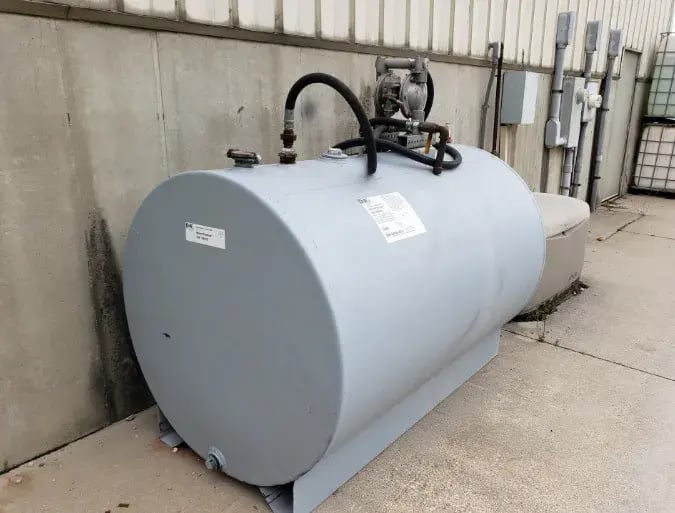
A practical walkthrough for drafting site-specific inspection checklists, oil-handling steps, spill response and reporting procedures, and employee training for your New Jersey facility
If your New Jersey facility stores oil, your SPCC plan almost certainly includes a few pages of procedures, and there's a decent chance nobody at the site has read them. SPCC is the federal oil spill prevention rule, and it expects your written plan to say how you'll inspect tanks and equipment, how oil gets handled and transferred, what employees do when something spills, and how people get trained. A lot of facilities download a template, leave the generic language in, and find out it doesn't fit when an inspector asks to see the logs or a forklift punctures a drum.
This article walks through how to draft those procedures yourself, section by section, so they match how your site really runs. We'll cover inspections, oil-handling and transfer steps, spill response and reporting under federal and New Jersey rules, training, and recordkeeping, and we'll point out where do-it-yourself efforts tend to go wrong. If you'd rather have a second set of eyes on what you've written, or you'd like someone to handle the whole thing, you can reach out to RMA at any time, and we'll tell you if you don't need us.
Table of Contents
TL;DR
To write your own SPCC inspection and spill response procedures, start by listing every oil container, piece of equipment, and transfer area at your site, then write down for each one what gets checked, how often, who signs off, and what happens when something's wrong. Add step-by-step spill response and reporting instructions that name who to call, including NJDEP's hotline and the National Response Center when oil reaches water, and set up annual employee briefings with signed records kept for three years. Write procedures that match how your site really runs, because your written plan is the standard you're held to.
What Do Written SPCC Inspection and Spill Response Procedures Need to Cover?
SPCC stands for Spill Prevention, Control, and Countermeasure. It's the federal rule at 40 CFR Part 112, and EPA Region 2 enforces it in New Jersey. It applies to facilities that store more than 1,320 gallons of oil aboveground (counting containers of 55 gallons or more by capacity, not contents) and could reasonably be expected to discharge oil to navigable waters or adjoining shorelines. If it covers your site, your plan has to say in writing how you prevent spills and what your people do when one happens. Those written steps are your procedures, and they fall into four groups.
| Procedure area |
What the rule expects |
Where to find it |
| Inspections and tests |
Written procedures for inspecting containers, piping, and equipment, with signed records kept three years |
40 CFR 112.7(e), 112.8(c)(6) |
| Oil handling and transfers |
How deliveries, loading, unloading, and filling get done, including overfill prevention |
40 CFR 112.7(h), 112.8 |
| Spill response and reporting |
Steps to stop, contain, and clean up a spill, and who gets notified |
40 CFR 112.7(a) |
| Personnel training |
Training for oil-handling employees, a designated person accountable for spill prevention, and annual briefings |
40 CFR 112.7(f) |
New Jersey adds its own layer. The Spill Compensation and Control Act, known as the Spill Act, makes anyone responsible for a discharge of oil or other hazardous substances liable for cleanup and removal costs. In general terms that liability is strict, joint and several, so it applies regardless of fault and can reach more than one party. NJDEP's discharge rules at N.J.A.C. 7:1E also require immediate notification, and facilities that qualify as major facilities need two more plans, a DPCC plan (Discharge Prevention, Containment and Countermeasure) and a DCR plan (Discharge Cleanup and Removal). Whether your site is a major facility depends on what it stores and how much, so check N.J.A.C. 7:1E against your own inventory. Our guide to SPCC plans in New Jersey covers the state layer, and our article on everything you need to know about SPCC plans is a good place to start if the federal rule is new to you.
How Do You Write SPCC Inspection Procedures for Your Site?
Start with a walk around the property and build an inventory: every oil container of 55 gallons or more, oil-filled equipment like transformers and hydraulic units, piping, containment structures, loading and unloading areas, and the drains that lead off the site. For each item, write down what an inspector looks at, how often, and who signs the record. The rule requires written procedures and records but doesn't set a frequency for every item, so your plan sets it. Many facilities follow an industry standard such as STI SP001 for shop-built tank inspections, and a monthly visual walkthrough is common practice. Our guide to what to look for during monthly SPCC inspections lists what experienced inspectors check.
| Item |
What to check |
Example frequency (your plan sets yours) |
| Aboveground tanks |
Leaks, staining, corrosion, bulging, damaged supports, gauges, vents |
Monthly |
| Secondary containment |
Cracks, standing water, debris, drain valves closed |
Monthly and after heavy rain |
| Piping, hoses, and valves |
Leaks, corrosion, worn hoses, damaged supports |
Monthly |
| Loading and unloading areas |
Drains, curbing, spill kit, and the truck's lowermost drain and outlets before it leaves |
Every delivery |
| Drums and oil-filled equipment |
Lids, labels, leaks, staining, and whether drums sit in containment |
Monthly |
| Spill kits |
Stocked, accessible, and not buried behind pallets |
Monthly |
Two details trip people up. If your containment collects rainwater, the rule expects drain valves to stay closed and sealed, the water to be checked before release, and a record of each drainage event, so write down who's allowed to open the valve. And every inspection procedure needs a next step. When someone finds a leak or a corroded fitting, who fixes it, how fast, and who gets told? Leave a place on the form to flag a problem and a name to hand it to.
Keep the checklist usable: one page per area, tick boxes, a line for notes, and a signature and date. Record the clean inspections too, because a log full of them is exactly what you want to hand over when someone asks. If your containment is in question, read our guide on how big your SPCC containment needs to be before you write those checks.
How Do You Write Oil-Handling and Transfer Procedures for SPCC?
These are the "how we do it here" steps, and they're where templates fail most. Walk through each routine that moves oil: fuel deliveries, loading and unloading, filling drums, refueling equipment, and transfers between tanks. For a bulk delivery, the steps might include confirming the tank has room before the truck connects, closing containment drain valves, staging a spill kit, checking hoses and connections, staying with the transfer from start to finish, and checking the truck's lowermost drain and outlets before it leaves.
Write these with the people who do the work, like the maintenance tech or whoever meets the fuel driver. They know where the shortcuts are. A procedure that bans something everyone does daily gets ignored, and then your plan says one thing while your site does another. Also describe overfill prevention for each bulk container, such as high-level alarms, and say who checks that equipment. If you keep drums, spell out where they're stored, and see our explanation of whether 55-gallon drums count for how smaller containers fit the rule.

How Do You Write Spill Response Procedures for a New Jersey Facility?
Write these for the worst moment you can picture: one employee, a Friday afternoon, a hose that just let go. The steps need to be short and in the order people should do them. If anyone is hurt or there's a fire, the first step is to call 911. After that, most procedures follow six moves: protect people, stop the source if it's safe, contain the spill with kits, berms, or drain covers so it stays out of storm drains and waterways, notify the designated person, clean up and handle the waste, and document what happened.
Put a one-page reporting form next to the phone numbers so the caller has the details in hand: the facility's name and location, the date and time, the type and estimated quantity of oil, the source and cause, any injuries or damage, and what's being done to contain it. The reporting side has several layers.
| Who to notify |
When |
Contact |
| NJDEP hotline |
Immediately after a discharge starts, if you know or should know about it and you're responsible |
1-877-WARNDEP (1-877-927-6337) |
| New Jersey State Police |
If the NJDEP hotline isn't working |
609-882-2000 |
| National Response Center |
Immediately when oil reaches navigable waters or adjoining shorelines, including a sheen |
1-800-424-8802 |
| EPA Region 2 and NJDEP, in writing |
After a single discharge to navigable waters of more than 1,000 gallons, or two of more than 42 gallons each within 12 months, due within 60 days |
Details in 40 CFR 112.4 |
The gallon amounts in that last row refer to oil that reaches navigable waters or adjoining shorelines, not the total spilled. Which events count as reportable discharges in New Jersey depends on the substance, where it goes, and the specifics, and NJDEP separates a leak that stays in secondary containment from a discharge that reaches the lands or waters of the state. We'd rather your procedure push employees to escalate fast to the designated person than have anyone decide alone whether something is big enough. Our article on the sheen rule covers when oil reaching water triggers a call.
Because reporting ties into Spill Act liability, an environmental attorney may be the right person to involve for anything beyond a small, contained cleanup. And practice what you wrote. If you're a major facility with a DCR plan, N.J.A.C. 7:1E calls for annual drills that vary year to year and get critiqued in writing. Even if you're not, a short annual tabletop drill is the cheapest way to find the phone number that's out of date or the spill kit locked in an office.
How Do You Build an SPCC Training Program for Oil-Handling Employees?
Under 40 CFR 112.7(f), oil-handling personnel need training in operating and maintaining equipment to prevent discharges, your discharge response procedures, the pollution control laws that apply to the facility, general facility operations, and the contents of the SPCC plan. You also have to designate a person accountable for discharge prevention who reports to facility management. They don't have to be a manager, but they should have enough standing to get a leaking valve fixed.
The rule also requires discharge prevention briefings at least once a year. Use them to cover spills or equipment failures since the last briefing, components that keep malfunctioning, and new precautions, and to review any procedure changes. Our articles on annual SPCC training requirements and what SPCC training should include go through what trainers cover, and our quick guide to SPCC regulations for general staff works for employees who only need the basics.
Training works best at the equipment. Walk the site, show people the spill kits, shutoff valves, and drain valves, and have each person say what they'd do first in a spill. For the regulatory pieces, our online training library is available. Have everyone sign in, and train new hires before they handle oil.
How Should You Keep SPCC Inspection and Training Records?
Inspection and test records must be signed by the appropriate supervisor or inspector and kept with the plan for three years. Records kept under your usual business practice can satisfy this, so a maintenance system that captures the right information works as well as a paper log. The rule doesn't spell out a training record format, but inspectors ask for them, so keep sign-in sheets and briefing notes with the other SPCC records for three years. Missing or unsigned records show up regularly in enforcement actions, which we cover in our piece on top SPCC violations and fines.
Pick one place for the plan, inspection logs, drainage records, training sign-ins, and any spill documentation. Then tie your procedures to the plan. A change that materially affects your potential for a discharge may require a formal amendment, a technical change to a PE-certified plan needs the engineer's review, and the plan needs a review at least every five years. Our articles on updating your SPCC plan and the five-year review process explain how those cycles work.
Where Do Do-It-Yourself SPCC Procedures Go Wrong?
The most common failure is a procedure that doesn't match the site. The plan says monthly inspections and the facility does them quarterly, or it names a spill coordinator who left two years ago, or it describes a loading rack the facility doesn't have. Your written plan is the standard an inspector holds you to, so every gap between the page and the practice is a potential violation. Copying another facility's plan or leaving template language in place creates this quickly. We cover more in our look at overlooked SPCC requirements.
AI tools create the same problem. They write procedures that read well, but they don't know your tanks, containment, or drainage, and they fill the blanks with plausible text. We don't use AI to produce client deliverables. If you're curious how it goes, see how we tested whether AI can write an SPCC plan.
If your plan needs a Professional Engineer's certification, the engineer reviews and approves your procedures as part of it, so bring them in before you finalize anything. Some SPCC firms have a PE on staff and others work with a trusted outside PE, and either way that review is what makes the plan sound. Our article on Professional Engineer requirements for SPCC plans explains who needs one. And if your facility is simple enough for a self-certified plan, you may be able to write all of this yourself, and we'll tell you so if you ask.
What Does Help With SPCC Procedures and Plans Cost?
Writing procedures yourself costs staff time, usually a few days of walking the site, drafting, and getting feedback from the people who do the work. When facilities bring in help, it typically happens as part of developing or updating the SPCC plan. SPCC plans generally run from $2,500 to $15,000. A simple Tier I update is about $1,500, and a complex update that needs a Professional Engineer's certification starts around $7,500. The price moves with your total storage capacity, how many containers you have and what types, whether your secondary containment needs evaluation, and whether the plan requires PE certification. Our breakdown of what SPCC plans cost goes through each factor, and the SPCC pricing calculator below gives you a ballpark for your facility with no obligation.
How Can RMA Help With Your SPCC Inspection and Spill Response Procedures?
We're a family-run firm based in New Jersey, and we've been helping facilities with environmental compliance since 1992. For SPCC procedures, that means reviewing what you've drafted against your actual site, building inspection and response procedures from scratch, setting up training and recordkeeping, and working with your PE when the plan requires certification. Our senior staff does the work, not junior people and not AI.
If you want a second opinion on what you've written, or you'd like someone to take it off your plate, you can call us, email us, or fill out the form on our website, and you can contact RMA anytime. There's no pressure and no obligation. If your setup is simple and you can handle it yourself, we'll say so. Our article on who enforces SPCC plans covers who shows up for an inspection and why.