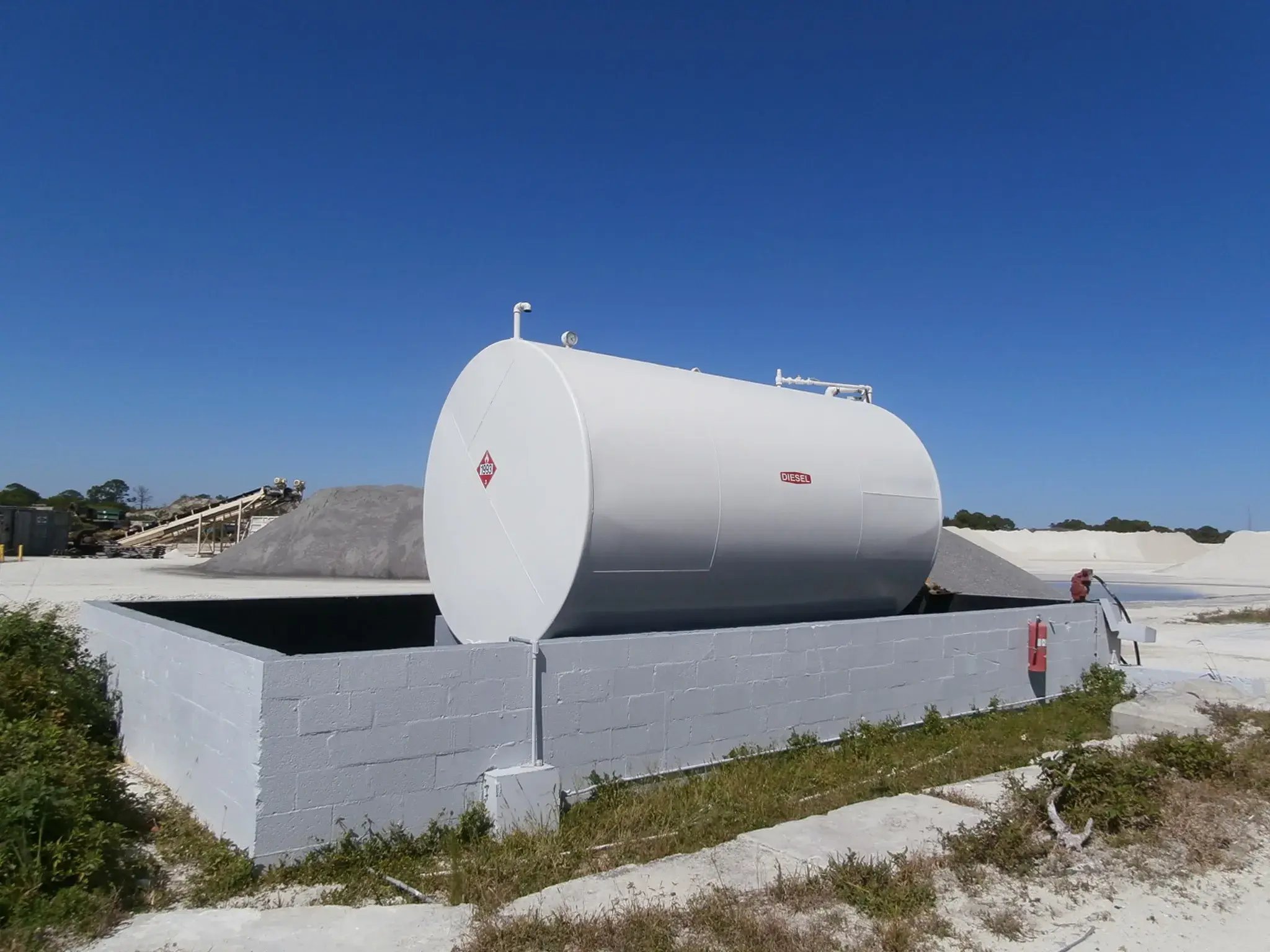
A Section-by-Section Walkthrough for Pennsylvania Facilities Writing Their Own Self-Certified Tier I SPCC Plan
If you store oil at a Pennsylvania facility and you've found EPA's Tier I Qualified Facility SPCC Plan template, you've probably noticed it's a roughly 20-page Word document packed with tables, rule citations, and boxes to check. The template is a legitimate way to meet the federal oil spill prevention rule without paying a professional engineer to certify your plan, but it only works if your facility qualifies, and it only protects you if what you write matches what's sitting on your property. Plenty of owners fill in the cover page, check every box, sign it, and file it in a drawer, and a plan like that tends to fall apart the first time an inspector walks the site.
This walkthrough follows the template in order. We cover who can use it, how it's laid out, how to complete each section, what Pennsylvania adds on top of the federal rule through DEP's storage tank program, and when you've outgrown the template. If you'd rather hand the whole thing off, or you just want an experienced second set of eyes before you sign, you can reach out to RMA at any point.
Table of Contents
TL;DR
A facility with 10,000 gallons or less of total aboveground oil storage, no single container over 5,000 gallons, and a clean spill history can complete and self-certify EPA's Tier I SPCC template without a professional engineer. The work is in the details: an accurate container list, containment sized for your largest container plus rainfall, written inspection and training procedures, and a contact list you keep current. In Pennsylvania, the template only covers the federal rule, so you also need to check DEP's storage tank registration requirements and your local fire code. If you have a container over 5,000 gallons, need a deviation from the rule, or outgrow the limits later, you'll need a different type of plan.
Who Can Use EPA's Tier I SPCC Plan Template?
Start by confirming that SPCC applies to you at all. The rule covers facilities with more than 1,320 gallons of aboveground oil storage, counting only containers of 55 gallons or more, or more than 42,000 gallons of completely buried storage. If you're under both numbers, you may not need a plan, and our guide on figuring out if you need an SPCC plan walks through that decision. If you're over, the next question is which kind of plan you're allowed to write. The Tier I template is open to facilities that pass three tests, and all three have to be true on the day you sign.
| Test |
Tier I limit |
How to check it |
| Total aboveground oil storage |
10,000 gallons or less |
Add up the full capacity of every aboveground container of 55 gallons or more, including fuel trailers, skid tanks, and oil-filled equipment |
| Largest single aboveground container |
5,000 gallons or less |
Look at your biggest tank, tote, or trailer and read its rated capacity |
| Spill history, past three years |
No single discharge over 1,000 gallons, and no two discharges over 42 gallons each within any 12-month period |
Review your spill records for oil that reached navigable waters or adjoining shorelines. Natural disasters, acts of war, and terrorism don't count |
Capacity is the number that trips people up. It's the size of the container, not what's in it, so an empty 2,000-gallon tank counts and a permanently closed one doesn't. Oil-filled equipment like transformers and hydraulic reservoirs counts, and so do animal fats and vegetable oils. Propane and DEF don't. The template also lists exemptions for containers under 55 gallons, motive power containers (the fuel tank on a truck or loader), wastewater treatment containers, hot-mix asphalt containers, single-family residential heating oil tanks, and pesticide application equipment. If you're wondering about drums, we cover them in our article on 55-gallon drums and SPCC plans.
On spill history, the 1,000 and 42 gallon figures measure the oil that reached navigable waters or adjoining shorelines, not the total amount spilled. If you've had a release that headed toward a creek, ditch, or storm drain and you're not sure whether it counts, sort that out before you certify, and consider talking with an environmental attorney, since the answer decides which plans you're allowed to use.
How Is EPA's Tier I SPCC Plan Template Organized?
The template reads like a form because it is one. Every Tier I self-certifier completes the first three parts, and the rest depends on what kind of facility you run.
| Template part |
What it covers |
Your job |
| Facility description and Section I |
Facility and owner information, plus the self-certification statement |
Fill in the details and sign only when every statement is true |
| Section II |
Five-year review and technical amendments |
Log every review and change in the Attachment 1 tables |
| Section III |
Container list, secondary containment, inspections, training, security, emergency procedures, contacts, and spill reporting |
Describe how your site really handles each item |
| Section A |
Rule requirements for onshore facilities: dike drainage, tank integrity, overfill prevention, valves and piping |
Check each box, or mark it N/A when it doesn't apply |
| Attachments 1 through 4 |
Review logs, oil spill contingency plan, inspection, dike drainage, and training logs, and a discharge notification form |
Print the logs and start using them |
Sections B and C are for oil production and for drilling and workover sites, so most facilities reading this will use Section A. You're allowed to modify the template, but then you have to add a section cross-referencing where your plan meets each applicable rule requirement. Unless you have a reason, leave the layout alone and fill it in as written.
How Do I Complete the SPCC Template's Facility Description and Self-Certification Statement?
The facility description is the easy part: facility name and address, county, and the owner or operator's name and contact information. The self-certification statement takes more care. You're signing eight statements under 40 CFR 112.6(a)(1): that you know the SPCC rule, that you've visited and examined the facility, that the plan follows accepted industry practice, that inspection and testing procedures are in place, that you'll fully implement the plan, that the facility meets the Tier I criteria, that the plan doesn't use any of the rule's deviations, and that management has approved the plan and committed the resources to carry it out.
Two of those deserve a closer look. The signer is the owner or operator, not a consultant, so someone can prepare the plan for you, but you're the one certifying you've walked the site. If you haven't, don't sign. The deviation statement matters too. If a tank can't have full secondary containment and you'd like to write off containment as impracticable, or you want to use an alternative method to the rule's requirements, a self-certifier can't do that on the Tier I template. Those measures need a professional engineer, which we cover in the section on outgrowing the template.
The signature page also describes one option: an oil spill contingency plan can stand in for secondary containment on qualified oil-filled operational equipment, like a transformer or hydraulic unit. If you use it, Attachment 2 has to follow the contingency plan criteria in 40 CFR Part 109, include an inspection or monitoring program, and carry a written commitment of manpower, equipment, and materials to remove any harmful spill quickly.
How Do I List Oil Storage Containers and Capacities in the SPCC Template?
The container table asks for every aboveground container and completely buried tank of 55 gallons or more that isn't exempt, with the type of oil and the shell capacity of each. For mobile and portable containers, you list an estimated number of containers, the types of oil, and the anticipated capacities. The totals at the bottom (aboveground, buried, and facility total) are the numbers you're certifying against the 10,000 gallon and 5,000 gallon limits, so do this part first and do it carefully.
The best method is a walk of the site with a notepad. Count the obvious tanks, then go looking for the ones people forget: generator base tanks, used oil tanks, hydraulic reservoirs, lube oil totes, transformers, and any skid tank or fuel trailer that parks on site. Record the rated capacity from the nameplate or the manufacturer's literature, not your best guess. Completely buried tanks get listed in the template, but they don't count toward the Tier I limits. EPA's example plans come with a simple site diagram, and sketching one with a number beside each container makes the table far easier to check. Our article on the different types of SPCC plans is useful if the total comes out close to a limit.

How Do I Complete the SPCC Template's Secondary Containment and Discharge Tables?
This is where most do-it-yourself plans get thin. Tier I facilities have to provide secondary containment for the entire capacity of the largest single container plus additional capacity for precipitation. That applies to mobile and portable containers too, with an exception for mobile refuelers and other non-transportation-related tank trucks. The rule doesn't hand you a rainfall number, so pick a reasonable design storm for your area and write down how you chose it, because an inspector will ask. Acceptable containment includes dikes, berms, retaining walls, curbing, drainage systems, weirs and booms, diversion or retention ponds, and sorbent materials, or an equivalent. EPA publishes blank worksheets for sizing a dike around horizontal and vertical cylindrical tanks, and our article on how big SPCC containment needs to be covers the math in plain terms.
The discharge table asks you to think through how each container, piece of equipment, pipe, and transfer area could fail. For each one you record the type of failure, the potential discharge volume, which way uncontained oil would flow, and the containment method and capacity that would catch it. A delivery hose that fails while a truck unloads into a 500-gallon diesel tank is a good example. The volume is however much the truck could pump before someone shut it off, and the flow direction is whichever way your pavement slopes. Section A adds a few more items: a system or documented procedure to prevent overfills on every container, valves on diked areas that stay closed except when you release inspected rainwater, and a dike drainage log for those releases.
If your numbers show the containment is too small, fixing it is construction work. The template itself tells you to follow state and local requirements for permitting, design, and construction and to get professional help where needed. RMA doesn't build containment or handle building or construction permits, and that piece usually goes to your engineer or contractor. We can help you work out what the plan needs once the work is done.
What Goes in the SPCC Template's Inspection, Training, Security, and Contact Sections?
These sections are where you describe the habits that keep the plan alive. For inspections, you describe your program, including the industry standard you follow, the scope, the frequency, and who does the checking. The template includes a schedule you can build from.
| Container type |
Template's inspection requirement |
| Portable containers (drums, totes, IBCs) |
Visual check monthly for deterioration, discharges, and oil inside diked areas |
| 55 to 1,100 gallons with sized secondary containment |
Monthly visual check, plus any annual inspection elements in your industry standard |
| 1,101 to 5,000 gallons with sized containment and leak detection |
Monthly visual check, plus annual inspection elements |
| 1,101 to 5,000 gallons with sized containment and no leak detection |
Monthly visual check, plus annual elements and any specific integrity tests your standard calls for |
Keep a record of every inspection and test with the plan for three years, signed by the inspector or supervisor. Our list of what to check during SPCC monthly inspections helps here. On training, the template requires that oil-handling employees are trained on equipment operation, spill procedures, pollution laws, and the contents of your plan, that one person who reports to management is accountable for spill prevention, and that you hold discharge prevention briefings every year. See our guide to annual SPCC training, or browse our online training library.
The security section asks how you control access to oil areas, secure master flow and drain valves, lock pump starter controls and out-of-service connections, and use lighting to deter vandalism and spot leaks. The emergency section describes what staff do right away after a spill. The contact list needs the National Response Center (1-800-424-8802), your cleanup contractors, key personnel with office and emergency numbers, state oil pollution control agencies, local fire, police, and hospital, and neighbors or downstream water intakes. In Pennsylvania, look up the emergency number for the DEP regional office that covers your county and confirm it's current before you print the plan.
The last items in Section III cover reporting. A discharge to navigable waters or adjoining shorelines gets an immediate call to the National Response Center. If a single discharge exceeds 1,000 gallons, or two discharges each exceed 42 gallons within 12 months, you also send a written report within 60 days to the EPA Regional Administrator (Region 3 for Pennsylvania) and to DEP. Our explainer on the sheen rule covers when a small spill triggers a call.
What Pennsylvania Rules Sit Around the Federal SPCC Template?
EPA's template satisfies the federal SPCC rule, which EPA Region 3 enforces in Pennsylvania. It doesn't satisfy anything DEP requires, and a completed SPCC plan doesn't register your tanks. Several layers can apply to the same tank, so it helps to see them side by side.
| Layer |
What it asks for |
Who runs it |
| Federal SPCC (40 CFR Part 112) |
A written, implemented oil spill prevention plan |
EPA Region 3 |
| DEP storage tank program (25 Pa. Code Chapter 245) |
Registration and permitting for regulated tanks, with DEP-certified installers and inspectors involved in installation and inspection work |
PA DEP |
| Spill Prevention Response Plan (SPRP) |
A state spill plan for facilities with more than 21,000 gallons of regulated aboveground tank capacity |
PA DEP |
| PPC Plan |
A preparedness, prevention, and contingency plan for some facilities under DEP's water quality rules |
PA DEP |
| Fire code |
Tank siting, spacing, and fire protection |
Your municipality |
Under DEP's program, aboveground tanks over 250 gallons that hold a regulated substance generally have to be registered, with exemptions that depend on the tank's type and use, so check each of yours against DEP's storage tank program. DEP also has a simplified program for small aboveground tanks. For regulated tanks, DEP can prohibit fuel deliveries when registration or permitting is out of order, which is a fast way to find out you missed a step. The SPRP is triggered by aggregate regulated tank capacity over 21,000 gallons. A Tier I facility tops out at 10,000 gallons of oil, but other regulated substances count toward DEP's total, so confirm your own number. Whether you need a PPC Plan depends on your DEP permits and what you handle, and a sound SPCC plan makes a good starting point for it. Fire code varies by town, so call your local fire marshal.
When Does a Facility Outgrow the Tier I SPCC Template?
The template stops working in a few predictable ways. A container over 5,000 gallons or a total over 10,000 gallons moves you out of Tier I. A facility that's still under 10,000 gallons in total can then write a Tier II self-certified plan, which follows the full rule requirements instead of this template. Over 10,000 gallons, you need a full plan certified by a professional engineer. A spill that crosses the 1,000 or 42 gallon thresholds can end your Tier I status as well. And if you need an environmental equivalence method or an impracticability determination for secondary containment, a professional engineer has to review and certify that piece, or the whole plan, depending on which route you take.
RMA doesn't have a professional engineer on staff. When a plan needs one, we work with an outside engineer licensed in the state, who reviews, stamps, and seals the plan. That review costs extra and adds time, so we tell clients early when their facility is heading that way. Our article on when a professional engineer is required lays out the cases.
Staying qualified also takes upkeep. You review the plan at least every five years, amend it within six months if the review turns up better prevention measures, and implement any amendment within six months after that. When you add or remove containers, change piping, alter containment, switch products, or revise operating procedures in a way that affects spill potential, you amend the plan and recertify it. If a change pushes you past the Tier I limits, you have six months to switch to a Tier II or PE-certified plan. Our piece on five-year SPCC reviews explains the options when a plan has aged.
How Much Does Completing an SPCC Plan Cost?
The template itself is free, so the real cost of doing it yourself is staff time plus whatever the walk-through shows you need to fix. Having someone prepare the plan for you changes the equation, and the range is wide because facilities vary.
| Route |
Typical cost |
What moves it |
| Complete EPA's template yourself |
No fee, plus staff time |
Number of containers, how much sizing and documentation you do from scratch, and any fixes you find |
| RMA Tier I SPCC plan |
About $1,500 to $4,000 |
Container count, site layout, and how clean your records are |
| RMA SPCC plans overall, including larger and PE-certified plans |
About $1,500 to $15,000 |
Whether a professional engineer must certify, how much containment needs evaluating, and facility complexity |
The costs outside the plan itself are separate and depend on the work. Building or upgrading containment, installing a registered tank, and paying DEP's registration fees fall outside what we price. If you have an existing plan from another firm and want it refreshed, we usually rebuild from scratch instead of updating someone else's work, so a cheap update is mostly for plans we wrote ourselves. Our SPCC pricing calculator is below, and it gives you a ballpark for our help with your facility. For the full breakdown, see our SPCC plan cost guide.
How Does RMA Help Pennsylvania Facilities With Tier I SPCC Plans?
If you have a handful of containers, one site, and a few free afternoons, EPA's template and its example plans can get you there on your own, and we're happy to say so. Where we come in is the part people get stuck on: walking the site, building an accurate container table, sizing containment, writing the plan in language an inspector will accept, and training your people. RMA is based in New Jersey and works with facilities across Pennsylvania, and a member of our senior staff does the work rather than handing it down. We don't use AI to produce client deliverables, and we tested why that matters for SPCC plans. Initial SPCC training is free with a new RMA plan.
There's no pressure and no obligation. Whether you want a review of the plan you drafted, a second opinion on whether your facility is really Tier I, or the whole plan prepared for you, you can call us at 888-RMA-0230, email us, or fill out the form on our website. When you're ready, contact RMA and we'll tell you honestly whether you need us.