SPCC Integrity Testing for Bulk Oil Containers at Pennsylvania Facilities: Which Standard Applies, Who Does the Work, and How to Document It
If your facility stores oil aboveground, the federal SPCC rule expects more from you than a monthly walk around the tank. SPCC stands for Spill Prevention, Control, and Countermeasure, and it's the EPA rule that requires a written oil spill plan once a facility's aboveground oil storage passes 1,320 gallons, counting only containers of 55 gallons or more. If you're over that line and don't have a plan yet, integrity testing is one of the duties you'd take on. If you already have one, it's a section EPA inspectors can ask you to back up with paperwork. Every bulk oil container has to be tested or inspected for integrity on a regular schedule, and again after material repairs.
What the rule doesn't give you is a calendar or a test method. It points to industry standards, and you decide which one fits each tank, who's qualified to do the work, and what records prove it. This article covers what the regulation requires, how to choose between STI SP001, API 653, and other standards, who can perform the inspections, what Pennsylvania's separate DEP tank rules add, and how to keep records that hold up. If you'd rather hand the program off, you can reach out to RMA at any point.
Table of Contents
TL;DR
Yes. If your facility needs an SPCC Plan, every aboveground oil container of 55 gallons or more has to be tested or inspected for integrity on a regular schedule and after material repairs. The rule doesn't set the schedule, so you follow an industry standard, usually STI SP001 for shop-built tanks and API 653 for large field-built tanks, and you keep signed records for at least three years. In Pennsylvania, larger tanks covered by DEP's storage tank program also need separate inspections by a DEP-certified inspector, at least every five years for most in-service tanks.
What Does the SPCC Rule Require for Bulk Oil Container Integrity Testing?
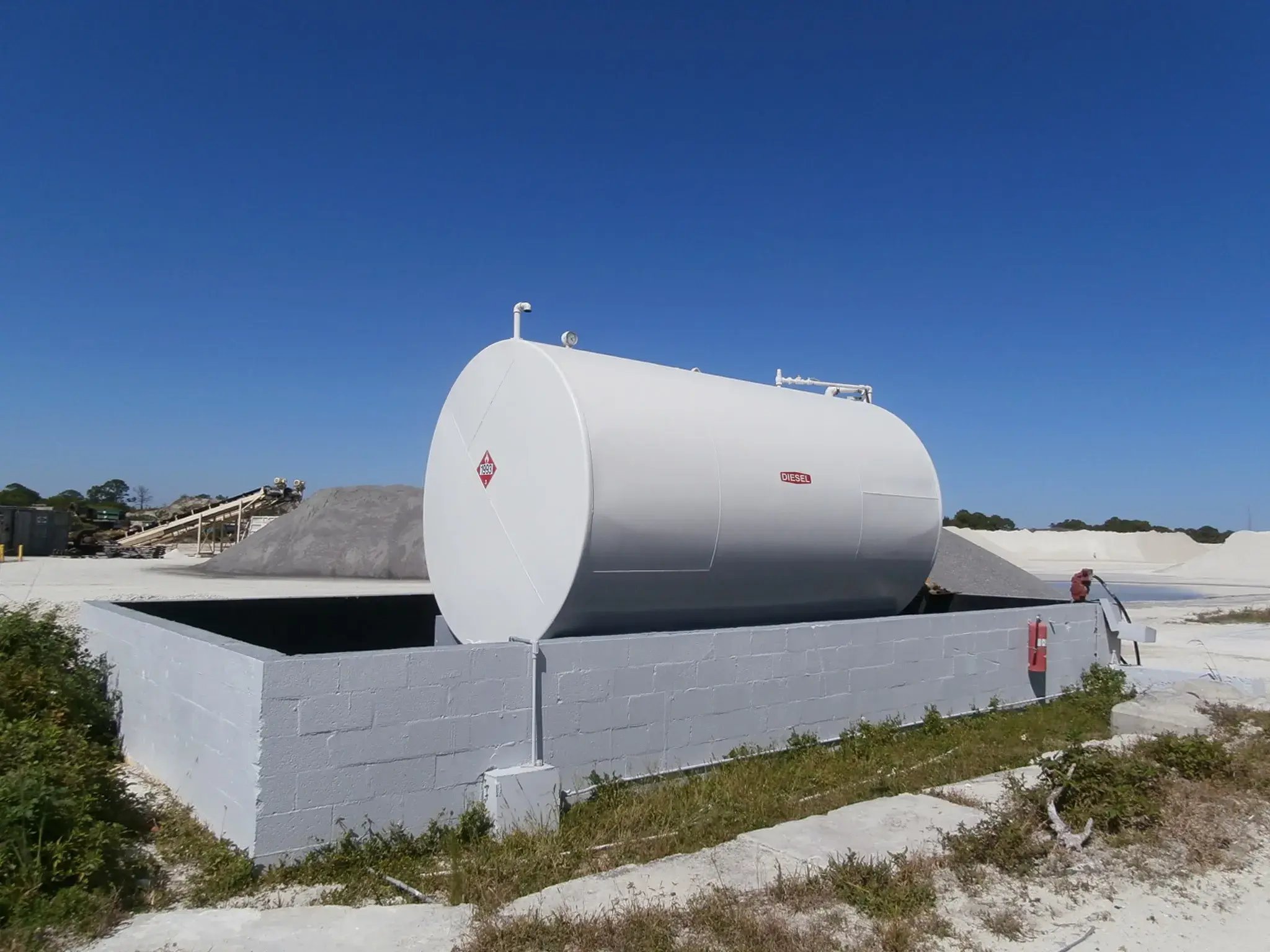
Paragraph 112.8(c)(6) of the SPCC rule (40 CFR Part 112) is short, but it packs in several separate duties. You have to test or inspect each aboveground container for integrity on a regular schedule and whenever you make material repairs. The rule then leaves the details to you: you determine, in accordance with industry standards, the qualifications of the people doing the work and the frequency and type of testing, taking into account container size, configuration, and design. Shop-built, field-erected, skid-mounted, elevated, lined, double-walled, and partially buried containers are all named as examples of differences that matter.
The rule's examples of integrity tests include visual inspection, hydrostatic, radiographic, ultrasonic, and acoustic emissions testing, along with other nondestructive methods. EPA's inspector guidance describes the goal as catching problems such as pinhole leaks before they become discharges. The same requirement appears for animal fat and vegetable oil containers in section 112.12(c)(6), and Tier I qualified facilities, the smaller facilities that can self-certify using EPA's template, don't get a pass either. Here's how the pieces break down.
| What the rule says |
What it means in practice |
| Test or inspect each aboveground container for integrity |
A structural check of the shell, bottom, and attached parts, which goes beyond a glance at the outside |
| On a regular schedule |
You set the schedule using an industry standard, because the rule doesn't give a number of years |
| Whenever you make material repairs |
Repair work that restores a container's condition triggers a new inspection, but routine maintenance doesn't |
| Inspect supports and foundations |
Legs, saddles, pads, and slabs get looked at along with the container |
| Frequently inspect the outside |
Staff watch for deterioration, leaks, and oil collecting inside the dike or containment area |
| Keep comparison records |
Each inspection's results need to be comparable to the last so changes show up over time |
| Use appropriately qualified personnel |
You determine the qualifications based on the standard you follow |
If you're new to all of this, our overview on what an SPCC Plan includes and who needs one covers the bigger picture around this one requirement.
Which Bulk Oil Containers Need SPCC Integrity Testing?
The rule defines a bulk storage container as any container used to store oil, and EPA's fact sheet on integrity testing applies the requirement to aboveground containers of 55 gallons or more, both shop-built and field-constructed. Containers under 55 gallons don't count toward SPCC capacity and fall outside the integrity testing requirement. That does mean 55-gallon drums and portable totes are in play, and we cover how they're counted in our post on 55-gallon drums and SPCC plans.
The rule treats tanks in vaults, bunkered tanks, and partially buried tanks as aboveground containers, so they get the same testing and inspection. Completely buried metallic tanks are handled by a different paragraph, which requires regular leak testing, and some buried tanks fall under the federal UST rules instead. Oil-filled operational equipment, such as hydraulic systems, lubricating systems, and transformers, isn't a bulk storage container, so this container integrity paragraph doesn't apply to it. The rule has other inspection and monitoring expectations for that equipment, which your SPCC Plan should address separately. Oil production facilities have their own visual inspection provision in section 112.9(c)(3), and this article sticks to the general onshore rules.
How Do You Decide Whether STI SP001, API 653, or Another Standard Applies?
The rule doesn't name a standard, but EPA's bulk storage container fact sheet calls API 653 and STI SP001 two commonly used ones. EPA's tank inspections page adds that facilities with shop-built aboveground containers can use SP001 to meet the requirement. Once you adopt a standard to comply, EPA says you have to implement the relevant portions of it, so a plan that cites SP001 and then ignores its checklists doesn't match what the facility does.
| Container type |
Commonly used standard |
Notes |
| Shop-fabricated steel tanks (horizontal, vertical, rectangular, often built to UL 142 or UL 2085) |
STI SP001 |
EPA says SP001 may be used for shop-built containers. The schedule depends on the tank's category and capacity. |
| Small field-erected tanks |
STI SP001 |
Included in the standard's scope |
| Portable containers such as totes, plus associated secondary containment |
STI SP001 |
The standard includes a checklist for portable containers |
| Large field-erected steel tanks |
API 653 |
Covers inspection, repair, alteration, and reconstruction of tanks built to API 650. It leaves more judgment to the inspector than SP001 does. |
| Fiberglass tanks |
Manufacturer guidance or a fiberglass industry recommended practice |
SP001 and API 653 are written around steel, so confirm what applies to your tank |
| Elevated, shop-built stainless steel tanks holding food-grade animal fat or vegetable oil |
Formal visual inspection on a regular schedule |
A specific option in section 112.12(c)(6)(ii). You document the inspector qualifications in the Plan. |
To sort your own tanks, start with an inventory listing each container's capacity, construction, orientation, material, whether it's elevated, whether it sits in a dike, whether it can detect a release, and any repair history. SP001 uses a tank's category, which turns on spill containment and release detection, along with its capacity to set the inspection schedule. The seventh edition, released in February 2024, kept the categories and schedules from the previous edition, so older plans built on SP001 still line up.
If no published standard fits a container, the rule allows a plan to deviate when you provide equivalent environmental protection another way, with your reasons and the alternative described in the Plan. A Tier I qualified facility can't use that option, and a Tier II qualified facility needs a professional engineer to certify the alternative. Our posts on the different types of SPCC Plans and on Tier I self-certified plans explain how those categories work.
How Often Should Bulk Oil Containers Be Inspected and Tested?
The rule says "regular schedule" and nothing more, so the schedule comes from the standard you follow and gets written into your Plan. In practice that produces layers of inspection, each handled by different people at different intervals. An inspector reviewing your program will compare what your Plan promises against the records you can produce, so the schedule needs to be one your staff and your outside inspector can keep.
| Inspection layer |
Who usually does it |
Typical timing |
| Outside check of the container, supports, and dike area |
Trained facility staff |
Frequently, and most plans built on SP001 use monthly checklists |
| Annual inspection |
A qualified person the owner designates |
Once a year under SP001 checklists |
| Formal inspection or integrity test |
A certified inspector (SP001 or API 653 qualified) |
On the interval the standard sets for the tank's category and size |
| Inspection after a material repair |
A qualified inspector |
Each time a material repair is made |
The monthly and annual layers are where most facilities spend their effort, and they're also where missed paperwork piles up. Our guide to the monthly SPCC inspection checklist covers what staff should look for on those walk-throughs. The formal inspections come far less often, and the interval depends on the tank's category and size, so read the schedule table in the current edition of SP001 for each tank rather than relying on a number you saw in a blog. For API 653 tanks, the inspector's findings drive the next inspection date.
Who Is Qualified to Perform SPCC Tank Integrity Inspections?
The rule leaves qualifications to you, again by way of industry standards, and the Plan should record what you decided. For routine outside checks, that's usually facility staff who've been trained on the checklist. SP001's seventh edition lets the owner designate a qualified person for periodic inspections and the leak test. Formal inspections under SP001 call for an inspector certified under that standard, and API 653 work calls for an inspector certified under API's program. Nondestructive testing such as ultrasonic thickness readings is typically handled by trained technicians working for those inspection firms.
The rule also requires that inspections follow written procedures that either you or the certifying engineer develop for the facility. If a professional engineer certifies your Plan, EPA's fact sheet says the PE works with you to set up the inspection program. RMA doesn't have a PE on staff, so when a plan needs certification we work with an outside PE, and our post on professional engineers and SPCC plans explains what that review involves. Whoever does the work, your staff still need training on their part of the program, and our online training library includes courses for that.
What Do Pennsylvania's DEP Aboveground Storage Tank Rules Add?
EPA Region 3 enforces the federal SPCC rule in Pennsylvania, and our post on who enforces SPCC plans covers how that works. Separately, the Pennsylvania Department of Environmental Protection (DEP) runs its own storage tank program under the Storage Tank and Spill Prevention Act and 25 Pa. Code Chapter 245. DEP requires periodic inspections of aboveground tanks over 5,000 gallons, and of tanks over 1,100 gallons that hold highly hazardous substances. The highly hazardous row covers certain chemicals, so for oil storage the 5,000-gallon rows are the usual starting point. Those inspections have to be done by DEP-certified inspectors, either an IAM inspector for manufactured tanks or an IAF inspector for field-constructed tanks. DEP publishes a searchable list of certified storage tank companies.
| Tank |
First inspection |
After that |
| In-service tank over 5,000 gallons |
Within 5 years of installation |
5 years maximum |
| Highly hazardous substance tank over 1,100 gallons |
Within 5 years of installation |
5 years maximum |
| Tank in an underground vault over 5,000 gallons |
6 to 12 months after installation |
3 years maximum |
| Out-of-service tank over 21,000 gallons |
Within 10 years of installing a new tank or tank bottom |
20 years maximum |
| Internally lined tank over 21,000 gallons |
Within 10 years of installing the lining |
10 years maximum |
Those are maximums. The inspector sets the actual due date at each inspection, and the regulation ties the next in-service inspection to a calculated corrosion-rate life, capped at five years. The inspections follow guidelines from a nationally recognized association such as API 653, results go to DEP on its inspection summary form, and the facility keeps the complete report on site until the next out-of-service inspection. A certified inspector can't be an employee of the tank owner, so an in-house maintenance lead can't fill that role. Whether a particular tank is in DEP's program depends on its size, contents, and use, so confirm yours with DEP's Division of Storage Tanks at 1-800-42-TANKS or tanks@pa.gov.
One inspection visit can sometimes feed both programs, but don't assume it will. Confirm that the DEP report covers what your SPCC Plan promises. Local fire officials may also have their own tank inspection expectations, which vary by municipality.
What Counts as a Material Repair That Triggers New Testing?
The SPCC rule defines a repair as any work needed to maintain or restore a container to a condition suitable for safe operation, other than the ordinary, day-to-day maintenance that keeps the container functioning and doesn't weaken it. Patching a shell, installing a new bottom, adding an opening, or modifying supports all fall on the repair side, and STI's SP031 standard covers repairs to shop-fabricated tanks while API 653 covers them for large field-erected tanks. Replacing a worn gasket or repainting the exterior generally falls on the maintenance side. Cutting, burning, welding, or heating work that changes a container's dimensions is an alteration, which puts you well past routine upkeep.
Field-constructed containers get an additional step. After a repair, alteration, reconstruction, or change in service that might affect the risk of a discharge or brittle fracture failure, section 112.7(i) requires you to evaluate the container for that risk and take appropriate action. The same evaluation applies if the container has discharged oil or failed. In Pennsylvania, DEP requires field-constructed tanks to be inspected at installation, reconstruction, or relocation, and major modifications to aboveground tanks must be inspected by a certified inspector and reported. When you're unsure whether a job counts as material, ask your inspector before the work starts, and record the answer either way.
How Do You Document Integrity Testing for an SPCC Plan?
Section 112.7(e) requires the written inspection and testing procedures and a record of each inspection and test, signed by the appropriate supervisor or inspector, to be kept with the SPCC Plan for at least three years. Records kept under usual and customary business practices count, so you don't need a special form if your existing paperwork covers the same information. Paragraph 112.8(c)(6) separately requires comparison records, which means results from one inspection need to line up with the next. EPA recommends keeping formal test records for the life of the container, and many industry standards say the same.
| Record |
What it should show |
| Written procedures |
The standard you follow, the schedule for each container, and the inspector qualifications you determined |
| Each inspection or test |
Date, container identified, who performed it and their qualifications, method used, and findings |
| Measurements |
Readings such as shell thickness, recorded so they can be compared to prior inspections |
| Corrective actions |
What was found, what was done, and the date it was completed |
| Signature |
The supervisor or inspector who signed each record |
Our post on the top SPCC plan violations and fines covers what inspectors cite. The testing program also gets revisited when you review the Plan every five years, and our guide to SPCC plan five-year reviews walks through that process. Keep the records where the Plan lives so the two stay together.
How Does RMA Help With SPCC Tank Integrity Testing Programs?
We build the integrity testing program into your SPCC Plan: a tank inventory, the standard that fits each container, a schedule, and monthly and annual inspection forms your staff can use. We also train your team on their part, and when a plan needs PE certification we bring in an outside professional engineer. The formal inspections themselves are specialty work for certified tank inspectors, and we can help you understand what yours should cover and when they're due. If your facility has a few small shop-built tanks and a Tier I plan, you may be able to run the program yourself using SP001 checklists, and we'll tell you so.
If you'd like a second set of eyes on your current program, or you're not sure which of your tanks fall under SPCC, DEP's rules, or both, there's no obligation to talk to us. You can call, email, or fill out the form on our website, and you can also contact RMA to talk through your tanks with someone who works on these plans every day.