A Printable Monthly SPCC Inspection Checklist for New Jersey Facilities, Organized by Area
If you store oil at a New Jersey facility, your SPCC Plan almost certainly commits you to walking the site on a regular schedule and writing down what you find. SPCC stands for Spill Prevention, Control, and Countermeasure, the federal oil spill prevention plan required under 40 CFR Part 112 for facilities with more than 1,320 gallons of aboveground oil storage, counting only containers of 55 gallons or more. Most facilities handle the inspection requirement with a monthly walk-through, and the form they use often ends up being a scribbled page or a log nobody has looked at in a year.
This post is built around the checklist itself, organized by area with a column for findings and corrective actions, so you can print it and use it. We also explain where the inspection frequency comes from, what the rule expects you to record, and what to do when you find a problem. If you'd like a second set of eyes on your plan or inspection form, feel free to reach out to RMA.
Table of Contents
TL;DR
A good monthly SPCC inspection walks the site area by area: tanks and containers, leaks and staining, secondary containment, valves and piping, overfill alarms, drum storage, loading areas, and security. The federal rule leaves the inspection frequency to your SPCC Plan and industry standards, so follow what your plan says. Write down every finding and fix, sign the form, and keep it with your plan for three years. The checklist in this post is a printable starting point you can adjust to your site.
How Often Do SPCC Inspections Have to Happen?
The federal SPCC rule doesn't say "inspect every month" in a single sentence. What it says is that you have to inspect and test your aboveground containers on a regular schedule, and that the scope and frequency of that work should follow industry standards. Under 40 CFR 112.8(c)(6), that applies to container integrity, and under 112.8(d)(4), your aboveground valves, piping, and appurtenances get regular inspection too. Section 112.7(e) then requires you to keep your written inspection procedures and signed records of each inspection with your plan for three years. The monthly rhythm most facilities follow comes from the industry standards your plan leans on, such as the Steel Tank Institute's SP001 standard for many shop-fabricated tanks.
That means the real answer to "how often" sits in your own SPCC Plan. Whatever frequency your plan commits to is the schedule an EPA inspector will hold you to. If the plan says monthly and your logs show a quarterly walk, that gap is a finding, even if nothing was ever leaking. The reverse is true as well. Don't write a monthly promise into your plan unless somebody will really keep it. EPA Region 2 enforces the federal SPCC rule in New Jersey, and missing or incomplete inspection records show up regularly in the most common SPCC violations we see. If you're not sure what your plan requires, pull it out and read the inspection section before you use any generic form, ours included. Our top 10 things to do during monthly inspections article walks through the monthly routine in a different format.
Monthly walk-throughs are also different from formal inspections. A monthly visual check is something your own trained staff can do with a clipboard. Larger or older tanks may also need periodic formal inspections or integrity testing by a qualified inspector, on a longer cycle set by the standard your plan references. This checklist covers the monthly visual walk, and it doesn't replace those formal tests.
How Do You Use a Monthly SPCC Inspection Checklist?
Print one copy per inspection, fill in the header, and walk the site in the same order every time. Using a consistent route is what makes the checklist useful, because you stop skipping the same corner of the yard every month. Mark each row OK or Issue. When you mark Issue, write down what you saw in the Findings column, with enough detail that someone else could find it (which tank, which valve, which side), and write the fix and the date it was completed in the last column. Then sign and date the form and hand it to whoever signs off in your plan.
Treat this as a starting template. Delete rows for equipment you don't have, and add rows for anything specific to your site, like a day tank for a generator, an oil-water separator, or a used oil tank. Keep a clean master copy so you aren't rewriting the form every month, and file the completed sheets with your SPCC Plan. If you have several buildings or yards, run a separate form for each so the findings stay tied to a location.
| Facility name and address: |
Inspection date and time: |
| Inspector name: |
Weather and recent rainfall: |
| Area or building inspected: |
Plan section or frequency this inspection follows: |
What to Check on SPCC Tanks and Containers
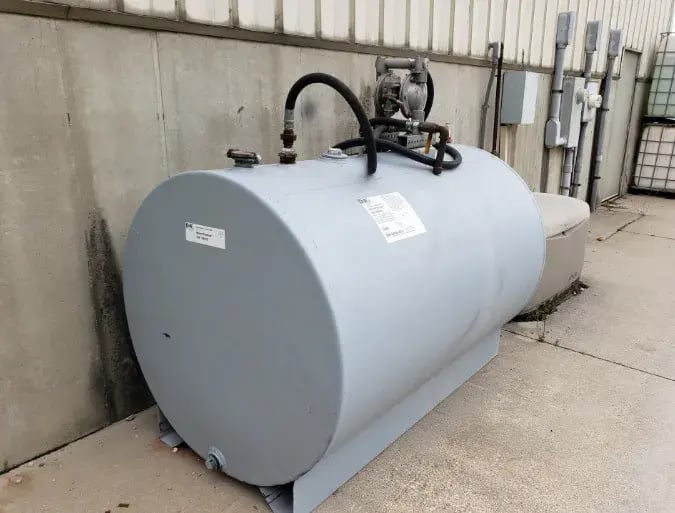
Start with the containers themselves, since they hold the oil. You're looking for the early signs of failure: rust that's bubbling the paint, a bulge, a dent near a weld, a stain running down from a seam. Walk all the way around each tank and look at the base and supports as well as the shell. Tanks usually fail at the bottom, at the seams, and at fittings, and those are also the spots people overlook because they're low or awkward to see. Oil-filled operational equipment, such as transformers and hydraulic units, counts as oil storage for SPCC purposes, so include it here.
| Check |
What to look for |
OK / Issue |
Findings |
Corrective action and date |
| Shell and walls |
Dents, bulges, rust blistering, pitting, failed paint or coating, wet spots |
☐ OK
☐ Issue |
|
|
| Seams, welds, bolts, and gaskets |
Weeping, drips, staining, loose or missing bolts, deteriorated gaskets |
☐ OK
☐ Issue |
|
|
| Supports, saddles, and foundations |
Settling, cracks, corrosion at legs, standing water against the base, soil washed out beneath |
☐ OK
☐ Issue |
|
|
| Gauges, vents, and openings |
Gauges readable, vents unobstructed, caps and bungs in place and tight |
☐ OK
☐ Issue |
|
|
| Labels and identification |
Contents and capacity labeled, tank numbers match your plan |
☐ OK
☐ Issue |
|
|
| Oil-filled equipment |
Transformers, hydraulic units, and compressors free of leaks, staining, or damaged casings |
☐ OK
☐ Issue |
|
|
| Portable tanks and totes |
Intact frames and valves, no bulging or cracks, outlets capped |
☐ OK
☐ Issue |
|
|
How Do You Spot SPCC Leaks, Drips, and Staining?
Stains are a record of what's happened since your last walk. A fresh, wet stain tells you something is leaking now, and an old dark patch tells you it's been happening for a while and nobody wrote it down. Look under fittings, around pumps and fill ports, along piping, and on the ground beneath and between containers. Check gravel and soil for discoloration or a smell of fuel, and look at drains, ditches, and puddles for sheen. Stressed or dead vegetation near a tank is another sign that gets missed.
The federal rule at 40 CFR 112.8(c)(10) says visible oil losses from seams, gaskets, piping, pumps, valves, and similar parts must be promptly corrected, and any oil that accumulates in diked areas must be promptly removed. If oil has left containment or reached a drain or water, the situation changes from a maintenance item to a possible reportable discharge. Federal reporting is triggered by oil reaching navigable waters or creating a sheen, which our sheen rule article covers in detail. New Jersey also has its own discharge reporting duty under the Spill Compensation and Control Act (the Spill Act), and the NJDEP hotline takes those reports. We don't print the hotline number here because it's best to take it from NJDEP's website, then post it where your staff can see it.
| Check |
What to look for |
OK / Issue |
Findings |
Corrective action and date |
| Around containers and fittings |
Wet spots, drips, oil film on surfaces, stains on the ground beneath |
☐ OK
☐ Issue |
|
|
| Soil, gravel, and pavement |
Dark patches, fuel odor, fresh staining, absorbent material that needs replacing |
☐ OK
☐ Issue |
|
|
| Drains, ditches, and puddles |
Sheen on water, oil near storm drains, oil in nearby catch basins |
☐ OK
☐ Issue |
|
|
| Vegetation and surrounding area |
Dead or stressed plants near tanks, piping, or fill areas |
☐ OK
☐ Issue |
|
|
| Spill response supplies |
Spill kit stocked and accessible, absorbents and booms in place, used pads removed |
☐ OK
☐ Issue |
|
|
How Do You Inspect SPCC Secondary Containment?
Secondary containment is what keeps a tank failure from becoming a discharge, so the walk should include the berm, the floor, and the drain valve. Look at the walls of a dike or curb for cracks, erosion, burrowing animals, and gaps where pipes pass through. On a lined or concrete floor, check for cracks, separations at joints, and a coating that's peeling. Stored pallets, equipment, and snow piles inside the containment take up volume that's meant for oil, so check that the area is clear.
Then look at water. Rainwater collects inside open containment, and you can't leave it, because it reduces capacity and can hold a layer of oil. The rule's drainage requirements for diked areas expect the drain valve to stay closed except when you're draining rainwater, and a common approach in plans is to check the water for sheen before opening it, then close and reseal the valve and record the drainage event. Follow whatever procedure your own plan describes. A drainage log is separate from your inspection form, and inspectors ask for both. If you want to double-check the size of your containment, see our guide on how big your secondary containment needs to be.
| Check |
What to look for |
OK / Issue |
Findings |
Corrective action and date |
| Dike or berm walls |
Cracks, erosion, settlement, holes, gaps at pipe penetrations, damaged curbing |
☐ OK
☐ Issue |
|
|
| Floor, liner, or coating |
Cracks, open joints, peeling or bubbling coating, standing oil |
☐ OK
☐ Issue |
|
|
| Accumulated water |
Rainwater depth, any sheen or oil film, water drained only after inspection |
☐ OK
☐ Issue |
|
|
| Drain and bypass valves |
Closed and sealed or locked between drainage events, valves operate freely, no leaks |
☐ OK
☐ Issue |
|
|
| Drainage log |
Any rainwater release since last inspection recorded with date, time, and who inspected |
☐ OK
☐ Issue |
|
|
| Containment capacity |
Area clear of stored items, equipment, debris, and snow that reduce volume |
☐ OK
☐ Issue |
|
|
| Sumps and collection points |
Free of oil and debris, pumps and floats working where present |
☐ OK
☐ Issue |
|
|

What to Check on SPCC Valves, Piping, and Appurtenances
Piping and valves leak more often than tank shells, because they have more joints, more movement, and more people touching them. Check flanges, valve stems and packing, threaded connections, and any spot where a hose or pipe meets a tank. Look at the pipe supports and racks, since a sagging pipe puts strain on the next joint. Where pipe runs above ground, look for corrosion, coating failure, and signs of impact from vehicles.
The rule also expects piping that's out of service to be dealt with. Under 112.8(d), the terminal connection at the transfer point should be capped or blank-flanged and marked if the line is not in service or on standby for an extended time. It also expects you to warn vehicles entering the facility so they don't endanger aboveground piping. Look for the signs, barriers, and bollards your plan describes.
| Check |
What to look for |
OK / Issue |
Findings |
Corrective action and date |
| Flanges and joints |
Weeping, drips, staining, loose bolts, failed gaskets |
☐ OK
☐ Issue |
|
|
| Valves and packing |
Leaks at the stem or body, valves labeled and operating, locked where required |
☐ OK
☐ Issue |
|
|
| Pipe supports and racks |
Sagging, rust, loose or missing supports, pipes rubbing on hard surfaces |
☐ OK
☐ Issue |
|
|
| Piping surface condition |
Corrosion, coating damage, dents, signs of vehicle impact |
☐ OK
☐ Issue |
|
|
| Piping out of service |
Terminal connections capped or blank-flanged and marked as to origin |
☐ OK
☐ Issue |
|
|
| Exposed buried piping |
Any section visible at the surface or in a trench checked for coating damage and corrosion |
☐ OK
☐ Issue |
|
|
| Vehicle protection |
Barriers, bollards, and warning signs in place and undamaged |
☐ OK
☐ Issue |
|
|
How Do You Check SPCC Overfill Prevention and Alarms?
Overfills are among the most common ways oil ends up on the ground, and they almost always happen during a delivery. Your plan describes how each tank is protected, which can include a high-level alarm, an automatic shutoff, a gauge that someone watches during filling, or a mix of these. Under 112.8(c)(8), each bulk storage container needs at least one of these measures, and your inspection is where you confirm the device you named in the plan is still there and still works.
Test the way your plan and the equipment manufacturer say to test. Some alarms have a test button, and others need a more involved check, so don't invent a procedure. What we'd look for on a monthly walk is simple: the alarm or gauge is intact, readable, and powered, the audible or visible signal can be seen or heard from where the delivery driver stands, and the fill procedure posted at the tank matches what your plan says. Where the plan relies on someone watching the gauge during filling, make sure that person knows they're the control. Staff who receive deliveries should also be covered by your annual SPCC training, and our online training library gives employees an easy way to complete it.
| Check |
What to look for |
OK / Issue |
Findings |
Corrective action and date |
| High-level alarms |
Alarm intact, powered, signal audible or visible at the fill point, tested as your plan specifies |
☐ OK
☐ Issue |
|
|
| Level gauges |
Readable, not cracked or fogged, readings make sense compared with last month |
☐ OK
☐ Issue |
|
|
| Automatic shutoff or overfill valves |
Present, undamaged, operation checked per manufacturer guidance |
☐ OK
☐ Issue |
|
|
| Fill ports and caps |
Caps present and secure, fill port labeled, containment at the fill connection free of oil and water |
☐ OK
☐ Issue |
|
|
| Delivery procedures |
Posted at the fill location, matches the plan, delivery staff know who is responsible |
☐ OK
☐ Issue |
|
|
What to Check for SPCC Drum and Portable Container Storage
Drums, totes, and other portable containers are easy to forget because they move around. A drum that was in the corner last month may be next to the loading dock now. Containers of 55 gallons or more count toward your SPCC capacity total, as we explain in our guide on how 55-gallon drums count toward SPCC, and that includes used oil and empty-but-not-clean drums that still hold residue. Look at each one for rust, dents, bulging, loose bungs, and missing labels. Also check where they're stored, since a drum sitting on bare ground or in the rain is a different risk than a drum in a covered, curbed area.
Under 112.8(c)(11), mobile or portable oil containers should be positioned or located to prevent a discharge, and they need a secondary means of containment sized to hold the largest single container plus enough freeboard for precipitation. A pallet of drums with a spill pallet underneath meets that idea only if the sump size really works for the largest container above it.
| Check |
What to look for |
OK / Issue |
Findings |
Corrective action and date |
| Drum and tote condition |
Rust, dents, bulging, leaks at seams, damaged valves or frames |
☐ OK
☐ Issue |
|
|
| Closures and labels |
Bungs tight, lids closed, contents labeled, hazard markings legible |
☐ OK
☐ Issue |
|
|
| Storage location |
Inside containment, on a spill pallet, or in a curbed and covered area; not on bare ground |
☐ OK
☐ Issue |
|
|
| Containment capacity |
Sized for the largest container plus freeboard, free of rainwater and debris |
☐ OK
☐ Issue |
|
|
| Used oil and waste oil |
Containers closed and labeled, no overfilled drums, pickup schedule on track |
☐ OK
☐ Issue |
|
|
| Inventory |
Number and size of containers matches your plan, with new or extra drums noted |
☐ OK
☐ Issue |
|
|
What to Check at SPCC Loading and Unloading Areas
Loading and unloading is where people, vehicles, hoses, and oil all meet, so it's where a lot of spills start. Where you have a tank truck loading rack, 40 CFR 112.7(h) calls for containment or quick drainage at the rack, a way to keep a vehicle from leaving before the transfer lines are fully disconnected (wheel chocks, barriers, or interlocked warning lights, for example), and an inspection of the truck's lowermost drains and outlets before it leaves. Your monthly walk should confirm the physical pieces of that setup are still in place, even when no delivery is happening that day.
Look at the surface where trucks park, since cracks and damaged curbing can let a hose spill reach a storm drain. Check that any drain covers or plugs you use during transfers are available and working. Hoses and couplings wear out, and a split hose is one of the most predictable sources of a transfer spill. If your facility sits near a waterway, in the Meadowlands, or next to storm drains that discharge close by, even a small loading spill can reach water quickly.
| Check |
What to look for |
OK / Issue |
Findings |
Corrective action and date |
| Containment or curbing at the loading area |
Intact, drains controlled, no oil or standing water |
☐ OK
☐ Issue |
|
|
| Hoses and couplings |
Cracks, splits, worn ends, leaking connections, caps in place when stored |
☐ OK
☐ Issue |
|
|
| Vehicle departure prevention |
Wheel chocks, interlocks, or warning lights present and working |
☐ OK
☐ Issue |
|
|
| Drain covers and plugs |
Available, in good condition, stored where staff can find them quickly |
☐ OK
☐ Issue |
|
|
| Transfer connections |
Capped or blank-flanged when not in use, drip pans clean |
☐ OK
☐ Issue |
|
|
| Spill response supplies |
Spill kit stocked near the loading area, absorbents and drain covers ready to use |
☐ OK
☐ Issue |
|
|
What to Check for SPCC Security, Lighting, and Signage
Security is part of oil spill prevention because vandalism and tampering cause discharges as readily as corrosion does. Section 112.7(g) expects your plan to describe how you control access to the places where oil is handled and stored, which at many sites means fencing and locked gates when the site is unattended. It also covers securing master flow and drain valves, preventing unauthorized use of pump starter controls, and securing out-of-service and loading connections, along with whether security lighting makes sense to deter vandals and help you spot discharges.
Walk the perimeter and the storage areas as if you were checking for a way in. Test a lock rather than assuming it's engaged, and walk after dark once in a while to see whether the lighting covers what it should. Check that someone who finds a spill at 2 a.m. can see the emergency contact numbers and what to do. Staff turnover causes signage to get out of date faster than anything else, and a phone number nobody answers doesn't help in an emergency.
| Check |
What to look for |
OK / Issue |
Findings |
Corrective action and date |
| Access control, fencing, and gates |
Intact, locked when the site is unattended, no gaps or damage |
☐ OK
☐ Issue |
|
|
| Valves and pump controls |
Master flow and drain valves secured when not in use, pump starter controls secured against unauthorized use |
☐ OK
☐ Issue |
|
|
| Lighting |
Fixtures working and positioned to cover tanks, loading areas, and valves |
☐ OK
☐ Issue |
|
|
| Signage |
Tank labels, no-smoking and hazard signs, and emergency contacts visible and current |
☐ OK
☐ Issue |
|
|
| Emergency information |
Spill response procedure and contact numbers posted and up to date |
☐ OK
☐ Issue |
|
|
| Spill kit |
Stocked, accessible, inventory list checked, used items replaced |
☐ OK
☐ Issue |
|
|
What Do You Do With SPCC Inspection Findings and Records?
A finding only helps if something happens after it's written down. For each issue you mark, record who is responsible for the fix and when it's done, then follow up at the next inspection. Small things such as a loose bolt or a missing label can be fixed that day. A weeping seam, a failing valve, or a cracked containment wall needs a repair plan, and any material repair to a container may call for a new integrity inspection afterward under your plan. If the same item turns up month after month, that's a sign to replace it rather than keep patching it.
Keep the signed forms with your SPCC Plan for at least three years, along with your drainage logs, training records, and any test records the plan calls for. Think of the records as your proof that the plan is more than a document on a shelf. If you've added, removed, or relocated tanks, changed what you store, or changed how deliveries are handled, your plan may need an amendment. See our guide on when to update your SPCC plan, and note that your plan needs a review at least every five years, covered in our five-year review article. The most overlooked SPCC requirements are worth a read too, since inspection records are on the list.
If a walk-through turns up an actual discharge, put safety first, stop the source if it's safe to do so, and contain the oil. Then work out whether the release needs to be reported. Oil that leaves containment, reaches a drain, or creates a sheen on water can trigger federal reporting, and New Jersey's Spill Act has its own reporting duty to NJDEP. Cleanups in New Jersey typically involve a licensed site remediation professional (LSRP). When liability or enforcement is a concern, an environmental attorney may be the right call alongside your consultant. Our SPCC plans in New Jersey guide covers how the state layer sits on top of the federal rule, and the who enforces SPCC plans article explains who shows up when something goes wrong.
How Can RMA Help With Your SPCC Inspections and Plan?
A checklist only works if it matches your plan, and plenty of facilities find out that theirs doesn't. We can read your SPCC Plan, tell you what it requires for inspections, and help you build a site-specific form that matches your tanks, containment, and delivery setup. We also help with plan updates, amendments after site changes, and staff training so the people doing the walk-throughs know what they're looking at. If your plan is out of date or you're not sure it reflects what's on the ground, that's worth sorting out before an inspector does it for you. Our SPCC pricing calculator gives real ranges if you want a sense of cost first.
There's no obligation and no pressure. If a simple form and a few training sessions are all you need, we'll tell you that. Call us, email us, or fill out the form on our website, and you'll hear back from someone on our team. You can also contact RMA directly to talk through your situation.