How the Contingency Plan Option Works for Transformers, Hydraulic Systems, and Other Equipment, and Why It's Not a Shortcut for New Jersey Facilities
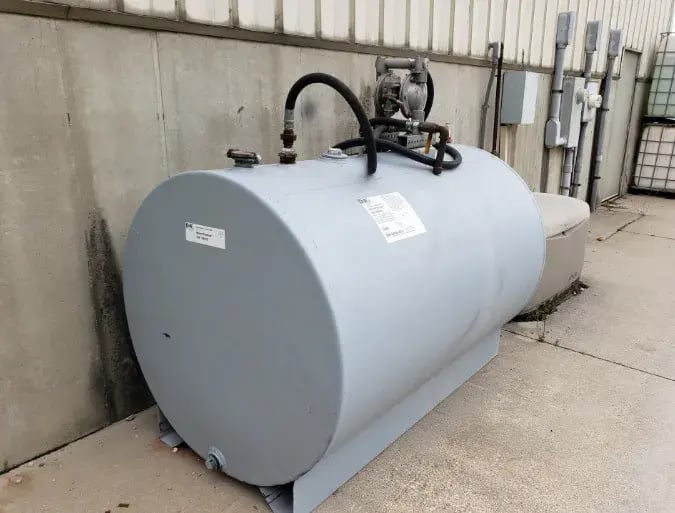
Some oil sits in places where building a berm isn't realistic. A transformer bolted to a pad against a building wall, a hydraulic elevator in a mechanical room, a compressor skid with a gearbox full of lubricating oil. If your facility stores enough oil to need a Spill Prevention, Control, and Countermeasure (SPCC) Plan, the federal rule generally expects secondary containment under or around all of it. The rule does let you use a contingency plan in place of containment, but only in two situations: for qualified oil-filled operational equipment, and for equipment or areas where containment is truly impracticable and a licensed Professional Engineer signs off. Either way, the contingency plan comes with its own list of obligations.
This article covers how secondary containment works under the SPCC rule, which equipment counts as oil-filled operational equipment, how each contingency plan option works, what the plan has to contain, and what New Jersey adds on top. We'll also explain why these options trade one kind of protection for another instead of letting you skip the work. If you'd like someone to look at your equipment and tell you which route fits, reach out to RMA and we'll walk through it with you.
Table of Contents
TL;DR
Yes, a contingency plan can stand in for secondary containment, but only in two situations. Qualified oil-filled operational equipment, like transformers and hydraulic or lubricating systems at a facility with a clean discharge history, can use an inspection or monitoring program, a contingency plan, and a written commitment of manpower, equipment, and materials. Anything else where containment isn't practical needs a documented impracticability determination certified by a licensed Professional Engineer, plus the same contingency plan and commitment, plus integrity testing for bulk storage containers. Neither route is an exemption. You trade a physical barrier for ongoing inspections, trained people, and stocked equipment, and New Jersey's Spill Act and discharge prevention rules still apply on top of the federal rule.
What Does Secondary Containment Mean Under the SPCC Rule?
Secondary containment is the backup that catches oil if the primary container fails. Under 40 CFR 112.7(c), the SPCC rule requires appropriate containment or diversionary structures or equipment to keep oil from reaching navigable waters or adjoining shorelines. The walls and floor have to hold oil, and a discharge can't escape before cleanup happens. For general containment, you only need to address the typical failure mode and the most likely quantity of oil discharged.
Acceptable methods include dikes, berms, curbing, drip pans, sumps, drainage systems, weirs and booms, diversion and retention ponds, and sorbent materials. Containment can be passive, like a berm, or active, like a drain valve that stays closed until someone opens it. Bulk storage containers carry a separate sizing rule, which our guide on how big SPCC oil spill containment needs to be covers.
Before reaching for either contingency option, check whether ordinary containment can work. A drip pan, a short curb, or a spill pallet handles a lot of small hydraulic and lubrication equipment at far less cost than an engineered inspection and response program. If a drip pan solves the problem, that's the right answer, and we'll say so.
What Counts as Oil-Filled Operational Equipment Under SPCC?
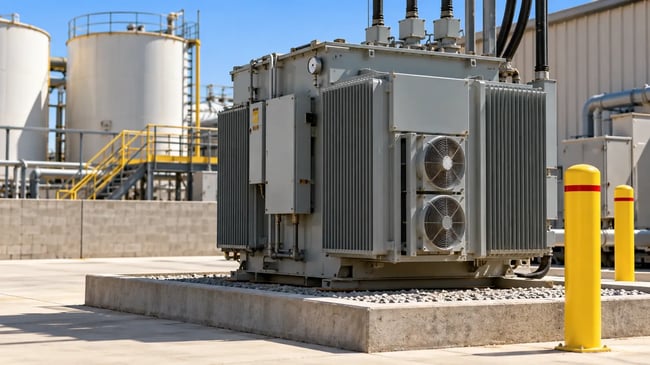
The rule defines oil-filled operational equipment as equipment with an oil container where the oil is present solely to support the function of the apparatus or device. It isn't a bulk storage container, and it excludes oil-filled manufacturing equipment, where oil flows through a process. Section 112.2 names hydraulic systems, lubricating systems, gear boxes, machining coolant systems, heat transfer systems, transformers, circuit breakers, and electrical switches. The line matters because the qualified-equipment option only applies to operational equipment. EPA also treats closed-loop piping that's intrinsic to the equipment as part of it, but not transfer piping, flowlines, or process piping.
| Equipment |
How SPCC generally treats it |
Qualified-equipment option? |
| Transformers, circuit breakers, electrical switches |
Operational equipment (named in the rule) |
Yes, if the discharge history test is met |
| Hydraulic systems, lubrication systems, gear boxes |
Operational equipment (named in the rule) |
Yes, if the discharge history test is met |
| Oil-filled equipment in a flow-through process |
Manufacturing equipment (excluded) |
No, but impracticability may be available |
| Generator fuel tanks, day tanks, refill drums |
Generally bulk storage containers |
No |
Generators cause the most confusion. The engine's own lubrication system is one thing, and the fuel tank feeding it is another, which is why our article on emergency backup generators and environmental permits treats fuel storage separately.
How Does the Qualified Oil-Filled Equipment Contingency Plan Option Work?
Paragraph (k) of 40 CFR 112.7 lets a facility skip general secondary containment for qualified oil-filled operational equipment. Using it is a choice. You can still provide containment, or prepare an impracticability determination instead.
Qualification comes down to discharge history. In the three years before the date the SPCC Plan is certified (or since the facility became subject to the rule, if that's been less than three years), the facility can't have had a single discharge from oil-filled operational equipment of more than 1,000 gallons, and it can't have had two discharges from that equipment that each exceeded 42 gallons within any twelve-month period. The discharges that count are oil that reaches navigable waters or adjoining shorelines in a quantity that may be harmful, and discharges caused by natural disasters, acts of war, or terrorism are left out. EPA has said a facility that uses the alternative and later has a reportable discharge doesn't automatically lose eligibility, though the history counts again the next time the Plan is certified.
If you don't provide containment for qualified equipment, the rule requires three things: documented inspection procedures or a monitoring program that can detect equipment failure or a discharge, an oil spill contingency plan that follows 40 CFR Part 109, and a written commitment of manpower, equipment, and materials to expeditiously control and remove any quantity of oil discharged that may be harmful. The last two don't apply if the facility has already submitted a Facility Response Plan under 112.20, a separate and larger plan for certain high-risk facilities.
The practical advantage is that you don't have to write an impracticability determination, so a small facility that qualifies for self-certification can generally use this option without a Professional Engineer developing the alternative measures. Our explainer on the Tier II self-certified SPCC Plan explains who qualifies.
When Is Secondary Containment Impracticable Under SPCC?
Everything that isn't qualified oil-filled operational equipment falls under 112.7(d). That covers bulk storage containers, oil-filled manufacturing equipment, loading areas, and operational equipment at facilities that don't meet the discharge history test. If you determine containment isn't practicable, the Plan has to clearly explain why. For bulk storage containers, you also have to conduct periodic integrity testing of the containers and periodic integrity and leak testing of the valves and piping. And unless you've submitted a Facility Response Plan, the Plan needs the same contingency plan and written commitment.
This route involves a licensed Professional Engineer. The determination sits inside a Plan certified by a PE under 112.3(d). A Tier II qualified facility can't self-certify an impracticability determination, because the rule requires a PE to review and certify each determination and its alternative measures in writing. A Tier I facility using the self-certification template can't include one at all and would need a PE-certified Plan. Our guides to Professional Engineer requirements for SPCC Plans and the different types of SPCC Plans sort out which category you're in.
So what counts as impracticable? EPA's guidance says cost can be considered, but it can't be the only reason, and the Plan has to explain the determination clearly. Legitimate reasons tend to involve physical space, worker safety, or engineering limits, such as a berm that would block an emergency exit route. "It's expensive" and "we'd rather not" don't hold up. Rule out active measures like drain valves or deployable barriers first, because the general containment rule allows them.
What Do the SPCC Contingency Plan and Written Commitment Have to Include?
Part 109 was written as criteria for state, local, and regional oil removal contingency plans, so facilities borrow its framework and scale it to the site. The criteria call for a defined response team of trained, available personnel, and a predesignated, qualified response coordinator with the authority to direct operations and request federal help. They also call for reliable communications so a discharge gets reported in time, a prearranged procedure for getting assistance when a situation exceeds your capability, and different levels of response depending on severity. A page of emergency phone numbers doesn't meet that.
The written commitment is where the plan meets reality. It should name who responds (your employees, a spill response contractor, or both), what equipment and materials are staged and where, and how quickly they can be deployed. Think sorbent pads and socks, storm drain covers, booms, pumps, and vacuum truck access. The commitment has to be something you can deliver at your site, on a Saturday night, with the staff you have.
The inspection or monitoring program should match the equipment: routine walk-arounds with a checklist, level or pressure checks on hydraulic units, and alarms or gauges where they exist. Inspection records have to be signed and kept with the Plan for three years, and our list of the top 10 things to do during SPCC monthly inspections is a good starting point. Oil-handling personnel also need training on the Plan and an annual discharge prevention briefing, and the response team named in the contingency plan should be the same people. We cover the details in annual SPCC training requirements, and our online environmental training library has ready-made courses.
Why Isn't the SPCC Contingency Plan Option a Shortcut?
| Route |
Who can use it |
What the Plan needs |
PE role |
| General containment (112.7(c)) |
Any facility |
Berm, curb, drip pan, sorbents, or another listed method |
Standard Plan certification, unless self-certified |
| Qualified equipment (112.7(k)) |
Operational equipment at facilities that meet the discharge history test |
Inspection or monitoring program, contingency plan, written commitment |
No separate impracticability determination |
| Impracticability (112.7(d)) |
Equipment or areas where containment truly isn't practicable |
Written explanation, contingency plan, written commitment, integrity testing for bulk containers |
Licensed PE certifies the determination and measures |
A berm works at 2 a.m. on a holiday weekend without anyone doing anything. A contingency plan works only if the inspections happen, the people know their roles, the materials sit where the plan says they do, and the response contractor picks up the phone. That makes it a standing obligation instead of a one-time project. The Plan needs a review at least every five years, it has to be amended when changes affect discharge potential, and a new reportable discharge can change whether equipment still qualifies. The written commitment also sets the standard you'll be measured against after a spill, and our breakdown of the top SPCC Plan violations and fines shows the kinds of gaps inspectors cite.
If you're adding equipment as part of a build-out, designing containment in is nearly always easier than retrofitting it later. Construction permits, fire permits, and equipment installation approvals go through your engineer and contractor, and RMA doesn't prepare them. Once the facility is operating, we help with the operational side: the SPCC Plan or amendment, inspection procedures, training, and spill reporting procedures.
What Does New Jersey Add to SPCC Contingency Plans for Oil-Filled Equipment?
EPA Region 2 enforces the SPCC rule in New Jersey, and the rule tells you to discuss conformance with any applicable more stringent state rules in your Plan. New Jersey has several, and our overview of SPCC Plans in New Jersey shows how the state and federal programs fit together.
The first is the Spill Compensation and Control Act, usually called the Spill Act, which covers discharges of petroleum and other hazardous substances. Liability under it is generally strict, so a good plan doesn't erase the cleanup cost of a discharge that happens anyway. The Spill Act also carries a duty to report discharges to NJDEP, and NJDEP's website lists the current hotline number. If a spill is threatening people or entering a waterway, call 911 first. Our article on when you have to report an oil spill covers the federal side.
The second is New Jersey's discharge prevention rule, N.J.A.C. 7:1E. A facility that qualifies as a major facility has to prepare and submit a Discharge Prevention, Containment and Countermeasure (DPCC) plan and a Discharge Cleanup and Removal (DCR) plan to NJDEP. Those plans have their own standards, including standards for facility drainage and secondary containment, and they're subject to NJDEP approval and periodic renewal. A federal alternative in your SPCC Plan doesn't automatically carry over to the state plan, so a major facility should treat the two documents as separate and make sure they agree. Whether you count as a major facility depends on your storage capacity and what you store, so check N.J.A.C. 7:1E against your own inventory.
When oil reaches soil or groundwater, cleanup typically involves a Licensed Site Remediation Professional (LSRP), and that bill is usually far larger than anything described here. If you've had a discharge and you're unsure where you stand on liability, an environmental attorney is the right person to ask.
How Does Using a Contingency Plan Option Affect SPCC Plan Cost?
The alternatives aren't free. On the Plan side, RMA's published SPCC Plan pricing runs from about $2,500 to $15,000 depending on facility complexity, simple Tier I updates run around $1,500, and PE-certified complex updates start at $7,500 and up. Plans that rely on impracticability determinations always involve a licensed Professional Engineer's review and certification, which is one factor that moves a plan up that range, along with total storage capacity and how many containers and pieces of equipment are involved. On the program side, the inspections, staged materials, response contracts, and training time are yours to run, so weigh them against the cost of a drip pan or short curb before deciding. Many small facilities with a few oil-filled units can self-certify without a consultant. If yours isn't one of them, our SPCC Plan cost guide goes through pricing in detail, and the pricing calculator below shows what RMA's help with your SPCC Plan would run based on your facility's details.
How Can RMA Help With Oil-Filled Equipment and Your SPCC Plan?
We start with your equipment list, your discharge history for the three-year lookback, and your site layout, then tell you honestly which route fits each piece of equipment. Sometimes it's a drip pan. Sometimes it's the qualified-equipment option with a documented inspection program, and sometimes it's an impracticability determination that a licensed Professional Engineer has to review and approve. When a contingency plan is the right answer, we write the plan and the written commitment so they match what your people and contractors can really do, and we can train the response team to match. We're based in New Jersey and know NJDEP's rules well, so we can also help you line up the SPCC Plan with any state plans you carry.
There's no pressure and no obligation. You can call us, email us, or fill out the form on our website, and we'll give you a straight answer, even when the answer is that you don't need us. When you're ready, talk with RMA about your SPCC Plan.