How Everyday Items Affect Whether Your Pennsylvania Facility Can Claim No Exposure or Needs PAG-03
If your business is in an industrial category covered by Pennsylvania's stormwater rules, one question decides a lot about what comes next: is anything industrial exposed to rain? A facility where everything stays indoors may qualify for a No Exposure Certification, which is far simpler than a permit. A facility with industrial materials or activities out in the weather generally needs PAG-03 coverage, Pennsylvania's general permit for industrial stormwater, with a written plan, inspections, and sampling. The trouble is that "exposure" sounds obvious until you walk your own yard and start asking about the dumpster, the forklift parked by the dock, or the pallets stacked along the fence.
The short answer is that exposure means industrial materials or activities that rain, snow, or runoff can reach, and Pennsylvania follows the federal No Exposure criteria to decide what counts. An employee parking lot on its own usually isn't industrial exposure. A covered, leak-free dumpster usually isn't either. But outdoor vehicle maintenance, open or leaking containers, equipment that drips, materials sitting outside, and dust from roof vents can all count. Below, we go item by item, with a quick-reference table, and explain what would change the answer for each one. These are general guidelines, and DEP's No Exposure criteria and its review of your site are the final word. If you want a second set of eyes on your facility, you can reach out to RMA.
Table of Contents
TL;DR
Exposure means industrial materials or activities that rain, snow, or runoff can reach, and it decides whether a covered facility can skip the state's industrial stormwater permit by certifying that nothing is exposed. Employee parking lots, covered and leak-free dumpsters, sealed and undamaged drums, and well-maintained vehicles usually don't count on their own. Outdoor vehicle maintenance or washing, open or leaking containers, dripping equipment, materials stored or loaded outside, spills on the ground, and dust from roof vents usually do. One exposed item anywhere on the site is enough to rule out the no-exposure route, and the state's criteria and review of your site are the final word.
What Does Stormwater Exposure Mean Under Pennsylvania's Rules?
Exposure is about contact. If rain, snow, snowmelt, or stormwater runoff can touch an industrial material or activity at your site, that material or activity is exposed. The federal rule that Pennsylvania follows, 40 CFR 122.26(g), defines "no exposure" as a condition where all industrial materials and activities are protected by a storm-resistant shelter. A roof with walls is the classic example, but a well-built canopy or other cover can work too, as long as it keeps precipitation and runoff off the material.
"Industrial materials and activities" is a broad phrase. It covers raw materials, intermediate products, final products, by-products, waste, and the machinery and material handling equipment used to move, store, load, and process them. It also covers the activities themselves, like storing, loading and unloading, transporting, and cleaning equipment. And it reaches backward in time. Materials or residue left over from past industrial activity, like an old stockpile or contaminated soil, can still count as exposure today.
The federal rule also carves out a few things that don't need shelter. Tightly sealed containers that are undamaged, not leaking, banded or otherwise secured, and have no operational taps or valves are one. Adequately maintained vehicles used in material handling are another. Final products intended for outdoor use are a third, as long as rain won't wash pollutants off them. Those exceptions explain a lot of the "usually fine" answers in this article. If the industrial activity concept itself is new to you, our article on stormwater associated with industrial activity covers the background.
Why Stormwater Exposure Decides No Exposure vs. PAG-03
For a facility in a covered industrial category, the exposure question is usually the fork in the road. If nothing industrial is exposed, you can apply to DEP for a No Exposure Certification. That certification doesn't come with the routine sampling and eDMR reporting that PAG-03 does, but it's not a form you fill out and forget. DEP has to approve it, it must be renewed every five years, you have to let DEP inspect the site, and DEP's application materials ask existing facilities for stormwater sampling results. Facilities that discharge to High Quality or Exceptional Value waters can't use it at all. Our article on what No Exposure means goes deeper on the certification itself.
Two rules trip people up. First, No Exposure is all or nothing. DEP won't approve it for only part of a site, so one exposed scrap bin behind the building can send the whole facility to PAG-03. Second, the question isn't only about today. The No Exposure form asks whether materials or activities are exposed now or will be within the next five years. If you're planning an outdoor storage yard next spring, you can't certify no exposure this fall. And if conditions change after you're approved and something becomes exposed, you need to apply for permit coverage. Our guide to general, individual, and No Exposure permits lays out all three paths side by side.
Exposure only matters this way for facilities in covered industrial categories. If your business isn't in one, you generally don't need PAG-03 or a No Exposure Certification no matter what's sitting outside. Warehouses, body shops, dealerships, quick-lubes, and most contractors usually fall in that group. You can check where you stand in our article on who needs a stormwater permit.
Everyday Items and Stormwater Exposure: A Quick Reference Table
Here's a quick look at common items on industrial sites. The middle column is the typical answer, and the right column is what would usually flip it. Use this to plan a walk around your facility, not as a final determination.
| Item |
Usually Exposure? |
What Would Change That |
| Employee and visitor parking lot |
Usually not |
Its drainage mixes with industrial areas, or vehicles are serviced, washed, or loaded there |
| Outdoor vehicle maintenance or washing |
Yes |
Moving the work indoors or under a storm-resistant shelter |
| Dumpsters |
Usually not, if covered and leak-free |
Lids left open, drain plugs missing, leaks, or waste piled beside them |
| Drums, totes, and tanks |
Usually not, if sealed and intact |
Open, damaged, or leaking containers, or containers with working taps or valves |
| Scrap and roll-off bins |
Often yes |
Covering them, keeping them leak-free, and keeping scrap off the ground |
| Pallets stored outside |
Depends |
Clean, empty pallets are lower concern; pallets with product residue, oil, or loaded materials count |
| Forklifts and equipment parked outside |
Depends |
Leaks, drips, residue on the equipment, or machinery that isn't a maintained vehicle |
| Loading docks |
Often yes, if open |
Enclosed or sheltered docks, or materials that stay sealed and covered during transfer |
| Roof vents and stacks |
Depends |
Visible dust or residue reaching stormwater from vents not covered by an air permit |
| Raw materials stored outside |
Yes |
Moving them indoors or under a storm-resistant shelter |
| Finished products stored outside |
Depends |
Products meant for outdoor use that don't shed pollutants are usually fine; anything rain can wash off counts |
| Old spills, stains, and leftover piles |
Yes |
Cleaning up residue and removing material from past activity |
The pattern behind most of these rows is simple. If something is sealed, covered, intact, and clean, it usually isn't exposure. If it's open, leaking, dirty, or sitting on the ground, it usually is. The sections below go through the trickier items in more detail.
Are Parking Lots and Vehicles Stormwater Exposure?
An employee or visitor parking lot generally isn't industrial exposure on its own. The federal definition of industrial activity specifically excludes office buildings and their parking lots, as long as their drainage isn't mixed with stormwater from industrial areas. That last condition matters. If the lot drains across your yard, or yard runoff flows into the same inlets as the parking lot, the picture changes. It also changes if the lot is used for industrial work. Trucks waiting to be loaded, trailers full of product, or a corner where a mechanic changes oil all turn a parking lot into an industrial area.
Vehicles themselves get a specific exception. Adequately maintained vehicles used in material handling don't need shelter. A delivery truck or company pickup that doesn't leak isn't exposure just because it sits outside. The key word is maintained. A truck with a steady oil drip leaves a stain that rain carries away, and stains or residue on the ground are their own exposure item. Outdoor vehicle maintenance, fueling-related work, and vehicle or equipment washing are industrial activities, so doing them outside generally counts as exposure. Wash water also raises a separate issue, since it isn't stormwater and generally can't be discharged without its own authorization. Our article on the difference between stormwater and process water explains why.
When Dumpsters, Drums, Scrap Bins, and Pallets Count as Stormwater Exposure
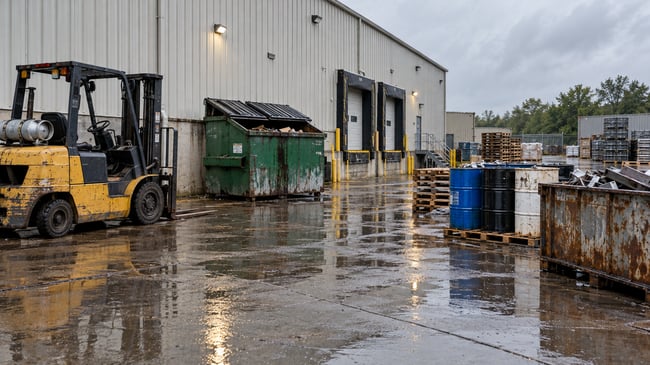
Waste is an industrial material, but the federal No Exposure checklist makes an exception for waste in covered, non-leaking containers, and it names dumpsters as the example. So a dumpster with working lids that stay closed and no leaks usually doesn't count. What turns it into exposure is everyday sloppiness: lids left open or broken, a missing drain plug, liquid seeping from the bottom, or bags and debris piled next to it when it's full. If you're aiming for No Exposure, dumpster discipline has to be a habit, not something you fix the week before DEP visits.
Drums, barrels, totes, and tanks follow a similar logic. They don't need shelter if they're tightly sealed, in good shape, not leaking, banded or otherwise secured, and have no operational taps or valves. A row of sealed new product drums waiting to ship is a different story from a drum with a bung open, a dented tote, or a tank with a spigot people use to fill buckets outdoors. Scrap and roll-off bins are often harder, because they're usually open-topped and full of material rain can wash, like metal shavings with cutting oil on them. Covering them and keeping them leak-free is the usual fix.
Pallets aren't named in the federal criteria, so they're judged by the general definition. Clean, empty pallets stacked outside are a lower concern for most sites. Pallets carrying raw materials or product, pallets with oil or residue on them, and pallets at a business where wood is the product (a pallet manufacturer, for example) are industrial materials, and rain reaching them is exposure. If you're not sure where your pallets fall, they're a good item to ask about before you certify.
Forklifts, Loading Docks, and Outdoor Equipment as Stormwater Exposure
Forklifts fall under the same vehicle exception as trucks. An adequately maintained forklift parked outside overnight usually isn't exposure by itself. A forklift that leaks hydraulic fluid, or one that spends the day hauling something messy and carries residue outside, is a different matter. Other industrial machinery and equipment is broader. The federal checklist lists using, storing, or cleaning industrial machinery or equipment outdoors as exposure, including areas where residue from that equipment stays exposed to rain. A mixer, a compressor that drips, or a piece of production equipment stored out back can count even if it's not running.
Loading docks are one of the most common reasons facilities can't claim No Exposure. The federal checklist lists materials or products exposed during loading, unloading, or transporting as exposure. An enclosed dock, or one with a canopy and seals that keep rain off the trailer opening, can solve that. An open dock where forklifts carry materials across the pavement in the rain usually doesn't. What's being moved matters too. Sealed, shrink-wrapped boxes crossing a few feet of covered dock are a very different situation from bulk materials, open containers, or anything that can spill.
If your equipment and docks are the only things standing between you and No Exposure, small changes can make a difference. A drip pan program, a covered parking spot for the forklifts, a leak inspection routine, or a dock canopy can be cheaper over time than PAG-03 coverage. Our article on stormwater BMPs covers practical options like these.
Roof Vents, Dust, and Outdoor Material Storage as Stormwater Exposure
Roofs can be part of the picture. The federal No Exposure checklist includes particulate matter or visible deposits of residue from roof stacks or vents that aren't otherwise regulated under an air quality permit and that show up in stormwater runoff. In plain terms, if dust from a process vent settles on the roof and washes down the downspouts, that can count. Vents covered by an air permit are handled under that permit instead. A walk across the roof, or a look at what comes out of the downspouts during a storm, is a good way to find out. Our guide on how to do a stormwater visual inspection the right way shows what to look for in the water.
Outdoor storage is the clearest exposure item. Raw materials stored outside, like aggregate, lumber, metal stock, bagged material on pallets, or bulk powders, are industrial materials exposed to rain. So are intermediate products and by-products. Final products get a narrow exception. Products meant for outdoor use, like new cars, can sit outside without counting as exposure, but only if rain won't wash pollutants off them. Products that rain can dissolve or carry away, like rock salt, don't qualify. Stored items on roads or rail lines you own or maintain count as well.
Finally, don't overlook history. Materials or residue from past activity count as exposure even if nobody's touched them in years. An old stockpile, a stained area where drums used to sit, or contaminated soil near a former process area can keep a site from qualifying until it's cleaned up. Some facilities need a little cleanup work before they can certify No Exposure, and the cleanup often pays for itself in avoided permit costs.
How RMA Helps Facilities Evaluate Stormwater Exposure
RMA is a family-run environmental consulting firm based in New Jersey, and we work with facilities across Pennsylvania on industrial stormwater. We can walk through your site with you, item by item, and tell you plainly whether No Exposure looks realistic, what would need to change to get there, or whether PAG-03 is the better fit. If you qualify, we can prepare the No Exposure paperwork. If you don't, we can prepare your PPC Plan and Notice of Intent and help with the inspections, sampling, and eDMR reporting that follow. Our comparison of SWPPPs vs. PPC Plans for PAG-03 explains what that plan involves.
If it turns out your business isn't in a covered category, or you can handle the certification yourself, we'll say so. There's no pressure and no obligation. You can call us, send an email, or fill out the form on our website. Whenever you're ready, reach out to RMA and we'll help you figure out where your facility stands.


