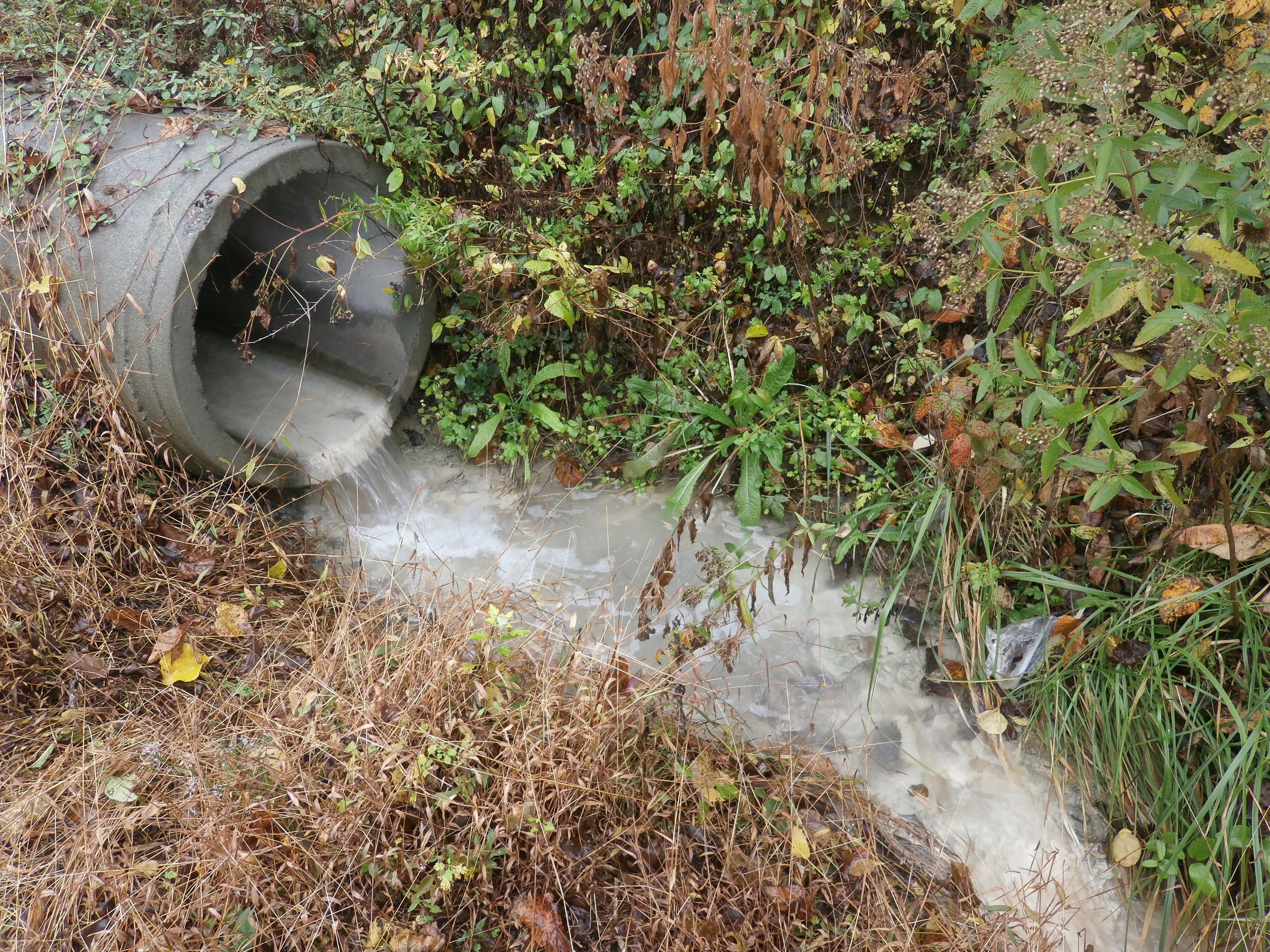
What PA DEP Inspectors Look For, How to Handle the Visit, and How to Get Your Stormwater Program Ready Before They Show Up
Finding out that PA DEP is coming for a stormwater inspection, or having an inspector walk up to your front desk with no warning at all, can wreck a facility manager's week. Most of the stress comes from not knowing what the visit looks like. Nobody's told you what they'll ask for, where they'll walk, or what counts as a problem.
This article walks through what a PA DEP stormwater inspection usually involves, from the records review to the facility walk to the follow-up afterward. We'll cover what inspectors look at on sampling and eDMR, how to talk to an inspector without making things harder, and how to get your program in shape before anyone knocks. If you'd rather have a second set of eyes on your program first, you can reach out to RMA and we'll tell you where you stand.
Table of Contents
TL;DR
A PA DEP stormwater inspection usually starts with a records review, moves to a walk of the facility, and checks your sampling and eDMR results against what your permit requires. Getting inspected doesn't mean you did something wrong. The inspector wants to see an organized program, straight answers, and real follow-through on any problems. Keep your records in one place, make sure the site matches your PPC Plan, and fix anything that comes up quickly.
Does a PA DEP Stormwater Inspection Mean You Did Something Wrong?
No. Getting inspected doesn't mean you did something wrong. Inspections happen for all kinds of reasons. Some are routine, some are tied to specific permit requirements, and sometimes DEP just shows up unannounced. If you hold stormwater permit coverage in Pennsylvania, whether that's PAG-03 or an individual NPDES permit, you should expect a visit at some point.
The way we explain it to clients is that the inspector is trying to answer one question: is this facility managing its stormwater program, or does it just have a permit? Those are different things. A permit is a document. A program is the sampling, the inspections, the training, the recordkeeping, and the fixes that happen when something goes wrong. Everything an inspector asks for during the visit is a way of checking whether your program exists and whether the people running the facility understand it.
Knowing that takes some of the guesswork out of preparing. You're not trying to look perfect. You're trying to show a program that runs, with people who know where things are and what the permit requires. The rest of this article follows the order an inspection usually takes: records first, then the facility walk, then sampling, then what comes after.
What Stormwater Records Will a PA DEP Inspector Ask to See?
Usually the inspection starts with your paperwork, before anyone steps outside. Expect the inspector to ask for some combination of these:
- Your current PPC Plan
- Stormwater inspection records
- Sampling results and the lab reports behind them
- eDMR submissions
- Employee training records
- Annual reports
- Documentation of any corrective actions you've had to complete
The PPC Plan is usually the first thing on the table, since it's the document everything else gets measured against. If you're not sure how a PPC Plan differs from a SWPPP, our comparison of Pennsylvania SWPPPs and PPC Plans under PAG-03 walks through it. The eDMR submissions are the electronic record of what you reported to DEP, so they should line up with your lab reports. If you want a refresher on how the system works, we put together a guide to Pennsylvania's eDMR reporting, with a video walkthrough.
What Does a Disorganized Records Review Look Like?
A manageable inspection turns miserable when nobody knows where anything is. Three people are digging through filing cabinets, someone's searching their email for a sampling report from two years ago, and the inspector is sitting in your conference room watching it happen. Even if every record exists, the scramble makes it look like nobody's running the program.
The fix is boring and it works. Keep everything in one place, either a binder or a shared folder, organized by year. PPC Plan, inspection records, lab reports, eDMR confirmations, training sign-in sheets, and corrective action logs each get their own tab. Make sure at least two people know where it lives. If you can put the whole file on a table in five minutes, you've already handled the part of the inspection that trips up the most facilities.
What Does a PA DEP Inspector Look For During the Facility Walk-Through?
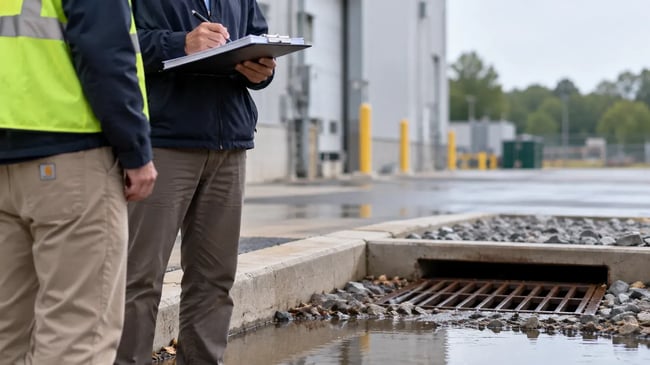
After the records review, the inspector will probably walk the facility. Expect them to spend time on outdoor material storage, dumpsters, loading and unloading areas, drainage paths, outfalls, and whatever stormwater controls you've got in place. They're not just looking at each item on its own. They're comparing what they see outside to what your PPC Plan says is there.
Plans tend to fall apart on that comparison. A storage area that grew after the plan was written, a drain that got rerouted, or a control the plan describes that nobody can find in the yard all tell the inspector the document and the site have drifted apart. Walking your own site with the plan in hand a few times a year catches most of this before DEP does. If the site changed, either fix the site or update the plan, and write down the date you did it.
How Does Housekeeping Affect a Stormwater Inspection?
Basic housekeeping gets noticed fast. Leaking containers, trash piled around drainage areas, materials sitting outside uncovered, and neglected containment all draw attention quickly, and none of them take a consultant to fix. An organized facility where it's obvious somebody's paying attention leaves a very different impression, and it tends to set the tone for the rest of the visit.
If you want a routine for catching these problems, our post on how to do a stormwater visual inspection the right way covers the walk-around, and our explainer on stormwater BMPs covers the controls themselves.
How Does PA DEP Review Stormwater Sampling and eDMR Results?
Sampling is a big piece of the inspection. The inspector wants to know four things: whether you collected the samples your permit requires, whether you collected them correctly, whether the results made it into eDMR, and what you did when a result came back high. Each of those leaves a paper trail, which is why the records review and the sampling review tend to blend together.
Collection mistakes are easy to make. A missed sampling period, a sample taken from the wrong spot, or a lab report that doesn't match what got entered in eDMR is the kind of thing an inspector can spot in a few minutes of comparing paperwork. Our post on Pennsylvania's PAG-03 permit and how to take stormwater samples goes through the collection side in detail.
What Does DEP Expect After a High Sampling Result?
A high result by itself isn't necessarily the biggest problem. Ignoring it is. If your results show a pattern of benchmark exceedances, DEP will want to see that you looked into what was causing it and took the corrective actions your permit requires. A lab report with an exceedance and nothing else in the file looks like nobody read it. A lab report with an exceedance, a note about what you found, and a record of what you changed looks like a program that works.
If benchmarks and limits are fuzzy for you, our explainer on benchmark values versus effluent limits covers the difference, and our post on what to do if your stormwater sampling results are high walks through the next steps. Keep the investigation notes, the fix, and the date together so you can hand them to an inspector in a minute.
How Should You Act During a PA DEP Stormwater Inspection?
One of the best answers to "what should I do during a DEP stormwater inspection?" is simple: don't make stuff up. If you don't know the answer to something, say you don't know and that you'll find out. If you can't put your hands on a record right away, tell the inspector you'll find it and follow up, then follow up the same day or the next.
Guessing usually backfires. So does getting defensive, trying to minimize something the inspector can plainly see, or treating the visit like a fight. An inspector who's gotten a few vague answers and a lot of pushback has a reason to dig harder. An inspector who's gotten straight answers and a "good catch, we'll fix that" has less of one.
The goal isn't to convince the inspector your facility is perfect. It's to show that you understand your permit, you're organized, you take the requirements seriously, and when there is a problem, you do something about it. Pick one person to walk with the inspector, ideally someone who knows the PPC Plan and the permit well. Have that person take notes on what the inspector asks for and what they point out, so nobody's reconstructing the day from memory afterward.
What Happens After a PA DEP Stormwater Inspection?
After the inspection there may be follow-up. It could be something relatively minor, like a records gap or a housekeeping fix, or it could be a formal violation, depending on what the inspector found. You won't always know which until it arrives, so read anything that comes from DEP the day it lands.
Whatever it is, deal with it quickly. A small issue that's been corrected and documented is very different from an issue that sits unanswered for six months. If the follow-up includes a deadline, put it on a calendar with a reminder well ahead of the date. Keep dated photos and records of what you fixed, who did it, and when, because that file is what you'll point to if DEP asks again.
If the follow-up turns out to be a formal violation, don't sit on it and hope it fades. Our post on common NPDES permit problems and how we fix them covers the kinds of issues we see most. A response that's specific and on time beats a polished one that shows up late.
How Can You Get Ready for a PA DEP Stormwater Inspection Before It Happens?
The best preparation is running your own inspection the way DEP would. Start with the records. Pull everything on the list from earlier and see how long it takes to get it all onto one table. Then read your PPC Plan, walk the site with the plan in hand, and mark anything that doesn't match. Fix the site or update the plan, whichever one is wrong.
Next, go back through your last year of sampling. Was every required sample collected? Did each result make it into eDMR? For any high result, is there a note showing what you checked and what you changed? If there's a gap, closing it now beats explaining it across a table later. Then clean up the housekeeping items from the walk-through: covered materials, sound containers, clear drainage areas, and containment that someone has looked at recently.
Who Handles the Inspector When They Arrive?
Settle this before an inspector shows up. Make sure the front desk or gate knows who to call, and name a backup for the days that person's out. Whoever meets the inspector should know where the records live and be comfortable walking the site. Training helps here too. Staff who know what stormwater controls are on site and why they're there can answer a casual question without freezing up. Our online training library is one place to start, and our posts on whether stormwater training is required and why you need stormwater training cover the basics.
Do You Need a Consultant for a PA DEP Stormwater Inspection?
Not always. If your records are organized, your sampling is current, your PPC Plan matches the site, and somebody on staff knows the permit well, you can probably handle an inspection yourself, and the self-inspection above is most of the work. Plenty of Pennsylvania facilities do exactly that, and we're fine with it. Our post on whether you can get a PAG-03 permit yourself works through the same DIY-versus-consultant question on the permitting side, and the same thinking applies here.
Outside help starts to make sense in a few situations. Nobody on staff has the time or the experience to review the program. You've had benchmark exceedances and you're not sure your follow-up would hold up. The PPC Plan hasn't been touched since your permit coverage started. Or an inspection is already on the calendar and you'd rather find the gaps before DEP does. In that last case, finding the problems yourself beats hearing about them from the inspector.
How Does RMA Help With PA DEP Stormwater Inspections?
If you've got a PA DEP stormwater inspection coming up and you'd rather not walk in wondering what they'll find, we can help. We review your PPC Plan and records, walk the facility the way an inspector would, and point out compliance gaps before DEP gets there. From there we can help you correct those issues, or help you respond to DEP if the inspection already happened. The person who walks your site is a senior member of our team, not a hand-off to someone junior.
There's no pressure and no obligation. You can call us, email us, or fill out the form on our website, and if you don't need us, we'll say so. If you want to see how our NPDES and stormwater support works before you reach out, our service and company fit guide lays it out. Otherwise, get in touch with RMA whenever you're ready.