Pennsylvania's Aboveground Storage Tank Program Explained: The 250-Gallon Line, Exemptions, Annual Fees, Certified Installers, and How It Fits With Your SPCC Plan
Pennsylvania runs its own storage tank program, and it works separately from the federal oil spill rules most facility managers have heard about. If you've got a diesel tank by the shop, a fuel tank feeding a generator, or a bulk tank out back, whether DEP expects you to register it comes down to three things: how big the tank is, what's in it, and how it's used. A tank that's exempt from state registration can still count toward a federal oil spill plan, and a registered tank doesn't automatically mean you need one.
In this article we'll walk through which aboveground tanks Pennsylvania generally requires owners to register, the exemptions that take some tanks out, what registration costs each year, when the state requires DEP-certified installers and inspectors, and how all of it sits next to a federal SPCC Plan, the written oil spill prevention plan required under 40 CFR Part 112. If you'd rather talk through your own tanks with someone who does this every day, feel free to reach out to RMA.
Table of Contents
TL;DR
In Pennsylvania, DEP generally requires owners to register stationary aboveground tanks that hold more than 250 gallons of a regulated substance such as diesel, gasoline, or other petroleum. The annual fee is $50, $125, or $300 per tank depending on size. Exemptions cover things like small noncommercial motor fuel tanks, heating oil used on site, and certain farm tanks. Installing, modifying, removing, or inspecting a regulated tank takes DEP-certified installers or inspectors. Registration is a state requirement and is separate from the federal SPCC Plan, which looks at total oil storage at your facility, so many facilities need both.
Which Aboveground Tanks Have to Be Registered With Pennsylvania DEP?
Pennsylvania's program grew out of the 1988 Floreffe tank collapse near Pittsburgh, when a failed diesel tank sent fuel into the Monongahela River. The Storage Tank and Spill Prevention Act (Act 32) followed in 1989, and the rules that carry it out live in 25 Pa. Code Chapter 245. DEP's Division of Storage Tanks runs the program with help from the department's six regional offices.
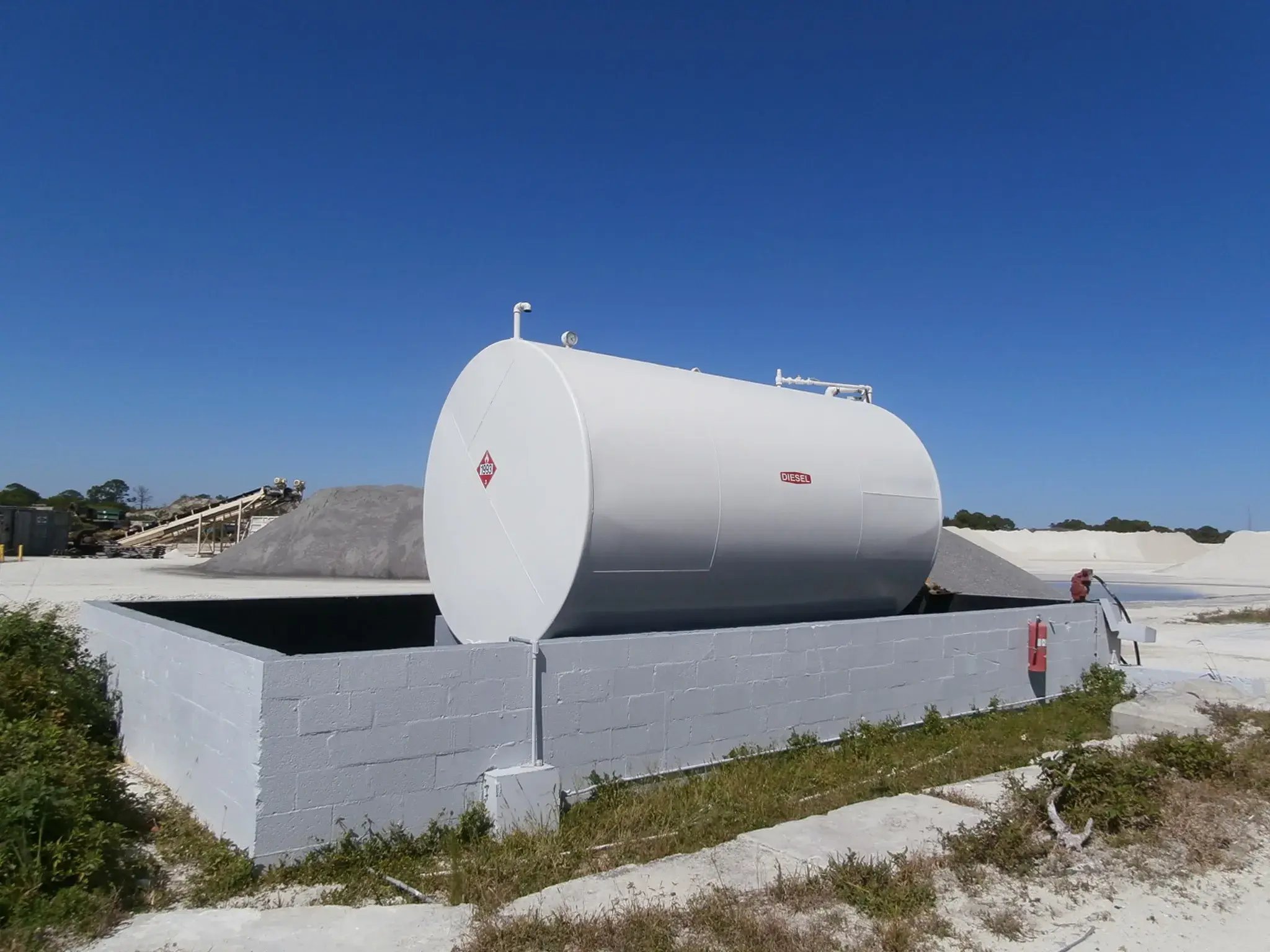
Under Chapter 245, an aboveground storage tank is a stationary tank, or a combination of stationary tanks, with a capacity over 250 gallons. More than 90 percent of its volume has to sit above the ground surface, counting connected piping, and the tank has to be something you can inspect visually from the outside. That includes tanks inside buildings and tanks in basements or other below-grade areas, as long as you can see the outside of them. Each compartment of a multi-compartment tank is registered as its own tank.
The tank also has to hold a regulated substance. That means petroleum products such as gasoline and diesel, along with substances that the federal Superfund law (CERCLA) lists as hazardous. DEP publishes a full regulated substances list, so check it if you're storing a chemical rather than fuel. The rule looks at capacity, so a tank that's mostly empty still counts at its full size.
Registration matters because it doubles as the tank's operating permit. DEP's fact sheet says it's unlawful to use a regulated tank that hasn't been registered and permitted, and anyone who delivers product to an unregistered regulated tank can be liable for a release from it. In practice, your fuel distributor is expected to check your current registration certificate before filling the tank.
Which Aboveground Tanks Are Exempt From Pennsylvania DEP Registration?
Quite a few tank types fall outside the program. The table below covers the ones DEP lists in its storage tank registration fact sheet, which is the best starting point for a tank-by-tank check.
| Tank type |
Exemption condition |
| Small tanks |
Capacity of 250 gallons or less is below the regulated size |
| Noncommercial motor fuel |
1,100 gallons or less |
| Heating oil |
30,000 gallons or less, used on the premises where it's stored |
| Farm tanks |
1,100 gallons or less, holding substances that support crop, livestock, and livestock product production on that farm |
| New motor oil and lubricating fluids |
1,100 gallons or less, including hydraulic, transmission, gear, and braking fluids |
| Flow-through process tanks |
Process vessels and oil and water separators |
| Nonstationary tanks |
Designed to be moved, and actually moved to different service locations at least once in any 12-month period |
| Tanks covered by other programs |
Regulated pipeline facilities, tanks regulated under the Oil and Gas Act or the Surface Mining Conservation and Reclamation Act, products regulated by the Federal Food, Drug, and Cosmetic Act, and boiler-law pressure vessels operated above 15 psig |
Each exemption has conditions, and that's where owners get tripped up. The heating oil exemption covers oil burned in the heating equipment where it's stored, so fuel for a generator or a vehicle fleet doesn't qualify for it. The nonstationary exemption depends on how a skid tank or fuel trailer is actually used, since it has to be moved to different locations as part of normal operations. A tank that sits in one spot year-round on a trailer frame is a different conversation. Portable drums and totes generally aren't stationary tanks at all, which is why they don't show up on state registrations.
If you believe a tank on your registration should be exempt, expect DEP to want documentation showing why. And if you aren't sure which category a tank falls into, the Division of Storage Tanks answers questions at 1-800-42-TANKS. A state exemption also says nothing about the federal side. A heating oil tank that skips DEP registration still counts toward the SPCC threshold, and we'll show how that plays out later in this article.
What Do Pennsylvania Tank Registration Fees and Annual Requirements Look Like?
Fees are charged per tank, every year, and the aboveground rate steps up with capacity. These come from 25 Pa. Code § 245.42 and DEP's registration page.
| Aboveground tank capacity |
Annual registration fee |
| 5,000 gallons or less |
$50 per tank |
| 5,001 to 50,000 gallons |
$125 per tank |
| More than 50,000 gallons |
$300 per tank |
A facility with a 10,000-gallon diesel tank and a 500-gallon tank would pay $125 plus $50, or $175 a year. Because compartments count as separate tanks, a split tank is billed per compartment. DEP doesn't refund fees when a tank is closed, exempted through a change in service, or sold partway through the registration period.
The process starts with DEP's storage tank registration and permitting application form, submitted for each regulated tank. DEP then invoices the initial fee, and once it's paid, DEP issues the certificate of registration. After that, DEP sends an annual invoice at least 60 days before the certificate expires. Fees are due within 60 days of the invoice date and are considered delinquent 90 days after it. Falling behind can lead to enforcement against the owner and operator, including revocation of operating permits. You'll want the current certificate available when DEP, a certified installer or inspector, or your product distributor asks to see it.
The other recurring job is keeping the record accurate. Owners have to submit an amended form within 30 days of a change of ownership, a new tank installation, a tank closure or removal, or a change in the substance stored, tank capacity, or facility contact information. A tank that's out of service still needs a valid registration until someone closes or removes it. If you bought a site and the certificate is still in the previous owner's name, that amendment is already overdue.
When Does Pennsylvania Require DEP-Certified Tank Installers and Inspectors?
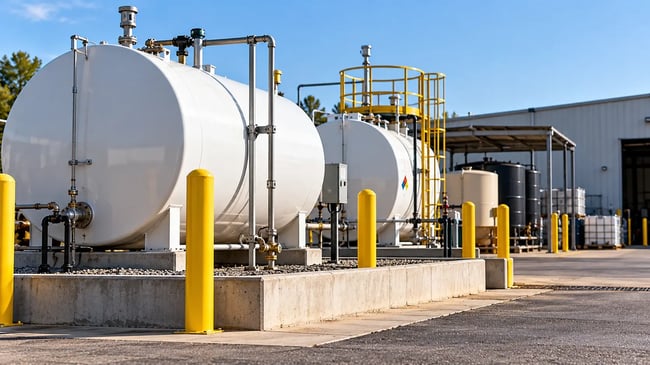
Pennsylvania doesn't let just anyone work on a regulated tank. DEP states that only certified storage tank installers and inspectors may install, modify, remove, or inspect storage tanks, and the company they work for has to hold DEP certification too. Certification comes in categories, covering things like civil installation, mechanical installation, and field-constructed metallic tanks, so a contractor certified for one kind of job isn't automatically certified for another.
Tank handling work has to be done by a certified installer or under that installer's direct, onsite supervision. The one carve-out is that an aboveground nonmetallic tank can be modified by its manufacturer. Inspections are a separate certification. A large aboveground tank, meaning one over 21,000 gallons, gets an installation inspection by a certified inspector when it's installed, rebuilt, or relocated, and small field-constructed tanks get the same treatment. In-service and out-of-service inspections also have to be done by a DEP-certified aboveground tank inspector, and a certified inspector can't be an employee of the tank owner. How often those inspections come around depends on tank size and type, so check the schedule in Chapter 245 against your own tanks.
Maintenance is murkier. DEP publishes guidance that sorts routine maintenance from modifications, and not every repair needs a certified installer. Ask DEP or a certified company before assuming a repair counts as routine, especially if it touches piping, valves, release detection, or overfill equipment.
Anything that involves building, expanding, or redeveloping a facility brings in construction-phase requirements, and that's where we draw a line. RMA doesn't install, modify, or remove tanks, and we don't prepare construction-phase permits and approvals such as building and fire permits, Chapter 102 erosion and sediment control, or construction stormwater permits. Fire code requirements for tanks are enforced locally and vary by municipality, so confirm yours with the local fire marshal. Most owners work with their engineer, their contractor, and a DEP-certified installer on that piece. What we do help with is the operating side once the tank is in service: the oil spill plan, the inspections and records that go with it, and training for the people handling oil.
How Is Pennsylvania Tank Registration Different From an SPCC Plan?
The two programs often touch the same tanks, which is why people blur them together. They're written by different agencies, measure different things, and ask for different paperwork. An SPCC Plan is a written plan for preventing, containing, and responding to oil spills that could reach waterways. If you're new to it, our overview of what an SPCC Plan is covers the basics, and in Pennsylvania the federal rule is enforced by EPA Region 3, not DEP. Our article on who enforces SPCC Plans explains how the federal and state roles divide up.
| |
PA DEP tank registration |
Federal SPCC Plan |
| Who runs it |
PA DEP Division of Storage Tanks and regional offices |
U.S. EPA, Region 3 in Pennsylvania |
| The rule |
Storage Tank and Spill Prevention Act, 25 Pa. Code Chapter 245 |
Clean Water Act, 40 CFR Part 112 |
| What it measures |
Each stationary tank over 250 gallons |
Total oil storage at the facility: more than 1,320 gallons aboveground (containers of 55 gallons or more) or more than 42,000 gallons buried |
| What's covered |
Petroleum and listed hazardous substances |
Oil of any kind, including animal fats and vegetable oils |
| Paperwork |
Filed with DEP and renewed yearly by invoice |
Kept on site, not filed with EPA, and reviewed at least every five years |
| Government fee |
$50 to $300 per tank per year |
None |
| Who signs off |
DEP-certified installers and inspectors for tank work and inspections |
The owner for qualified facilities, or a Professional Engineer |
Larger aboveground facilities may also owe the state a Spill Prevention Response Plan, and many Pennsylvania permits call for a Preparedness, Prevention, and Contingency (PPC) Plan. Whether either applies depends on your total aboveground capacity and the permits you hold, so check them against your own facility. Each of these is its own requirement, and having one in place doesn't satisfy the others.
Does Your Facility Need Both Tank Registration and an SPCC Plan?
Often, but not always, and the quickest way to see it is to run a few examples. The federal rule applies when a facility has more than 1,320 gallons of aboveground oil capacity, counting only containers of 55 gallons or more, or more than 42,000 gallons of buried capacity, and could reasonably be expected to discharge oil to a waterway. That last test is about slope, drainage, and nearby streams, and you can't count berms, curbs, or other manmade structures to argue your way out of it.
| Your situation |
DEP registration |
SPCC Plan |
| One 500-gallon diesel tank, no other oil on site |
Yes, it's over 250 gallons |
Probably not, since total storage is under 1,320 gallons |
| One 2,000-gallon diesel tank feeding a generator |
Yes |
Likely, if a discharge could reasonably reach a waterway |
| One 2,000-gallon heating oil tank heating the building, nothing else |
Generally exempt |
The tank counts at full capacity, so it can trigger a plan on its own |
| Twenty-five 55-gallon drums of oil |
Generally no, since drums are portable containers |
Yes, drums count and the total is 1,375 gallons |
A few counting rules decide most of these cases. It's capacity that counts, not how full a container is, so an empty tank counts at its full size. Permanently closed containers don't count, and oil-filled equipment like transformers and hydraulic systems does. Animal fats and vegetable oils count, while propane and diesel exhaust fluid don't. Fuel in a vehicle's own tank is exempt, but fuel trailers and skid tanks aren't. Our guide to the four steps to figure out if you need an SPCC Plan walks through the full count, and our article on 55-gallon drums in SPCC Plans covers the container side. If you're comfortably under the threshold, you likely don't need an SPCC Plan and you don't need to hire anyone to confirm it. Just recount whenever you add storage.
If you do need a plan, the type depends on how much oil you store and your spill history. Smaller facilities can often self-certify a Tier I or Tier II qualified facility plan, and larger ones need a Professional Engineer to certify it. Our breakdown of the different types of SPCC Plans shows where the lines fall. Plans also need a review every five years, and the people who handle oil need annual training, which our online environmental training library can cover.
On cost, DEP's fees are the small number here. The bigger expenses come from certified inspections, any repairs those inspections turn up, and installer work when tanks are added or closed. Those prices come from the certified companies that do the work and vary by tank and site, so get quotes directly from them. On the SPCC side we publish our pricing. A new plan generally runs $2,500 to $15,000 depending on how many containers you have, how complex the site is, and whether the plan needs a Professional Engineer's certification, which we arrange through an outside engineer when it's called for. A simple Tier I update runs about $1,500, and a PE-certified update on a complex facility can be $7,500 or more. Our article on SPCC Plan costs breaks down what moves the price, and it helps to weigh those numbers against what a missing plan can cost, which we cover in the most common SPCC violations and fines. For a quick estimate of what RMA's help with your plan would cost, use the calculator below.
How RMA Helps Pennsylvania Facilities With Tank Registration and SPCC Compliance
We're a family-run environmental consulting firm based in New Jersey, and we work with facilities across Pennsylvania on the federal oil spill side of tank compliance. That means working out whether your facility needs an SPCC Plan, writing or updating it, fitting it together with your DEP registration and any state spill plans you already have, and training your team. Senior staff do the work, and we'll tell you plainly if you're under the threshold and don't need us. The DEP registration form is something many owners complete themselves, and tank installation, modification, removal, and required inspections belong with DEP-certified contractors. We're glad to help you figure out which of those you need.
If you've got a list of tanks and aren't sure where you stand, give us a call, send an email, or fill out the form on our website. There's no obligation, and a quick conversation is usually enough to tell whether you have a problem, a to-do list, or nothing to worry about. When you're ready, contact RMA and we'll take it from there.