Pennsylvania DEP, the Storage Tank Act, and Federal Law Each Set Their Own Oil Spill Reporting Triggers, Which Is Why One Spill Can Mean Several Phone Calls
You find diesel spreading from a tank fitting, or a hydraulic line lets go and the oil is headed for a storm drain. The first few minutes go to stopping the source and keeping people safe, and then the real question hits: who exactly are you supposed to call? In Pennsylvania the answer is often more than one agency, because the Department of Environmental Protection (DEP), the state's storage tank program, and federal law each have their own rules about what has to be reported and how fast.
This article walks through when a spill has to be reported to DEP, what the Storage Tank Act adds for regulated tanks, how federal reporting differs, and how to sort out which calls apply to your situation. We're keeping the focus on oil, since that's where most facilities get tripped up. If you'd rather talk through your own site, you can reach out to RMA any time.
Table of Contents
TL;DR
In Pennsylvania, you have to call DEP right away when an oil spill pollutes a waterway or threatens to, endangers downstream water users, or damages property, and the rule doesn't set a minimum number of gallons. Releases from DEP-regulated storage tanks add a second track: phone the DEP regional office within 24 hours of confirming the release and follow up in writing within 15 days. Federal law adds the National Response Center for any oil discharge that leaves a sheen on water, plus a written report to EPA after large or repeated spills. One spill can trigger all of these, so it pays to know the calls before it happens.
What Does DEP Require When an Oil Spill Threatens a Pennsylvania Waterway?
Before any phone call, stop the source if you can do it safely, keep people back, and call 911 if there's a fire, an explosion risk, or an injury. Reporting comes after people are safe.
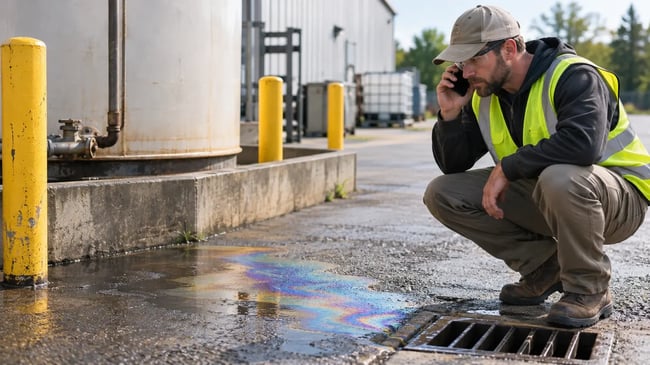
The core state rule is 25 Pa. Code § 91.33, which comes out of Pennsylvania's Clean Streams Law. It says that when an accident or other incident involves a substance that would pollute waters of the Commonwealth, endanger downstream users of those waters, or damage property, the person responsible has to notify DEP immediately by telephone and give the location and nature of the danger. "Waters of the Commonwealth" covers streams, ponds, and groundwater, and DEP's guidance extends the duty to the sewers, drains, and ditches that carry water into them. That's why a spill on pavement beside a storm inlet can trigger the rule before any oil reaches a creek.
Section 91.33 doesn't set a minimum volume, and DEP's guidance says so directly. What counts is whether the spill pollutes or threatens to pollute, so a few gallons of oil running toward a storm drain can require a call, while a larger spill that stays inside intact secondary containment may not. DEP has said it doesn't expect notification for incidents that pose negligible risk to waters, downstream users, or property. It has also said that when you're unsure what a discharge will do, the better move is to call and err on the side of caution.
How Do You Report a Spill to DEP?
Call the DEP regional office that covers the county where the spill happened, or use DEP's statewide emergency line at 800-541-2050. The duty sits with the person responsible for the spill, so don't assume a neighbor's call or a fire department response counts as your notice. The rule also expects you to warn downstream water users who could be affected, such as a public water supplier with an intake below you.
If your facility holds an NPDES permit, such as a stormwater general permit, the permit adds its own notification clock under 25 Pa. Code § 92a.41(b), which DEP's guidance describes as no later than four hours after you become aware of the incident, with a written report to follow. That sits on top of the immediate call, not in place of it. DEP also proposed rewriting § 91.33 in 2025 but withdrew the proposal in April 2026 and said it would finalize technical guidance instead, so the rule you follow today is still the existing § 91.33. Check DEP's current guidance when you're dealing with a real spill.
When Does the Storage Tank Act Require You to Report a Tank Release?
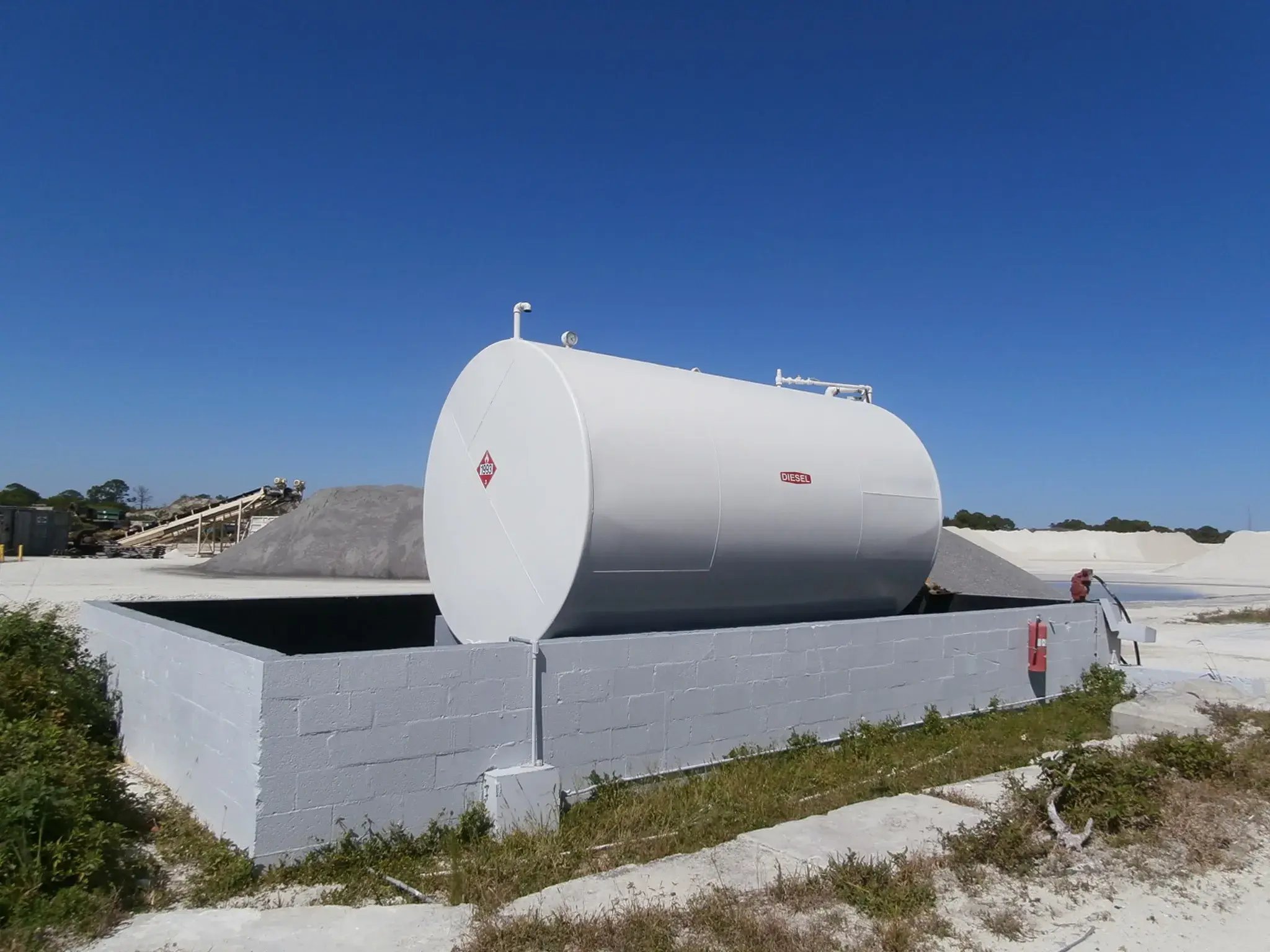
The Storage Tank and Spill Prevention Act and its regulations in 25 Pa. Code Chapter 245 create a separate reporting track for DEP-regulated tanks. In general, a regulated aboveground tank is a stationary tank holding more than 250 gallons of a regulated substance, and a regulated underground tank holds more than 110 gallons, with exemptions that include certain heating oil and farm tanks. Whether yours is regulated depends on its size, type, and use, so confirm it against DEP's storage tank program if you're not sure. A 500-gallon aboveground diesel tank for a fleet, for example, can fall under DEP's tank program while sitting far below the threshold for a Spill Prevention, Control, and Countermeasure (SPCC) Plan, the federal oil spill plan required when a facility stores more than 1,320 gallons of oil in aboveground containers of 55 gallons or more, or more than 42,000 gallons buried.
The tank owner or operator has to investigate signs of a release, such as a leak alarm, unexplained product loss, water in the tank, or oil showing up in soil or a nearby sump, and then report on a schedule that differs from § 91.33's "immediately."
| Situation |
What the rule requires |
Deadline |
| Signs of a possible release |
Investigate to confirm whether a release occurred |
As soon as practicable, no later than 7 days after the indication |
| Investigation can't tell if a release occurred |
Report the suspected release to the DEP regional office on DEP's form |
Within 15 days of the indication |
| Release confirmed |
Phone the DEP regional office with the substance, quantity, time and place, cause, affected media, and any impact on water supplies, buildings, or utility lines |
As soon as practicable, no later than 24 hours after confirmation |
| After the initial call |
Send written notice to DEP and to each municipality where the release occurred or had an effect |
Within 15 days of the initial notice |
| Aboveground facility with more than 21,000 gallons of total capacity |
Immediately notify the county emergency management agency, the Pennsylvania Emergency Management Agency, and DEP. If the release enters or threatens a water supply, notify downstream water companies, municipalities, and industrial users within 20 miles |
Immediately, and within 2 hours for downstream users |
| Release creates a fire, explosion, or safety hazard |
Notify the local fire authority |
Immediately |
Chapter 245 has a narrow exception. Release reporting and further corrective action aren't required if you have control of the release, it's completely contained, and the entire volume is recovered within 24 hours, and the release is under 25 gallons of petroleum on an aboveground surface (including inside an emergency containment structure) or stays below the lowest penetration of a containment sump. That exception covers Storage Tank Act reporting only. It doesn't switch off § 91.33 or federal reporting, so a 20-gallon spill that's headed for a storm drain isn't excused just because it's under 25 gallons.
What Does Federal Oil Spill Reporting Require?
Federal oil spill reporting comes from section 311 of the Clean Water Act and 40 CFR Part 110. The trigger is an oil discharge to navigable waters or adjoining shorelines that violates water quality standards, leaves a visible film, sheen, or discoloration on the water or shoreline, or leaves sludge or emulsion beneath the surface or on the shore. The person in charge of the facility has to notify the National Response Center (NRC) immediately at 800-424-8802. There's no gallon threshold. A sheen on a creek is enough, which is why a small spill can create a federal reporting duty. We cover the details in our article on the sheen rule for reporting oil spills.
The federal trigger is tied to oil reaching water or a shoreline. A spill that stays inside secondary containment and never gets near a waterway generally isn't a federal reportable discharge, even though a regulated tank release could still need to go to DEP.
When Does an SPCC Facility Have to Send EPA a Written Report?
If your facility is covered by the federal SPCC rule, 40 CFR 112.4 adds a written report after a large or repeated spill. It applies when your facility discharges more than 1,000 gallons of oil in a single event, or more than 42 gallons in each of two discharges within any 12-month period, to navigable waters or adjoining shorelines. You have 60 days to send the EPA Regional Administrator (Region 3 for Pennsylvania) a report covering the facility's capacity and throughput, the corrective actions taken, the cause of the discharge including a failure analysis, and the steps you're taking to keep it from happening again. A complete copy also goes to the state agency in charge of oil pollution control, and confirming which Pennsylvania office should receive it is a quick call to DEP. For more on how the agency handles inspections and follow-up, see our article on who enforces SPCC plans.
This article stays on oil. Releases of other chemicals can trigger separate federal reporting based on reportable quantities, along with notice to state and local emergency planners, so a spill involving solvents, antifreeze, or process chemicals needs its own look.
Why Do Facilities Often Have to Call More Than One Agency About an Oil Spill?
Each of these rules was written by a different body to protect something different, and each has its own trigger. Federal law keys on oil reaching water or a shoreline. The Clean Streams Law keys on pollution or the threat of it, including to groundwater and downstream users, and on property damage. The Storage Tank Act keys on releases from regulated tanks whether or not the oil ever reaches water, with a narrow exception for small, fully recovered spills. None of them cancels the others, so a single spill can satisfy one trigger, two of them, or all three.
Take a 1,000-gallon aboveground diesel tank that overflows during a delivery. About 40 gallons run past the edge of the containment toward a storm drain and leave a sheen in the creek below. That's an immediate call to DEP under § 91.33, an immediate call to the NRC because of the sheen, and, since the tank is regulated, a Storage Tank Act release report to DEP within 24 hours of confirming the release, followed by written notice to DEP and the municipality within 15 days. Two of those obligations go to DEP, but they're separate duties with separate deadlines.
| Who you notify |
What triggers it |
Timing |
| DEP regional office or statewide line (Clean Streams Law, § 91.33) |
A spill that pollutes or threatens waters, endangers downstream users, or damages property |
Immediately, by phone |
| DEP regional office (Storage Tank Act, Chapter 245) |
A confirmed release from a regulated tank, unless a small-spill exception applies |
24 hours after confirmation, then written notice within 15 days |
| DEP under an NPDES permit (§ 92a.41(b)) |
An incident that triggers permit notification |
No later than 4 hours after you become aware |
| National Response Center, 800-424-8802 (Clean Water Act) |
An oil discharge that leaves a sheen, violates water quality standards, or leaves sludge or emulsion in water or on the shore |
Immediately |
| EPA Region 3 (40 CFR 112.4) |
More than 1,000 gallons in one discharge, or more than 42 gallons in each of two discharges in 12 months |
Written report within 60 days |
| 911, local fire authority, county emergency management |
Fire, explosion, or safety hazard, and large aboveground tank facilities |
Immediately |
Local rules can add another layer. Some municipalities have their own ordinances requiring notice of reportable releases, and fire code requirements for tanks vary by municipality, so confirm what applies where your facility sits.
How Can a Facility Get Ready to Report an Oil Spill Quickly?
The worst time to figure out who to call is while oil is moving. If your oil storage puts you over the SPCC threshold, you'll need an SPCC Plan, and if you already have one, it's the natural home for your reporting information. For most facilities, the federal rule requires the plan to include a contact list with phone numbers for the facility response coordinator, the National Response Center, your cleanup contractors, and the appropriate federal, state, and local agencies. It also has to lay out the information you'll be asked for when you report, including the facility's address, the date and time, the type of material, estimated quantities, the source and cause, the affected media, any damage or injuries, and who you've already contacted. If you're not sure whether you need a plan, our overview of what an SPCC plan is is a good place to start.
If you already have a plan, check that the contact list includes your DEP regional office and DEP's statewide emergency line along with the NRC, since a plan can be sound on federal requirements and still leave staff guessing about the state calls. Training closes the same gap. The person who finds a spill at 6 a.m. needs to know who to call and what to say, and our articles on annual SPCC training requirements and our online training library can help you get staff ready.
Prevention is the other piece. A spill fully captured by properly sized, intact secondary containment is the situation where DEP has said it doesn't expect a call, and we explain how to size it in how big your SPCC oil spill containment needs to be. Whatever happens, write down what you saw, when you made each call, who you spoke with, and what they told you. Those notes help with the written follow-up and with any questions that come later.
What Happens If You Don't Report an Oil Spill in Pennsylvania?
Failing to report is its own violation, separate from the spill. Under the Clean Streams Law, DEP can assess a civil penalty of up to $10,000 per day for each violation, and it can do so whether or not the violation was willful. At the federal level, failing to notify the government immediately of an oil discharge is a criminal offense under section 311(b)(5) of the Clean Water Act, with penalties of up to five years in prison and fines under federal law, per EPA's summary of the statute. On top of that, you're responsible for the cleanup and for the penalties tied to the spill itself. Our article on top SPCC plan violations and fines covers what inspectors tend to cite.
Penalty exposure is also the point where it can make sense to bring in an environmental attorney, particularly before you give written statements to an agency after a serious spill. We're consultants, not attorneys, and this article is general information rather than legal advice.
How Does RMA Help With Oil Spill Reporting and SPCC Plans?
We're a family-run firm, and the part of this we help with is everything that happens before a spill. We work with Pennsylvania facilities to figure out whether their oil storage triggers an SPCC Plan, whether their tanks fall under DEP's storage tank program, and what their reporting contacts and procedures should look like. When a plan needs a professional engineer's certification, we work with an outside engineer, and initial SPCC training comes free with a new RMA plan. We don't respond to spills or handle cleanup, so if oil is moving right now, call the agencies and your cleanup contractor first.
We also tell people when they don't need us. If you have a couple of small containers well under the thresholds and a clear sense of who you'd call, you may be fine on your own. If you're unsure, or you'd like a second set of eyes on a plan and a reporting checklist, you can call us, email us, or fill out the form on our website. There's no pressure and no obligation, and you're welcome to reach out to RMA with questions about your own site.