A Plain-English Glossary of PAG-03, NPDES, PPC Plans, eDMR, and the Other Pennsylvania DEP Stormwater Terms You'll Run Into
If you've ever opened a letter from PA DEP or a lab report from a stormwater sample and found yourself decoding abbreviations, you're in good company. Pennsylvania stormwater paperwork leans on permit numbers, chapter citations, and acronyms that rarely get explained, and the same handful of terms show up on your permit, your NOI, your lab results, and your inspection reports.
This glossary defines the terms you're most likely to see in plain English, with a note on where each one turns up. It stays focused on stormwater, and where a term connects to a bigger topic we link to a longer explanation. If something here doesn't match your situation, or you'd like someone who works with PA DEP on these permits to look at your site, feel free to reach out to RMA.
Table of Contents
- Pennsylvania Stormwater Permit Terms: NPDES, PAG-03, PAG-02, PAG-13, and No Exposure
- Pennsylvania Stormwater Plans and Reporting Terms: PPC Plan, NOI, eDMR, eFACTS, and SIC Codes
- Pennsylvania Stormwater Sampling and Monitoring Terms: Outfall, Benchmark, and Corrective Action
- Pennsylvania Water Quality and Regulation Terms: MS4, HQ/EV, TMDL, and Chapters 92a, 93, and 102
- How Does RMA Help With Pennsylvania Stormwater Permits and Plans?
- Additional Information About Pennsylvania Stormwater Terms
TL;DR
Pennsylvania stormwater paperwork uses a small set of terms over and over: the permit types (PAG-03, PAG-02, PAG-13, and No Exposure Certification), the plans and filings that go with them (PPC Plan, NOI, eDMR), the sampling terms (outfall, benchmark, corrective action), and the regulations behind them (Chapters 92a, 93, and 102). This page defines each one in a sentence or two and notes where you'll see it. The definitions are general, so check them against your own permit and the current PA DEP forms.
Pennsylvania Stormwater Permit Terms: NPDES, PAG-03, PAG-02, PAG-13, and No Exposure
Permit names are where most of the confusion starts, because several of them look alike and apply to completely different situations. Only some of the permits below are likely to apply to a running industrial facility, and the table notes which ones belong to construction projects or municipalities instead.
| Term |
Plain-English Definition |
Where You'll See It |
| NPDES |
The National Pollutant Discharge Elimination System is the federal Clean Water Act program that requires a permit to discharge pollutants into rivers, streams, and other surface waters. In Pennsylvania, PA DEP runs the program under 25 Pa. Code Chapter 92a. |
On your permit authorization as an NPDES permit number, and in DEP letters about stormwater. |
| PAG-03 |
PA DEP's general NPDES permit for stormwater discharges associated with industrial activity. The current version took effect March 24, 2023 and runs through March 23, 2028, and facilities in covered categories apply for coverage by filing an NOI. |
Your authorization letter, the NOI, the appendix for your industry sector, and eDMR. |
| PAG-02 |
PA DEP's general NPDES permit for stormwater discharges from construction activity, tied to the erosion and sediment control rules in Chapter 102. It covers the building phase of a project rather than a running facility, and RMA doesn't prepare construction-phase permits. |
Land development and site work approvals, county conservation district correspondence, and your engineer's or contractor's plans. |
| PAG-13 |
PA DEP's general NPDES permit for stormwater discharges from regulated small municipal separate storm sewer systems (MS4s). It's written for municipalities and similar entities, not industrial facilities. |
Township and borough documents and DEP's municipal stormwater materials. |
| No Exposure Certification |
A PA DEP approval that lets a qualifying industrial facility skip PAG-03 coverage because its industrial materials and activities are protected from rain, snow, and runoff. DEP has to approve it, it must be renewed every five years, and it isn't available for discharges to High Quality or Exceptional Value waters. |
Submitted with a PAG-03 NOI on DEP's No Exposure Certification form, and on the approved certification itself. |
If you're trying to work out which of these fits your facility, our guide to which NPDES permit you need compares general, individual, and No Exposure coverage, and our Pennsylvania PAG-03 guide goes deeper on the permit most Pennsylvania industrial facilities use. Our explanation of what No Exposure means under an NPDES stormwater permit covers the conditions in more detail. Whether any of them applies depends on your SIC code, whether industrial activity is exposed to stormwater, and where the water goes, so a quick look at your site usually beats guessing.
Pennsylvania Stormwater Plans and Reporting Terms: PPC Plan, NOI, eDMR, eFACTS, and SIC Codes
Once a facility has coverage, most of the day-to-day work is paperwork: a plan on file, filings with DEP, and reports of what your sampling found. These are the terms that come with that work, plus two that decide who can sign it and which rules apply to your sector.
| Term |
Plain-English Definition |
Where You'll See It |
| PPC Plan |
A Preparedness, Prevention, and Contingency Plan is a written plan for preventing and responding to spills and releases of polluting substances, built around PA DEP guidance. PAG-03 requires permittees to prepare and maintain one. |
The PAG-03 application package, DEP inspections, and your site's spill response procedures. |
| SPCC Plan |
A Spill Prevention, Control, and Countermeasure Plan is the federal oil spill prevention requirement under 40 CFR Part 112 for facilities that meet certain oil storage and discharge-potential criteria. It's separate from a PPC Plan, though some facilities combine the two into one document. |
EPA inspections, oil storage areas, and integrated PPC/SPCC plans. |
| NOI |
A Notice of Intent is the application you file with PA DEP to get coverage under a general permit like PAG-03. It describes the site, the industrial activities, and where stormwater leaves the property. |
DEP's PAG-03 NOI form and checklist, and again when you amend or renew coverage. |
| DMR / eDMR |
A Discharge Monitoring Report is the form used to report sampling results to PA DEP. eDMR is DEP's online version, and PAG-03 permittees use it. |
DEP's GreenPort login, with reports due on the schedule in your permit. |
| eFACTS |
PA DEP's public online database, short for Environment, Facility, Application, Compliance Tracking System, holds permits, inspections, and violations for regulated sites. Anyone can look up a facility. |
When you want to review your own inspection history, or when someone else looks you up. |
| Responsible Official |
The person authorized to sign permit applications and reports for the facility. For a corporation, the federal rule Pennsylvania incorporates at 25 Pa. Code § 92a.22 (40 CFR 122.22) calls for a responsible corporate officer, and signing authority can be delegated only in the ways that rule allows. |
The signature blocks on the NOI, the No Exposure Certification, and reports sent to DEP. |
| SIC Code |
A Standard Industrial Classification code is a four-digit number that classifies a business by what it does. PAG-03 coverage and its monitoring appendices are tied to SIC codes and industrial activities. |
The NOI, the PAG-03 appendix for your sector, and many of your own business records. |
The PPC Plan is the one that trips people up most, mainly because it's easy to mix up with a SWPPP. Our comparison of how PPC Plans compare to SWPPPs under PAG-03 lays out how they differ, and the breakdown of the difference between an SPCC Plan and a SWPPP covers the federal oil spill side. For reporting, our guide to Pennsylvania's eDMR reporting walks through the system, and our overview of what Discharge Monitoring Reports are covers the basics. If you're wondering what an inspector will look at, we've also written up what happens during a PA DEP stormwater inspection.
Pennsylvania Stormwater Sampling and Monitoring Terms: Outfall, Benchmark, and Corrective Action
Sampling language is the part of a stormwater permit that feels most like a foreign language, partly because the same word can mean a regulatory trigger in one sentence and a plain physical location in the next. These five terms cover most of what appears on a lab report and a DMR.
| Term |
Plain-English Definition |
Where You'll See It |
| Outfall |
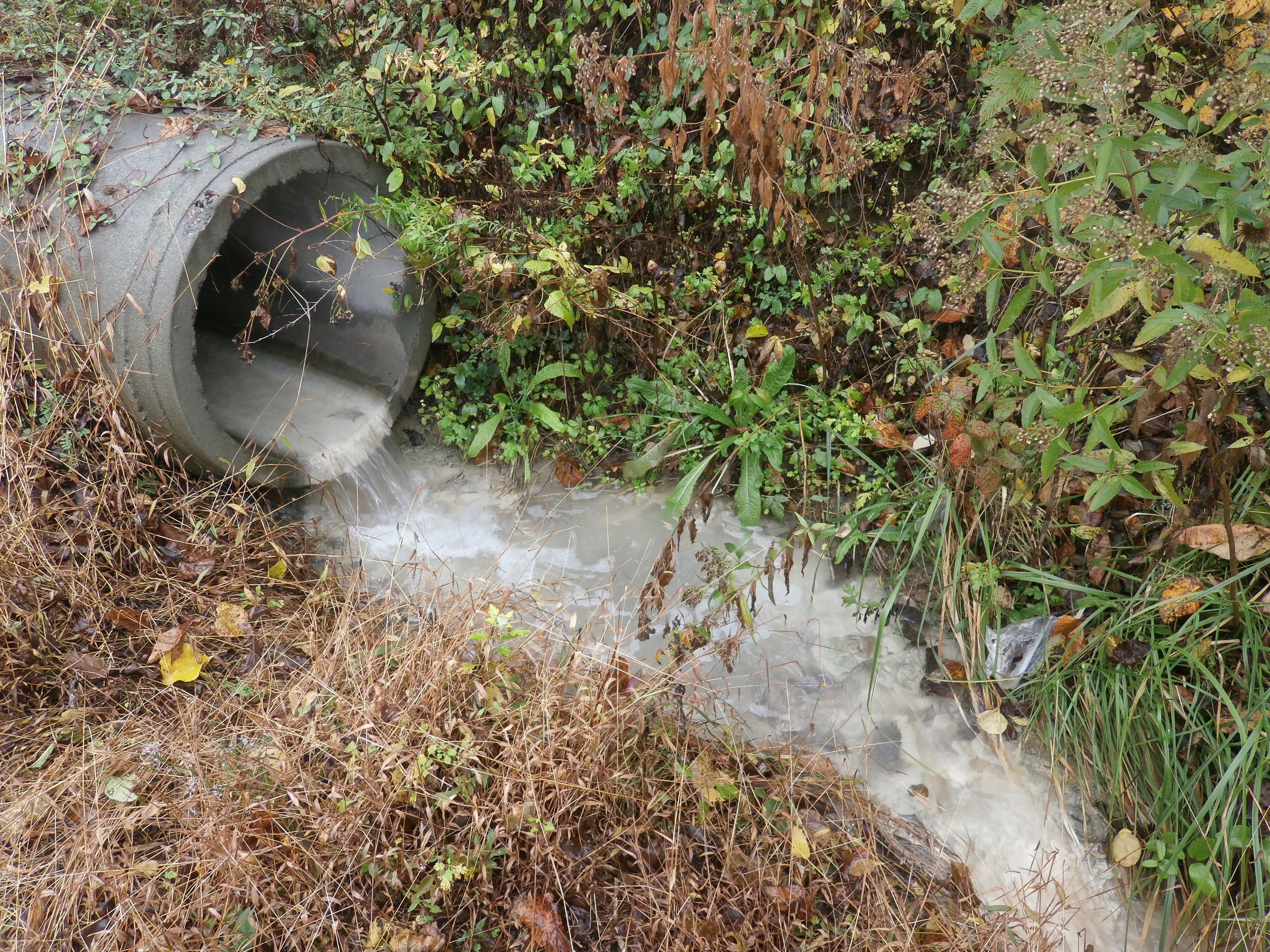
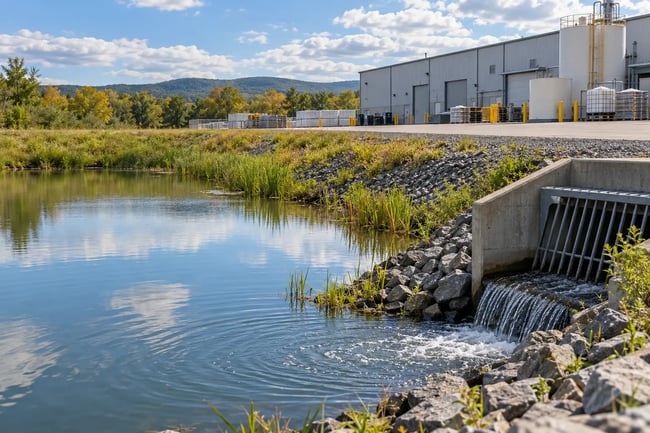
A point where stormwater leaves your site and enters a stream, a storm sewer, or another surface water. Outfalls are identified on your site map and in your NOI. |
Site maps, the NOI, sampling instructions, and inspection reports. |
| Benchmark Value |
A pollutant concentration listed in your PAG-03 appendix that DEP uses to judge whether your stormwater controls are working. It's a trigger for follow-up rather than a numeric discharge limit. |
The appendix for your industry sector, lab reports, and your DMRs. |
| Corrective Action Plan (CAP) |
A plan you submit to PA DEP describing what you'll change after sampling keeps exceeding a benchmark. Under the current PAG-03, exceeding a benchmark for the same pollutant in consecutive monitoring periods triggers a CAP, and four or more consecutive exceedances bring an expanded process with a stormwater BMP checklist. Your permit sets the exact triggers. |
Your PAG-03 permit conditions and DEP's CAP and BMP checklist forms. |
| Qualifying Storm Event |
Federal rules define a storm event as rainfall of more than 0.1 inch that follows at least 72 hours after the previous storm of that size (40 CFR 122.21(g)(7)(ii)). Your permit explains how that definition applies to your inspections and sampling. |
Sampling instructions, inspection forms, and your rainfall records. |
| BMP |
Best Management Practices are the activities, structures, and housekeeping measures that keep pollutants out of stormwater, such as covering materials, sweeping, berms, and spill kits. |
Your PPC Plan, inspection checklists, and any CAP. |
A benchmark exceedance isn't automatically a violation, but it does start the clock on follow-up, so it helps to know how benchmark values differ from effluent limits. If a result has already come back over the line, our guide on what to do when sampling results come back high covers the usual next steps, and our overview of stormwater BMPs explains the controls DEP expects you to adjust.
Pennsylvania Water Quality and Regulation Terms: MS4, HQ/EV, TMDL, and Chapters 92a, 93, and 102
The last group is the background: the type of sewer system your site drains to, the stream it ends up in, and the chapters of the Pennsylvania Code that DEP cites when it explains a requirement. You won't need most of these day to day, but they show up in permit conditions and DEP letters often enough to be worth recognizing.
| Term |
Plain-English Definition |
Where You'll See It |
| MS4 |
A municipal separate storm sewer system is the network of storm drains, pipes, and ditches a municipality or similar entity owns and uses to carry stormwater to local waters. If your site drains into one, the owner may have its own rules for what can go in. |
Township and borough ordinances, PAG-13 materials, and your site's drainage description. |
| Receiving Water |
The stream, river, lake, or wetland that your stormwater ultimately reaches. Its classification affects which permit you can use and what DEP expects from you. |
The NOI, DEP's review of your application, and TMDL or HQ/EV discussions. |
| HQ / EV |
High Quality (HQ) waters have quality that exceeds what's needed to support fish, wildlife, and recreation, and Exceptional Value (EV) waters are outstanding resources with the highest level of protection. Facilities discharging to them aren't eligible for PAG-03 coverage or a No Exposure Certification and typically need an individual permit. |
DEP's review of your NOI, stream designations under Chapter 93, and permit eligibility discussions. |
| TMDL |
A Total Maximum Daily Load is a limit on how much of a pollutant a water body can receive and still meet water quality standards, divided among the sources that contribute it. Permits can include extra conditions when a discharge reaches a water body with a TMDL. |
DEP water quality reports and your permit conditions. |
| Chapter 92a |
Chapter 92a of Title 25 of the Pennsylvania Code is PA DEP's set of NPDES permitting, monitoring, and compliance regulations. It covers topics like who signs applications, NOI requirements, and general permits. |
Citations in permits, DEP letters, and fact sheets. |
| Chapter 93 |
The Water Quality Standards chapter. It assigns designated uses to Pennsylvania's streams and sets the antidegradation protections behind the HQ and EV classifications. |
Stream classification discussions, individual permit applications, and PAG-03 eligibility. |
| Chapter 102 |
The Erosion and Sediment Control and Stormwater Management chapter. It governs earth disturbance and construction stormwater, including PAG-02 and post-construction stormwater management, and RMA doesn't prepare construction-phase permits or plans, so that work usually goes to your engineer, contractor, or an erosion and sediment control specialist. |
Construction permitting, county conservation district reviews, and plan sets for site work. |
Local rules can sit on top of all of this. Cities, townships, and sewer authorities may have their own stormwater requirements and fees, and in some older cities with combined sewers, the sewer authority may govern site runoff instead of a DEP stormwater permit, so confirm your situation locally before assuming a DEP permit does or doesn't apply. To see how a water body's cleanup limits can reach a facility's permit, read our article on how TMDLs and impaired waters affect NPDES stormwater permits.
How Does RMA Help With Pennsylvania Stormwater Permits and Plans?
RMA is based in New Jersey and works with facilities across Pennsylvania. We help figure out whether PAG-03 coverage, an individual NPDES permit, or a No Exposure Certification fits your site, then prepare the NOI and PPC Plan, coordinate sampling, set up eDMR reporting, and keep the permit in good standing. Senior staff do the work, and if a simpler route exists, we'll say so.
If you're building or expanding a facility, the construction phase has its own requirements, including PAG-02 coverage and Chapter 102 erosion and sediment control plans. RMA doesn't prepare those, and your engineer, contractor, or an erosion and sediment control specialist is the right place to start. Once the facility is running, it usually needs operational pieces such as PAG-03 coverage or No Exposure, a PPC Plan, inspections, sampling, and often SPCC or Tier II reporting, and that's where we can help. We can also point you toward the right construction-phase professionals.
If you'd like to talk it through, there's no pressure and no obligation. You can call us, email us, or fill out the form on our website, and you can contact RMA. For team members who need to learn these terms on the job, our online environmental training library is another place to start.