Spill Kits for Pennsylvania SPCC Facilities: What to Stock, How to Size Them, and Where to Put Them
Most facilities that store oil have a spill kit somewhere. It's usually a yellow bucket or a bin in the corner of the shop that someone bought a few years ago and nobody has opened since. When a hose lets go at the fuel island or a drum tips over at the back of the yard, that kit is the first thing your team reaches for. Whether it has the right gear, in the right amount, in the right place, decides whether you end up with a small cleanup or a much bigger problem. This guide covers what to stock, how to size kits to the spills you're likely to have, where to put them, and how to keep them ready, with a focus on Pennsylvania facilities that fall under the federal oil spill rules.
The short version is to stock oil-only absorbents, socks or booms, storm drain covers, protective gear, and disposal bags, size each kit to the spill that's realistic at that spot, and place kits at fueling, unloading, drum storage, and near drains. Your oil spill plan, formally called an SPCC Plan, should describe all of it. If you'd like a second set of eyes on yours, you can reach out to RMA, and the rest of this article walks through the details so you can check your own setup first.
Table of Contents
TL;DR
The federal SPCC rule doesn't require a particular spill kit, but it does require your plan to describe how you'll respond to and clean up a spill, and sorbent materials are one of the accepted methods. A good kit holds oil-only absorbent pads and socks, storm drain covers, gloves and eye protection, and disposal bags, sized to the spill that's realistic at that location. Put kits at fueling areas, unloading spots, drum storage, and near drains, check them during your routine inspections, and restock the same day after any use. Absorbents handle small and medium spills. Anything bigger is a job for containment and a response contractor.
Does an SPCC Plan Require Spill Kits?
Not by name. The SPCC rule, which is 40 CFR Part 112, has no line saying "keep a spill kit," and it doesn't set a kit size, brand, or contents. What it does require is that your plan describe countermeasures for discovering, responding to, and cleaning up a discharge, covering both what your own people can do and what a contractor would handle. It also requires the plan to describe how you'll dispose of recovered material and to carry a contact list that includes the National Response Center and any cleanup contractors you've lined up. Sorbent materials appear on the rule's list of accepted containment methods, right next to berms, curbing, drip pans, and booms. In practice, the spill kit is how most facilities show that the "our staff will clean it up" part of the plan is real.
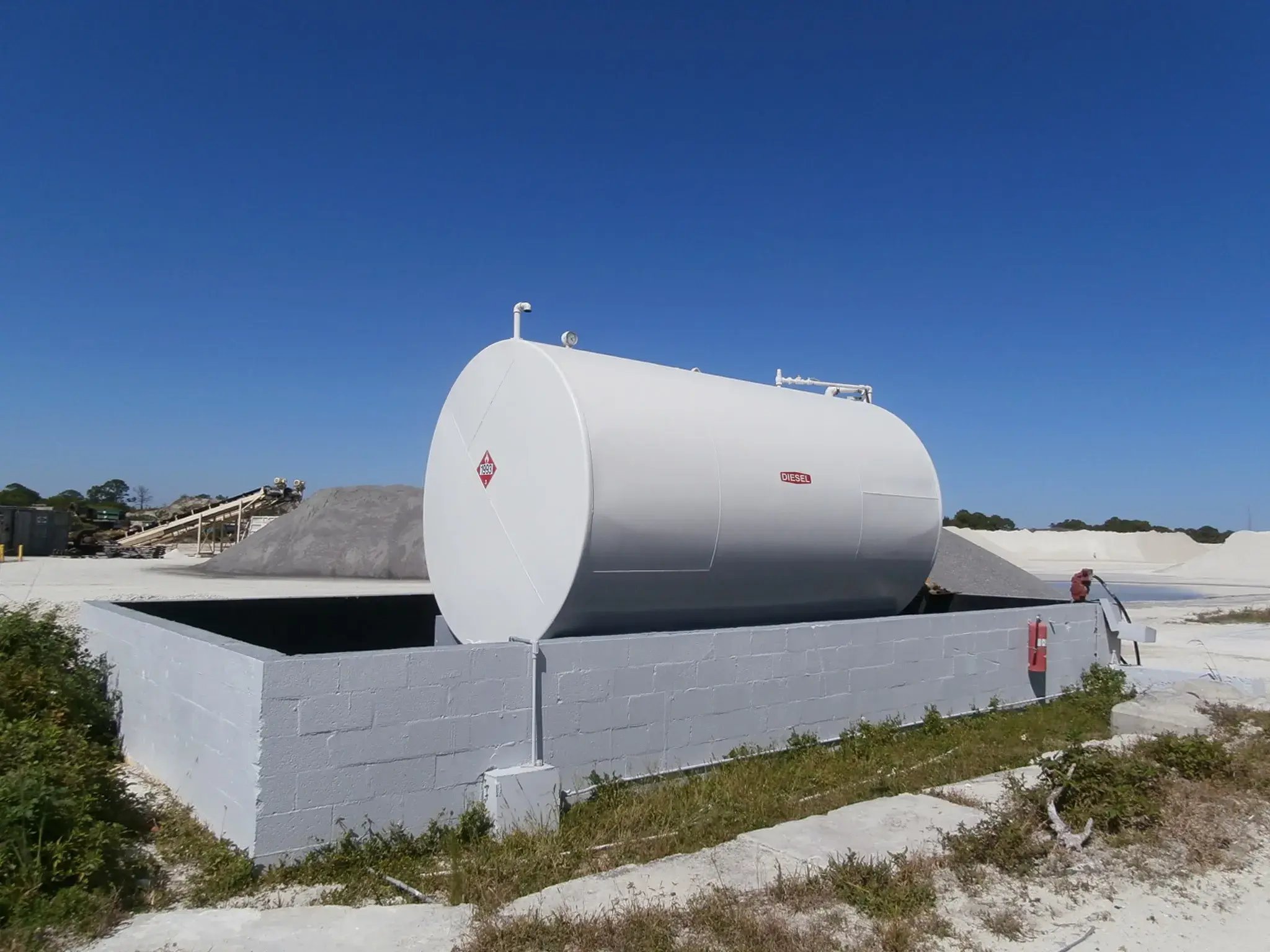
That matters when EPA Region 3, which enforces the SPCC rule in Pennsylvania, reviews a plan or walks your site. If the plan says an operator will contain a diesel leak with pads and socks from the kit at the fuel island, the inspector will expect to find pads and socks at the fuel island. You need an SPCC Plan if you store more than 1,320 gallons of oil aboveground, counting only containers of 55 gallons or more and counting capacity rather than what's in them today, or more than 42,000 gallons buried. If you aren't sure where you land, our complete guide to SPCC Plans walks through it. If you already have a plan, check what it says about response equipment and make sure the kits on your shelves match. Facilities under the threshold don't have to write that section, but a spill that reaches a ditch or creek is a problem under Pennsylvania law either way, so the same kits make sense.
What Should an SPCC Spill Kit Contain?
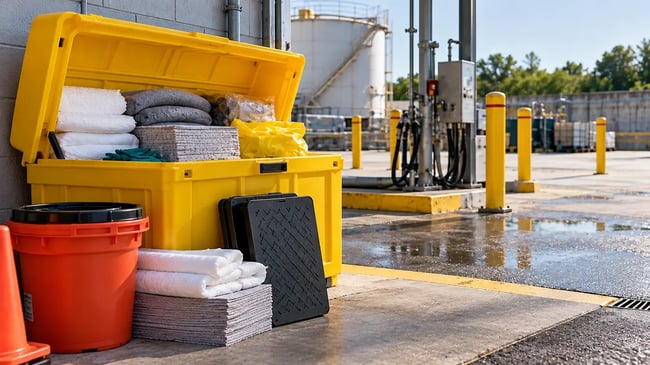
A kit for an oil storage facility is built around one job: stop the oil from spreading, soak up what's there, keep it out of drains, and protect whoever's doing the work. Prepackaged kits from industrial supply vendors cover most of this, and you can add to them. The table below shows what we'd expect to find in a well-stocked kit and why each item is there.
| Item |
What it does |
Notes |
| Oil-only absorbent pads and rolls |
Soak up fuel, hydraulic oil, and lube oil while repelling water |
The default choice outdoors, since rain won't fill them up |
| Universal pads |
Absorb oil, coolant, and water-based fluids |
Better indoors where you handle mixed fluids, a poor fit in wet areas |
| Absorbent socks and booms |
Ring a spill, block its path, and protect drains |
Lay them down first, before you start soaking up the middle |
| Absorbent pillows and loose absorbent |
Catch leaks under equipment and clean up slick pavement |
Sweep granules up fully, because leftover material becomes a slip hazard and can wash off |
| Storm drain covers or mats |
Seal an inlet so oil can't reach the storm system |
Check that the size fits your actual inlets |
| Leak-sealing putty and patches |
Slow a leak at the source on drums and small fittings |
Stopping the source beats cleaning up forever |
| Chemical-resistant gloves, eye protection, boots, and coveralls |
Protect the person doing the cleanup |
Match the gear to the product, and check the safety data sheet |
| Non-sparking scoops and a dust pan |
Pick up soaked material safely |
Matters around gasoline and other fuels |
| Heavy-duty disposal bags, ties, and labels |
Hold used absorbents until they're properly disposed of |
Pair with a lidded pail or open-top drum for bigger cleanups |
| Instruction card with emergency contacts |
Tells staff who to call and what to do first |
Use the same numbers that appear in your SPCC Plan |
Universal pads are the default in many prepackaged kits, but outdoors they soak up rainwater along with the oil and spend their capacity before they've done their job. If your oil is stored and handled outside, oil-only absorbents are usually the better call. Either way, an absorbent is a cleanup tool and doesn't replace secondary containment under your tanks and drums. Our guide on how big SPCC containment needs to be covers that side of the picture.
How Do You Size Spill Kits to Likely Oil Spills?
Start with your SPCC Plan. Where experience points to a reasonable potential for equipment failure, such as loading and unloading equipment, tank overflow, rupture, or leakage, the rule asks the plan to predict the direction, rate of flow, and total quantity of oil that could be discharged. Those predictions are already written down for your facility, which makes them the best starting point. Kit labels list how many gallons they can absorb, so you can compare that number to the volume you expect at each spot. Size for the realistic spill at that location and leave some margin. A kit rated for exactly the volume of the spill won't get the job done, because nobody uses every pad perfectly.
| Type of spill |
Typical volume |
What handles it |
| Drips and small leaks from fittings and equipment |
Ounces to a few gallons |
Pads, pillows, and a small bucket-style kit |
| Hose, nozzle, or fill port overflow |
A few gallons to tens of gallons |
Mid-size kit with socks and drain covers, and staff who can deploy them in minutes |
| Tipped or punctured drum or tote |
Up to the container's full capacity, which is 55 gallons for a standard drum and several times that for a tote |
Kit sized to your largest container, plus an overpack drum or spill pallet |
| Tank, tank truck compartment, or large piping failure |
Hundreds of gallons or more |
Secondary containment and a response contractor, with absorbents for the edges |
The last row is where facilities most often fool themselves. Absorbents are made for drips, hose leaks, and tipped containers. A full tank truck compartment or a ruptured tank puts out far more oil than any kit can soak up, and that spill belongs to your containment, your shutoff valves, and the cleanup contractor named in your plan. Lining up a response agreement before a spill is much easier than finding a contractor during one. If your facility handles drums, our article on whether 55-gallon drums count toward SPCC explains how they figure into the threshold and the plan.
Where Should Spill Kits Go at an Oil Storage Facility?
Put kits where oil moves or gets handled, because that's where spills start. The most useful spot is within a short walk of the source and outside the area a spill would flood, so the person who needs the kit can reach it without wading through the mess. A kit locked in the office or stored inside a containment dike is a kit that won't get used in the first minute, which is the minute that counts.
| Location |
What to stage |
Placement note |
| Fueling area |
Pads, socks, a drain cover, gloves, and bags |
Close to the dispenser, on the side away from vehicle traffic |
| Tank truck unloading and loading |
Larger kit, extra socks, and drain covers |
Where the driver can see and reach it, and clear of the truck's path |
| Drum and tote storage |
Kit sized to the largest container, plus an overpack drum |
Just outside the storage area, on the approach side |
| Bulk tanks inside containment |
Pads, socks, and leak-sealing putty |
Outside the dike wall near the access point, never inside it |
| Near storm drains and ditches |
Drain covers and booms |
At or near the inlets that lead to a creek, stream, or ditch |
| Generators and oil-filled equipment |
Pillows, pads, and a small bucket kit |
Nearby, but not blocked by the equipment itself |
| Service trucks and mobile equipment |
Small kit with pads, gloves, and bags |
In the cab or toolbox, since hydraulic hoses fail wherever the machine is working |
Mark each kit with a sign visible from the work area, keep cabinets weatherproof and unlocked (or make sure everyone knows where the key is), and show the locations on your facility map. Find out where your drains go. Many Pennsylvania facilities sit near creeks, ditches, and small streams, and a floor drain or yard inlet that looks harmless can lead straight to one. Drain covers only help if staff know which inlets matter and can reach them quickly. If nobody has mapped that, walk the site during a rainstorm and watch where the water goes.
How Do You Inspect and Restock SPCC Spill Kits?
The SPCC rule requires you to carry out inspections and tests under written procedures and to keep signed records with the plan for three years. Most facilities fold the spill kit check into the routine walkaround they already do for tanks and containment, since it's the same trip and the same clipboard. Our list of monthly SPCC inspection items is a good starting point for building that routine. For the kits themselves, the check is quick:
- The cabinet or bin is where the plan says it is, unlocked or accessible, and the sign is readable.
- The contents match the inventory list, and nothing has been borrowed for another job.
- Drain covers, gloves, and other rubber or plastic items aren't cracked or stiff, since sun and heat break them down.
- Absorbents are dry and clean, because wet or dirty pads have already lost their capacity.
- The emergency numbers on the instruction card match the plan and still work.
After any use, restock the same day, even for a small drip. A used kit that hasn't been refilled looks fine from the outside and fails the next time someone needs it. A short log of what you used and replaced also gives you a record of small spills. The rule requires you to brief oil-handling staff on the plan at least once a year, which is a good time to show the team where each kit lives and let them practice deploying a drain cover. Our guide on what SPCC training should include covers the rest of the training requirements, and we also offer an online training library if you'd like to cover the basics that way.
How Do You Dispose of Used Spill Kit Absorbents?
Once a pad or sock has soaked up oil, it's a waste, and your plan is supposed to describe how you'll dispose of recovered material under the applicable rules. The right handling depends on what was spilled. Absorbent that picked up used oil is treated differently from absorbent that picked up gasoline, and a spill of unknown or mixed material needs more care than either. Contaminated soil is its own problem. Decide in advance who takes your used absorbents, what container they go in, and who classifies them. Your waste hauler or used oil vendor is often the right first call, and our overview of used oil regulations is a useful companion. Bag and label used material at the spill, keep it in a closed container, and don't put it in the dumpster until you know it's allowed.
What Happens After a Spill Kit Gets Used?
Safety comes first. If anyone is hurt, if there's fire risk, or if vapors are building up in a confined space, get people clear and call 911 before you touch the kit. For a spill you can handle safely, stop the source, block the drains, and contain and soak up the oil. Then decide who needs to be told.
Federal reporting depends on where the oil went. If oil reaches navigable waters or adjoining shorelines and causes a sheen, it has to be reported to the National Response Center at 800-424-8802, and our explanation of the oil spill sheen rule goes through the details. Separately, an SPCC facility must report to the EPA Regional Administrator if it discharges more than 1,000 gallons to navigable waters or adjoining shorelines in a single event, or more than 42 gallons in each of two discharges within twelve months. Only oil that reaches the water counts toward those totals.
Pennsylvania adds its own layer. DEP's Clean Streams Law regulations call for immediate telephone notification when a spill threatens pollution of state waters, which includes sewers, drains, ditches, and other channels that lead to them. The rule sets no minimum volume, so a small spill that reaches a storm drain can still qualify. DEP publishes regional office numbers and a statewide emergency number, 800-541-2050. DEP has also proposed updates to this rule, so check its current guidance before you finalize your own procedures. If a spill is large, reaches water, or draws an inspector's attention, consider bringing in an environmental attorney early, since penalties and liability can follow. Our overview of SPCC violations and fines shows what that exposure looks like.
How Can RMA Help With SPCC Spill Response Planning?
You don't need a consultant to buy a spill kit. Any industrial safety supplier carries them, and the tables above give you what you need to stock one sensibly. Where we help is the part that sits around the kit. If you don't have an SPCC Plan yet, we can help you work out whether you need one and then build it, including the response section that describes your equipment, your contacts, and your contractors. If you already have a plan, we can review whether what's written matches what's on your shelves, and a mismatch between the two is one of the easier things for an inspector to spot. Initial SPCC training is free with a new RMA plan, so your team gets walked through the kits and the response steps right away.
There's no pressure and no obligation. You can call us, email us, or fill out the form on our website, and we'll tell you honestly whether you need help or can handle it yourself. If you'd like to talk it through, contact RMA whenever it's convenient.