Diesel, Hydraulic Fluid, Used Oil, Fryer Oil, and Asphalt Cement: What the Federal Oil Spill Rule Counts at New Jersey Businesses, and What It Leaves Out
When most people hear the word "oil," they picture a fuel tank or a gas station. So when someone tells a plant manager, a restaurant group, or a fleet shop owner that they might need a federal oil spill plan, the first answer is usually "we don't really store oil." Under federal rules, though, "oil" means a lot more than fuel. It includes gasoline, diesel, heating oil, lube and hydraulic oils, used oil, transformer oil, asphalt cement, synthetic oils, and even animal fats and vegetable oils like the soybean oil in a commercial fryer. If it's an oil or grease of any kind, from any source, it almost certainly counts. The main things left out are gases like propane and natural gas, and chemicals that aren't oils and aren't mixed with oil.
Below, we explain the federal definition in plain language, walk through the petroleum, synthetic, and food-based oils that count, and give you a table of the oils we see most often at New Jersey businesses. We also cover what doesn't count, why the broad definition pushes some sites over the line for needing a plan, and how New Jersey's own spill rules reach even further. If you'd like a second set of eyes on what's in your building, reach out to RMA and we'll help you sort it out.
Table of Contents
TL;DR
Under the federal oil spill rule, "oil" means oil of any kind: gasoline, diesel, heating oil, lube and hydraulic oils, used oil, transformer oil, asphalt cement, synthetic oils, biodiesel, and animal fats and vegetable oils like cooking oil all count. Propane, natural gas, and chemicals that aren't oils and aren't mixed with oil don't. Because so many everyday products count, a business that thinks it barely stores oil can still cross the 1,320-gallon line that triggers a written spill plan. New Jersey's own spill law goes further and covers many hazardous substances beyond oil.
What Counts as Oil Under the Federal SPCC Rule?
The federal rule we're talking about is the Spill Prevention, Control, and Countermeasure rule, usually called SPCC. It's part of the Clean Water Act, and it requires businesses that store more than a set amount of oil, in a place where a spill could reach a waterway, to keep a written oil spill plan and follow it. In New Jersey, EPA Region 2 inspects for it. Our article on what an SPCC Plan is covers the plan itself. This post is about the word that decides whether the rule applies in the first place: oil.
The definition sits in 40 CFR 112.2, and it starts with "oil of any kind or in any form." It then lists examples: petroleum, fuel oil, sludge, synthetic oils, mineral oils, oil refuse, oil mixed with wastes, and fats, oils, and greases of animal, fish, or marine mammal origin, plus vegetable oils from seeds, nuts, fruits, and kernels. The list isn't meant to be complete. It's there to show how wide the net is. EPA's own guidance says a list of oils maintained by the Coast Guard is a useful reference, but even that isn't the final word.
A practical way to think about it: if a product is an oil or a grease, whether it came out of the ground, out of a lab, or out of a soybean, assume it counts. If it's a blend that contains oil, it usually counts too. Gasoline, for example, contains benzene, which on its own is regulated as a hazardous substance and not as oil, but gasoline as a whole is still oil for SPCC purposes. The rule cares about what's in the container, not what's printed on the brand label.
Petroleum Oils That Count Under SPCC: Fuels, Lubricants, and Used Oil
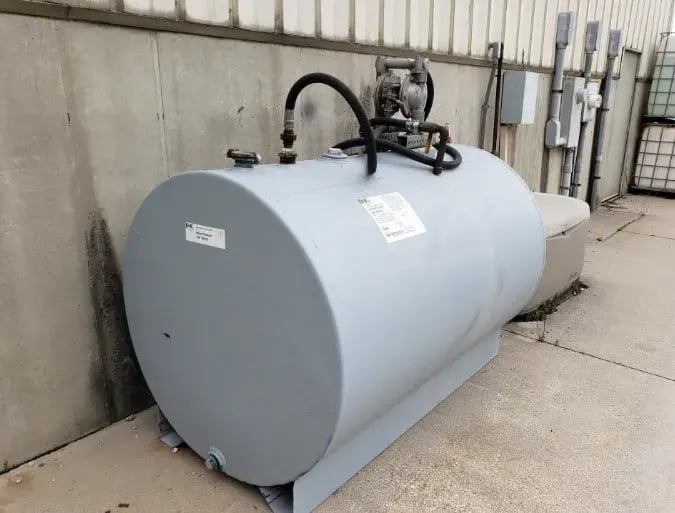
Petroleum oils are the obvious group, and still, people forget half of them. Fuels are the first category: gasoline, diesel, kerosene, jet fuel, and heating oil (also called fuel oil). Emergency generators are where diesel hides most often, in a tank built into the base of the unit that nobody on site thinks of as a tank. Office buildings, hospitals, schools, and data centers all run into this. We've written about emergency backup generators and environmental permits, and SPCC usually comes up.
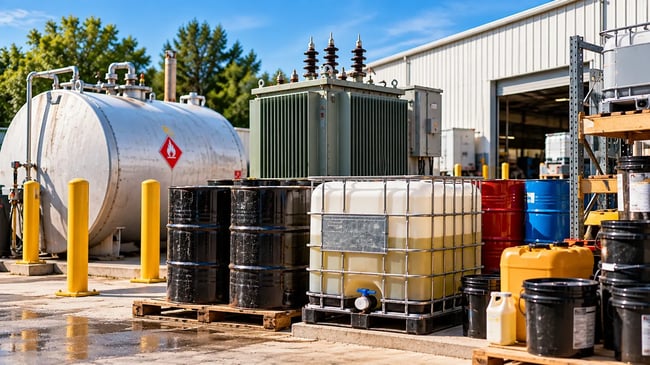
Lubricants and process oils are the second category. Motor oil, gear oil, hydraulic oil, compressor oil, turbine oil, cutting and machining oils, and mineral oils all count. So does transformer oil, the mineral oil that fills electrical transformers and switchgear. If your business owns a pad-mounted transformer, a hydraulic press, an elevator with a hydraulic reservoir, or large gearboxes, that equipment holds oil, and once a single piece holds 55 gallons or more it goes into your count.
Used oil is the third, and it's the one that sneaks up on maintenance shops, fleets, and manufacturers. Every drum, tote, or tank of used oil waiting for a hauler counts toward your total, at the full size of the container. Waste oil and oily sludge count as well, since the definition includes oil mixed with wastes. If you want to get into the waste side of this, our posts on the top things to know about used oil regulations and the difference between used oil and waste oil are good next reads.
Synthetic and Non-Petroleum Oils That Count Under SPCC
"It's synthetic" or "it's not petroleum-based" is a reason we hear for leaving a product off the list, and it doesn't hold up. Synthetic oils are named in the definition. That includes synthetic motor oils and hydraulic fluids, synthetic compressor lubricants, and many heat transfer fluids. EPA's guidance also lists non-petroleum oils such as silicone fluids, coal tar, creosote, pine oil, turpentine, and tall oil as oil under the rule.
Asphalt is another one that surprises people. Asphalt cement, the liquid binder stored hot in tanks at asphalt and paving plants, counts as oil, and so do asphalt cutbacks and emulsions. The one carve-out is hot-mix asphalt itself, the finished blend of asphalt and aggregate, which EPA exempts because the stone in the mix makes it very unlikely to flow to water. So the paving company's finished mix is out, but the asphalt cement tanks that feed it are in.
Fuel blends and biofuels count as well. EPA treats biodiesel (B100) and its blends as oil, and it treats denatured ethanol as oil because the denaturant is a petroleum product. Natural gas condensate, sometimes called drip gas, is also oil, even though natural gas itself isn't. If your business stores any of these, they belong in the same tally as your diesel and hydraulic oil.
Vegetable Oils and Animal Fats: Why Food Businesses Count Cooking Oil for SPCC
This is the part of the definition that catches food businesses off guard. Vegetable oils and animal fats are oil under the SPCC rule, full stop. That covers soybean, canola, corn, palm, olive, and peanut oil, along with lard, tallow, shortening, fish oil, and other fats and greases. EPA regulates them under their own subpart of the rule (Subpart C), but for deciding whether a site needs a plan, they count exactly like diesel. A gallon of canola oil adds a gallon to your total.
The logic is about what a spill does to water. Vegetable oils and animal fats coat birds and fish, use up oxygen in water as they break down, and can foul shorelines the way petroleum does. So the rule doesn't give them a pass for being "natural" or food-grade.
In New Jersey, the businesses that run into this include bakeries, snack and chip makers, frying and prepared food operations, food distribution warehouses, rendering and grease collection companies, and large restaurant or commissary kitchens. Bulk fryer oil tanks, used cooking oil tanks out back, and totes of shortening on the dock all count at their full container size, as long as each one is 55 gallons or larger. We go deeper on this in our post on whether you need an SPCC Plan for cooking oil or used cooking oil.
Common Oils Found at New Jersey Businesses: An SPCC Reference Table
Here's a quick reference for the oils we see most often at New Jersey sites, where they tend to show up, and whether they count toward the SPCC total. Remember that only containers and equipment holding 55 gallons or more go into the count, and you count the full size of the container whether it's full or not.
| Oil or Product |
Where It's Usually Found |
Counts for SPCC? |
| Diesel fuel |
Generators, fleet fueling, equipment yards |
Yes |
| Gasoline |
Fleet and equipment fueling |
Yes |
| Heating oil (fuel oil) |
Boilers in older buildings, warehouses, schools |
Yes |
| Hydraulic oil |
Presses, lifts, elevators, heavy equipment |
Yes |
| Motor, gear, and lube oils |
Maintenance shops, manufacturing, fleets |
Yes |
| Used oil and waste oil |
Drums, totes, and tanks waiting for pickup |
Yes |
| Transformer (mineral) oil |
Owner-owned transformers, switchgear |
Yes |
| Cutting and machining oils |
Machine shops, metal fabrication |
Yes |
| Synthetic oils and heat transfer fluids |
Compressors, process heating, manufacturing |
Yes |
| Asphalt cement |
Asphalt and paving plants |
Yes |
| Hot-mix asphalt |
Asphalt and paving plants |
No, exempt |
| Biodiesel and blends |
Fleet fueling, generators |
Yes |
| Vegetable oils and shortening |
Food plants, bakeries, commercial kitchens |
Yes |
| Used cooking oil and grease |
Restaurants, food processors, rendering |
Yes |
| Propane and LPG |
Forklifts, heaters, process burners |
No |
| Natural gas |
Boilers, process heating |
No |
If you store something that isn't on the table, check its safety data sheet. Section 3 lists the ingredients, and if you see petroleum distillates, mineral oil, base oils, or plant or animal oils making up the product, treat it as oil. If you're still unsure, count it. Being under the threshold with everything included is a much better position than learning about a missed product from an inspector.
What Doesn't Count as Oil Under SPCC: Propane, Chemicals, and Other Exceptions
The definition is broad, but it has edges. The biggest one is gases. EPA doesn't consider liquids that turn to vapor as soon as they hit air or water, like propane, liquefied petroleum gas (LPG), and liquefied natural gas, to be oil under SPCC. Natural gas isn't oil either. A business with a large propane tank for forklifts or heating doesn't add that tank to its SPCC total, though propane has its own fire code requirements.
The second edge is chemicals. A chemical that isn't an oil and isn't mixed with oil isn't covered by SPCC, even if it's hazardous. Acids, caustics, many water-based cleaners and coolants, and substances that the Clean Water Act lists separately as hazardous substances fall outside this rule. They may be covered by other programs, including Community Right to Know reporting and New Jersey's own spill rules, but they don't go into your SPCC oil count. A mixture that contains oil is a different story, which is why oily wastewater and oil-based products still count.
A few other items are carved out by the rule itself even though they hold oil. Containers smaller than 55 gallons aren't counted. Fuel tanks that power vehicles and forklifts (what the rule calls motive power containers) aren't counted. Hot-mix asphalt is exempt, as are milk and milk product containers. And a container that's been permanently closed, meaning emptied, disconnected, locked, and labeled with its closure date, drops out of the count. Our post on whether 55-gallon drums are included in SPCC Plans covers that size cutoff in more detail.
How the Broad Oil Definition Pushes Sites Over the SPCC Threshold
In practice, it all comes back to the threshold. A site needs an SPCC Plan if it can store more than 1,320 gallons of oil aboveground (or more than 42,000 gallons in completely buried tanks) and a spill could reasonably reach a waterway or a storm drain that leads to one. Every oil type in this article goes into the same total. You don't count fuel separately from hydraulic oil or cooking oil. It's all one number.
That's how a business that "doesn't store oil" ends up needing a plan. Picture a food plant with a 500-gallon generator tank, two 275-gallon totes of soybean oil, a 300-gallon used cooking oil tank, and an owner-owned transformer holding 150 gallons of mineral oil. Nobody there would call it an oil storage site, but that's 1,500 gallons, well over the line. Swap the food oils for hydraulic oil drums and used oil totes and you've got a typical machine shop or fleet garage.
The fix starts with an honest inventory. Walk the site with the table above, write down every container and piece of equipment holding 55 gallons or more of any oil, and add up the full capacities. Our guide on the four steps to figure out if you need an SPCC Plan walks through the rest of the test. If you land over the line, our breakdown of the different types of SPCC Plans explains which kind fits your site, and smaller sites can often self-certify without a Professional Engineer.
How New Jersey Spill Rules Reach Beyond Oil
The federal SPCC rule draws a clear line around oil. New Jersey doesn't stop there. The state's Spill Compensation and Control Act, known as the Spill Act, covers discharges of petroleum and a long list of other hazardous substances. So a chemical that falls outside the SPCC oil definition can still be very much inside New Jersey's spill rules. If it's released, it's reportable to the NJDEP Action Hotline at 1-877-WARNDEP (1-877-927-6337), and the people responsible for a discharge can be held liable for the cleanup. How that liability applies in any specific case is a question for an environmental attorney.
New Jersey also has its own discharge prevention rules at N.J.A.C. 7:1E for larger "major facilities." Those sites need Discharge Prevention, Containment and Countermeasure (DPCC) and Discharge Cleanup and Removal (DCR) plans, which cover hazardous substances as well as oil. The storage levels that trigger those plans are well above the federal SPCC line, so most small and mid-sized businesses aren't major facilities, but bulk terminals and large chemical or manufacturing operations often are.
The takeaway for most readers is simple. Use the federal oil definition to decide whether you need an SPCC Plan, and keep in mind that the state looks at a wider set of substances when something spills. Our article on SPCC Plans in New Jersey explains how the federal and state pieces fit together.
How RMA Helps New Jersey Businesses Figure Out What Oil They Store
We're a family-run environmental consulting firm based in New Jersey, and we've been helping facilities with oil storage questions since 1992. A lot of that work starts with exactly the question in this article: does this product count? We'll go through your inventory and safety data sheets with you, sort out what's oil and what isn't, add up your storage the way EPA does, and tell you plainly whether you need a plan. If you don't, we'll say so.
If you do, our senior staff prepare the SPCC Plan themselves, without AI, and we can help with the inspections, updates, and employee training that keep it working. Our online environmental training library is an easy way to get your team up to speed. Because we're in New Jersey, we also know how the federal rule lines up with the Spill Act and NJDEP's programs.
There's no pressure and no obligation. You can call us, send an email, or fill out the form on our website, and we'll talk through what's on your site. Whenever you're ready, reach out to RMA.