A Real-World Walkthrough of What to Expect Before, During, and After an Environmental Site Visit
If you’ve been told an environmental consultant needs to come out and do a site visit, there’s a good chance your brain immediately fills in the blanks with worst-case scenarios. You might be wondering what they’re actually going to look at, how disruptive this is going to be, and whether this feels a little too close to an inspection for comfort. That reaction is completely normal.
We talk to a lot of people who are nervous the first time they hear “site visit,” especially if they haven’t worked with an environmental consultant before. The good news is that this process is usually far more straightforward and low-stress than people expect. And once you understand what’s happening and why, it tends to feel a lot less intimidating.
So let’s slow this down and walk through it together. In the next few minutes, we’ll explain what an environmental site visit actually is, why it happens, and what the process usually looks like before, during, and after the visit. And if at any point you want to talk through your specific situation, you can always reach out to us at RMA.
Table of Contents
What an Environmental Site Visit Is, and Why It Happens In the First Place
At its core, an environmental site visit is about understanding reality. Environmental requirements are written on paper, but facilities operate in the real world. Things get moved, processes evolve, equipment changes, and areas get used in ways that aren’t always obvious from drawings or descriptions alone.
The site visit is how we make sure the work we’re doing actually reflects how your site operates day-to-day. Whether the visit is for a permit, a compliance plan, a report, or a broader environmental review, the goal is accuracy. Seeing the site in person helps eliminate assumptions, and avoiding assumptions is one of the most important parts of environmental compliance.
It’s also worth saying this clearly: a site visit by an environmental consultant is not a government inspection. We don’t have enforcement authority, we don’t issue fines, and we’re not there to report you to regulators. Our role is to understand your operation so we can help you meet requirements correctly and efficiently, without unnecessary overcomplication.
Step One: Pre-Visit Coordination and Preparation
Before the site visit ever happens, there’s usually some upfront coordination. We’ll reach out to schedule a time that works for you and ask a few basic questions to make sure everything goes smoothly. This typically includes things like site access, safety protocols, whether personal protective equipment is required, and whether certain areas need an escort.
This step is about being respectful of your operations and showing up prepared. No one wants a consultant who arrives unannounced, underprepared, or unaware of basic site rules. A little planning ahead of time helps avoid delays, confusion, or unnecessary interruptions on the day of the visit.
This is also a good time for you to ask questions if you’re unsure about what the visit is for or what the scope includes. A good consultant should be happy to explain why the site visit is needed and how it fits into the overall project. Clear expectations up front make the entire process easier for everyone.
Step Two: What Actually Happens During the Site Visit
Okay, so the big day is here. The site visit is on the calendar, someone is about to pull into the parking lot, and you might still be wondering what’s actually going to happen once they walk through the door! If this is your first site visit, it’s completely normal to feel a little unsure about how the day will unfold.
The good news is there’s nothing mysterious about it. Let’s walk through what typically happens, step by step, starting from the moment we arrive on site.
Check-In and Getting Oriented
When we arrive on site, it typically starts with a simple check-in, just like any other visitor. We’ll sign in if needed, get whatever visitor badge or safety briefing applies, and make sure we’re following your site’s protocols. If PPE is required, we’ll already have it, or we’ll coordinate it as part of that pre-visit planning.
After that, we usually have a short conversation with whoever is escorting us or managing the visit. This is where we confirm what we’re there to do, what areas we’ll be walking through, and any operational things we should avoid disrupting. It’s not a deep meeting. It’s more like getting everybody on the same page so the walkthrough goes smoothly.
The Walkthrough and Who Needs To Be Involved
The walkthrough is the main event, and it’s usually more straightforward than people expect. Often, we’ll have an escort, someone who knows the site well and can answer questions as we go. That person might be in EHS, operations, maintenance, or whoever’s most familiar with the day-to-day reality of the facility.
Sometimes, especially after we get an initial overview, we may ask to walk certain areas alone. That’s not because we’re trying to be secretive or weird. It’s usually because we’re trying to observe things as they normally are without distracting staff or pulling people away from their work. Both approaches are normal, and neither one should set off alarm bells.
What We’re Actually Looking At
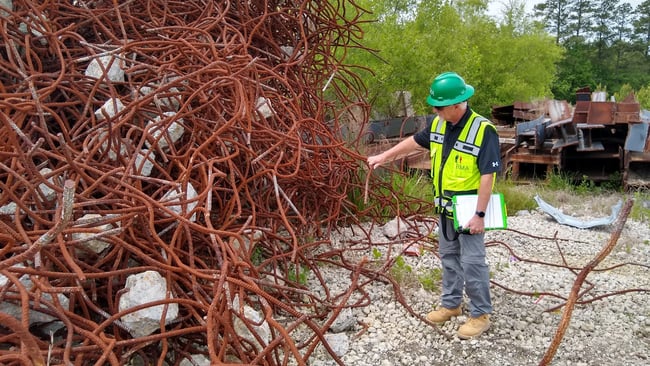
During the walkthrough, we’re looking for the things that matter for the scope of work. That sounds obvious, but it’s worth saying. If we’re there for stormwater, we’re going to focus on drainage, outdoor exposure, material storage, discharge points, and what happens when it rains. If we’re there for a broader compliance review, we may look at more of the facility, including waste handling, storage areas, equipment, and common risk points.
A lot of the focus is on connections. Where does this drain go? What happens to this waste stream? Is that material exposed to precipitation? Where do spills realistically travel? Those are the questions that decide what requirements apply, and how your site should be managed to stay compliant.
The “Oddly Specific” Questions We Might Ask
You’ll probably hear questions that feel strangely detailed. Things like why a material is stored in a specific spot, how often a piece of equipment is used, whether an area has changed recently, or what happens during a certain part of the process. These questions aren’t random, and they’re not meant to be annoying. They’re how we avoid guessing.
Environmental rules can hinge on small operational details. If we guess wrong, the plan or recommendation can end up being wrong, too. We've seen hundreds of unique facilities that all operate in their own distinct ways. It’s always better to ask a few very specific questions up front to make sure we understand your operation, rather than to make assumptions and deal with problems later.
Photos, Notes, and “Is This Going In a Report?”
Yes, most consultants are going to take photos. We take photos. Almost everyone does. And no, it’s not a “gotcha” thing. It’s a practical thing. Photos help us capture details that are easy to forget once we’re back at the office, especially when we’re reviewing notes or building deliverables later.
In most cases, photos are used internally to support accuracy. They help us remember what we saw, confirm a detail, or make sure we don’t miss something small but important. If something needs to be included in a report, we’ll handle that professionally and in context, not in a dramatic “look what we found” way.
How Long the Site Visit Usually Takes
Most site visits fall in the 2-4 hour range. Bigger or more complex facilities can take a full day. Very large sites, multi-building operations, or visits with multiple scopes can take more than one day. That doesn’t mean you’re in trouble. It just means your facility has more going on, and it takes time to understand it properly.
If anyone tells you they can “do a full site visit” for a complex facility in 30 minutes, you should honestly be more concerned about that than a visit that takes a few hours. A good site visit takes the time it needs to take.
The Quick Wrap-Up Before We Leave
At the end of the visit, you might get a brief verbal wrap-up. Something like what we saw, what seems relevant, and what we’ll be digging into next. Sometimes it’s more detailed, and sometimes it’s lighter depending on the project and what we’re seeing.
Other times, we’ll hold off on feedback until we’ve had time to review everything. That’s normal too. Not every visit ends with a neat bow, because a lot of the value comes from what happens after the visit, when we check requirements and translate observations into next steps.
Step Three: What Happens After the Site Visit
Once the site visit wraps up, the work shifts behind the scenes. Notes and photos are reviewed, observations are organized, and any assumptions are checked against what was actually observed in the field. This is where the site visit really starts to pay off.
From there, we evaluate the applicable environmental requirements and use the site-specific information we gathered to move the project forward. Depending on the scope, this could mean developing a permit application, drafting a compliance plan, preparing a report, or outlining next steps and recommendations.
Sometimes we’ll provide a brief verbal summary at the end of the visit, sharing initial observations or explaining what we’ll be focusing on next. Other times, we need time to digest everything before offering feedback. Both approaches are normal, and neither one means you’re being left in the dark.
What a Good Site Visit from a Good Consultant Looks Like
So what should a good environmental site visit from a good environmental consultant feel like? It should feel organized, professional, and respectful. You should feel like the consultant is genuinely trying to understand your operation, not judge it. And you should walk away with a clearer sense of what happens next.
At RMA, this is how we approach site visits. We explain what we’re looking for, ask questions as we go, point out what matters and what doesn’t, and keep the focus on practical outcomes. Every site and every project is a little different, but the goal is always the same: leave with a clear, accurate picture so the work that follows is efficient, defensible, and actually helpful.
If you have a site visit coming up, try not to stress about it. It’s not something to fear. It’s how environmental compliance stops being theoretical and starts being useful. And if you want a team that will walk you through the process and keep surprises to a minimum, reach out to RMA. You can get in touch with us anytime here. We’re here to help!