A Plain-English Explanation of Oil Spill Plans for Pennsylvania Business Owners
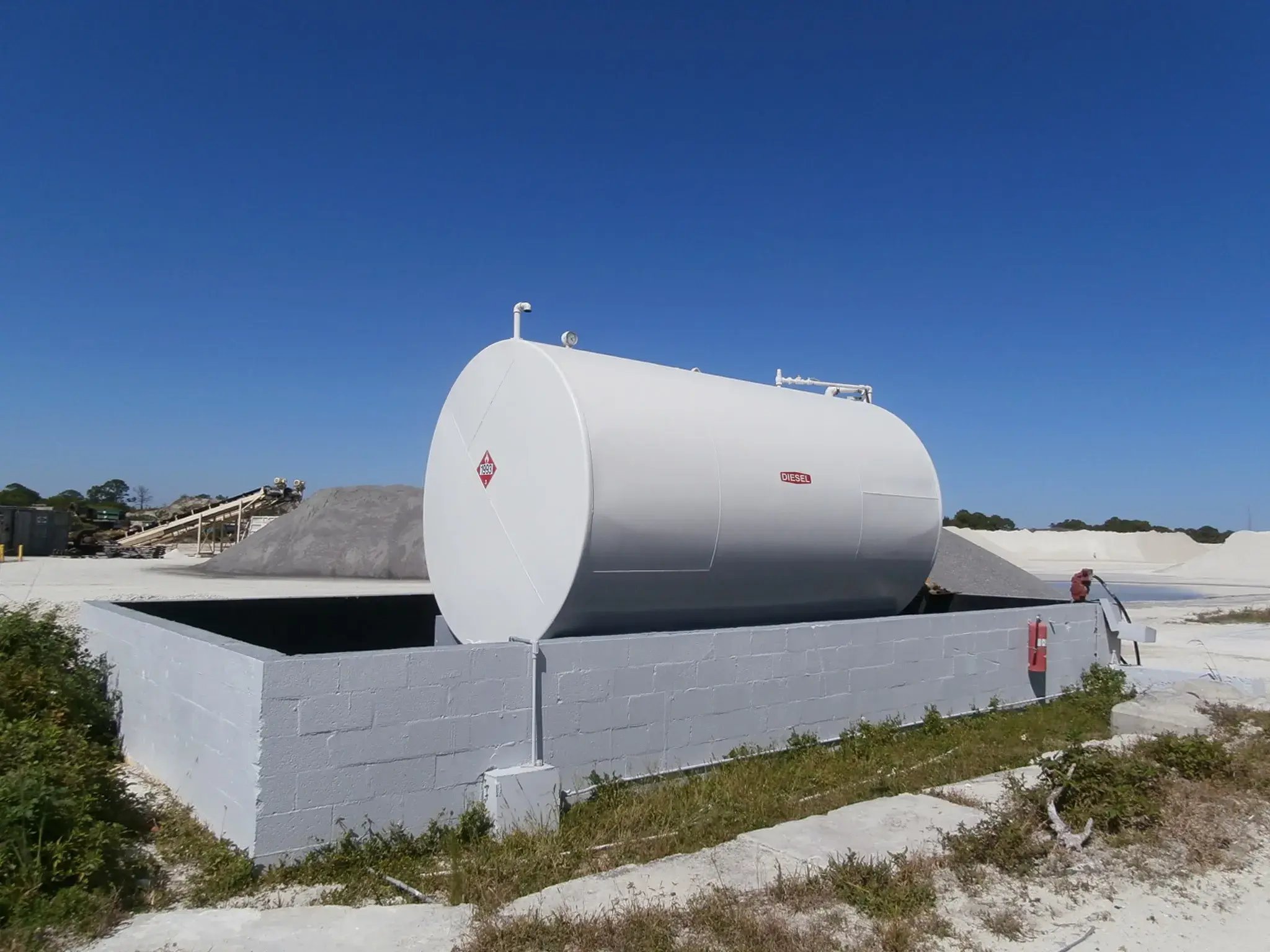
If your business keeps diesel, heating oil, hydraulic oil, or even cooking oil on site, you may have been told you need an "oil spill plan" and not known what that means. It's a written document that describes what oil you store, how you prevent spills, what catches a spill if one happens, how your employees inspect things and get trained, and what they do if oil gets loose. In plain terms, it's a playbook for keeping oil out of the ground and the water.
Below, we explain what goes into an oil spill plan and then introduce the federal version, called an SPCC Plan (Spill Prevention, Control, and Countermeasure Plan), including when it's required. We also cover how inspections and training work, who writes the plan and what it costs, what happens if you need one and don't have one, and what Pennsylvania adds. If you'd like to talk it through, you can reach out to RMA at any point.
Table of Contents
TL;DR
An oil spill plan is a written playbook that lists the oil you store, how you prevent spills, what would catch one, how employees inspect and get trained, and what to do if oil gets loose. The federal version is called an SPCC Plan, and you need one if your aboveground oil storage totals more than 1,320 gallons (counting containers of 55 gallons or more) or your buried storage is over 42,000 gallons, and a spill could reasonably reach a stream, river, or wetland. Smaller sites can often self-certify, larger ones need an engineer to certify the plan, and every plan has to be reviewed at least every five years. Pennsylvania adds its own tank rules through DEP.
What Is an Oil Spill Plan?
An oil spill plan is a written document that explains how your business keeps oil from getting loose and what you'll do if some does. Think of it as a playbook for every tank, drum, and piece of oil-filled equipment on your property. A good one answers five plain questions, and it answers them for your site specifically, not in general terms.
| The question |
What the plan says |
What it looks like |
| What oil do we store, and where? |
A list of every tank, drum, and oil-filled machine with the type of oil, the size, and the location, plus a simple site map |
A 500-gallon diesel tank for the backup generator behind the warehouse |
| How do we keep spills from happening? |
Everyday habits for handling oil, protection against overfilling, and how deliveries are handled |
Someone checks the tank level before the fuel truck pulls in |
| What catches a spill if one happens? |
The physical barriers that hold oil in place so it can't reach the ground, a drain, or a stream |
A concrete wall around the tank, a double-walled tank, or drip pans under drums |
| How do we check things and train people? |
Regular inspections, written records, and training for the employees who handle oil |
A monthly walkthrough and a yearly refresher |
| What do we do if oil gets loose? |
Who to call, how to stop and clean up a spill, where the spill kit is, and who has to be notified |
Phone numbers posted near the fuel area and a spill kit within reach |
None of that is complicated, and most of it is writing down good habits and making sure the equipment matches what's on paper. The plan has to describe your real site, because an inspector will compare the two. Many business owners we talk to have never heard of any of this, and plenty don't realize that storing diesel, hydraulic oil, motor oil, or even cooking oil can bring federal rules.
What Is an SPCC Plan, the Federal Version of an Oil Spill Plan?
The federal version has a name: an SPCC Plan. SPCC stands for Spill Prevention, Control, and Countermeasure, and the three words line up with the pieces above. Prevention is how you stop spills, control is what catches them, and countermeasures are what you do if one happens anyway. The requirement comes from 40 CFR Part 112, an EPA rule under the Clean Water Act. In Pennsylvania, EPA Region 3 enforces it. When someone says a business needs an oil spill plan, this is almost always the plan they mean.
The rule sets the content and leaves the details to you, so every plan looks a little different. Management has to approve it and commit the resources to follow it. If your site is staffed at least four hours a day, a copy has to be kept there, and an inspector can ask to see it during normal working hours. We go deeper on what an SPCC Plan is in a separate article, and we explain who enforces SPCC Plans too.
When Do You Need an Oil Spill Plan (SPCC Plan) in Pennsylvania?
The federal rule applies when two things are true. First, your site could reasonably be expected to send oil into "navigable waters," which in plain terms means streams, rivers, lakes, and wetlands, including by way of a storm drain or ditch that leads to one. Second, you store more oil than the thresholds allow. Aboveground, that's more than 1,320 gallons in total, counting only containers of 55 gallons or more. Buried, it's more than 42,000 gallons. Go over either number and you'll need a written plan. If you're under both, the federal rule doesn't apply to you.
The number that counts is capacity, not what's inside today. An empty 1,000-gallon tank counts in full. Twenty 55-gallon drums add up to 1,100 gallons, and one 275-gallon tote on top of that puts you at 1,375 gallons and over the line. It's the total across the whole site that matters, not any single tank. If you're near the threshold, take a careful inventory first, and our four-step guide to figuring out if you need a plan walks through it.
| Counts toward the 1,320 gallons |
Doesn't count |
| Diesel, gasoline, heating oil, motor oil, and hydraulic oil in containers of 55 gallons or more |
Containers smaller than 55 gallons |
| Oil-filled equipment such as transformers, hydraulic systems, and compressors |
The fuel tank on a vehicle that's used to power that vehicle |
| Animal fats and vegetable oils, including fryer and cooking oil |
Permanently closed containers (emptied, disconnected, and marked) |
| Fuel trailers and skid tanks |
Propane and diesel exhaust fluid, which aren't oil |
| Tanks that are partly buried, in a vault, or bunkered |
Milk containers |
The rule has other exemptions, such as certain underground tanks already covered by federal tank rules and facilities used only for wastewater treatment. Our articles on 55-gallon drums and cooking oil cover the edge cases people ask about most. If your site is new, the plan needs to be in place before operations begin.
How Do Inspections and Employee Training Work for an Oil Spill Plan?
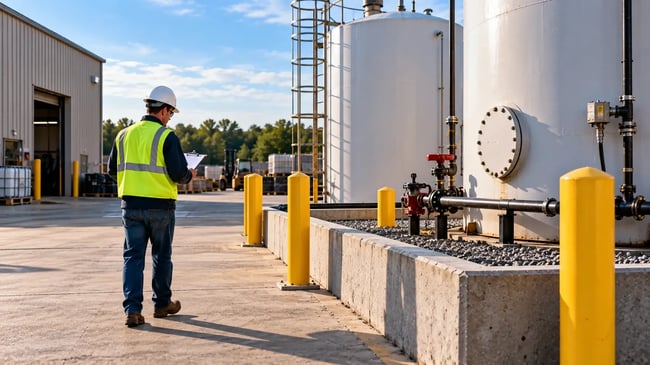
A plan that sits in a binder doesn't prevent anything, so the rule builds in routines. You inspect your tanks, containers, valves, piping, and containment on a regular schedule, and most facilities settle on a monthly walkthrough. The rule lets you set the schedule based on industry standards for your equipment, as long as it's written down. You look for leaks, rust, damaged containment, a full berm, or oil that's pooling where it shouldn't. The written procedures and the signed records of each inspection stay with the plan for three years. We list what to check in our guide to monthly inspections.
Training is the second routine. Employees who handle oil need to learn how to prevent spills, what to do if one happens, and what's in the plan. You also name one person who's accountable for spill prevention, and you hold a briefing for oil-handling employees at least once a year, covering any recent spills or equipment problems. See what training should include and the details on annual SPCC training. If you need a starting point for your team, our online training library has options.
Who Writes an Oil Spill Plan, and What Does an SPCC Plan Cost?
Some owners write their own, and some hire a consultant. The rule offers a few paths depending on your size and history. A smaller site may qualify to self-certify, meaning the owner signs the plan instead of having an engineer stamp it. A Tier I facility has no single container over 5,000 gallons, no more than 10,000 gallons in total, and a clean spill history (no single spill over 1,000 gallons and no two spills over 42 gallons each in a twelve-month period over the past three years). A Tier I site can use EPA's fill-in-the-blank template. A Tier II facility meets the same total and history limits but can have a larger single container, and follows the full rule instead of the template and can still self-certify. Everyone else needs a licensed Professional Engineer to review and certify the plan. RMA has no engineer on staff, so when a plan needs one, we work with an outside engineer and handle the coordination. See different types of SPCC Plans, the Tier I self-certified plan, and professional engineers and SPCC Plans for more.
Cost depends on how much oil you have and how complicated the site is. At RMA, a Tier I plan runs about $1,500 to $4,000, and plans overall run about $1,500 to $15,000. What moves the number is how many tanks and containers you have, their sizes, whether containment needs to be evaluated, and whether an engineer has to certify it. Our pricing calculator below gives you a quick estimate based on your own setup, and SPCC Plan costs explains the ranges in more detail.
Timing varies too, and how long it takes to get a plan depends mostly on how fast your site information comes together. Initial SPCC training is free with a new RMA plan, so your team isn't left holding a document they don't understand.
What Happens If You Need an SPCC Plan and Don't Have One?
The penalties are real, and they apply to the missing paperwork, not only to a spill. Under the Clean Water Act, EPA can seek a civil penalty in court of up to $59,114 per day of violation for failing to comply with the SPCC rule, under the January 2025 inflation adjustment. Administrative penalties run up to $23,647 per day, capped at $295,564 for a single proceeding. These figures are adjusted for inflation over time, so the current numbers may be higher. If a spill reaches a waterway, a missing plan makes everything about the response harder. The most common violations are missing or incomplete plans, inadequate containment, and no inspection records, and our article on the violations inspectors cite most walks through them.
There's a practical side too. Insurers, lenders, and customers increasingly ask whether you have a plan, and we cover why in insurance companies. If you've received a letter from EPA, a notice of inspection, or an information request, an environmental attorney may be appropriate before you respond, and we can explain the technical side while the attorney handles the legal side. If a spill happens, the sheen rule explains when you have to report it.
How Do You Keep an Oil Spill Plan Current?
A plan isn't a one-time document. You have to review it at least once every five years, and the review has to be documented with a signed statement saying whether you'll amend it. If a change at the site materially affects your chance of a spill, like adding or removing a tank, changing piping, or altering your containment, you amend the plan within six months of the change and put the amendment in place as soon as possible, and no later than six months after it's prepared. Amendments get certified the same way the original plan was. Our articles on the five-year review and when a plan needs updating explain what each looks like in practice.
What Else Does Pennsylvania Require for Oil Storage and Spill Plans?
The federal plan is one layer. Pennsylvania's Department of Environmental Protection runs its own storage tank program under the Storage Tank and Spill Prevention Act and 25 Pa. Code Chapter 245. Whether a particular tank falls under it depends on its size, what's in it, and how it's used, so check each tank against DEP's storage tank program pages. DEP also has spill response plan expectations for larger aboveground tank facilities, and where yours fits depends on your tank capacity. Local fire codes for fuel tanks are enforced by your municipality and vary from one to the next, so your fire code official is the right source.
If you're building a new facility or adding tanks, the construction side is separate work. Site grading, erosion and sediment control, building and fire permits, and tank installation, which in Pennsylvania may require DEP-certified installers, belong to your engineer or contractor. We don't prepare construction-phase permits or approvals. What we do is help with the operational side once the site is running: the oil spill plan itself, tank inspections, and training. We can also help you figure out what the construction phase needs and point you to the right people.
How Can RMA Help With Your Oil Spill Plan?
If you're a Tier I site with a simple setup, you may not need us. EPA's template is free, and a careful owner with a clear picture of the site can fill it out. Where we come in is when the picture isn't simple: lots of containers, oil-filled equipment, a site near water, a plan someone else wrote that doesn't match what's on the ground, or a need for engineer certification. We visit the site or work with you remotely, build the plan around what's actually there, and train your people on it. Senior staff do the work, and we don't use AI to produce your plan.
There's no pressure and no obligation. You can call, email, or fill out the form on our contact page, and someone from our team will follow up. You can also read more in our SPCC Learning Center or in everything you need to know about SPCC Plans.