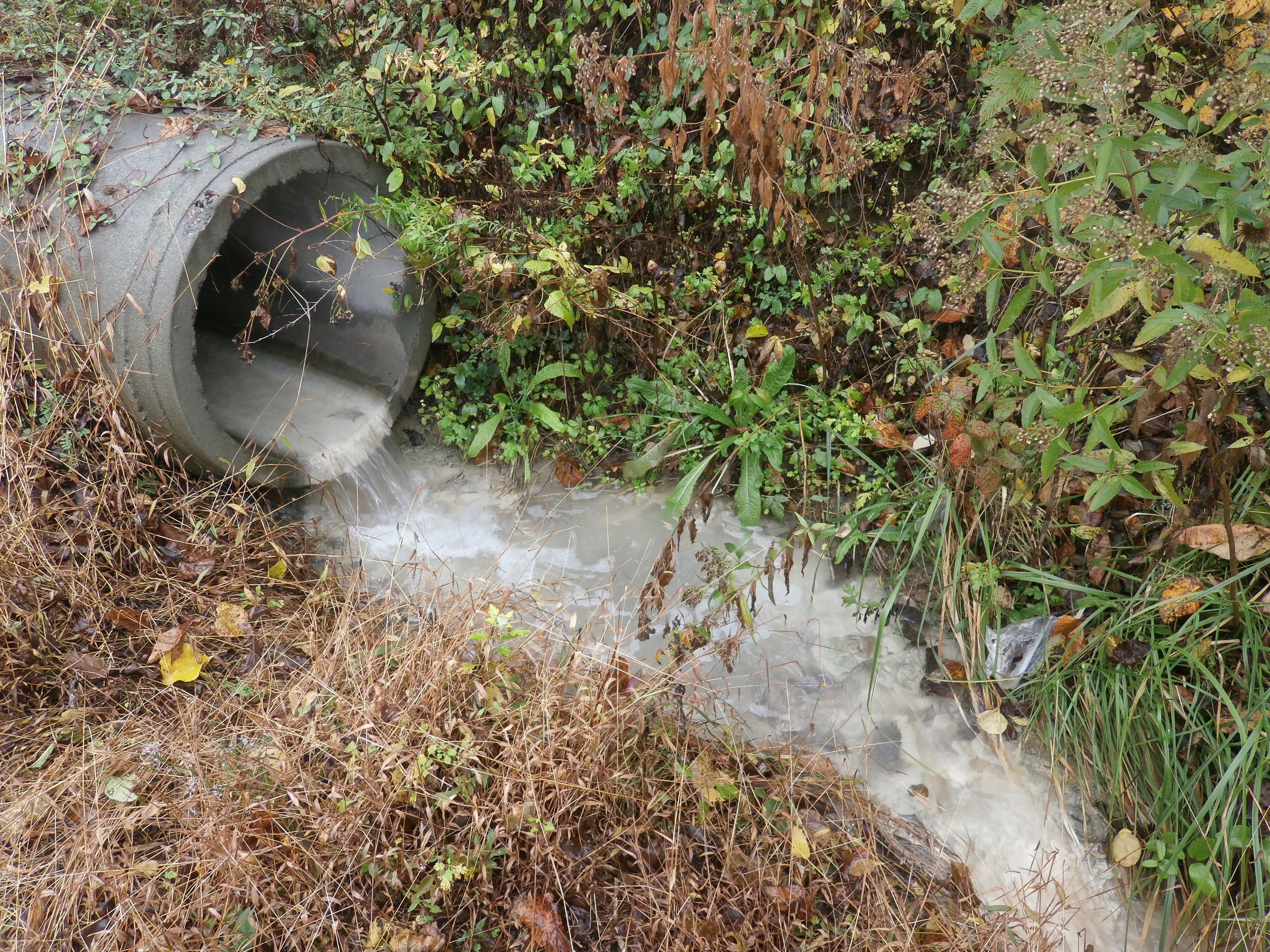
Different Water, Different Permits: Why PAG-03 Covers Stormwater and Only a Short List of Other Discharges
Walk around almost any industrial facility in Pennsylvania and you'll find water in places that have nothing to do with rain. A hose running on a wash pad, a chiller dripping into a floor drain, boiler blowdown headed for a pipe nobody has traced in years. Meanwhile, the stormwater permit sitting in the office, usually PAG-03, is written for rain and snowmelt runoff and a short list of other discharges. PAG-03 is the general permit that Pennsylvania's Department of Environmental Protection (DEP) issues for industrial stormwater under the federal National Pollutant Discharge Elimination System, or NPDES. Process wastewater, meaning water your operation uses, handles, or creates, isn't covered by it. The short answer is that the two get different permits.
The rest of this article covers what counts as stormwater, what counts as process wastewater, which non-stormwater discharges PAG-03 does allow, and where process water has to go instead. We've included a table that classifies the water streams facilities most often mix up, plus a look at the problems that come from letting process water slip into the stormwater system. If you'd rather talk it through with someone who does this every day, you can reach out to RMA at any point.
Table of Contents
TL;DR
Stormwater is rain and snowmelt runoff. Process wastewater is any water your operation uses, handles, or creates, including wash water, cooling water, and boiler blowdown. Pennsylvania's PAG-03 covers industrial stormwater plus a short list of clean, incidental non-stormwater discharges, but it doesn't cover process water. Process water going to a stream generally needs its own individual NPDES permit, process water going to a sewer needs the sewer authority's approval, and letting it mix into your stormwater system can put your stormwater coverage at risk.
What Is the Difference Between Stormwater and Process Wastewater?
Stormwater is water that fell from the sky: rain, snow, sleet, and the runoff when it melts. At an industrial facility, the version regulators care about is stormwater associated with industrial activity, meaning runoff that touches equipment, stockpiles, loading areas, or other parts of your operation on its way off the site. That's the water PAG-03 is written for.
Process wastewater is defined by where it comes from, and it comes from you. It's water your operation uses, handles, or creates: production water, equipment and floor cleaning, cooling, rinsing, pressure testing, boiler operation, and anything similar. The easiest field check is the dry day test. If water is flowing out of your facility on a day when it hasn't rained or snowed, it didn't come from the sky, so it isn't stormwater. We walk through that test in our general article on stormwater and process water, and this article picks up where that one leaves off by focusing on Pennsylvania and PAG-03.
What Non-Stormwater Discharges Does PAG-03 Allow?
PAG-03 is Pennsylvania's general NPDES permit for industrial stormwater. A general permit is a standard set of conditions DEP lets many similar facilities sign onto, instead of writing a custom permit for each one. You can read more on how that compares with general, individual, and No Exposure permits if you're sorting out which one fits. PAG-03 is built around stormwater, but DEP knows most sites also have a little incidental water that isn't rain, so the permit lists specific non-stormwater discharges that are allowed to leave through a stormwater outfall.
According to DEP's PAG-03 fact sheet, that list covers emergency or unplanned firefighting water, potable water from line and hydrant flushing that doesn't contain measurable chlorine, and uncontaminated condensate from air conditioners and chillers. It also covers irrigation drainage, landscape water with no pesticides, herbicides, or fertilizers, uncontaminated groundwater or spring water, and foundation drains that aren't contaminated with process materials. Pavement wash water and routine external building washdown are on it too, but only where no detergents or hazardous cleaning products are used. Compressor condensate qualifies only if it goes through an oil/water separator, and for cooling towers, only windblown mist that lands on rooftops is allowed, not intentional discharges from the tower.
Read that list again and the pattern is clear. Everything on it is clean, incidental, or occasional, and almost every item comes with a condition like "uncontaminated" or "no detergents." Once water picks up soap, oil, or process materials, it falls off the list. Industry appendices can add their own allowed discharges, such as hydrostatic test water for petroleum terminals. DEP also renewed PAG-03 in 2023 and added new requirements for managing certain authorized non-stormwater discharges, so read the list and conditions in the current permit instead of relying on any summary, including this one. Our PAG-03 guide covers the permit in more depth.
The Notice of Intent (NOI), which is the application you submit to DEP for PAG-03 coverage, asks you to identify and describe the non-stormwater discharges you expect. If a water stream isn't on the list or in your approved NOI, assume PAG-03 doesn't cover it. We go through what's allowed in more detail in our article on what you can discharge under a stormwater permit.
Where Does Process Wastewater Have to Go Instead of PAG-03?
Process wastewater has three common destinations: a surface water like a stream or creek, a sewer, or a tank that gets hauled away. Each one runs through a different approval, and none of them is PAG-03.
Process Wastewater Discharged to a Stream
Process water that leaves your site to a stream, creek, river, or other surface water generally needs an individual NPDES permit for industrial wastewater. Unlike PAG-03, an individual permit is written for one facility, with limits and monitoring built around what's in your discharge and the waterway receiving it. One more connection to know about: a facility that already has, or is required to have, an individual NPDES permit for non-stormwater discharges generally can't use PAG-03 for its stormwater, because the stormwater gets folded into the individual permit.
Process Wastewater Discharged to a Sewer
If your process water goes to a sanitary sewer instead, the local sewer authority is the one to answer to. Sewer authorities set limits on what can enter their system, commonly covering things like pH, oils, metals, and temperature, and many require a written approval or permit before you connect. Some older Pennsylvania cities have combined sewers, where the sewer authority may govern site water instead of a DEP stormwater permit. Local rules and fees differ, so confirm your situation with your authority. DEP's PAG-03 fact sheet does note that stormwater discharged to a separate or combined sanitary sewer doesn't need its own permit coverage, which is one reason process water and stormwater at the same site can have such different answers.
The third route is to capture the water and haul it off site for treatment or disposal. Depending on what's in it, that water may be regulated as a waste, sometimes a hazardous one, with its own rules, so testing it with a water testing lab before you decide is worth the money.
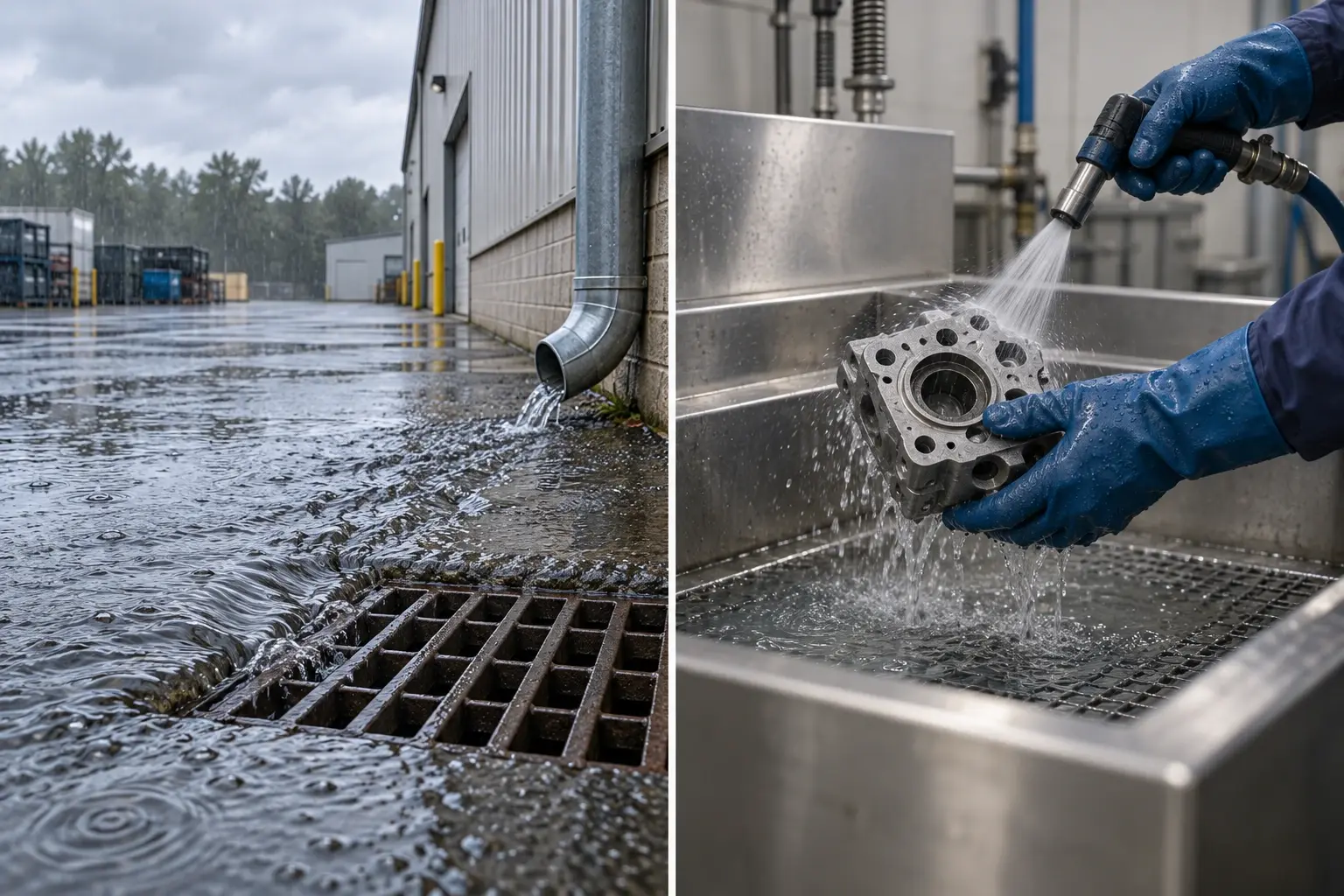
How Are Common Water Streams Classified at an Industrial Facility?
The table below sorts the water streams we see most often at industrial facilities. It's built from the authorized non-stormwater list in DEP's PAG-03 fact sheet, so treat the PAG-03 column as a starting point and check your own permit, including your industry's appendix, before relying on it.
| Water stream |
Stormwater or process? |
Can PAG-03 cover it? |
If not, where it generally goes |
| Rain runoff from outdoor storage, loading, and equipment areas |
Stormwater |
Yes, this is what the permit is for |
Not applicable |
| Snowmelt from piles and paved areas |
Stormwater |
Yes |
Not applicable |
| Emergency or unplanned firefighting water |
Non-stormwater |
Yes, on the authorized list |
Not applicable |
| Potable water from line or hydrant flushing |
Non-stormwater |
Yes, if it has no measurable chlorine |
Chlorinated flushing water needs a different route, so confirm with DEP |
| Condensate from air conditioners and chillers |
Non-stormwater |
Yes, if uncontaminated |
If contaminated, treat as process wastewater |
| Compressor condensate |
Non-stormwater |
Only if it goes through an oil/water separator |
Otherwise process wastewater |
| Irrigation and landscape water |
Non-stormwater |
Yes, if no pesticides, herbicides, or fertilizers |
Not applicable when conditions are met |
| Pavement wash and routine external building washdown |
Non-stormwater |
Only with no detergents or hazardous cleaning products and no contact with oil, grease, or pollutant sources |
Soapy or oily wash water is process wastewater |
| Uncontaminated groundwater, spring water, and foundation drains |
Non-stormwater |
Yes, if not contaminated with process materials |
If contaminated, treat as process wastewater |
| Truck, vehicle, and equipment wash water |
Process wastewater |
No |
Individual NPDES permit, sewer authority approval, or hauling for disposal |
| Floor and production area wash water, floor drain discharges |
Process wastewater |
No |
Individual NPDES permit, sewer authority approval, or hauling for disposal |
| Noncontact cooling water and intentional cooling tower discharge |
Process wastewater |
No (only windblown tower mist is allowed) |
Individual NPDES permit or sewer authority approval |
| Boiler blowdown |
Process wastewater |
No |
Individual NPDES permit or sewer authority approval |
| Water used in production, rinsing, or product contact |
Process wastewater |
No |
Individual NPDES permit, sewer authority approval, or hauling for disposal |
| Leachate, sump water, and contaminated water in secondary containment |
Process wastewater or waste |
No |
Test it first, then permit, sewer approval, or disposal as waste |
| Hydrostatic test water |
Non-stormwater |
Only where an industry appendix allows it, such as land transportation and petroleum terminals |
Otherwise individual permit or sewer authority approval |
A clean stream that picks up a cleaning product, oil, or process material stops being clean, and the answer in the table changes with it. The conditions on the allowed items are the whole point, not fine print.
Which Water Streams Do Facilities Commonly Mix Up With Stormwater?
Most mix-ups aren't careless. Process water and stormwater travel across the same pavement, drop into the same inlets, and look alike once they're running together. These are the three we run into most.
Wash Water
Hosing down equipment, trucks, floors, and pads is routine, and the wash water runs to the nearest drain, which at plenty of sites is a storm drain. Pavement wash and routine external building washdown are allowed under PAG-03 only without detergents or hazardous cleaning products, and the pavement wash can't touch oil and grease deposits or other pollutant sources. Add soap to a truck wash, degreaser to a shop floor, or product residue to a rinse, and it's process wastewater. That water usually needs to be captured and routed to a sewer with approval, treated, or hauled off.
Cooling Water
Noncontact cooling water passes through a heat exchanger without touching product, so it looks clean, which is exactly why it ends up at storm outfalls. PAG-03 doesn't list it. The only cooling tower water on the allowed list is windblown mist that settles on rooftops. Intentional discharges, including blowdown from a cooling tower, are process water that generally needs an individual NPDES permit or sewer approval.
Boiler Blowdown
Boiler blowdown is water drained from a boiler on purpose to keep dissolved solids from building up. It's typically hot and carries water treatment chemicals, and it isn't on the allowed list. A floor drain that ties into the storm system can send it straight to an outfall without anyone noticing, so blowdown is one of the first places we look.
A few other streams cause the same trouble. Compressor condensate carries oil and is allowed only if it passes through an oil/water separator. Rain that collects in secondary containment and picks up oil is no longer clean runoff, so test it before you release it instead of pumping it out, since it may need to be managed as waste. Floor drains deserve a trace too, since one connected to the wrong pipe can put process water into a system your permit treats as stormwater only.
Why Does Mixing Process Water Into Stormwater Cause Problems?
Several problems stack on top of each other. The first is the obvious one: if process water leaves through a stormwater outfall and PAG-03 doesn't authorize it, you have an unauthorized discharge. That's a permit violation, and it can also run afoul of Pennsylvania's Clean Streams Law and the federal Clean Water Act.
The second shows up in your sampling data. Under PAG-03, stormwater samples are supposed to be taken when non-stormwater isn't mixing in, or at a point before it mixes in. If wash water or blowdown runs through the outfall you sample, your results reflect both streams, and the process water can push readings over benchmark values. Exceeding a benchmark isn't a violation by itself, but two consecutive exceedances for the same pollutant at the same outfall call for a corrective action plan within 90 days. A facility can end up writing plans to fix pollution that never came from rain.
Third, it puts your coverage at risk. DEP can deny PAG-03 coverage, or require an individual permit instead, when stormwater discharges would be better controlled that way, and the fact sheet specifically lists non-stormwater discharges a permittee introduces on purpose without DEP's authorization. A site with regular process water at its outfalls looks like exactly that kind of candidate. And flow from an outfall on a dry day tends to draw questions quickly during a PA DEP stormwater inspection.
If you've already received a notice of violation or a letter from DEP about an unauthorized discharge, an environmental attorney may be appropriate alongside your environmental consultant.
How Do You Sort Out Stormwater and Process Water at Your Pennsylvania Facility?
Start with a walk on a dry day. Follow every drain and pipe you can find, and note where hoses, chillers, boilers, compressors, and floor drains discharge. For each one, write down whether the water ends up at an outfall, a sewer, or a tank. This is the same idea behind good stormwater visual inspections, and it doesn't take specialized equipment.
Then compare what you found against your paperwork. Check the non-stormwater list and conditions in the current PAG-03, what you identified in your NOI, and what your PPC Plan says about water at the site. A PPC Plan, short for Preparedness, Prevention and Contingency Plan, is the site plan DEP requires with each PAG-03 application. If a stream you found isn't in any of them, that's your gap.
For each stream that isn't authorized, you generally have a few options: stop it by changing a practice, reroute it to a sewer with the authority's approval, capture and haul it, or pursue an individual NPDES permit. Sampling the water tells you what's in it, and that drives which option makes sense. Making sure the people doing the washing and draining know what can and can't go down a drain helps too, and our online training library is one way to get them there.
How Does RMA Help With Stormwater and Process Wastewater in Pennsylvania?
RMA is based in New Jersey and works with facilities across Pennsylvania. If you aren't sure what water is leaving your site, we can help you identify each stream, work out whether PAG-03 covers it, and lay out what your options are. That can include preparing a PAG-03 application and PPC Plan, and if an individual NPDES permit turns out to be the right path, helping with the application and the back and forth with DEP. You can see how this works on our Pennsylvania NPDES and stormwater help page.
There's no pressure and no obligation. If a drain plug and a quick conversation will fix it, we'll tell you that. You can call us, send an email, or fill out the form on our website whenever you're ready, or simply contact RMA to talk through what you're seeing.