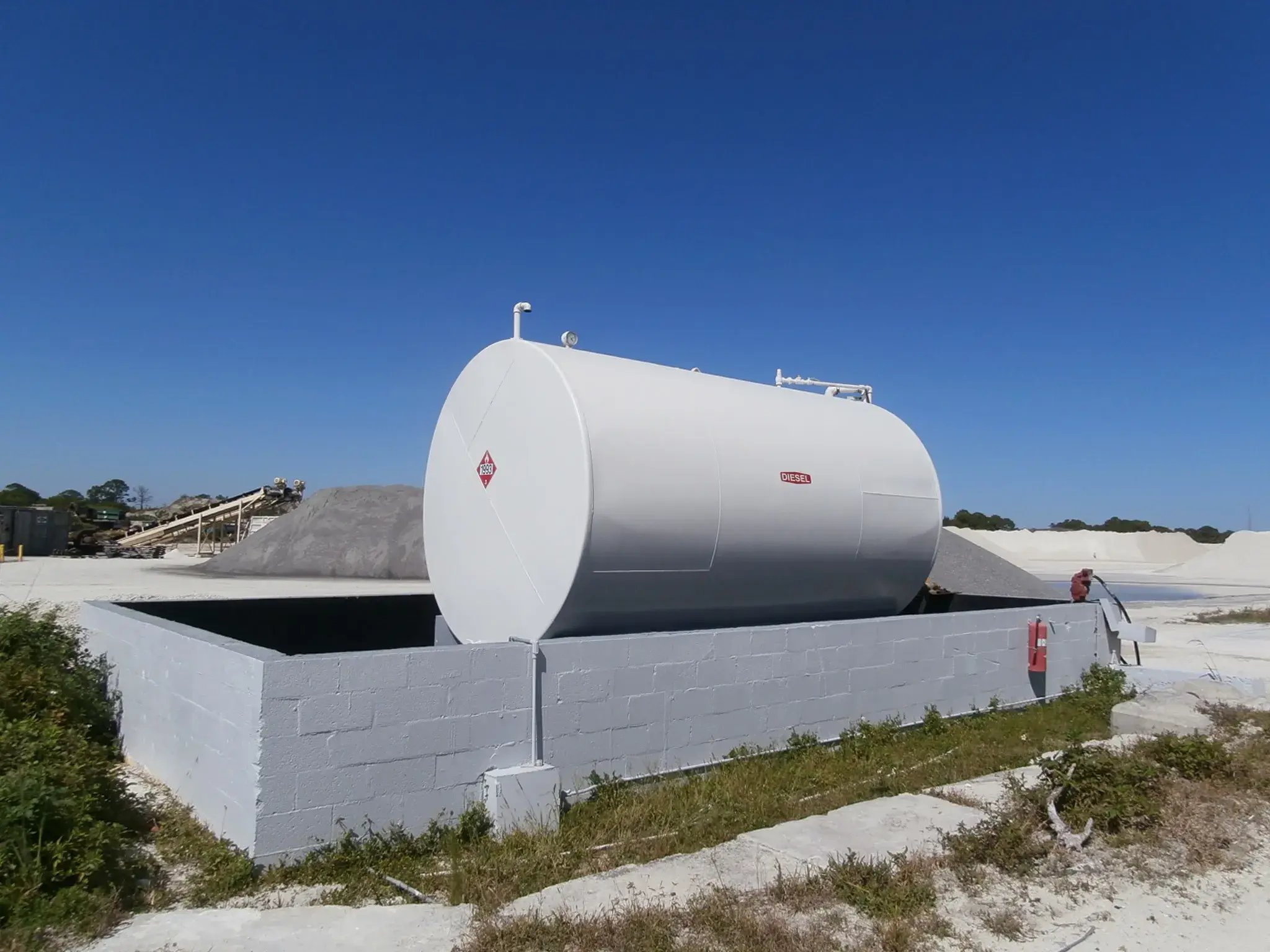
EPA Region 3 Enforces SPCC Oil Spill Plans in Pennsylvania, Not PA DEP. But DEP and Your Local Fire Officials Regulate the Same Tanks. Here's Who Does What.
If your facility stores diesel, hydraulic oil, lube oil, or even cooking oil in Pennsylvania, you've probably assumed the Pennsylvania Department of Environmental Protection is the agency that cares about it. That's only partly right. The federal oil spill plan, known as an SPCC Plan, is enforced in Pennsylvania by the U.S. Environmental Protection Agency's Region 3 office in Philadelphia, not by DEP. DEP runs its own storage tank program and spill reporting rules on top of that, and many DEP permits require a separate state plan called a PPC Plan. Local fire officials then enforce fire code requirements for the tanks themselves. So the short answer is EPA for the oil spill plan, DEP for the state tank and spill rules, and your municipality for fire code.
That's how a single 10,000-gallon diesel tank ends up with two or three agencies interested in it, each looking at different things. Below, we walk through what each agency enforces, where their thresholds differ, a simple who-enforces-what table, who you call when oil spills, and how to keep one set of paperwork from turning into three. If you'd like help figuring out which of these rules apply to your site, feel free to reach out to RMA and we'll talk it through.
Table of Contents
TL;DR
The federal oil spill plan (an SPCC Plan) is enforced in Pennsylvania by EPA Region 3 in Philadelphia, not by PA DEP, and you don't file it with anyone, you keep it at the facility and follow it. DEP separately regulates many of the same tanks through its storage tank program, which covers registration, certified installers and inspectors, and a state spill plan for larger tank facilities, and DEP also requires spill notification and, through many permits, a PPC Plan. Local fire officials enforce fire code rules for fuel and oil tanks, and those vary by town. Each agency uses different thresholds, so a facility can owe something to one agency and nothing to another, which is why it's worth checking all three.
Who Enforces Oil Spill Plans in Pennsylvania, EPA or DEP?
The federal oil spill rule comes from the Clean Water Act and lives at 40 CFR Part 112. It requires facilities that store enough oil, and could reasonably be expected to spill it into a creek, river, or storm drain leading to one, to have a written Spill Prevention, Control, and Countermeasure Plan. That's the SPCC Plan. A facility is covered when its aboveground oil storage capacity is more than 1,320 gallons, counting only containers of 55 gallons or more, or its completely buried capacity is more than 42,000 gallons. Capacity counts, not contents, so an empty tank still counts while a permanently closed one doesn't.
Unlike a lot of environmental programs, SPCC was never handed off to the states. EPA keeps it, and in Pennsylvania that means EPA Region 3, which covers Pennsylvania, Delaware, Maryland, Virginia, West Virginia, and the District of Columbia from Philadelphia. You don't submit an SPCC Plan to EPA for approval. You keep it at the facility, follow it, and show it to an inspector when asked. We cover the national picture in our article on who enforces SPCC Plans. The Pennsylvania wrinkle is what DEP layers on top.
That state layer has a local origin. In January 1988 a large diesel tank at an Ashland Oil terminal in Floreffe, south of Pittsburgh, collapsed and sent millions of gallons of diesel across the site and into the Monongahela River, disrupting drinking water downstream. The next year Pennsylvania passed the Storage Tank and Spill Prevention Act, which DEP carries out through 25 Pa. Code Chapter 245. Those tank rules, plus the Clean Streams Law's spill notification and PPC provisions, are what DEP enforces, and they use different definitions and thresholds than the federal rule.
Pennsylvania Oil Storage Rules: Who Enforces What
Here's the simplest way we know to lay it out. Each row is a separate set of requirements with its own trigger, and meeting one doesn't satisfy the others.
| Agency |
What It Enforces |
Typical Trigger |
What You Deal With |
| EPA Region 3 (Philadelphia) |
SPCC Plans under 40 CFR Part 112, plus Facility Response Plans at higher-risk sites |
More than 1,320 gallons of aboveground oil capacity (containers of 55 gallons or more) or more than 42,000 gallons completely buried, with a reasonable expectation of a discharge to waters |
A written plan kept on site, containment, inspections, training, five-year reviews, federal inspections and penalties |
| PA DEP Storage Tank Program |
Tank registration, installation and inspection standards, and the Spill Prevention Response Plan under 25 Pa. Code Chapter 245 |
A stationary aboveground tank over 250 gallons, or an underground tank over 110 gallons, holding a regulated substance, unless exempt |
Annual registration fees, DEP-certified installers and inspectors, and a state spill plan submitted to DEP at larger tank facilities |
| PA DEP Clean Water and Permit Programs |
Spill notification and Preparedness, Prevention and Contingency (PPC) Plans under 25 Pa. Code Chapter 91 |
Any spill that causes or threatens pollution of state waters, and any DEP permit that calls for a PPC Plan |
Immediate phone notice to the DEP regional office, cleanup, and a PPC Plan where required |
| Local Fire Officials |
Fire code requirements for flammable and combustible liquid tanks |
Varies by municipality and by what's stored |
Permits, setbacks, tank location limits, and fire inspections |
The thresholds are what trip people up. DEP's tank program reaches down to a single 300-gallon tank, while SPCC doesn't apply until the whole facility passes 1,320 gallons. Go the other way, and a shop with thirty 55-gallon drums of hydraulic and gear oil has 1,650 gallons of aboveground capacity, enough for SPCC, without one container big enough to register with DEP. Being registered with DEP doesn't mean your oil spill plan is covered, and having an SPCC Plan doesn't mean your tanks are registered. If you're not sure whether you cross the federal line, our guide to the four steps to figure out if you need an SPCC Plan is a good place to start.
How EPA Region 3 Enforces SPCC Plans in Pennsylvania
Region 3 runs routine SPCC inspections, and an inspector can show up and ask to see the plan, inspection records, training records, and containment. A spill that reaches a waterway is the other common trigger, since EPA will want to know whether the facility had a plan and followed it. The findings are rarely exotic: no plan at all, a plan that needed Professional Engineer certification and didn't get it, a missed five-year review, missing or undersized containment, no inspection records, and no oil-handling training. Smaller facilities may qualify to self-certify as a Tier I or Tier II qualified facility, which our article on the different types of SPCC Plans walks through, but a self-certified plan still has to be followed.
Penalties are set by the Clean Water Act and adjusted for inflation in 40 CFR Part 19. Under the current table, administrative penalties for violating the oil spill regulations can reach $23,647 per violation per day, capped at $295,564 in the larger class of case, and court penalties can reach $59,114 per day per violation. Most cases settle well below the maximums, and EPA uses expedited settlements for some minor SPCC violations. Our breakdown of the top SPCC Plan violations and fines covers the patterns we see.
EPA and the state sometimes act together. In one case involving a plant in Clairton, Pennsylvania, EPA, Pennsylvania, and West Virginia jointly resolved alleged violations of the federal SPCC and Facility Response Plan rules alongside violations of Pennsylvania's Storage Tank and Spill Prevention Act, with penalties paid to the United States and each state. If you've received an EPA inspection report, an information request, or a settlement offer, it's reasonable to talk with an environmental attorney before you respond, and we're glad to support one on the technical side.
What PA DEP's Storage Tank Program Regulates
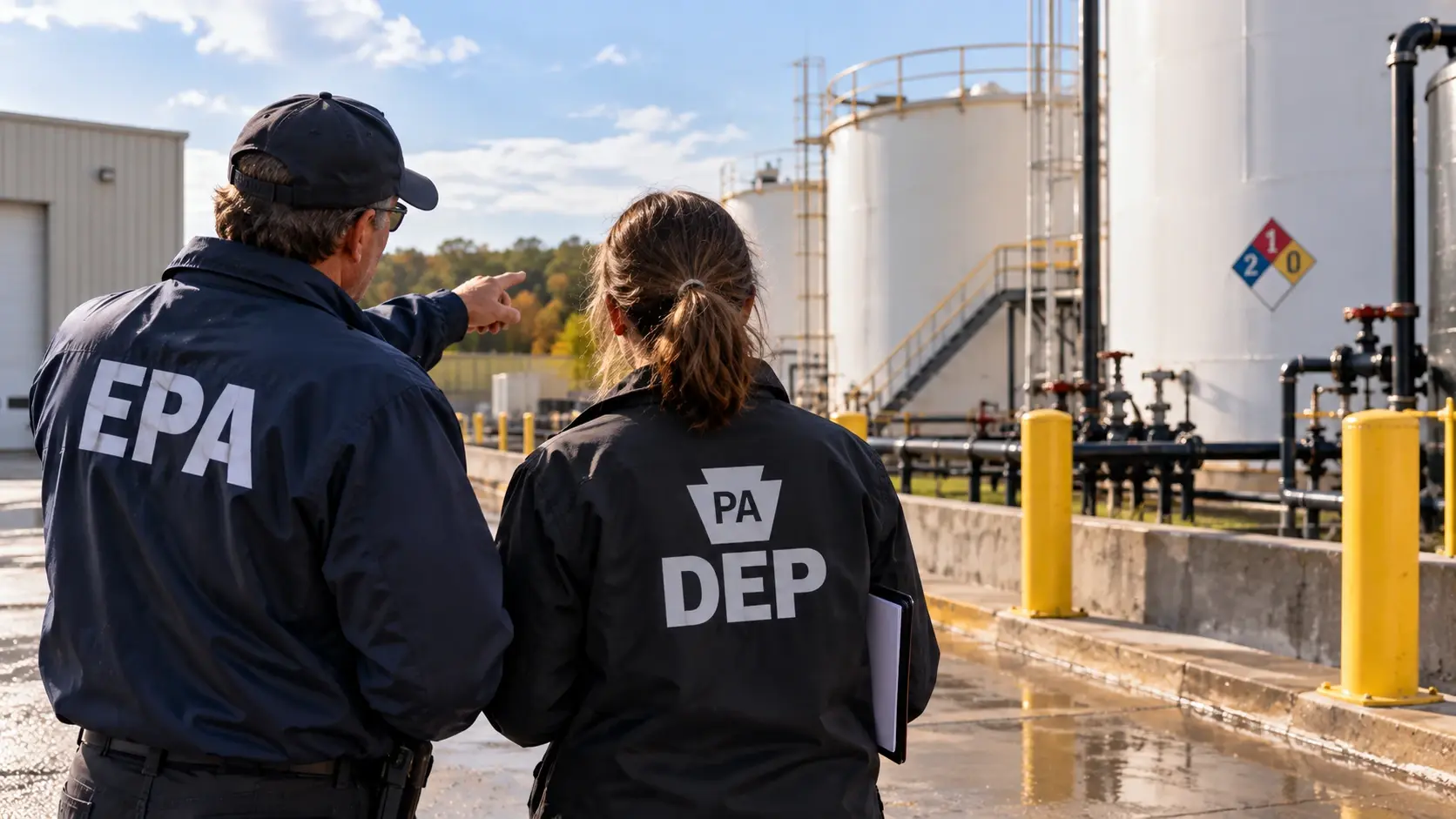
DEP's storage tank program under Chapter 245 is about the tanks themselves. A regulated aboveground tank is a stationary tank over 250 gallons holding a regulated substance, which includes petroleum products like diesel, gasoline, and lubricating oil. Underground tanks are regulated above 110 gallons. The exemptions facilities run into most involve heating oil tanks used on the premises and smaller farm or noncommercial motor fuel tanks, and oil-filled operational equipment like transformers generally falls outside the state definition even though it counts toward SPCC capacity. Exemptions turn on details, so check the definitions before assuming a tank is out.
Every regulated tank has to be registered, and operating an unregistered one is illegal. A distributor that fills an unregistered tank can share liability for a release, which is why some suppliers ask. DEP bills aboveground tank registration annually at $50 for tanks of 5,000 gallons or less, $125 from 5,001 to 50,000 gallons, and $300 above that. Installing, modifying, or removing a regulated tank generally requires a DEP-certified installer, and larger tanks need periodic inspections by DEP-certified inspectors. Underground tank owners also deal with the Underground Storage Tank Indemnification Fund (USTIF), administered by the Pennsylvania Insurance Department. Registrations, inspections, and violations show up in DEP's public eFACTS database, where buyers and lenders can see them too.
The other big piece is the Spill Prevention Response Plan, or SPRP. Pennsylvania's tank law requires one at aboveground tank facilities with more than 21,000 gallons of aggregate regulated aboveground capacity, and it's submitted to DEP. That's a real difference from SPCC, which EPA only sees if it asks. A bulk fuel terminal or large fleet depot may need an SPCC Plan, an SPRP, and tank registrations all at once.
When PA DEP Requires a PPC Plan for Oil Storage
The Preparedness, Prevention and Contingency Plan, or PPC Plan, comes from a different corner of DEP. Under 25 Pa. Code 91.34, DEP can require anyone storing or using pollutants that could reach state waters to take preventive measures and submit plans. In practice, the PPC requirement usually arrives as a permit condition, including in NPDES permits for industrial stormwater, waste management facility permits, and oil and gas operations. DEP's PPC guidelines cover more than oil, including chemicals, wastes, emergency procedures, and notifications.
So a facility can be told by a DEP permit writer that it needs a PPC Plan while also needing an SPCC Plan for EPA. The two overlap heavily, but they aren't the same document and don't answer to the same agency. Facilities with stormwater coverage often have a stormwater plan in the mix too, and our explanation of the difference between an SPCC Plan and a SWPPP sorts out how those relate. Construction projects get PPC requirements through DEP's Chapter 102 erosion and sediment control program, but those are construction-phase permits we don't prepare. Your engineer or contractor typically handles them, though temporary fuel tanks on a construction site can still fall under SPCC, and that's a plan we can help with.
Where Local Fire Officials Fit Into Pennsylvania Tank Rules
Fire code is the third layer, and it varies the most. Pennsylvania's Uniform Construction Code pulls in parts of the International Fire Code statewide, and many municipalities adopt the full fire code, appoint a fire marshal, and set their own limits, including districts where aboveground tanks of flammable liquids like gasoline aren't allowed. Fire officials look at setbacks, venting, tank construction standards, vehicle impact protection, and fire apparatus access. A township in Chester County, a borough in Allegheny County, and the City of Philadelphia may all handle it differently, so call your municipal code office or fire marshal before adding or moving a tank. Fire code permits for tank installation are construction-side approvals RMA doesn't handle.
Who to Call When Oil Spills in Pennsylvania
Safety comes first. If there's a fire, a risk of fire or explosion, or anyone is hurt, call 911 before anything else. After that, reporting follows the same federal and state split, and more than one call is often required.
On the federal side, oil that reaches a waterway or shoreline in a harmful quantity, including enough to leave a sheen, has to be reported right away to the National Response Center at 1-800-424-8802. Our article on when you have to report an oil spill and the sheen rule covers that in detail. The SPCC rule adds a written report to EPA within 60 days if a facility discharges more than 1,000 gallons to navigable waters in one event, or more than 42 gallons in each of two events within twelve months.
On the state side, 25 Pa. Code 91.33 requires anyone responsible for a spill that causes or threatens pollution of Pennsylvania waters to notify DEP immediately by phone, and to notify known downstream users when reasonably possible. There's no minimum quantity, so a small spill running toward a storm drain or ditch can count. DEP takes these calls through its six regional offices in Norristown, Wilkes-Barre, Harrisburg, Williamsport, Pittsburgh, and Meadville, and its own guidance says to err on the side of calling. Your SPCC Plan, SPRP, or PPC Plan should list every one of these numbers in one place. If a spill turns into an enforcement matter, that's another point where an environmental attorney is worth a call.
How One Pennsylvania Fuel Tank Ends Up With Three Regulators
Picture a trucking yard along the Susquehanna with a 10,000-gallon aboveground diesel tank, a 2,000-gallon lube oil tank, and a few dozen drums of hydraulic oil. Its aboveground oil capacity is well past 1,320 gallons and a yard storm drain leads to a creek, so it needs an SPCC Plan, and EPA Region 3 can inspect it. Both tanks are over 250 gallons, so each is registered with DEP, at $125 a year for the diesel tank and $50 for the lube oil tank. Total regulated aboveground capacity stays under 21,000 gallons, so no SPRP yet. If the yard has DEP industrial stormwater coverage, the permit likely calls for a PPC Plan, and because diesel is a combustible liquid, the local fire official has a say in where the tank sits and how it's protected.
Now the owner adds a second 10,000-gallon diesel tank for a bigger fleet. Regulated aboveground capacity crosses 21,000 gallons, so the facility now needs an SPRP submitted to DEP. The new tank needs registration and a DEP-certified installer, the fire official may need to sign off, and the SPCC Plan needs an amendment, certified by a Professional Engineer if the plan is PE-certified. One equipment decision touches every row of the table, and none of the agencies will tell you about the others.
Can One Oil Spill Plan Cover EPA and PA DEP Requirements?
Often, yes, if it's built carefully. Pennsylvania facilities commonly combine their SPCC and PPC Plans into one document, and DEP has accepted spill prevention response plans that take the form of a PPC Plan with the SPCC Plan folded in. One combined plan means one contact list, one inspection program, and one training program, which is far easier to keep current than three binders that drift apart.
The catch is that a combined plan has to satisfy every rule it claims to cover. The SPCC portion still needs everything in 40 CFR Part 112, including PE certification where required and the five-year review. The PPC portion follows DEP's guidelines, and the SPRP still gets submitted to DEP. A cross-reference table showing where each agency's requirements are addressed lets an EPA inspector and a DEP inspector each find their items quickly. Lining up review cycles helps too, and our guides to SPCC Plan five-year reviews and keeping SWPPP and SPCC Plans in one book cover the tradeoffs.
How RMA Helps Pennsylvania Facilities With Oil Spill Plans
We're a family-run environmental consulting firm based in New Jersey, and we work with facilities across Pennsylvania on exactly this kind of overlap. We'll look at what you store and where, tell you plainly which agencies' requirements apply, and prepare or update your SPCC Plan so it lines up with your DEP obligations. Senior staff do the work, and we don't use AI to write client plans. If you're under the federal threshold and only need a DEP tank registration, we'll tell you that, because you may not need a consultant at all. SPCC Plans generally run from about $2,500 to $15,000 depending on complexity, and our article on SPCC Plan costs explains what moves that number. For required oil-handling training, our online environmental training library makes it easy to cover your team.
We don't install tanks or prepare construction or fire code permits, but we can point you toward the right people and handle the operational plans once your tanks are in service. If you'd like to talk through your site, there's no obligation and no pressure. Call us, email us, or fill out the form on our website, and when you're ready, contact RMA and we'll help you sort out who's responsible for what at your facility.