The Streams, the Chesapeake Bay, and the Legacy Pollution Behind Pennsylvania's Stormwater Rules
If you've ever wondered why a Pennsylvania stormwater inspector seems to care about a puddle by your loading dock, the answer isn't a regulator with a grudge. It's geography, a river basin that feeds a famous bay, and more than a century of heavy industry that left its mark on the state's streams. Those three things explain most of why runoff from a business gets treated seriously here, and knowing them makes the rules easier to live with.
This article walks through each of the three, then shows how they turn into the permits, plans, and sampling a Pennsylvania facility deals with. We'll also cover what you can do before DEP comes calling, and when you don't need outside help at all. If your own site is the real question, you can reach out to RMA and we'll tell you what applies and what doesn't.
Table of Contents
TL;DR
Pennsylvania has roughly 86,000 miles of rivers and streams, about half of the state drains to the Chesapeake Bay, and decades of coal, steel, and other heavy industry left many waterways already damaged. That leaves DEP and local governments little room for added pollution, which is why runoff from industrial sites comes with permits, plans, and sampling. If your facility has outdoor activity, find out whether PAG-03 or a No Exposure Certification applies, and call for help only if the answer isn't clear.
Why Does Pennsylvania Regulate Business Runoff So Closely?
The basic rules for business runoff in Pennsylvania follow the same federal framework every other state uses. The Clean Water Act sets the structure, DEP runs the NPDES permit program under it, and the general permit for industrial stormwater is called PAG-03. What's different is the setting those rules land in. Pennsylvania has an enormous number of small streams, a big share of its land drains into the Chesapeake Bay, and many of its waterways were damaged long before anyone wrote a stormwater permit.
Put those together and the state has good reasons to care about every source of pollution it can regulate, including a stockpile, a fueling area, or a truck wash pad that rain can reach. Our guide on who needs an NPDES stormwater permit shows which facilities end up covered. The rest of this post explains why the net is cast the way it is.
How Does Pennsylvania's Huge Stream Network Raise the Stakes for Runoff?
DEP puts the state's total at about 86,000 miles of rivers and streams. Most of that mileage isn't big rivers. It's small headwater creeks and tributaries that run through farmland, towns, and industrial parks, which means very few sites in Pennsylvania are far from water. A parking lot drain on a commercial lot can reach a creek in a few hundred feet, and nothing stands between the two but a pipe and some pavement.
Small streams also have less water to dilute whatever shows up. A load of sediment or a film of oil that a large river would absorb can change a headwater creek for days. Those headwaters feed the larger rivers, so what enters at the top of a watershed ends up downstream, in drinking water intakes and fishing streams and the Bay.
Pennsylvania also protects its cleanest streams with special designations, High Quality (HQ) and Exceptional Value (EV). A facility that discharges to one of those can't use PAG-03 or a No Exposure Certification, and it generally ends up with an individual NPDES permit written for its site. Checking your receiving stream's designation early can change your whole permitting plan, and it's one reason a neighbor's permit rarely tells you what you need.
What Does the Chesapeake Bay Have to Do With a Pennsylvania Business Yard?
According to DEP's Chesapeake Bay plan, about half of Pennsylvania's land area drains to the Bay through the Susquehanna and Potomac river basins, across 43 counties. The Susquehanna is the largest tributary to the Bay, supplying roughly half of its total freshwater flow and about 90 percent of the flow to the upper Bay. So pollution that leaves a lot in Harrisburg or Lancaster doesn't stay in Pennsylvania. It travels.
The Bay operates under a pollution budget, and Pennsylvania has commitments to meet it. DEP's Phase 3 Watershed Implementation Plan set 2025 targets of cutting nitrogen by 34 million pounds a year and phosphorus by 0.7 million pounds a year. Farms are the largest source of those nutrients, and we won't pretend industrial sites are the main problem. But the plan also names stormwater from developed areas, carrying sediment, oil, fertilizer, pesticides, and trash, and it lists stormwater actions such as municipal storm sewer (MS4) permit compliance and erosion control.
For a business owner, the effect shows up through the permit system and through your municipality. Towns with MS4 permits have pollution-reduction obligations of their own, and the commercial and industrial properties that drain into their sewers are part of that picture. Industrial stormwater is a small slice of the Bay problem, but it's a slice DEP regulates directly through permits, so it gets attention.
How Do Legacy Coal, Steel, and Mine Pollution Shape Pennsylvania's Runoff Rules?
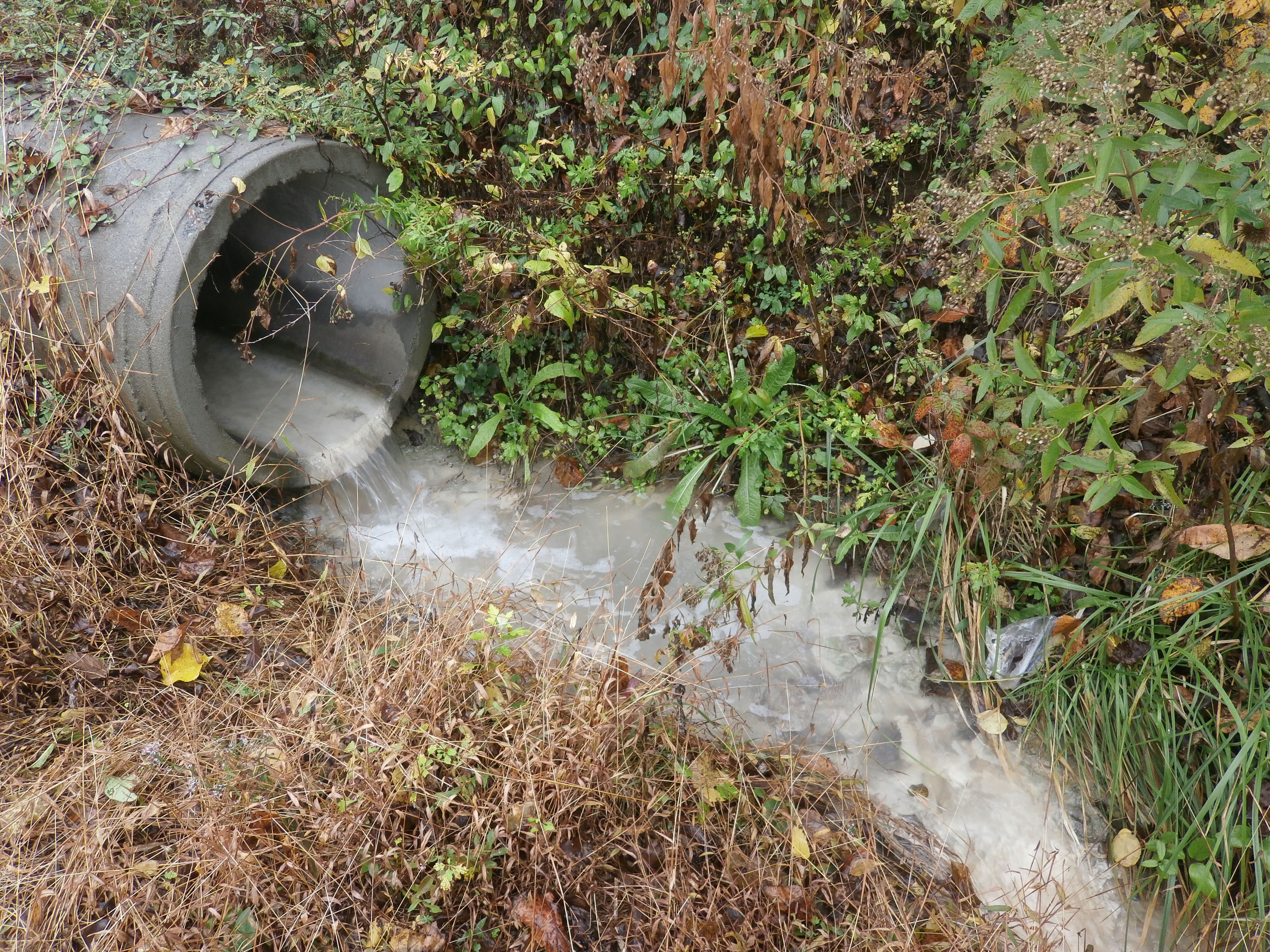
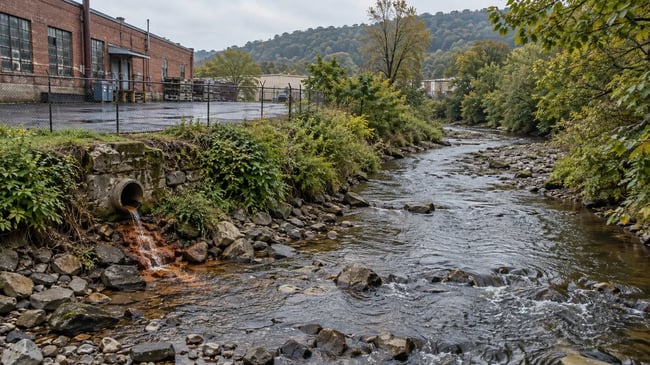
For well over a century Pennsylvania mined coal, made steel, drilled for oil, and ran heavy manufacturing along its rivers, usually with no pollution controls to speak of. The state passed its Clean Streams Law in 1937, partly in response to sewage and coal mine drainage that had left many streams in poor shape. Abandoned mine drainage is still around. DEP's water resources summary counts thousands of stream miles affected by it, and those are the orange-stained, acidic, metal-heavy creeks you see in coal country.
Damage like that has a practical effect on today's runoff rules. A stream that's already carrying metals or sediment from the past has little room for new loads, so DEP asks more questions about what a facility adds. DEP's own Bay plan says more than 11,000 of the roughly 49,000 assessed stream miles in the Pennsylvania part of the watershed remain polluted. Streams that land on the impaired waters list can come with cleanup plans called TMDLs, and our article on TMDLs, impaired waters, and NPDES stormwater permits explains how those can reach back to individual sites.
Legacy pollution can also complicate your own sampling. Metals like iron can show up in stormwater samples even when your operations don't use them, and the industrial and mining history of an area can be one reason. If your results run high for a metal you don't use, our piece on iron in stormwater monitoring is a good place to start before you assume the problem is your site.
What Does Pennsylvania's Runoff Focus Mean for an Industrial Facility Day to Day?
For a facility with industrial activity exposed to rain or snowmelt, the pressure above turns into PAG-03. Getting covered means evaluating how stormwater moves across your site, documenting outfalls and drainage areas, preparing a Preparedness, Prevention, and Contingency (PPC) Plan, and submitting a Notice of Intent to DEP. After approval you're looking at inspections, stormwater sampling, electronic DMR reporting through DEP's eDMR system, employee training, and recordkeeping. Our guides to the PAG-03 permit and sampling, PPC Plans versus SWPPPs, and eDMR reporting cover each piece.
The other two routes follow the same logic. A facility that can't use PAG-03, most often because of an HQ or EV receiving stream, needs an individual NPDES permit. A facility that keeps every industrial material and activity protected from rain and snow can ask DEP for a No Exposure Certification, which has to be approved and renewed every five years. Our article on which NPDES permit you need compares the three, and the one on what no exposure means covers the certification in detail.
Sampling is where many facilities struggle first. PAG-03 expects you to collect stormwater samples during rain events, send them to a lab, and report the results through eDMR, and the details of when and how to collect them trip people up. A sample taken late, in the wrong container, or from the wrong spot can produce numbers that don't reflect your site, and those numbers become part of your record. Our articles on taking your own stormwater samples and nine tips for taking good samples cover the practical side.
Skipping coverage you needed carries real cost. Federal Clean Water Act civil penalties can reach $68,445 per day per violation under the January 2025 inflation adjustment, and DEP can enforce under state law as well. Most facilities that get in trouble aren't dumping anything. They never realized the permit applied, or the plan on the shelf stopped matching the site. Knowing what happens during a PA DEP stormwater inspection helps you see where that gap tends to show up.
Does Pennsylvania's Close Attention to Runoff Mean You Need a Consultant?
Not always. If all your industrial work happens under a roof, you may not need a stormwater permit at all, and we'd rather tell you that than take your money. If you do need PAG-03, some owners write their own PPC Plan and handle the application, especially at small, simple sites. Our guide on getting a PAG-03 permit yourself lays out what that takes so you can judge it fairly.
Where people tend to get stuck is the part after the paperwork: sampling done wrong, a plan that doesn't match the site, a missed eDMR deadline. DEP charges $500 for the PAG-03 application and $500 a year after that, and professional help with the full application for a straightforward facility typically runs about $5,000 to $10,000, with ongoing support adding roughly $3,000 to $6,000 a year. Our breakdown of PAG-03 permit costs goes through the numbers.
If you decide to hire help, the cheapest bid is rarely the one to take. A low price usually means no site walk, and a plan written without walking your site tends to cost more later, when it doesn't match what DEP finds. We wrote a short guide on how to choose a PAG-03 consultant in Pennsylvania, and it applies whether you pick us or someone else.
Timing deserves some planning too. If a customer, lender, or buyer is asking for proof of coverage, start early, because the site work comes first and DEP review takes time after you submit. Our article on how long PAG-03 coverage takes walks through what to expect.
What Can a Pennsylvania Business Do Now to Reduce Runoff Risk?
Start with a walk. Go around your site after a rain, or picture one, and note anything industrial that's outside: material piles, uncovered dumpsters, fueling and wash areas, equipment, and pallets of product waiting for pickup. Then look at where the water goes from each spot. A storm drain, a ditch, or a swale that leads off your property is a path to a stream, and knowing which stream it reaches (and whether it's HQ or EV) tells you a lot about your options.
Many of the fixes are cheap. Moving a pile under cover, keeping dumpster lids closed, sweeping regularly, putting drip pans under equipment, and keeping spill kits where spills happen all cut what rain can pick up. Our article on stormwater BMPs explains the controls inspectors look for. Write down what you did and when, since a record of regular housekeeping helps in any inspection.
A plan only works if the people carrying it out know what's in it. The forklift driver who spots a leak and the yard supervisor who closes the dumpster at night are doing stormwater work, whether anyone calls it that or not. Short, site-specific training helps, and our article on whether stormwater training is required covers the question. RMA's online training library has courses you can buy if you'd rather start there.
If you want a quick read on where your facility stands, RMA's online environmental assessment is a free way to screen your site. And if a walk-through raises more questions than it answers, that's a good time to get a second opinion.
How Does RMA Help With Pennsylvania Stormwater and Runoff Compliance?
We help Pennsylvania facilities work out whether PAG-03, an individual permit, or a No Exposure Certification applies. From there we can handle the site walk, the PPC Plan, the application, DEP review, and the ongoing sampling and eDMR reporting if you want that help. Senior staff do the work, and if you don't need a permit at all, we'll say so. Our Pennsylvania NPDES and stormwater services page lays out the process in more detail.
There's no pressure and no obligation. You can call us, email us, or fill out the form on our website and tell us a little about your site, and we'll help you figure out the next step. Whenever you're ready, contact RMA and we'll talk it through.