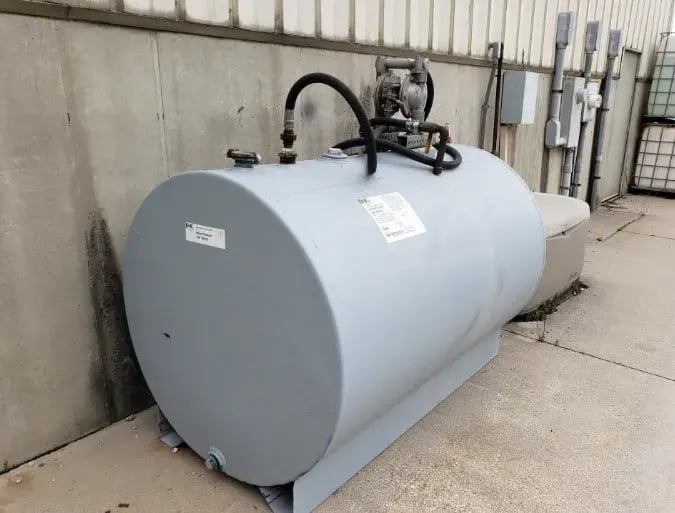
What an SPCC Plan Is, How a New Jersey Facility Can Tell If It Needs One, and What to Send Back When the Request Shows Up
The request usually arrives as one line in a longer email. A customer's supplier compliance team wants it for their vendor file. Your landlord's property manager wants it before the lease renewal. Your insurance broker says the underwriter needs it to quote your pollution coverage. All of them are asking for your "SPCC Plan," and if you've never heard the term, you're not alone. An SPCC Plan is a written oil spill plan that the U.S. Environmental Protection Agency (EPA) requires at facilities that store more than 1,320 gallons of oil above ground, counting only containers that hold 55 gallons or more. If your facility is over that line, you need one. If it isn't, you don't, and the right answer to the request is a short written explanation of why.
In this article we'll explain what an SPCC Plan is in plain terms, why customers, landlords, and insurers keep asking for them, and how to count your oil storage to see if the rule applies to you. We'll also cover what to send back in each situation: when you have a plan, when you need one and don't have it yet, and when you don't need one at all. Since you're in New Jersey, we'll touch on the state's own spill rules too, because they reach further than the federal rule does. If you'd rather talk it through with someone who does this every day, you can reach out to RMA and we'll help you figure out where you stand.
Table of Contents
TL;DR
An SPCC Plan is a federal oil spill prevention and response plan that EPA requires when a facility stores more than 1,320 gallons of oil above ground in containers of 55 gallons or more, and customers, landlords, and insurers ask for it because it's an easy way to check whether you take spill risk seriously. Add up the capacity of your oil containers to see if you're over the line. If you are, you need a plan before you can honestly say yes, and if you aren't, send a short written explanation instead. New Jersey also has its own Spill Act, which requires reporting spills to the state and covers chemicals as well as oil.
What Is an SPCC Plan?
SPCC stands for Spill Prevention, Control, and Countermeasure. It's a federal rule under the Clean Water Act, found at 40 CFR Part 112, and it requires certain facilities that store oil to write down how they'll keep oil from getting into creeks, rivers, wetlands, and storm drains, and what they'll do if a spill happens anyway. The plan itself is a binder (or a PDF) that lives at your facility. You don't file it with EPA or wait for an approval. You write it, put it into practice, and keep it ready for an inspector to review.
A complete plan covers a predictable set of things. There's a list of every oil container on site with its capacity and contents, and a facility diagram showing where they are. It describes the secondary containment around those containers, like dikes, double-walled tanks, spill pallets, or curbing, and shows that it's big enough. It lays out how you'll inspect tanks and containment, how you'll train the people who handle oil, how you'll load and unload safely, and who does what when something leaks. Depending on the facility, it's either certified by a Professional Engineer or self-certified by the owner, which we'll get to below.
"Oil" under this rule is broader than most people assume. It includes diesel, gasoline, heating oil, hydraulic oil, lubricating oil, used oil, transformer oil, and even animal fats and vegetable oils like cooking oil. Equipment that holds oil to run, like a transformer or a hydraulic system, counts as an oil container too. If you'd like a deeper primer before going further, our article on what an SPCC Plan is walks through the basics in a few minutes.
Why Customers, Landlords, and Insurers Ask for Your SPCC Plan
None of these people enforce the SPCC rule. EPA does, and in New Jersey that's EPA Region 2. So why are they asking? Because an SPCC Plan is one of the easiest documents to check if they want to know whether a business handles oil responsibly. If a company is required to have one and doesn't, that says something about how the rest of its compliance program is run. The request usually comes from a checklist, and the person sending it often doesn't know whether your facility needs a plan either.
| Who's Asking |
Why They Usually Want It |
What They're Really Checking |
| Customers |
Supplier onboarding, vendor audits, contractor prequalification questionnaires |
That you won't create an environmental problem tied to their name or supply chain |
| Landlords |
Lease clauses requiring tenants to follow environmental laws, renewals, property sales or refinancing |
That a spill won't contaminate their property and leave them with a cleanup bill |
| Insurers |
Underwriting for pollution liability or property coverage, renewals, loss control visits |
How likely a costly spill is and whether you're managing that risk |
| Lenders and buyers |
Loan due diligence, acquisitions, property transfers |
Whether there's an open compliance gap that could become a liability |
Landlords in New Jersey have an extra reason to care. Under the state's Spill Act, the owner of a property can be held responsible for cleaning up a discharge even when a tenant caused it, so a property owner has every incentive to make sure tenants who store oil have their spill planning in order. Insurers are in a similar spot, since an oil release into a stream or storm sewer can turn into an expensive claim fast. We wrote a separate piece on why insurance companies ask about SPCC Plans if that's the request sitting in your inbox.
How to Tell If Your Facility Needs an SPCC Plan
The SPCC rule applies to a facility that meets two conditions. First, it has to store more than 1,320 gallons of oil in aboveground containers (or more than 42,000 gallons in completely buried tanks that aren't already covered by the underground tank rules). Second, it has to be reasonably expected to discharge oil, if it spilled, into navigable waters or adjoining shorelines. In New Jersey, with its dense network of streams, wetlands, and storm sewers that empty into them, most facilities over the gallon threshold meet the second condition. You also can't count on a berm, wall, or other manmade structure to say a spill wouldn't reach water. EPA's test looks at where oil would go based on the land itself.
Counting is where people go wrong. You add up the shell capacity of every container that holds 55 gallons or more, not how much oil is in them today. A 500-gallon tank that's half full counts as 500 gallons. Containers smaller than 55 gallons don't count at all. Here's what a typical small facility's count might look like:
| Container |
Capacity |
Counts Toward 1,320? |
| Emergency generator day tank |
300 gallons |
Yes |
| Eight 55-gallon drums of hydraulic and motor oil |
440 gallons |
Yes |
| Used oil tank |
275 gallons |
Yes |
| Pad-mounted transformer you own |
400 gallons |
Yes |
| Shelf of 5-gallon pails and quart bottles |
Varies |
No, under 55 gallons each |
| Total |
1,415 gallons |
Over the threshold |
Notice that none of those items look like a "big tank farm." A handful of drums, a generator, and a transformer can push a modest shop or warehouse over the line without anyone noticing. Drums are the item people forget most often, so our article on whether 55-gallon drums count toward SPCC is worth a look. If you want a step-by-step version of this exercise, try our four steps to figure out if you need an SPCC Plan.
What Doesn't Count Toward the SPCC Oil Storage Threshold
A few common items are left out of the count, and knowing them can change your answer. Propane isn't oil under this rule, so propane tanks don't count. Fuel tanks that power a vehicle or a piece of mobile equipment, like a forklift, truck, or excavator tank, are exempt as "motive power" containers. Containers under 55 gallons are excluded, as we covered. Completely buried tanks that are already regulated under the federal or state underground storage tank programs are also left out of the aboveground count, though they still have their own rules.
Other items catch people the other way. Vegetable oil and used cooking oil count, which surprises restaurants, food processors, and grease collectors. Oil-filled equipment counts, including transformers you own, hydraulic presses, and large gear boxes. Mobile tanks that move around the site, like a fuel trailer or tote, count while they're on your property. And emptiness doesn't help unless a container is permanently closed under the rule's specific requirements, which means more than draining it and leaving it in the corner. If your facility is close to the 1,320-gallon line, take a careful second pass through the building and the yard before you answer the request.
What to Send When You Already Have an SPCC Plan
If you have a plan, the easy part is saying yes. The part to think about is how much to send. A full SPCC Plan includes site diagrams, container locations, security details, and emergency contacts, and you may not want all of that sitting in a customer's vendor portal. Many facilities send the plan's cover page, the certification page (signed by the Professional Engineer or by the owner for a self-certified plan), the date of the most recent five-year review, and a table of contents. That's usually enough to show the plan exists and is current. If the requester insists on the full document, that's your call, and it's reasonable to ask how they'll store it.
Before you send anything, open the plan and check the dates. SPCC Plans need a documented review at least once every five years, and they need a technical amendment within six months of a change that affects spill potential, like adding a tank, removing one, or changing containment. A plan from 2014 that never got its five-year reviews isn't a current plan, and an underwriter or auditor may notice. Our guide to SPCC five-year reviews explains what's required, and if yours has lapsed, read whether your existing SPCC Plan can be updated or needs to be redone.
It also helps to confirm the plan matches what's on the ground. If the diagram shows six drums and you now have twenty, or the generator tank was swapped for a bigger one, the plan is out of date even if the paperwork looks fine. Inspectors find these mismatches all the time, and they show up on our list of the most common SPCC violations and fines.

What to Do If You Need an SPCC Plan and Don't Have One
If your count comes out over 1,320 gallons and there's no plan, don't panic, and don't tell the requester you have one. The honest answer is that you've identified the requirement and you're getting the plan done. Most customers, landlords, and insurers would much rather hear "we're putting one in place and expect it by a specific date" than receive a document that falls apart the first time someone reads it. If the request has a deadline, ask whether a short letter confirming you've started the process will satisfy it for now.
The next step is figuring out which kind of plan your facility qualifies for. The rule has three paths, and the right one depends on how much oil you store and your spill history:
| Plan Type |
Who Generally Qualifies |
Who Certifies It |
| Tier I Qualified Facility |
10,000 gallons or less aboveground, no single container over 5,000 gallons, and a clean recent spill history |
The owner or operator, usually using EPA's template |
| Tier II Qualified Facility |
10,000 gallons or less aboveground with a clean recent spill history, but at least one container over 5,000 gallons |
The owner or operator, with a full written plan |
| PE-Certified Plan |
More than 10,000 gallons aboveground, or a recent reportable spill history |
A licensed Professional Engineer |
"Clean recent spill history" means no single discharge to water over 1,000 gallons, and no two discharges over 42 gallons each within any 12-month period, in the three years before the plan is certified. Many small New Jersey facilities qualify for Tier I, which means you may be able to prepare the plan yourself. Our breakdown of Tier I self-certified SPCC Plans explains how that works, and the different types of SPCC Plans compares all three side by side.
Be careful with fast online templates bought just to check a box. A plan that lists the wrong containers, undersizes containment, or skips the inspection and training pieces doesn't protect you, and it can make things worse if a customer or insurer relied on it. Before you buy one, read our take on whether you can get an SPCC Plan online. Timing varies with the facility and plan type, and our article on how long it takes to get an SPCC Plan lays out what to expect so you can give the requester a realistic date.
How Much an SPCC Plan Costs for a Small or Mid-Sized Facility
Cost depends mostly on which type of plan you need and how complicated the site is. Across the facilities we work with, a new SPCC Plan generally runs from about $2,500 for a simple self-certified plan to $15,000 for a larger site that needs a Professional Engineer, multiple tank systems, and containment calculations. Updating an existing plan costs less. A simple Tier I update is often around $1,500, while a complex PE-certified update can run $7,500 or more. Our full guide to SPCC Plan costs explains what drives those numbers.
Keep in mind that the plan document isn't the only cost. If containment is missing or undersized, you may need spill pallets, a double-walled tank, or new curbing, and that money goes to equipment, not paperwork. The plan also requires ongoing inspections and annual briefings for the people who handle oil, which our online environmental training library can help with. If you'd like a ballpark for RMA's help preparing or updating your plan, use the SPCC pricing calculator below.
How to Respond When Your Facility Doesn't Need an SPCC Plan
Plenty of businesses that get this request don't need a plan at all. An office, a small service shop with a few pails of oil, or a warehouse that stores no oil beyond the forklifts' own fuel tanks is often well under the threshold. If that's you, the worst thing you can do is ignore the request or buy a plan you don't need. The best thing is a short, signed memo on company letterhead.
That memo should list each oil container of 55 gallons or more with its capacity, give the total, and state that the facility's aggregate aboveground oil storage capacity is below the 1,320-gallon threshold in 40 CFR Part 112, so an SPCC Plan isn't required. Mention any exempt items you left out and why, like propane or vehicle fuel tanks. Date it and have someone with authority sign it. That's a far more useful answer for a customer's file or an underwriter's checklist than a blank space where a plan should be, and it gives you a record if anyone asks again.
Revisit that memo whenever your operations change. Adding a backup generator, a waste oil tank, or a few more drums can tip a facility over the line quietly. Generators are one of the most common reasons, and our article on environmental permits for backup generators covers what else a new generator can trigger.
How New Jersey's Spill Act and Discharge Rules Fit In With SPCC
The SPCC rule is federal and works the same in every state. New Jersey layers its own rules on top, and they're broader. The Spill Compensation and Control Act, usually called the Spill Act, covers discharges of petroleum and a long list of other hazardous substances, not just oil. It requires anyone responsible for a discharge to report it to the New Jersey Department of Environmental Protection (NJDEP) right away, through the NJDEP hotline at 1-877-WARNDEP (1-877-927-6337). It also makes the people responsible for a discharge liable for the cleanup, and that liability can be broad. That's the main reason New Jersey landlords and buyers pay attention to how tenants handle oil and chemicals. If a spill or a liability question is already on the table, talk to an environmental attorney.
Larger sites face another layer. New Jersey's discharge prevention rules, N.J.A.C. 7:1E, apply to "major facilities," meaning sites with 200,000 gallons or more of storage capacity for hazardous substances of all kinds, including petroleum, or 20,000 gallons or more of hazardous substances other than petroleum. Those facilities need a Discharge Prevention, Containment, and Countermeasure (DPCC) plan and a Discharge Cleanup and Removal (DCR) plan, which are submitted to NJDEP for review. Most businesses getting an SPCC request from a customer or landlord are nowhere near those numbers, but larger fuel distributors, terminals, and chemical facilities often are.
Federal reporting still applies too. A spill that reaches water or leaves a sheen generally has to be reported to the National Response Center, and our article on when you have to report an oil spill explains the sheen rule. For a fuller look at how the federal and state pieces work together here, see our guide to SPCC Plans in New Jersey, and if you're wondering who would show up for an inspection, read who enforces SPCC Plans.
How RMA Helps New Jersey Facilities Answer SPCC Plan Requests
We're a family-run environmental consulting firm based in New Jersey, and we've been helping facilities with oil spill planning since 1992. When an SPCC request lands on your desk, we can help you count your storage and tell you plainly whether you need a plan. If you don't, we'll say so, and we can help you put together the memo that answers the request. If you do, we'll prepare or update the plan with senior staff doing the work, coordinate the Professional Engineer certification when it's required, and walk you through the inspections, training, and recordkeeping that keep it current. If your situation also touches NJDEP's discharge rules, we'll help you sort out which pieces apply.
There's no pressure and no obligation. Give us a call, send us an email, or fill out the form on our website, and tell us who asked for the plan and what they need. You can contact RMA here, and we'll help you figure out the right answer for your facility.