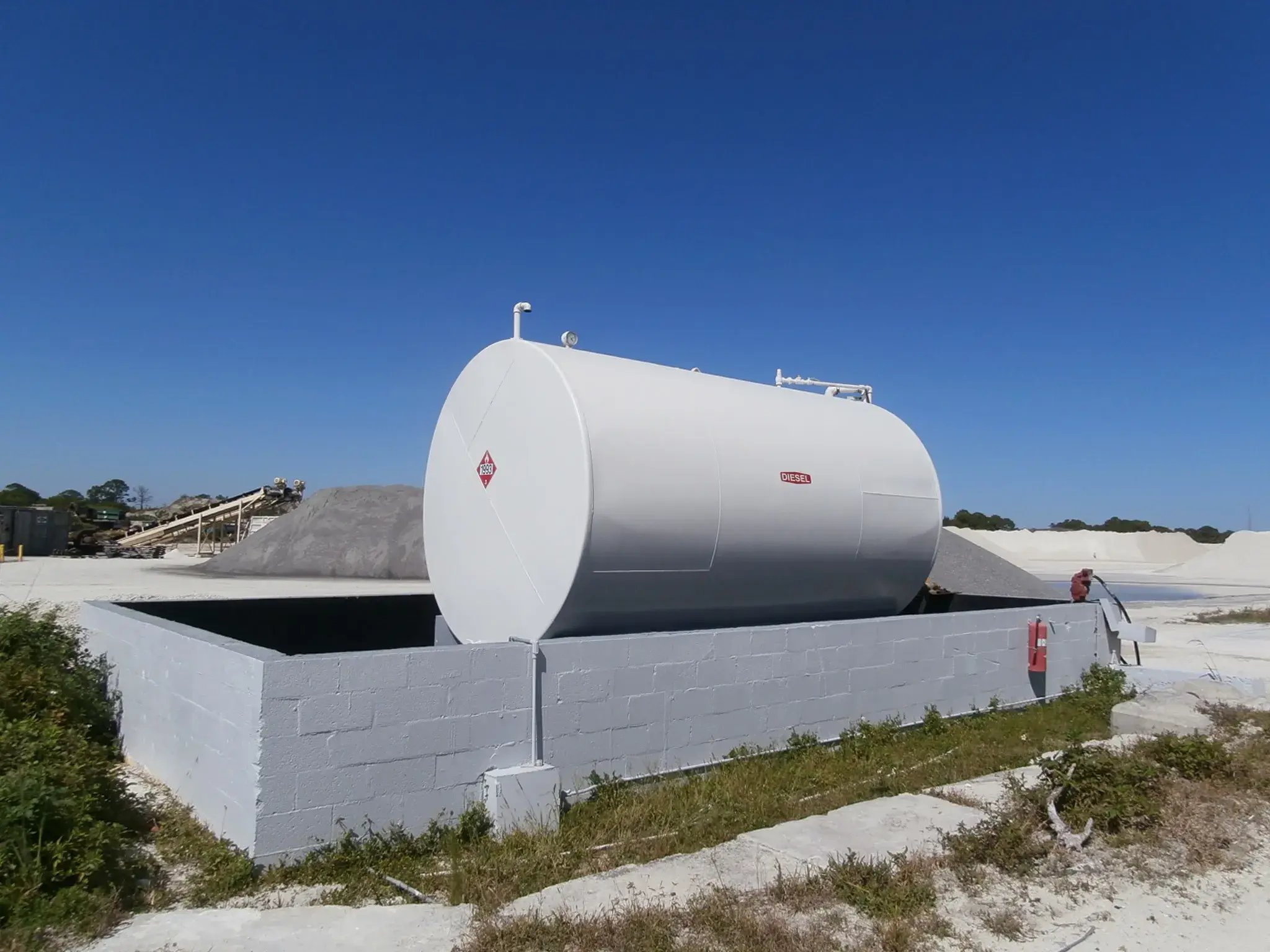
Your Customer, Landlord, or Insurer Asked for Your SPCC Plan. Here's What That Oil Spill Plan Is, Whether Your Pennsylvania Facility Needs One, and What to Send Back
Maybe it showed up in a vendor qualification packet from a big customer, a lease renewal from your landlord, or an underwriting questionnaire from your insurance broker. Somewhere in the list of documents they want is a line that says "SPCC Plan," and you've never heard of it. You're not alone. Here's the short answer: an SPCC Plan is a federal oil spill plan that EPA requires at facilities storing more than a set amount of oil. If your site can store more than 1,320 gallons of oil aboveground in containers of 55 gallons or more, you very likely need one. If it can't, you probably don't, and you can tell the person asking exactly that.
Below, we'll explain what the plan is in plain words, why customers, landlords, and insurers ask for it, how to tell whether your facility is covered, what to send back, and how Pennsylvania's own tank and spill rules fit alongside the federal requirement. If you'd rather talk it through with someone who does this every day, you can always reach out to RMA and we'll help you sort out where you stand.
Table of Contents
TL;DR
An SPCC Plan is a federal EPA plan for preventing and cleaning up oil spills, and it's required when a facility can store more than 1,320 gallons of oil aboveground in containers of 55 gallons or more (or more than 42,000 gallons in completely buried tanks). Customers, landlords, and insurers ask for it because it's a quick way to check that a business is handling oil storage responsibly. If you're over the threshold, send a copy of your current plan or its certification page, and if you don't have one, get one in place before you reply. If you're under the threshold, you don't need a plan, and a short written explanation of your oil storage capacity is usually enough. Pennsylvania adds its own tank registration and spill planning rules on top of the federal plan, so larger sites may have more than one document to keep current.
What Is an SPCC Plan? A Plain-Language Oil Spill Plan Explanation
SPCC stands for Spill Prevention, Control, and Countermeasure. Strip away the name and it's an oil spill plan: a written document that describes how a facility stores oil, what could go wrong, what's in place to keep a leak from reaching a stream or storm drain, and what employees do if oil gets loose anyway. The requirement comes from the federal Oil Pollution Prevention regulation at 40 CFR Part 112, which EPA adopted under the Clean Water Act.
The word "oil" covers a long list of products. Diesel, gasoline, hydraulic oil, lube oil, transformer oil, and used oil all count, and so do animal fats and vegetable oils, which is why restaurants and food plants sometimes get caught off guard. A plan also comes with ongoing obligations like routine inspections, annual training for people who handle oil, secondary containment around tanks, and a review at least every five years. Our article what is an SPCC plan covers the fundamentals in more detail.
Nobody files an SPCC Plan with EPA for approval. You prepare it, implement it, and keep it at the facility, and EPA only asks for a copy after certain larger spills or during an inspection. Since there's no permit number to look up, the only way a customer or landlord can confirm you have a plan is to ask you for it.
Why Are Customers, Landlords, and Insurers Asking for Your SPCC Plan?
A request for your SPCC Plan almost never means someone suspects you of doing something wrong. It's a common compliance checkpoint, and it shows up whenever another company is taking on some of your risk. An oil spill can mean cleanup costs, property damage, and penalties, so anyone who might share in those consequences has a reason to check that you're prepared.
| Who's Asking |
Why They Ask |
What They Usually Want to See |
| Customers and general contractors |
Supplier and vendor qualification programs often include an environmental compliance section, especially for large manufacturers, utilities, and public agencies. |
Confirmation that you have a current plan, or a statement that you aren't required to have one. |
| Landlords and property managers |
Under the SPCC rule, the owner or operator of a facility can be responsible. A landlord doesn't want a tenant's spill turning into the landlord's cleanup or enforcement problem. |
A copy of the plan, proof of training and inspections, and sometimes a lease clause requiring ongoing compliance. |
| Insurance carriers and brokers |
Pollution and environmental liability underwriters use the plan as a signal of how well you manage spill risk. |
Plan status, certification date, and sometimes spill history. |
| Lenders and buyers |
Due diligence during a financing, sale, or acquisition often looks at environmental compliance alongside a Phase I Environmental Site Assessment. |
The plan itself, the last five-year review, and any spill records. |
If an underwriter is the one asking, our guide to SPCC plans and insurance companies goes further into what carriers look for. Whoever's asking, they want a straight answer. "Here's our current plan" or "we're below the threshold, and here's our capacity math" beats silence or a vague reply every time.
How Do You Know If Your Pennsylvania Facility Needs an SPCC Plan?
The SPCC rule applies to non-transportation-related facilities that store, use, or handle oil and meet two tests. The first is capacity: more than 1,320 gallons of aboveground oil storage, counting only containers of 55 gallons or more, or more than 42,000 gallons of completely buried storage. The second asks whether a spill could reasonably be expected to reach navigable waters or adjoining shorelines. With storm sewers and streams feeding the Delaware, Susquehanna, Allegheny, and Monongahela, most Pennsylvania facilities meet that second test.
The second test has a catch. You can't count manmade structures like berms, dikes, or containment walls when deciding whether a spill could reach water. You look at the geography as if those structures weren't there, so in practice the capacity test does most of the work.
You can often work through the capacity test yourself. Walk the site and list every container, tank, drum, tote, and piece of oil-filled equipment that holds 55 gallons or more. Write down the shell capacity of each one, not how much oil is in it today, and add them up. If the total is 1,320 gallons or less and you don't have large buried tanks, you're probably under the threshold. Our article on the best four steps to figure out if you need an SPCC plan walks through it in more depth. EPA runs SPCC directly, not Pennsylvania DEP, and here that means EPA Region 3 in Philadelphia handles inspections and enforcement. We explain that split in who enforces SPCC plans.
What Counts Toward the SPCC Oil Storage Threshold?
Capacity is what counts, not contents. A 500-gallon tank sitting empty still counts as 500 gallons unless it's been permanently closed according to the rule. Oil-filled equipment like transformers and hydraulic systems counts too, which is how facilities with no "fuel tanks" at all end up over the line.
| Counts Toward the 1,320-Gallon Threshold |
Doesn't Count |
| Aboveground fuel tanks (diesel, gasoline, heating oil) |
Containers smaller than 55 gallons |
| 55-gallon drums and totes of oil, including used oil |
Permanently closed containers |
| Emergency generator belly tanks and day tanks |
Motive power containers, like the fuel tank on a truck or loader |
| Oil-filled equipment such as transformers and hydraulic units |
Propane and diesel exhaust fluid (DEF), which aren't oils under the rule |
| Fuel trailers and skid tanks |
Completely buried tanks already regulated under the federal UST rules |
| Animal fat and vegetable oil storage, including used cooking oil |
Milk and milk product containers |
| Empty tanks that haven't been permanently closed |
Pesticide application equipment and related mix containers |
Fuel trailers and skid tanks feel like vehicles, but they store fuel for other equipment, so they count. Drums add up fast, since six 55-gallon drums of hydraulic oil are 330 gallons by themselves. See whether 55-gallon drums are included in SPCC plans, and food businesses should read whether you need an SPCC plan for cooking oil.
What's Inside an SPCC Plan, and Who Can Certify It?
An SPCC Plan includes a facility diagram, an inventory of oil containers, a prediction of where oil would flow if each one failed, a description of secondary containment, inspection and training procedures, and spill response steps. It's signed by someone at the facility with authority to commit the resources to carry it out.
The rule sets up three paths, and the path determines whether you can certify the plan yourself or need a licensed Professional Engineer (PE). This "Tier I" and "Tier II" language has nothing to do with Tier II chemical reporting under EPCRA, a separate program.
| Plan Type |
Who Qualifies |
Who Certifies It |
| Tier I qualified facility |
10,000 gallons or less of total aboveground oil storage, no single aboveground container over 5,000 gallons, and a clean recent spill history |
The owner or operator, often using EPA's Tier I template |
| Tier II qualified facility |
10,000 gallons or less of total aboveground oil storage and a clean recent spill history, but at least one container over 5,000 gallons |
The owner or operator, with a full site-specific plan |
| PE-certified plan |
More than 10,000 gallons of aboveground storage, or a spill history that disqualifies the site |
A licensed Professional Engineer |
A clean spill history means that in the three years before certification, the facility hasn't had a single discharge of more than 1,000 gallons to water, or two discharges of more than 42 gallons each within 12 months. Our article on the different types of SPCC plans compares all three, and if you think you can self-certify, read what a Tier I self-certified SPCC plan is first.
What Should You Send Back When Someone Requests Your SPCC Plan?
You don't always have to hand over the full plan. SPCC Plans include site diagrams and security details you may not want circulating through every vendor portal, and many requesters are satisfied with the certification page or a short letter. If someone insists on the whole document, ask what they need it for and how they'll store it.
| Your Situation |
What to Send |
| You have a current plan, reviewed within the last five years |
The certification page (PE stamp or self-certification), the date of the last review, and the full plan if the requester needs it |
| You have a plan, but it's more than five years old or the site has changed |
Get the review or amendment done first, then send the updated certification |
| You're under the threshold |
A brief signed letter listing your oil containers and total capacity and explaining that the facility isn't subject to 40 CFR Part 112 |
| You need a plan and don't have one |
Tell the requester you're getting one prepared and give a realistic timeline |
If you're under the threshold, keep in mind that EPA doesn't issue exemption certificates. A signed statement with your capacity math is the standard answer, and most customers and landlords accept it. Update it whenever you add tanks or equipment, because one new generator can change the answer.
If your plan is past its five-year review, or doesn't reflect tanks you've added or removed, fix that before you send it. Our guide on SPCC plan five-year reviews explains when a review is enough. Requesters sometimes ask for training records too, and our online environmental training library is one way to handle the annual briefing.
How Do Pennsylvania Tank and Spill Rules Relate to an SPCC Plan?
Pennsylvania has its own tank and spill rules alongside SPCC. Most come from the Storage Tank and Spill Prevention Act of 1989, passed after the 1988 Ashland Oil tank collapse at Floreffe released nearly four million gallons of diesel, some of which reached the Monongahela River and disrupted drinking water downstream. DEP's storage tank program carries out that law through 25 Pa. Code Chapter 245, and a thorough landlord or buyer may ask about it too.
| Program |
Run By |
General Trigger |
| SPCC Plan (40 CFR Part 112) |
EPA Region 3 |
More than 1,320 gallons of aboveground oil storage in containers of 55 gallons or more, or more than 42,000 gallons completely buried |
| Aboveground storage tank registration (25 Pa. Code Chapter 245) |
PA DEP storage tank program |
Stationary aboveground tanks over 250 gallons holding regulated substances, with some exclusions |
| Spill Prevention Response Plan (SPRP) |
PA DEP storage tank program |
Facilities with more than 21,000 gallons of total regulated aboveground storage capacity |
| Preparedness, Prevention, and Contingency (PPC) Plan |
PA DEP, through various permits |
Often required as a condition of DEP permits for facilities that store or handle pollutants |
Regulated aboveground tanks have to be registered with DEP for an annual per-tank fee, and work on them generally has to be done by DEP-certified installers and inspected by DEP-certified inspectors. Some tanks are excluded, including certain heating oil tanks used on the premises and oil-filled operational equipment. Facilities over 21,000 gallons of regulated aboveground capacity also need an SPRP, which, unlike an SPCC Plan, gets submitted to DEP.
What If You Need an SPCC Plan and Don't Have One Yet?
Don't panic, and don't ignore it. Finding out through a customer request beats finding out during an EPA inspection. Federal SPCC penalties under the Clean Water Act are adjusted for inflation each year under 40 CFR Part 19 and can reach tens of thousands of dollars per day. Our article on the top SPCC plan violations and fines covers what inspectors cite most. If you've already had a spill or received a letter from EPA, talk to an environmental attorney as well.
Tell the requester you're getting it done and when to expect it. A small Tier I facility may be able to prepare its own plan using EPA's template, and if that's you, we'll say so. Larger sites need a PE-certified plan. Our article on how long it takes to get an SPCC plan gives realistic timelines.
When RMA prepares SPCC Plans, they generally run from about $2,500 for simple sites to $15,000 for complex ones, and updates range from about $1,500 for a simple Tier I update to $7,500 or more for complex PE-certified plans. Container count, engineering review, and whether we need a site visit drive the price, as our breakdown of SPCC plan costs explains. Containment upgrades or tank work would be separate. For a ballpark on RMA's help with your facility, use the calculator below.
How RMA Helps Pennsylvania Facilities Respond to SPCC Plan Requests
We're based in New Jersey and work with facilities across Pennsylvania, and our senior staff do the work themselves. When someone asks for your SPCC Plan, we can help you confirm whether you need one, prepare or update a plan, sort out how DEP's tank and SPRP rules apply, and pull together what the requester wants. If you're under the threshold, we'll tell you so and help you document it.
There's no pressure and no obligation. You can call, email, or fill out the form on our website. Whether you need a full plan or a second opinion before you reply, feel free to contact RMA and we'll help you figure out the next step.