Your Fuel Supplier Owns the Tank, but the Oil Spill Plan and Spill Rules Usually Still Land on Your New Jersey Facility
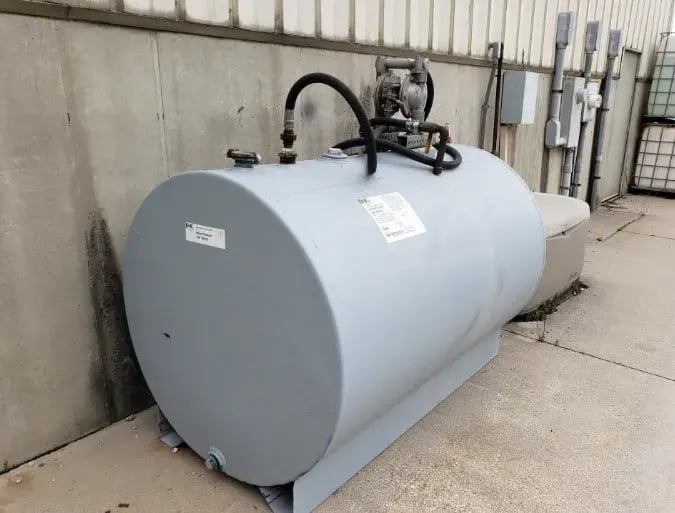
A lot of New Jersey facilities never bought the fuel tank sitting out back. The diesel tank feeding the yard equipment, the skid tank by the loading dock, or the generator day tank was dropped off by the fuel company, and the fuel company still owns it, fills it, and maybe even services it. So it's natural to assume the supplier handles the rules that come with it. In most cases, that assumption is wrong. Under the federal oil spill plan rules, responsibility generally falls on the owner or operator of the facility where the oil is stored, and that's usually you. Those supplier tanks typically still need to be counted and covered in your facility's plan, even though your name isn't on the title.
Below, we'll cover why the federal rules work this way, how New Jersey's spill law adds another layer, which tasks you can hand to your supplier (maintenance, inspections, overfill protection, delivery procedures), and how to put that split in writing so nobody's guessing after a spill. Arrangements vary from site to site, so we'll point out where the answer depends on your contract and setup. If you'd rather talk through your own tanks with someone, reach out to RMA anytime.
Table of Contents
TL;DR
If your fuel supplier owns a tank at your site, you're usually still on the hook. Federal oil spill plan rules apply to the facility where the oil is stored, so supplier tanks generally count toward your storage total and belong in your plan, and New Jersey's spill law can make more than one party responsible when oil gets out. You can split tasks like maintenance, inspections, overfill protection, and delivery procedures with your supplier, but that split only helps if it's in writing and your plan reflects it. Arrangements vary, so read your supply contract and ask EPA Region 2 or a consultant when the setup is unusual.
Who's Responsible for Supplier-Owned Fuel Tanks Under SPCC Rules?
The federal rule here is the Spill Prevention, Control, and Countermeasure rule, usually shortened to SPCC. It's EPA's oil spill plan requirement, and it lives in 40 CFR Part 112. It requires the owner or operator of a regulated facility to prepare and follow a written plan for preventing oil spills and responding to them. The key word is facility. The plan covers the whole site, not each tank separately, and EPA has said plainly that the plan applies to the facility and doesn't distinguish between who owns and who operates the individual tanks on it.
That's why the supplier's ownership usually doesn't get you off the hook. You run the site, your equipment draws from the tank, and your property is where the oil goes if the tank fails. To EPA, that makes you the operator of a facility that stores oil. EPA's agricultural guidance makes the same point from the other direction: when asked whether the retailer who filled a farm tank is liable for the farm's noncompliance, EPA said no, and that it holds the tank's owner or operator responsible.
It isn't always that clean, though. EPA has also said that when it's unclear whether a supplier's equipment is part of your facility, the EPA regional office can give a site-specific interpretation, and that you should work out an agreement with the equipment owner about who, if anyone, prepares the plan. In New Jersey, that regional office is EPA Region 2, which enforces SPCC. Some suppliers take on compliance for equipment they own, and some contracts push it back onto the customer. Either way, a regulated facility needs a plan that covers its oil storage, and "we thought the fuel company had it" isn't a defense EPA is likely to accept.
Do Supplier-Owned Tanks Count Toward Your SPCC Threshold?
Usually, yes. A facility needs an SPCC Plan when it has more than 1,320 gallons of total aboveground oil storage capacity, counting only containers of 55 gallons or more, and it could reasonably be expected to discharge oil to navigable waters or adjoining shorelines. The count is based on capacity, not how much oil is in the tank on a given day, and it includes everything on site: owned tanks, leased tanks, supplier tanks, drums, and oil-filled equipment like transformers. If you're not sure where you land, our guide to the four steps to figure out if you need an SPCC Plan walks through the math.
This is where supplier tanks catch people off guard. A site with a handful of 55-gallon drums and some hydraulic equipment might sit comfortably under 1,320 gallons on its own. Then the fuel company drops off a 2,000-gallon diesel tank, and the site is over the threshold without anyone at the facility buying anything. The same thing happens when a supplier swaps in a bigger tank to cut down on deliveries.
Here's how common supplier setups usually count. Unusual arrangements can change the answer.
| Supplier Setup |
Usually Counts Toward Your Total? |
Notes |
| Supplier-owned aboveground tank that stays on your site |
Yes |
Counted at full shell capacity, whether it's full or nearly empty. |
| Skid tank or portable tank parked on site |
Yes, while it's stationed there |
Mobile and portable containers still need to be addressed in the plan, including containment. |
| Generator base tank or day tank serviced by the supplier |
Yes, if 55 gallons or more |
Generator tanks are often missed because they're built into the equipment. |
| Delivery truck making a drop and leaving |
Generally no |
The truck isn't storage, but the transfer area and delivery procedures still belong in your plan. |
| Supplier mobile refueler that's kept at your site |
Depends |
This is the kind of setup where EPA Region 2 can give a site-specific answer. |
Don't forget less obvious vendor equipment, like lubricant totes, used oil tanks a recycler services, and bulk hydraulic oil containers. They add up the same way.
How New Jersey's Spill Act Affects Supplier-Owned Tanks
New Jersey adds its own layer on top of the federal rule. The Spill Compensation and Control Act, usually called the Spill Act, is the state law that governs discharges of petroleum and other hazardous substances, not just oil. Its liability section is broad. It makes any person who discharged a hazardous substance, or who is "in any way responsible" for it, strictly liable, jointly and severally, without regard to fault, for cleanup and removal costs. In plain terms, liability under the Spill Act doesn't depend on who was careless, and more than one party can be on the hook for the full cost.
For a supplier-owned tank, that means both the supplier and the facility can be exposed if it leaks. How that sorts out in a real case depends on the facts, the contracts, and sometimes the courts, so we won't predict who'd win that argument. Tank ownership alone isn't a safe place to hide, though, and liability questions are worth running past an environmental attorney before something happens.
New Jersey also has a separate set of discharge prevention rules for larger sites, found in N.J.A.C. 7:1E. Those rules apply to "major facilities," which the state defines by total storage capacity: 200,000 gallons or more of all hazardous substances including petroleum, or 20,000 gallons or more of hazardous substances other than petroleum. Major facilities need Discharge Prevention, Containment and Countermeasure (DPCC) and Discharge Cleanup and Removal (DCR) plans approved by NJDEP. NJDEP's guidance counts all hazardous substances stored at a facility toward its total, so supplier tanks can matter here too. Most small and mid-sized sites won't come close, but if yours is anywhere near the line, check N.J.A.C. 7:1E against your own inventory, including the tanks you don't own. For more on the state picture, our overview of SPCC Plans in New Jersey covers how the federal and state rules fit together.
Dividing Fuel Tank Responsibilities With Your Supplier
Even though the plan is usually yours, the day-to-day work doesn't all have to be. Plenty of suppliers already maintain, test, and repair their equipment, and there's nothing wrong with relying on that. The catch is that your SPCC Plan has to describe how each requirement gets met, so if the supplier does part of the work, the plan should say so and you should be able to show it happened. Here's how the work commonly splits. Your contract may look different, as long as every line has an owner.
| Task |
Who Often Handles It |
What You Still Need |
| Writing and certifying the SPCC Plan |
Facility |
A plan that covers every tank on site, including the supplier's. |
| Tank repairs and maintenance |
Supplier |
A way to request repairs quickly and records of what was done. |
| Periodic integrity testing |
Supplier, often |
Copies of test reports kept with your plan. |
| Routine visual inspections |
Facility |
Inspection checklists your staff fill out on schedule. |
| Secondary containment |
Either |
Containment that's sized correctly and kept free of rainwater and debris. |
| Overfill protection equipment |
Supplier, often |
Gauges and alarms that work, plus records that they're tested. |
| Delivery procedures |
Shared |
Written steps both your staff and the driver follow. |
| Spill response and reporting |
Facility, usually first |
Spill kits, trained staff, and the reporting steps posted where people will see them. |
| Employee training |
Facility |
Annual training for your oil-handling staff. |
Secondary containment deserves a closer look, because it's where supplier tanks most often fall short. A double-walled tank may handle it, while a single-walled tank sitting on gravel usually won't. If the supplier delivered a tank with no containment, you'll need to sort out who adds it and who pays. Our guide on how big SPCC containment needs to be covers the sizing rules.
Inspections are the other piece people assume the supplier covers. A supplier tech checking the tank twice a year isn't the routine inspection your plan calls for, and an inspector will ask your staff for those records. Our list of things to check during monthly SPCC inspections works just as well for supplier tanks as for your own.
Fuel Deliveries and Overfill Protection at Supplier-Owned Tanks
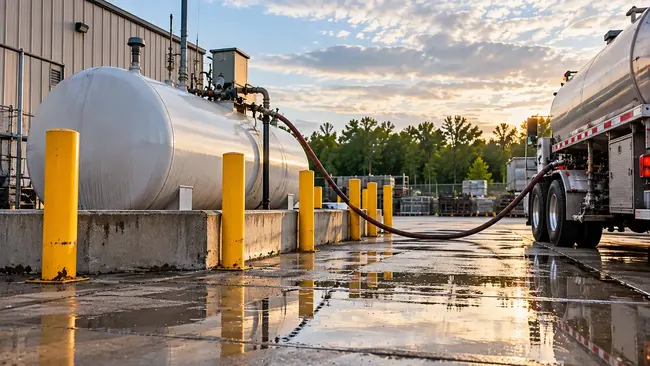
Most spills at supplier tanks don't come from a tank failing. They happen during deliveries. A driver misreads a gauge, a hose connection lets go, or someone pumps more fuel than the tank can take. That's why delivery is the part of the relationship most worth spelling out.
The SPCC rule expects your plan to cover how oil is handled during loading, unloading, and transfers, and it expects bulk storage tanks to have some form of overfill protection. That can be a high-level alarm, an automatic shutoff, a direct signal to the person filling the tank, or a similar system, and the liquid level devices need to be tested regularly so they're known to work. On a supplier-owned tank, the supplier usually installed that equipment, so they're the natural party to maintain and test it. Your plan still describes it, and you should keep copies of the test results.
Beyond the equipment, it helps to agree on a short set of delivery steps. Who checks the tank level before the driver starts pumping? Does someone from your site have to be present, or are deliveries made after hours with nobody around? Where does the truck park, and is there a spill kit and a drain cover within reach? What does the driver do if something goes wrong while nobody from your site is there? If deliveries happen unattended, that's worth a frank conversation, because a spill at 5 a.m. with nobody on site is still your facility's spill.
Your own staff need to know their part too. The SPCC rule requires annual discharge prevention training for oil-handling employees, and anyone who receives fuel deliveries or watches over them counts. Our article on what SPCC training should include covers the basics, and our online environmental training library has courses your team can take on their own schedule.
Putting Your Fuel Supplier Tank Agreement in Writing
Most of the trouble with supplier tanks comes from handshake deals. The supplier's sales rep says they'll take care of the tank, the facility manager who heard it leaves, and three years later nobody can say who was supposed to do what. EPA's guidance on leased tanks points the same way. It tells facilities to make sure the lease or agreement states who is responsible for the tanks, and to talk to the other party if it doesn't.
Start by pulling your current supply agreement. Plenty of fuel contracts cover price, delivery schedule, and equipment rental and say little about spill prevention, or they include one broad line about who's responsible for the equipment. Neither tells EPA or NJDEP how your site meets the SPCC requirements. A good written agreement, whether it's a contract amendment or a separate letter both sides sign, usually covers:
- Which tanks and equipment the supplier owns, with sizes and locations.
- Who maintains and repairs them, and how fast repairs happen once requested.
- Who performs integrity testing and overfill device testing, how often, and who keeps the records.
- Who provides and maintains secondary containment.
- The delivery procedure, including whether deliveries can be unattended.
- What each side does if there's a spill, including who calls NJDEP and who pays for cleanup in the first instance.
- Advance notice before the supplier swaps, adds, or removes a tank.
That last item gets overlooked. Under the SPCC rule, a change that materially affects your facility's potential to discharge oil, like a new or larger tank, generally means amending your plan within six months. If the supplier swaps tanks without telling you, your plan can fall out of date without anyone noticing. Our article on when to update your SPCC Plan explains which changes count.
A contract between you and your supplier decides how you split the work and the costs. It doesn't necessarily change what regulators can require of either of you, especially under the Spill Act. Indemnification and insurance language is a conversation for your attorney. And if the supplier is installing a new tank, permits may be involved, like a fire code permit through your local fire official or, for underground tanks, work NJDEP requires certified contractors to do. RMA doesn't prepare construction or installation permits, so that piece usually sits with the supplier or their contractor. Once the tank is running, your plan almost always needs updating to include it, and that's where we can help.
Reporting a Spill From a Supplier-Owned Tank in New Jersey
If oil is leaking right now, safety comes first. If anyone's in danger, there's a fire risk, or oil is heading somewhere it can hurt people, call 911. Then stop the source if you can do it safely and contain what you can.
New Jersey's reporting rule is strict. Discharges of hazardous substances, which include fuel oil and diesel, must be reported to NJDEP immediately through the 24-hour hotline at 1-877-WARNDEP (1-877-927-6337). NJDEP's own compliance guidance describes "immediately" as within 15 minutes. N.J.A.C. 7:1E has narrow exceptions for certain small, contained discharges, but they come with conditions, so when in doubt, call. Federal reporting can apply too, especially if oil reaches water or leaves a sheen. Our explainer on when you have to report an oil spill walks through that side.
Here's the practical problem with supplier tanks: the supplier usually isn't there when the leak is found. Your staff are. If the plan is to wait for the fuel company's dispatcher to decide whether to call NJDEP, you can easily blow through the reporting window. Your spill procedure should tell your own people to make the call, and your supplier agreement should say how you'll notify the supplier. Calling doesn't decide who's ultimately liable. It keeps a missed report from becoming a second violation.
After the initial report, a larger discharge can turn into a cleanup managed under New Jersey's site remediation program, which typically means hiring a Licensed Site Remediation Professional (LSRP) to oversee the work. Who hires the LSRP and who pays are questions your supplier agreement should answer ahead of time, and an environmental attorney can help if they turn into a dispute.
What It Costs to Add Supplier Tanks to Your SPCC Plan
If you already have an SPCC Plan and need to add a supplier tank, the cost depends mostly on the plan type and how much the change affects. A straightforward update to a self-certified Tier I plan typically runs around $1,500. Updates to a Professional Engineer certified plan, especially where the new tank changes containment calculations, often start around $7,500. If you don't have a plan at all and the supplier tank pushed you over the threshold, new SPCC Plans generally run $2,500 to $15,000 depending on the size and complexity of the site. Our breakdown of SPCC Plan costs goes into what drives those numbers.
A supplier tank can also change which kind of plan you're allowed to use. Facilities with 10,000 gallons or less of aboveground oil storage and a clean spill history can often self-certify, and a Tier I plan is limited to sites where no single aboveground tank is larger than 5,000 gallons. A bigger supplier tank can bump you out of Tier I or past the self-certification limit, which means a Professional Engineer has to certify the plan. So check with your supplier before they upsize a tank.
The bigger cost risk is not having the tank covered at all. Federal SPCC penalties are assessed under EPA's inflation-adjusted penalty rules and can reach tens of thousands of dollars per day, and that's before any cleanup costs if the tank leaks. Our article on common SPCC violations and fines shows what inspectors find most often. If you'd like a rough number for RMA's help adding supplier tanks to your plan or writing a new one, you can use the pricing calculator below.
How RMA Helps With Supplier-Owned Fuel Tanks in New Jersey
We've been helping facilities with oil spill plans since 1992, and we're based in New Jersey, so we know NJDEP and the state's spill rules well. When supplier tanks are part of the picture, we can inventory everything on your site regardless of who owns it, figure out whether you need a plan and what type, update or write the plan so it accurately reflects who does what, and help you work out the list of responsibilities to bring to your supplier. Senior staff do that work, not junior people handing off a template. If your arrangement is simple and your current plan already covers the supplier tank, we'll tell you that too.
There's no pressure and no obligation. You can call us, send an email, or fill out the form on our website, and we'll talk through your setup and let you know whether you need help at all. When you're ready, get in touch with RMA and we'll take it from there.