How to Hire an Environmental Consultant that Actually Fits Your Business
At some point, a lot of businesses find themselves in the same spot. You know you need some kind of environmental help, but you are not totally sure what kind. Whatever the reason, the search usually starts the same way. You type a few things into Google, click around, and quickly realize there are a lot of consultants out there claiming they are the right choice.
If you've never hired environmental help before, that can feel like a mess. Some firms are huge. Some are tiny. Some sound very technical. Some sound very polished. Some seem helpful. Some seem like they are trying to sell you everything at once. And when you're already dealing with rules, deadlines, and the risk of getting something wrong, it's easy to feel stuck before you even start.
We work with operating facilities every day, and we can tell you this much right now: hiring an environmental consultant should not feel like a gamble. It should feel like finding the right kind of help for your situation. If you want to talk through what kind of support makes sense for your business, contact RMA here! Even if we are not the right fit, we would rather help you think clearly about your options than watch you get buried in confusion.
Table of Contents
What People Usually Mean When They Say They Need an Environmental Consultant
Most of the time, when someone says they "need to hire an environmental consultant", what they really mean is something much simpler. They need help. They need someone to tell them what matters, what doesn't, what they need to do next, and what can wait. They need someone who can explain the rules in plain English and help them avoid mistakes that could cost time, money, or a bad conversation with an inspector.
That's an important place to start, because hiring environmental help isn't really about finding the most impressive resume on paper. It's about finding a person or team that can make a confusing situation easier. If a consultant can't make things clearer for you, they're probably not the right consultant for you, no matter how many credentials they list on their website.
This is especially true for businesses that aren't looking for some massive national environmental strategy. A lot of facilities just need practical help. They need somebody who understands operating sites, understands deadlines, and understands that the goal is not to turn a simple compliance issue into a giant project. The right consultant should make the path forward feel more manageable, not more intimidating.
Start With Fit, Not Fancy Titles
When people begin looking for environmental help, they often assume the first thing to compare is technical background. That matters, of course. You do want somebody who knows what they are doing. But in real life, one of the first things you should think about is fit:
How do you want this working relationship to feel?
That may sound a little funny, but it matters a lot. Some firms are very formal. They have lots of process, lots of layers, and lots of steps. You may talk to one person during the sales process, another during kickoff, another once the work starts, and another every time you call with a question. That setup can work well for large organizations with complex operations, multiple locations, and a need for lots of internal documentation.
But that same setup can feel incredibly frustrating and slow for a smaller or midsize business that just wants clear answers and steady support. If you're calling with a practical question and getting routed through a chain of people every time, the relationship can get tiring fast.
Other firms are more hands-on. You talk directly to the person doing the work. They know your site. They know your history. They know what you asked last month and what you are worried about now. You might even consider yourself... friends? For a lot of operating facilities, that kind of relationship is a much better fit because it's more comfortable, faster, simpler, and easier to manage.
Neither model is automatically better. The question is whether the firm’s way of working matches your way of doing business. That's why fit should come early in the conversation, not late.
Big Firm vs. Small Firm: What Is the Difference?
One of the biggest questions buyers have is whether they should hire a large national consulting firm or a smaller, more focused environmental firm. There is no one-size-fits-all answer, but there are real differences, and it helps to understand them before you decide.
Big firms usually have broad resources. They may offer engineering, design, remediation, auditing, due diligence, permitting, emergency response, and a long list of other services under one roof. If your company has sites across many states, a very large internal structure, or a highly specialized technical issue, that kind of bench strength can be useful.
But large firms also tend to come with larger systems. That can mean more meetings, more documentation, more handoffs, and sometimes more cost. For some buyers, that is worth it. For others, it can feel like using a whole marching band when what you really needed was someone who could just answer the question and solve the problem.
Smaller firms often work differently. They may be more flexible. They may respond faster. They may be better at tailoring the scope to what you actually need instead of what fits a corporate template. And because you're often closer to the people doing the work, communication tends to be simpler and more direct.
In environmental compliance, delay has a cost. Confusion has a cost. Overbuilding the work has a cost. Sometimes the best consultant is not the one with the biggest logo. It's the one that can help you make a good decision on a Friday afternoon without turning everything into a whole production.
If your needs are very narrow, very practical, or ongoing, responsiveness may matter more than size. If your needs are unusually complex or spread across many areas, size may matter more. The point is not to assume bigger means better. The point is to match the firm to the job.
Why Local Environmental Knowledge Matters More Than People Think
Environmental rules don't live only on paper. They live in the real world, where agencies interpret, enforce, inspect, and prioritize things in ways that can vary by state and region. And that's why local knowledge matters.
A consultant might understand the federal rule. Great. But do they understand how your state tends to apply it? Do they understand what local inspectors focus on? Do they understand the kind of issues facilities like yours usually run into in your area?
That local context can make a huge difference. Two consultants might both know the regulation, but one of them may also know how it usually plays out on the ground where you operate. That kind of experience often leads to better judgment, better preparation, and fewer surprises.
Now, this does not mean a national firm can't help. Plenty can. But local understanding should never be assumed, it should be confirmed. A firm that sounds impressive in a proposal but has little practical feel for your region may not be as helpful as a smaller group that knows exactly how things tend to go where you are.
If you're evaluating firms, ask about their experience in your state and with facilities like yours. Not in a vague way. Ask for specifics. The more real the answer feels, the better.

The Consultant’s Personality and Approach Matter, Too
Here is something buyers don't always think about soon enough: the personality and working style of the consultant matter a lot.
Some consultants are very conservative. Their default answer is the safest answer every time. That can be helpful in some situations, especially where risk is high and the margin for error is small. But in other situations, that same style can create frustration, extra work, and costs that may not match what your business actually needs.
Other consultants are more practical and risk-based. They still take compliance seriously, but they are comfortable talking through trade-offs. They can explain what matters most, what the options are, and where the real risk sits. For many businesses, that kind of conversation feels more useful because it helps them make informed decisions instead of just being handed a list of worst-case scenarios.
Again, neither style is automatically wrong. But one may fit your business better than the other. If your company values practical decision-making, direct communication, and a clear explanation of options, a very rigid consultant may feel painful to work with. If your company wants very strict direction and minimal gray area, a more flexible consultant may not feel decisive enough.
The wrong personality fit can drag down even a simple project. It can make meetings harder, emails more stressful, and decisions slower. That is why early conversations matter so much. You're not just hiring technical knowledge. You're hiring a working relationship.
Pay Close Attention to How They Answer Your Questions
One of the best ways to judge a consultant is to listen carefully to how they answer your first few questions.
Do they explain things in plain language, or do they bury everything in technical words? Do they ask about your operation before recommending solutions, or do they jump straight into a proposal? Do they talk about your actual situation, or do they speak in broad, generic statements that could apply to anybody? These small moments tell you a lot!
A good consultant should be able to explain complicated things simply. That doesn't mean they are less technically capable. In fact, it often means the opposite! People who truly understand a subject can usually explain it without hiding behind jargon.
You should also notice whether they are actually listening to you. Good environmental help is not only about giving answers. It's about asking the right questions first. A consultant who takes the time to understand your facility, your goals, your timeline, and your concerns is much more likely to give you advice that actually fits.
And pay attention to how they talk about risk. Some consultants talk as if every issue will end in disaster. Others talk as if nothing matters. Neither extreme is very useful. You want someone who can talk about risk in a realistic, grounded way. Serious where it needs to be serious. Practical where it can be practical.
If the early conversations feel clear, thoughtful, and honest, that is a good sign. If they feel slippery, vague, or overly dramatic, that is a sign too.
Watch for Scope Creep and Overcomplication
One of the biggest frustrations buyers have with consultants in general is scope creep. You ask for help with one thing, and suddenly the conversation turns into five projects, three extra reviews, and a long list of things that are supposedly urgent.
Sometimes extra work is legitimate. Sometimes your original question reveals other issues that really do need attention. That happens. But sometimes consultants throw everything into the proposal because it is easier for them, more profitable for them, or simply how they are wired to work. That's where you need to be careful!
Good environmental help is usually specific. It is tied to your situation. It makes clear what the actual need is, what the proposed work is, and why that scope makes sense. If somebody immediately recommends reviewing everything, doing everything, or expanding the project far beyond your original concern without much explanation, that should raise a flag.
Overcomplication is not the same thing as thoroughness. A good consultant knows how to stay in their lane, solve the real problem, and tell you honestly when something bigger is or is not necessary. That kind of discipline protects your time, your money, and your trust.
If you're not sure whether a scope is reasonable, ask the consultant to walk you through it line by line in simple terms. A strong consultant should be able to explain exactly why each part is there. If they can't, that tells you something!
Questions to Ask Before You Hire an Environmental Consultant
Before you hire anyone, it helps to ask a few simple questions that cut through the noise:
-
Ask what kinds of clients and facilities they work with most often.
-
Ask whether they have worked in your state.
-
Ask who will actually do the work.
-
Ask how communication will work once the project starts.
-
Ask what is included in the scope and what is not.
-
Ask what they think your biggest issue is based on what you have shared so far.
-
Ask them what kind of situations they are not the best fit for.
That last question is especially useful. Firms that can clearly say, “Here is where we fit best, and here is where we do not,” usually understand their value better than firms that try to sound like everything for everybody.
And if you feel rushed, pushed, or talked down to in the early stage, trust that feeling. Environmental work can be technical, but the relationship should still feel respectful and clear.
If you want to talk through your situation with a team that will give you a straight answer, reach out to RMA here. We're happy to help you think it through.
How We Think About This at RMA
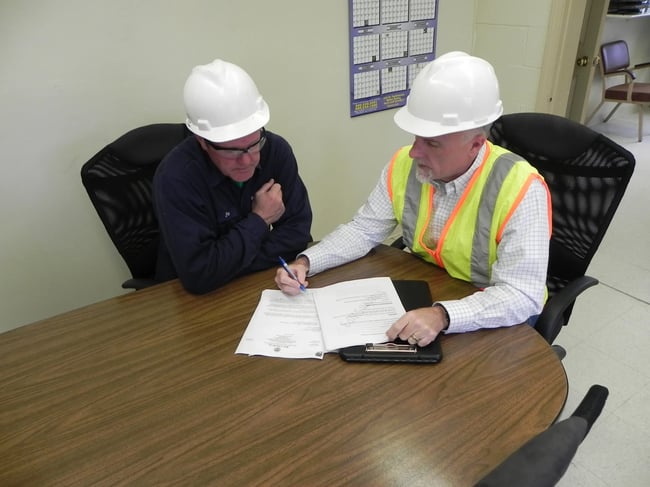
At RMA, we are a focused environmental consulting firm that works with operating facilities. We tend to be a strong fit for businesses that want practical help, direct answers, and a team that will explain things in normal human language. We are hands-on, we are straightforward, and we do not believe compliance needs to be more confusing than it already is.
We also try to be very honest about what we do (and what we do not do!). We don't pretend to be everything. And if a bigger firm, a smaller firm, or a different type of provider would serve you better, we would rather say that up front. A lot of people come into this process worried they are about to get sold, upsold, or buried in jargon. We would rather be clear about fit from the beginning. It builds trust faster, and frankly, it's just a better way to work.
We also believe environmental consulting should feel like support, not theater. If you hire help, you should feel less overwhelmed, not more. You should feel like someone joined your team and understands the real-world side of your operation, not like you entered a maze of meetings and mystery language.
Final Thoughts: Hiring Environmental Help Should Feel Like Relief!
If you're trying to figure out who to hire, the answer is not just about finding someone with the right title. It's about finding the right fit. The right size. The right communication style. The right level of local knowledge. The right attitude toward risk. The right ability to explain what matters without making a hard situation harder.
That's the deeper truth behind hiring an environmental consultant. You're not only hiring "technical support". You are choosing the kind of help you want in your corner when the rules are confusing, the stakes are real, and you need to make a smart call.
Take your time. Ask direct questions. Pay attention to how firms talk, not just what they claim. A good consultant should make you feel more informed, more confident, and more clear on what comes next.
And if you want help sorting through your options, contact RMA. We're happy to talk through fit, approach, and whether we are the right match before any real work even starts. That's how this should work. Hiring environmental help should not feel like a gamble. It should feel like relief.