How a Diesel Generator and Its Fuel Tank Can Push a Pennsylvania Facility Over the SPCC Threshold, Change Its Plan Tier, or Trigger a Plan Amendment
A backup generator is one of the easiest things to add to a facility, and one of the easiest ways to end up under federal oil storage rules without noticing. The generator runs on diesel, the fuel sits in a tank that can hold anywhere from a few hundred to several thousand gallons, and that tank gets added to everything else you already store. For a Pennsylvania facility that's been sitting just under the line, the new tank can be what pushes total oil storage past the point where the federal oil spill prevention rule applies. If you already have a spill plan, the same installation can force you to update it.
This article walks through how to check the change before the generator is ordered or installed: recounting your oil storage capacity, figuring out your SPCC plan tier, planning containment, amending the plan (with a Professional Engineer when one is required), and handling the Pennsylvania DEP tank registration that can come with a larger generator tank. If you'd rather have someone run the numbers with you, you can reach out to RMA at any point, and we'll tell you honestly whether the generator changes anything for your site.
Table of Contents
TL;DR
Yes, a backup generator can change your SPCC status. The generator's fuel tank and engine oil count toward your total oil storage capacity, and the federal rule applies once aboveground capacity passes 1,320 gallons. Recount your capacity before installation, check which plan tier you'd land in, plan containment for the fuel tank, and amend your plan (or write one) within the rule's timeframes, with a Professional Engineer when the plan requires it. In Pennsylvania, a generator tank over 250 gallons may also need DEP storage tank registration and a DEP-certified installer.
How Does a Backup Generator Count Toward Your SPCC Oil Storage Threshold?
The federal oil spill rule is called SPCC, short for Spill Prevention, Control, and Countermeasure. An SPCC Plan is a written plan for keeping oil spills from reaching waterways, and a facility needs one when it stores more than a set amount of oil. The trigger is total aboveground oil storage capacity over 1,320 gallons, counting only containers of 55 gallons or larger, or total buried capacity over 42,000 gallons. EPA Region 3 enforces the rule in Pennsylvania, and the regulation itself is 40 CFR Part 112. The rule only reaches facilities that could reasonably be expected to discharge oil to a waterway, but that call rests on geography like slope, drainage, and distance to a stream, and it can't take credit for man-made features like dikes or curbs. Many industrial sites can't rule it out.
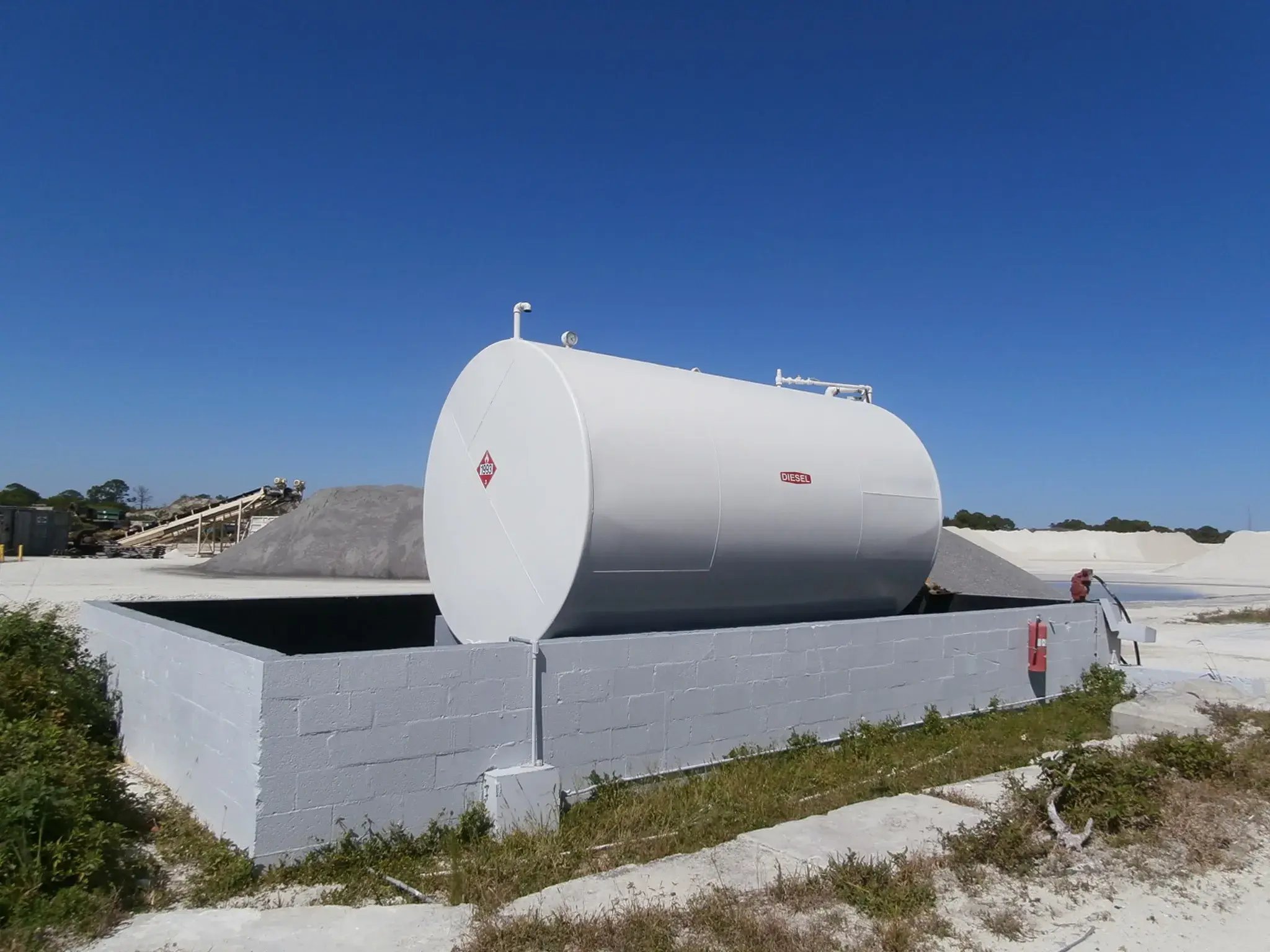
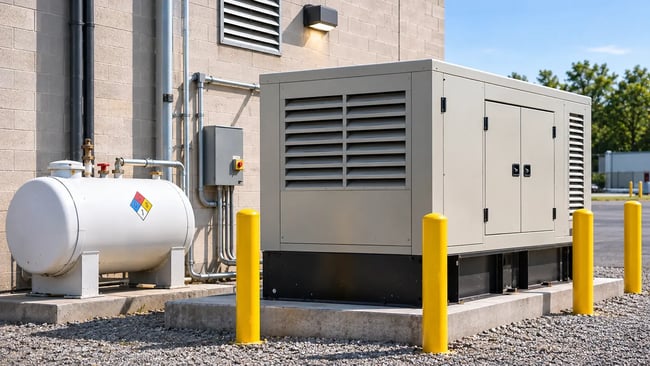
Capacity is what counts, not how full the tank is. A 500 gallon generator tank sitting empty still adds 500 gallons to your total. EPA treats a generator set as two things at once: the fuel tank is a bulk storage container, and the engine's lubricating oil system is oil-filled operational equipment. Both count toward your total when each container is 55 gallons or larger. That includes sub-base (belly) tanks built into the generator frame, day tanks near the engine, and separate bulk tanks that feed the generator through piping, along with the piping itself.
This is why a generator is such a common way to cross the line. A facility with a few drums of hydraulic oil and a forklift fuel station might sit at 800 or 900 gallons. Add a 1,000 gallon generator tank and it's at 1,800 to 1,900 gallons, and it now needs a plan, containment, inspections, and training it didn't need the week before. If you've never had an SPCC Plan, a generator that pushes you over 1,320 gallons means you'll need to get one. If you already have a plan, the new tank means that plan needs to be updated. Our guide on everything you need to know about SPCC plans covers the basics if the rule is new to you.
How Do You Recount Your Facility's Oil Capacity Before Installation?
Do the recount before the generator is specified, because tank size is easiest to discuss at that stage. Walk the whole facility, not just the generator pad, and add up the shell capacity of every oil container of 55 gallons or more. Include containers that are empty, idle, or tucked in a back corner. The table below shows how common items count.
| What You're Counting |
Counts Toward 1,320 Gallons? |
Notes |
| Generator fuel tank (sub-base, day tank, or separate bulk tank) |
Yes |
Full shell capacity, not what's in it |
| Engine crankcase and other oil reservoirs |
Yes, if the container is 55 gallons or more |
Oil-filled operational equipment |
| Existing diesel, gasoline, or fuel oil tanks |
Yes |
Empty tanks still count |
| 55 gallon drums and larger totes of oil |
Yes |
See our guide on 55-gallon drums and SPCC plans |
| Hydraulic, lube, and transformer oil in large containers |
Yes, if the container is 55 gallons or more |
Oil-filled equipment adds up fast |
| Used oil tanks and drums |
Yes |
Used oil is still oil |
| Containers under 55 gallons |
No |
Not counted individually |
| Permanently closed containers |
No |
Must meet the rule's definition of permanently closed |
| Propane and DEF |
No |
Not oil under the rule |
Take a facility with 750 gallons of oil spread across drums, a hydraulic reservoir, and a small diesel tank. That's under the 1,320 gallon line. Add a 600 gallon sub-base generator tank and the total is 1,350 gallons, over the line by 30. A recount before purchase catches that, and it lets you decide with your eyes open, whether that means accepting a plan or looking at whether old oil containers you no longer use can be removed. We wouldn't suggest under-sizing generator fuel to dodge the rule, since runtime during an outage is the reason the generator exists, but taking unused containers out of service is a legitimate way to bring the count down. Either way, keep the written recount on file. If you land under 1,320 gallons, it's your record of why you don't have a plan.
Which SPCC Plan Tier Will Your Facility Fall Into After the Generator?
Once you know you're over 1,320 gallons, the next question is which kind of plan you need. SPCC has three paths, and a generator can move you from one to the next.
| Plan Type |
Who Qualifies |
Who Certifies the Plan |
| Tier I qualified facility |
Total aboveground oil storage of 10,000 gallons or less, no single aboveground container over 5,000 gallons, and a clean discharge history |
The owner self-certifies, usually using EPA's template |
| Tier II qualified facility |
Total of 10,000 gallons or less and a clean discharge history, but at least one container over 5,000 gallons |
The owner may self-certify, but a PE must certify any alternative measures or impracticability determinations |
| Full plan |
Total over 10,000 gallons, or a discharge history that disqualifies the facility |
A licensed Professional Engineer reviews and certifies the plan |
A clean discharge history means no single oil discharge over 1,000 gallons, and no two discharges each over 42 gallons within any 12 month period, during the three years before the plan is certified (or since the facility became subject to the rule, if that's been less than three years). Tier I is usually the simplest and most affordable path, and our overview of Tier I self-certified SPCC plans explains when it fits. The Tier II self-certified plan and the PE-certified full plan each have their own articles, and our comparison of the different types of SPCC plans puts them side by side.
The single container limit is where generators surprise people. A generator with a 6,000 gallon sub-base or bulk tank breaks the 5,000 gallon limit all by itself, even if your facility total is small. Large generators at data centers, hospitals, and manufacturing plants often land in Tier II or full plan territory for exactly that reason. If you're adding a generator to a data center, our data center guide to SPCC plans goes deeper on that setup.
Does a Generator Fuel Tank Need SPCC Secondary Containment?
For bulk storage containers like a generator fuel tank, the rule expects secondary containment sized for the full capacity of the largest single container in the containment area, plus extra room for rainfall. It also expects each container to have a system or documented procedure to prevent overfills. Containment can be a dike, a curbed pad, a pit, or another structure that would hold a leak or a failed fill hose before it reaches the ground.
Many generator sets arrive with a double-walled sub-base tank, and people reasonably assume that settles the question. Sometimes it does. Whether a double-walled tank meets the rule depends on the tank's design, whether it's installed indoors or outdoors, and whether rainwater can collect in the outer space, so we look at each one case by case. Where containment isn't practical at all, the rule allows alternative measures, but those have to be certified by a Professional Engineer, even for a facility that would otherwise self-certify.
Containment isn't only about the tank. Delivery trucks fill generator tanks, so the fill port and the truck loading area matter, and any piping between a remote bulk tank and a day tank has to be covered in the plan. A spill box at the fill port, an overfill alarm, or a written fill procedure are the kinds of details that belong in the plan. Our article on how big your SPCC oil spill containment needs to be walks through the sizing math. Once the generator is running, the tank also goes onto your inspection routine, and many facilities handle that through online environmental training for the staff who fill and inspect it.
How Do You Amend Your SPCC Plan for a New Generator, and Does It Need a PE?
The rule says an SPCC Plan has to be amended when there's a change in facility design, construction, operation, or maintenance that materially affects the potential for a discharge. EPA's own examples include commissioning containers and installing piping, and a new generator with a fuel tank does both. The amendment has to be prepared within six months, and then implemented as soon as possible but no later than six months after it's prepared.
That isn't a twelve month grace period for the generator itself. The window exists so facilities can update a plan they already have. If your facility has never needed a plan and the generator pushes you over the threshold, we'd plan to have the new plan in place before the tank is filled and the generator is running. For a brand new facility, the rule requires the plan to be prepared and implemented before operations begin. The table below shows how the common situations play out.
| Your Situation |
What the Generator Means |
Who Certifies |
| No plan today, and the generator pushes you past 1,320 gallons |
You need a new plan, ideally in place before the generator runs |
The owner if you qualify for Tier I or Tier II, otherwise a PE |
| A Tier I plan, and you still qualify after the install |
Amend the plan to add the generator tank, engine oil, containment, and updated site diagram |
The owner self-certifies the technical amendment |
| A Tier I plan, but a single container now exceeds 5,000 gallons or your total exceeds 10,000 |
Within six months following preparation of the amendment, move to a Tier II plan if you still qualify, or a full plan if you don't |
A full plan needs a PE, and a Tier II plan may be self-certified |
| A PE-certified plan |
Technical amendments for the new tank and equipment |
A licensed PE |
When a PE is needed, the engineer attests that they or their agent visited and examined the facility, that the plan follows good engineering practice, and that the plan is adequate for the site. RMA doesn't have a Professional Engineer on staff. When a plan needs one, we work with an outside PE licensed in the state where the facility sits. Our staff usually does the site visit and develops the plan, and then the PE reviews, stamps, and seals it. That review is a separate paid step and it adds time to the schedule, so build it into your generator timeline. Our article on professional engineers and SPCC plan requirements explains who does what.
If another firm wrote your current plan, we typically don't edit it. We usually rebuild from scratch, and we explain why in Can I Get My SPCC Plan Updated? Maybe! The separate question of timing is covered in our guide on when to update your SPCC plan. A generator installation is also a natural moment to line up the five-year review every plan needs, which we cover in SPCC plan 5-year reviews.
Does Your Generator Tank Need Pennsylvania DEP Storage Tank Registration?
SPCC is a federal plan requirement, and it doesn't register your tanks with anyone. Pennsylvania adds its own layer through DEP's Storage Tank Program, which runs under the Storage Tank and Spill Prevention Act and 25 Pa. Code Chapter 245. A regulated aboveground storage tank is a stationary tank over 250 gallons that holds a regulated substance (diesel counts) with at least 90 percent of its volume above ground, unless an exemption applies.
DEP has used a 1,250 gallon diesel tank for an emergency generator as an example of a regulated tank. DEP has also told petroleum distributors that aboveground tanks connected to emergency generators, including belly tanks built into the generator, aren't exempt when they hold motor fuel unless they're 1,100 gallons or less. In plain terms, a small sub-base tank may fall outside the program, and a larger generator tank is something to plan on registering. Whether yours is regulated also depends on what it holds and how it's set up, so confirm the specifics with DEP's Storage Tank Program before assuming either way.
If the tank is regulated, registration comes with a few moving parts. Using an unregistered regulated tank is illegal, and DEP says anyone who delivers product to one can be liable for releases, so a fuel supplier may refuse to fill it. New tanks must be reported to DEP within 30 days of installation, and registration is renewed every year with a fee based on tank size.
| Aboveground Tank Capacity |
DEP Annual Registration Fee |
| 5,000 gallons or less |
$50 per tank |
| 5,001 to 50,000 gallons |
$125 per tank |
| Over 50,000 gallons |
$300 per tank |
Beyond registration, DEP expects work on a regulated tank system, other than routine maintenance, to be done by a DEP-certified tank installer. Required inspections have to be done by a DEP-certified inspector, and DEP recommends having a certified inspector involved in AST construction projects before work starts. Larger facilities, generally those with regulated aboveground tank capacity over 21,000 gallons, also face DEP's Spill Prevention Response Plan requirements. And if your facility has an NPDES permit, it likely already keeps a PPC Plan (preparedness, prevention, and contingency) that should be reviewed when a new tank goes in.
What Other Permits Come With a New Backup Generator Installation?
SPCC and DEP tank registration cover the oil. The engine and the installation bring other questions. Generator engines are air emission sources, and whether yours needs an air permit, qualifies for an exemption, or only needs recordkeeping depends on engine size, fuel, and how it's used. The answer comes from DEP, or from the Allegheny County Health Department or Philadelphia's own air program where those local agencies run the air permitting. Our article on environmental permits for emergency backup generators covers the usual questions.
Tier II reporting under the federal Emergency Planning and Community Right-to-Know Act (EPCRA) is the other one to watch. It applies when a facility holds 10,000 pounds or more of a hazardous chemical at one time. Diesel weighs about 7.2 pounds per gallon, so the line works out to roughly 1,400 gallons, counted across the whole site rather than per tank. A generator tank added to existing diesel storage can cross it, and the annual report is due by March 1.
The installation itself involves work RMA doesn't do. The pad and foundation, the electrical connection, building and fire permits, any earth disturbance and the erosion and sediment control that goes with it, and the tank installation are construction-phase approvals handled by your engineer, contractor, or a soil erosion specialist. Fire code requirements for fuel tanks are enforced locally and vary by municipality, so confirm yours with your local fire marshal. We don't prepare or file any of those. What we do help with is the other side: the SPCC plan, training, and reports a facility needs once the generator is in and running. We can also help you work out what the construction phase is likely to need and point you toward the right professionals.
What Does an SPCC Plan Cost When You Add a Generator?
Cost depends on what the generator does to your facility, not on the generator itself. Our SPCC plans run from about $1,500 to $15,000 overall, and a Tier I plan, the simplest path, typically runs about $1,500 to $4,000. Larger plans and plans that need a PE sit higher in that range, because the outside engineer's review is a separate paid step and adds time. Initial SPCC training is free when you get a new plan from us.
| What Drives the Price |
Pushes Cost Down |
Pushes Cost Up |
| Total storage capacity and number of containers |
One generator tank and a handful of containers |
Many tanks, drums, and pieces of oil-filled equipment |
| Plan tier |
Tier I self-certification |
Tier II with alternative measures, or a full PE-certified plan |
| Secondary containment |
Existing containment that clearly meets the rule |
Containment that needs sizing or evaluation |
| Existing plan |
No plan to reconcile, starting fresh |
Another firm's plan that has to be rebuilt |
| Number of sites |
A single site |
Several sites that each need a visit or review |
DEP's registration fees from the earlier table are separate from what we charge, and the generator purchase and installation costs sit outside all of it. Our guide on SPCC plan costs breaks the ranges down further. If you want a number for your own facility, our SPCC pricing calculator is below, and it gives you a quick range for RMA's help with your plan.
How Can RMA Help When You're Adding a Generator?
We're a family-run firm, and our senior staff does the actual work on your project. For a generator, that usually starts with the capacity recount and an honest answer about whether you need a plan at all. If you come out under 1,320 gallons, we'll say so, and if you qualify for Tier I and want to use EPA's template yourself, that's a legitimate route we'd tell you about. If you do need a plan, we build it, bring in an outside Professional Engineer when one is required, and cover the containment, inspections, and training that go with it.
There's no pressure and no obligation. You can call us, send an email, or fill out the form on our website, and we'll talk through your generator project before you've committed to a tank size. If you're ready to start the conversation, reach out to RMA and tell us what you're installing. Our SPCC pricing calculator and the full SPCC resource center are there too if you'd like to look around first.