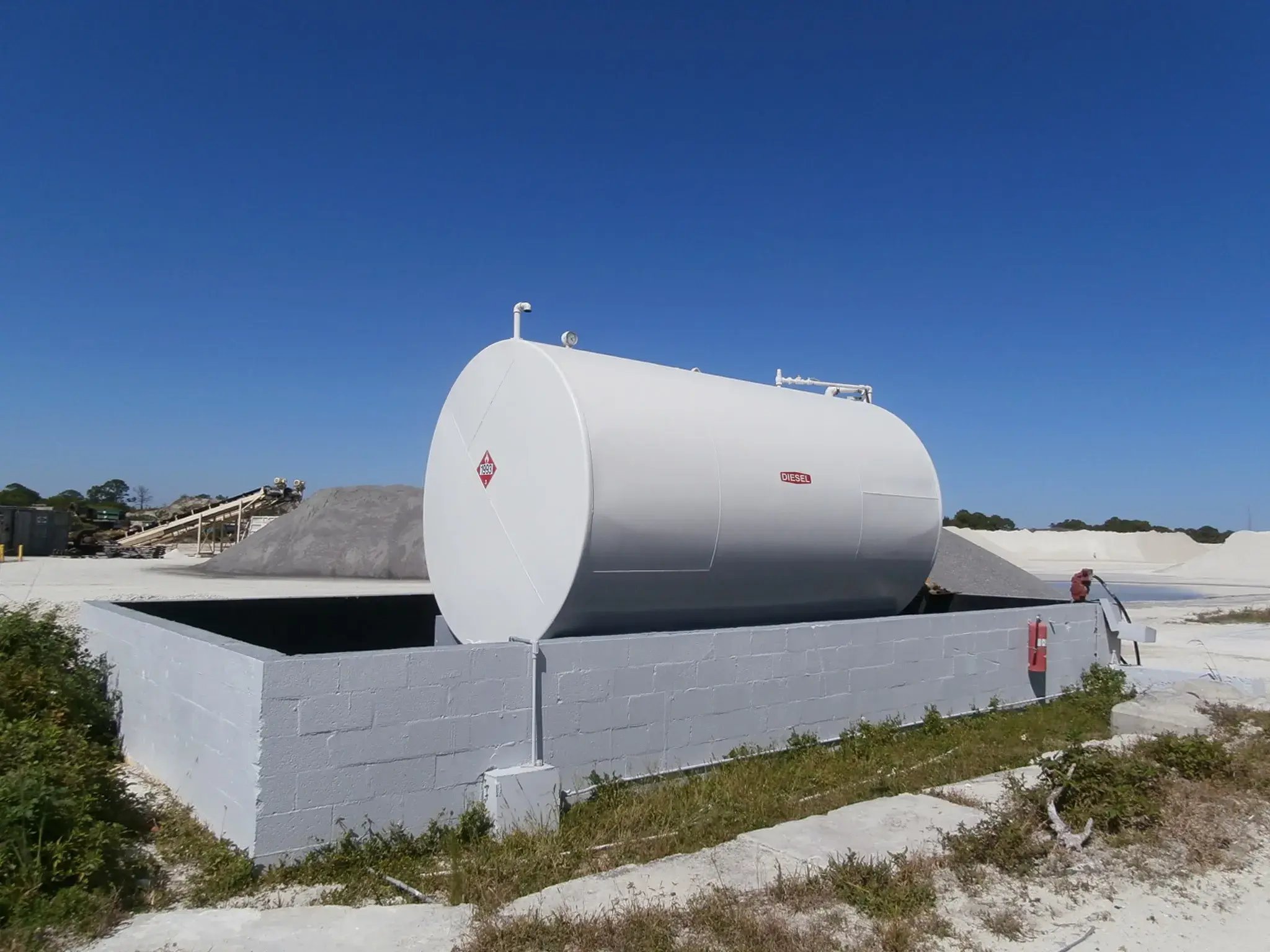
Buying or Selling a Facility With Oil Tanks: How SPCC Plans and Pennsylvania Tank Registrations Change Hands
When a facility with fuel tanks, drums, generators, or hydraulic equipment changes hands, the paperwork rarely moves as cleanly as the keys do. The seller has an oil spill plan in a binder somewhere, a few tanks registered with the state under the seller's name, and a stack of inspection records that may or may not get handed over at closing. Buyers usually assume all of it comes along with the property. It doesn't, at least not in a way that protects the new owner. So what happens to the Spill Prevention, Control, and Countermeasure (SPCC) Plan when a facility is sold, and what do Pennsylvania buyers and sellers have to do about tank registrations?
The short version is that the plan doesn't transfer in any meaningful way. The new owner or operator is responsible, and has to make sure the plan reflects them and is current. Pennsylvania tank registrations work the same way, and they come with a 30-day clock. This article walks through the federal plan steps, DEP's ownership change process, and what buyers and sellers should check before closing. If you'd like a second set of eyes on a deal, feel free to reach out to RMA.
Table of Contents
TL;DR
An SPCC Plan doesn't pass to a buyer in a way that takes the buyer off the hook. The new owner or operator is responsible, can sometimes keep using the seller's plan if the names and management sign-off are updated and nothing about the operation changes, and has to amend the plan within six months if the sale changes how oil is handled. In Pennsylvania, DEP's rules give a tank owner 30 days to register after acquiring a tank or to amend the registration after a change of ownership, so the filing needs to be planned before closing. Buyers should check the plan's age, tank condition, spill history, and registrations before they sign.
What Happens to an SPCC Plan When a Facility Is Sold?
An SPCC Plan is the written oil spill plan that federal rules require when a facility stores more than a set amount of oil. The threshold is total aboveground capacity over 1,320 gallons, counting only containers of 55 gallons or more, or buried capacity over 42,000 gallons. It's the capacity that counts, not what's in the tank today, so an empty 5,000-gallon tank still goes toward the total. Fuel tanks, generator tanks, oil-filled equipment, and even animal fats and vegetable oils all count. If you're buying a facility that crosses that line, the seller either has a plan or should have one. If the facility is under the line, you may not need a plan at all, but confirm that with a real inventory of the site instead of taking the seller's word for it. Our guide to what an SPCC Plan is covers the basics in more depth.
The obligation attaches to whoever owns or operates the facility, and the plan describes one specific facility run by one specific company. When ownership changes, nothing in the federal rule hands the old plan to the buyer in a way that satisfies the buyer's own duties. The seller's plan is often a perfectly good starting point, but the new owner or operator has to adopt it, update it, and carry it out.
EPA speaks to this directly in its guidance. If nothing about how the facility handles oil changes, it may still be feasible to operate under the existing plan, as long as the owner and company names in it are changed to reflect the new owner. If the sale results in a change to operation or maintenance that materially affects the facility's potential for a discharge, the plan has to be amended within six months, and any technical amendment must be certified by a Professional Engineer under 40 CFR 112.5. In Pennsylvania, EPA Region 3 handles SPCC enforcement, as we explain in our article on who enforces SPCC plans. An inspector who finds a plan still naming the previous owner has an easy finding to write up.
How Do You Transfer an SPCC Plan to a New Owner?
Start with the plan itself. Ask the seller for the current plan, the monthly and annual inspection records, the training records, the certification pages, and the documentation of the last five-year review, and ask for them before closing rather than after. Then read the plan against the real site. Tanks get added, removed, and moved, and plans fall behind. A plan that describes tanks that aren't there, or leaves out ones that are, won't hold up if an inspector walks in during your first few months of ownership.
Next, update the plan so it reflects you. That means the new owner and operator names, facility contacts, emergency phone numbers, and sign-off from someone in management with the authority to commit resources to the plan. Those are generally non-technical changes, and EPA says non-technical changes don't require a PE certification. We'd still date the update and record it in the plan so there's a clean paper trail showing when the new owner took over.
Then deal with anything technical. If you're changing how oil is stored, adding tanks, removing containment, or changing transfer procedures, that's a technical amendment. It has to be prepared within six months of the change and put into practice as soon as possible, and no later than six months after the amendment is done. On a PE-certified plan, a Professional Engineer has to certify technical amendments. A Tier I qualified facility, which is a smaller facility meeting EPA's criteria, can self-certify, so the owner signs instead of an engineer. Eligibility for that route depends in part on a facility's spill history, which is one more reason to ask the seller what has happened on site. Our articles on professional engineers and SPCC plan requirements and the different types of SPCC plans explain which path fits which facility. When a change is unclear, the usual advice, which tracks EPA's guidance, is to treat it as technical and have it certified.
Last, watch the five-year clock. A plan has to be reviewed and evaluated at least once every five years, and a change of ownership doesn't reset it. If the seller's last review is four and a half years old, you've bought a deadline along with the facility. Our article on SPCC plan five-year reviews covers the options.
| What Changes at Closing |
What It Usually Means for the Plan |
Engineer Certification? |
| Only the owner or company name, contacts, and management sign-off |
Update the plan to reflect the new owner. Generally a non-technical change. |
Generally not required for non-technical changes |
| The buyer adds, removes, or changes tanks, containment, or how oil is handled |
Technical amendment prepared within six months, then implemented within six months after that |
Required on PE-certified plans. Tier I qualified facilities can self-certify. |
| The plan is missing, thin, or past its five-year review |
A review of the whole plan, and in many cases a rebuilt plan |
Depends on the plan type |
| The buyer's combined oil storage crosses the 1,320-gallon threshold |
If the facility now meets the threshold, it needs an SPCC Plan. If it already has one, the plan needs to be amended. |
Depends on the plan type |
How Does a Pennsylvania Tank Registration Change of Ownership Work?
Pennsylvania adds a second layer on top of the federal plan. Under the Storage Tank and Spill Prevention Act and 25 Pa. Code Chapter 245, aboveground and underground tanks that hold regulated substances generally have to be registered with DEP, and the registration form doubles as the operating permit application. Whether a particular tank is regulated depends on its size, type, and use, so check yours against DEP's storage tank program before assuming anything either way.
Registrations don't follow the property on their own. The regulation requires a tank owner to register each tank on a DEP form within 30 days after installing it or acquiring an ownership interest in it, and it says a regulated substance can't be placed in the tank and the tank can't be operated until it's properly registered and DEP approves an operating permit, unless DEP agrees otherwise. Separately, owners have to submit a registration form to amend the information on file within 30 days of a change, and change of ownership or change of operator is one of the listed changes. That's the language of 25 Pa. Code 245.41. DEP revises its rules and procedures from time to time, so read the current text before closing instead of relying on a summary, ours included.
On the mechanics, DEP's Storage Tanks ePermitting system accepts change of ownership submissions through a Greenport account. A buyer typically has to finish DEP's enrollment steps and electronic filing agreement first, so build in some lead time instead of finding out about the account on day 29. Paper forms exist as well, including the Storage Tanks Registration/Permitting Application (2630-PM-BECB0514) and the shorter Storage Tank Registration Amendment Form (2630-FM-BECB0607). DEP updates forms and portal steps over time, so use whatever the agency currently posts, and call the Division of Storage Tanks at 717-772-5599 if your deal doesn't fit neatly. DEP also expects registration fees to be paid before the registration certificate expires, so the purchase agreement should say who covers the current billing cycle.
How the deal is structured affects what has to be filed. The table below shows the common scenarios, but treat it as a starting point for a conversation with DEP and your attorney, not a final answer.
| Deal Structure |
Likely Registration Question |
| Property or asset sale, tanks stay at the site |
The tank owner changes, so a change of ownership filing is the likely route. |
| Sale of company shares or membership interests, tank-owning company stays the same |
The registered owner may not change, but contact and operator details may. Confirm with DEP. |
| A new company takes over operations, the property owner stays the same |
A change of operator may apply, and the tank ownership question depends on who owns the tanks. |
| Tanks are removed or moved to another facility |
Removal or relocation to a new facility is its own listed change, separate from a simple ownership change. |
What Should Buyers Check on Oil Tanks Before Closing?
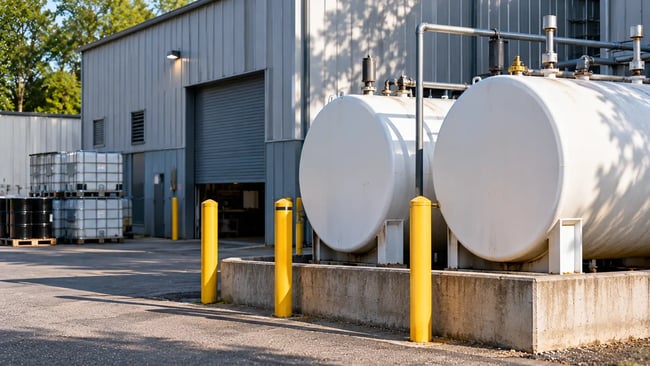
The plan and the registrations are the paperwork. Buyers should also look at the physical site and its history, because that's where the surprises are. We'd ask for the items in the table below, ideally during due diligence, when there's still time to renegotiate or walk away.
| Check |
What to Ask For or Look At |
Why It Matters to a Buyer |
| Plan currency |
The current plan, date of the last five-year review, amendment log, management sign-off, and the PE certification or Tier I self-certification |
A stale or incomplete plan becomes your problem the day you take over. |
| Tank condition |
Inspection and integrity testing records, and a walk of the site looking for corrosion, staining, leaks, and damaged foundations or supports |
Repair or replacement costs belong in the price discussion, not in your first year of ownership. |
| Containment |
Secondary containment for each tank and loading area, its condition, and whether it's sized for the largest container |
Containment shortfalls can turn into construction work, and you want to know that before closing. |
| Spill history |
Spill and release reports, any reports to the National Response Center, EPA, or DEP, and cleanup records |
Past discharges can trigger federal reporting and can affect whether a facility qualifies for a Tier I plan. |
| Registrations |
DEP registration certificates, the facility ID, and a tank list that matches what's physically on site |
Unregistered or mismatched tanks have to be sorted out within your 30 days. |
| Inspections and training |
Monthly and annual inspection records and employee training records, which the rule expects to be kept for three years |
Missing records suggest the plan wasn't being carried out, whatever the binder says. |
A few of those deserve more than a table cell. On spill history, the federal rule requires a facility to send information to EPA's Regional Administrator within 60 days when it has discharged more than 1,000 gallons of oil in a single discharge, or more than 42 gallons in each of two discharges within any twelve-month period, to navigable waters or adjoining shorelines. A seller who never filed that report may have a gap you inherit. Our article on when you have to report an oil spill explains the reporting triggers. DEP's eFACTS tool generally lets the public look up what the agency has on file for a facility, including storage tank registration information, which makes a useful cross-check against what the seller tells you. On containment, our guide on how big SPCC oil spill containment needs to be shows how the sizing works.
An SPCC review is also a different job from a Phase I environmental site assessment. A Phase I looks at the property's history for contamination risks, and past tank use is a normal part of it, but it won't tell you whether your plan is current or your registrations are in order. Lenders and buyers often order one anyway, and we do them, as described on our Phase I environmental site assessment page. If the review turns up a spill or a violation, bring in an environmental attorney before closing. How liability gets divided, and how the purchase agreement handles it, is a legal question, and we're not attorneys.
What Should Sellers Do Before Selling a Facility With Oil Tanks?
Sellers have their own to-do list, and working through it tends to make the sale smoother. The state regulation puts one item in writing: a person who sells a tank intended to be used as a regulated storage tank, or a property with an existing regulated tank, has to notify the purchaser in writing of the owner's obligations under the registration rule. Put that notice in the deal file, and make sure it names the 30-day registration and amendment requirements.
Beyond that, gather the plan, the five-year review record, inspection logs, training records, and any spill and cleanup documents into one package the buyer can use. Check that DEP's registration information matches what's on the ground, including tanks that were added, removed, or changed over the years. If you have tanks you no longer use, deal with them properly before the sale. A tank that's only been emptied still counts toward SPCC capacity, while a permanently closed one doesn't, and permanent closure and removal come with their own DEP requirements that may involve certified professionals. Be honest about spill history. Buyers who find an undisclosed release after closing tend to start calling their attorneys.
Finally, remember that you stay responsible for compliance until the facility changes hands. A seller who lets inspections lapse before closing hands the buyer a worse facility and may leave their own exposure behind.
What If the Seller's SPCC Plan Is Missing or Out of Date?
It happens often enough that buyers should expect it. A facility over the SPCC threshold with no plan, or with a plan that doesn't match the site, is out of compliance, and EPA can look to whoever owns or operates the facility. Federal penalties for SPCC violations come from the Clean Water Act and are adjusted for inflation each year in 40 CFR Part 19. In the 2021 adjustment table, the administrative Class II penalty was $23,647 per day of violation, with a cap of $295,564 for a proceeding, and the amounts have risen with later adjustments. Our article on top SPCC plan violations and fines shows what inspectors tend to cite.
When a seller's plan is missing or stale, we usually build a fresh one instead of patching another firm's work. A plan that follows the buyer's actual site, tanks, and procedures is easier to carry out than a patched version of someone else's document. We cover that tradeoff in our article on whether an SPCC plan can be updated, and our piece on plans over five years old covers the review side. Our article on how long it takes to get an SPCC plan gives the typical timelines, so build that time into your closing schedule.
If the buyer plans to build, expand, or add tanks, the construction side is a separate track. Pennsylvania's construction-phase requirements, such as construction stormwater (PAG-02) and Chapter 102 erosion and sediment control permits, building and fire permits for tank installation, and the installation itself, which in Pennsylvania may require DEP-certified installers, go through your engineer, contractor, or an erosion and sediment control specialist. We don't prepare those. Temporary fuel storage on a construction site can fall under SPCC, and we can help with that plan, but not with the construction permits around it. What we do help with is what the facility needs once it's running: an SPCC Plan or amendment, DEP tank registration updates, inspections, and training. We can also help you work out what the construction phase is likely to need and point you toward the right professionals.
What Does SPCC Compliance Cost After Buying a Facility?
The cost depends on what condition the facility is in when you take it over. If the plan is current and only the names change, the work is limited to updating and signing the plan. If the plan is missing, stale, or doesn't match the site, you're looking at a new plan. Here's what RMA's published ranges look like, and our article on SPCC plan costs goes into the details.
| Item |
Approximate Range |
What Moves the Price |
| Tier I SPCC Plan |
About $1,500 to $4,000 |
Smaller facilities that qualify. Price rises with the number of containers and the site's complexity. |
| SPCC Plans overall |
About $1,500 to $15,000 |
Storage capacity, number of containers, and whether secondary containment needs to be evaluated |
| PE certification, when required |
An added review fee from an outside professional engineer |
Larger or more complex facilities, and the extra time the engineer's review takes |
Those ranges cover plan work. They don't include tank repairs, containment upgrades, construction, or DEP's own fees, which the agency sets. When a PE has to certify a plan, we work with an outside professional engineer, so expect that review to add some time as well as cost. To get a ballpark for RMA's help with an SPCC Plan, use the pricing calculator below.
How Can RMA Help With SPCC Plans and Tank Transfers?
If you're buying or selling a facility with oil tanks and want to know where you stand, we're glad to help. We can check whether the facility is over the SPCC threshold, review the seller's plan against the real site, build or rebuild the plan when it needs it, and update the owner information so the plan reflects the new operation. We can also help sort out the DEP registration side so the 30-day window doesn't slip past you. Senior staff do the work, and when a plan needs PE certification, we work with an outside professional engineer. Initial SPCC training is free with a new RMA plan, and our online environmental training library has more courses for the people running the site. If it turns out you're under the threshold or don't need us, we'll tell you that too.
You can call, email, or fill out the form on our website, and there's no pressure or obligation. If you'd like to talk through a purchase, a sale, or a plan you've inherited, reach out to RMA and we'll point you to the right next step.