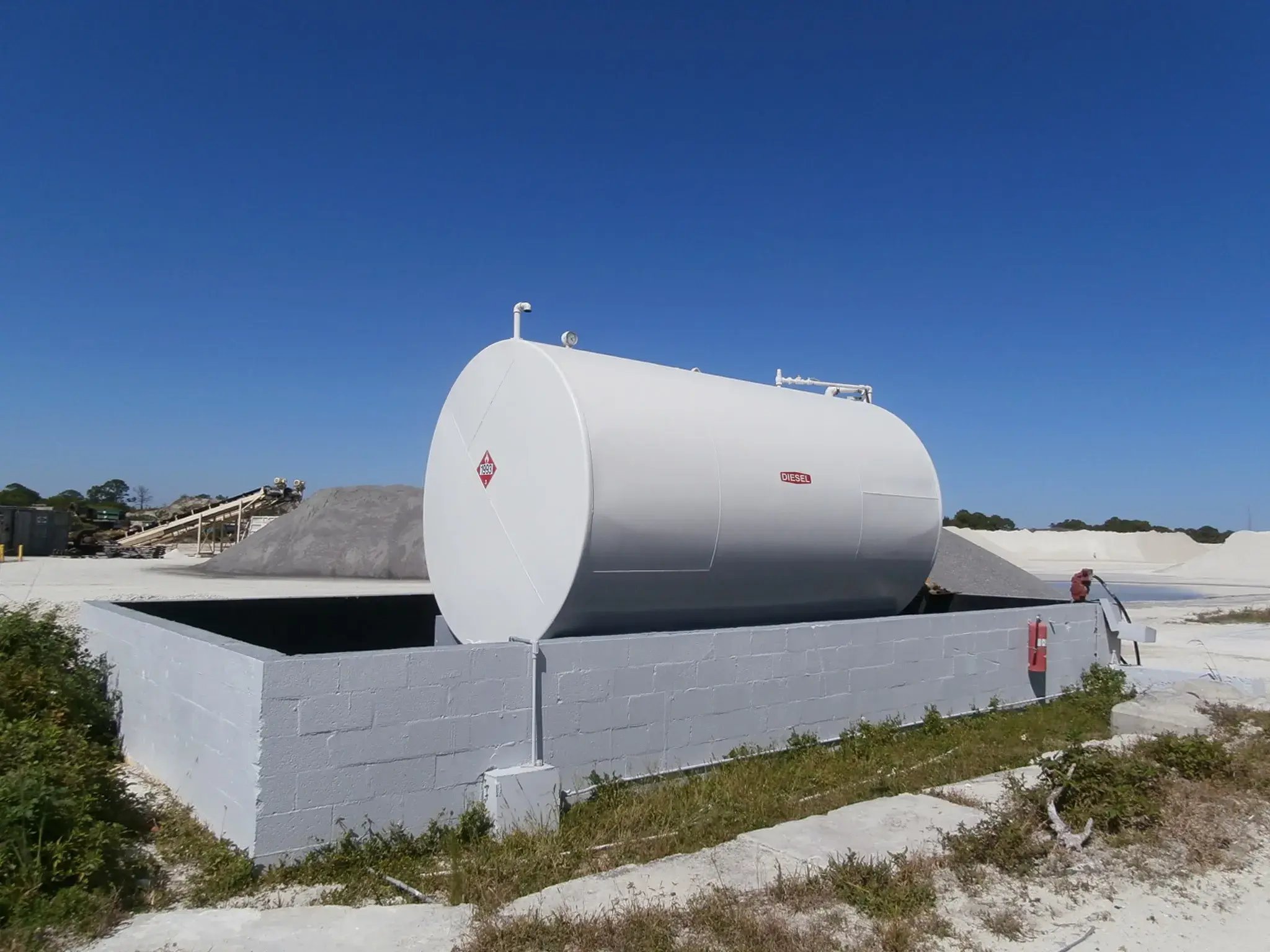
EPA's Tier I SPCC Plan Template: Who Qualifies, Where Facilities Get Stuck, and How It Fits With Pennsylvania Tank and PPC Rules
If your facility stores oil, you may have heard that EPA publishes a fill-in-the-blanks template that lets you write your own Spill Prevention, Control, and Countermeasure (SPCC) Plan instead of paying someone to draft one. It's real, it's free, and plenty of small facilities use it. The catch is that it's only available to facilities that meet specific size and spill-history limits, and filling it in is the easy part. The hard part is doing everything the finished plan says you'll do.
So can a Pennsylvania facility use it? Probably, if your total aboveground oil storage is 10,000 gallons or less, no single container is over 5,000 gallons, and you haven't had a significant spill in the last three years. In this article we'll walk through who qualifies, what the template asks for, the three places people usually get stuck (capacity counts, containment calculations, and inspection schedules), why a template doesn't remove a single requirement, and how the federal plan fits alongside Pennsylvania's tank and PPC Plan rules. If you'd rather talk it through with someone, you're welcome to reach out to RMA at any point.
Table of Contents
TL;DR
Yes, you can use EPA's Tier I template if your facility already needs an SPCC Plan, stores 10,000 gallons or less of oil aboveground in total, has no single container over 5,000 gallons, and has a clean spill history. The template is optional and free, and the owner or operator can fill it in and sign it without an engineer. It doesn't lower any requirement, so you still have to build the containment, run the inspections, train your people, and keep the plan current. In Pennsylvania, DEP's tank registration rules and, depending on your permits, a PPC Plan sit on top of the federal plan, so the three need to line up.
Who Can Use EPA's Tier I SPCC Plan Template?
The template is built for what the SPCC rule calls a Tier I qualified facility. Before a facility can be one, it has to be subject to the SPCC rule at all, which generally means more than 1,320 gallons of aboveground oil storage (counting only containers of 55 gallons or more) or more than 42,000 gallons of buried storage. From there, the Tier I test in 40 CFR 112.3(g) comes down to the limits below. Tier I here has nothing to do with Tier II chemical inventory reporting under EPCRA, even though the names overlap.
| Tier I Criterion |
The Limit |
| Total aboveground oil storage capacity |
10,000 gallons or less |
| Largest single aboveground container |
5,000 gallons or less |
| Spill history |
No single discharge over 1,000 gallons, and no two discharges each over 42 gallons within any 12-month period, looking back three years from your self-certification date (or since the facility became subject to the rule, if that's less than three years) |
Check your spill records before you start. Discharges caused by natural disasters, acts of war, or terrorism don't count against you, but a single release over 1,000 gallons, or two releases over 42 gallons inside the same twelve months, takes the template off the table. In that case you'd move up to a Tier II plan or a full PE-certified plan.
Using the template is also optional. EPA is clear that a Tier I facility can write its own equivalent plan, prepare a Tier II plan, or go with a PE-certified plan instead. If you modify the template heavily or skip it, your plan needs a cross-reference section showing where each applicable requirement is covered. Our articles on what a Tier I self-certified SPCC plan is and on the different types of SPCC plans go deeper on those choices.
One limit isn't in the size criteria. A self-certified Tier I plan can't rely on environmental equivalence or on a determination that secondary containment is impracticable. If your site needs either one, you're in PE-certified plan territory. And if you land under the 1,320-gallon threshold once you count correctly, you may not need an SPCC Plan at all, template or otherwise.
What Does the Tier I SPCC Template Ask For?
The template is the plan. Under 40 CFR 112.6(a), once the owner or operator completes and signs it, it can serve as your SPCC Plan with no separate document needed. EPA offers it as an interactive PDF and a Word file, and you can fill it in electronically or by hand on a printout. It walks you through describing the facility, confirming that you meet the Tier I criteria, listing your oil containers and equipment, and documenting how you handle containment, overfill prevention, inspections, and personnel training. It also gives you places to record technical amendments and your five-year review. EPA also publishes sample completed plans, including one for an automotive service station.
The template covers the rule's streamlined Tier I requirements, and three of them replace the more detailed general requirements. You have to include a failure analysis predicting the direction and quantity of oil that could escape from each type of major equipment failure. You need secondary containment for the entire capacity of your largest single container plus room for precipitation. And each container needs an overfill prevention system or a documented procedure, described in the plan and tested regularly.
The signature page is a legal certification. By signing, the owner or operator certifies eight things: that you know the requirements of 40 CFR Part 112, that you visited and examined the facility, that you prepared the plan following sound industry practices, that you've set up inspection and testing procedures, that you'll fully implement the plan, that the facility meets the Tier I criteria, that the plan doesn't deviate from the rule, and that management has approved it and committed the resources to carry it out. No engineer signs, which is what keeps the cost down, and it also means the responsibility sits with you.
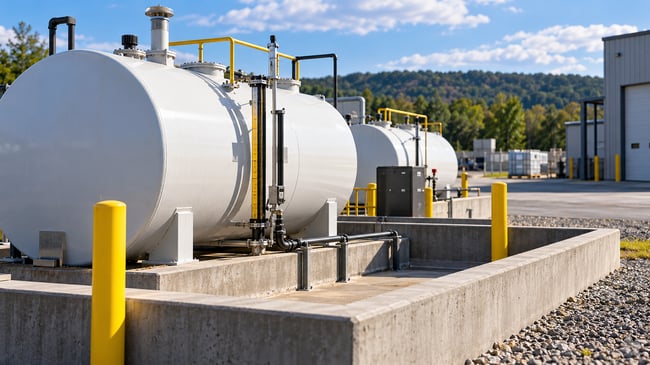
Where Do Facilities Get Stuck on the Tier I SPCC Template?
The facility description and signature block go quickly. The slowdowns tend to come in three places, and each one can quietly invalidate the plan if it's handled wrong.
Counting Oil Storage Capacity
Capacity is what a container can hold, not what's in it today, so an empty 500-gallon tank still counts. Containers under 55 gallons don't count toward the threshold, but drums at 55 gallons and up do, and so do oil-filled operational equipment like hydraulic reservoirs and transformers. Permanently closed containers don't count. Animal fats and vegetable oils count as oil, while propane and DEF don't. Motive power containers, like the fuel tank on a truck, are exempt, but fuel trailers and skid tanks aren't. Buried tanks regulated under the federal UST rules are excluded, and other completely buried tanks still need to be addressed in the plan even though they don't count toward the Tier I threshold. Our article on whether 55-gallon drums are included in SPCC plans covers the drum question in detail. A sloppy inventory can leave you with a wrong total in either direction, including a Tier I self-certification you don't qualify for.
Sizing Secondary Containment
The rule requires containment for the entire capacity of your largest single container plus additional capacity for precipitation. It doesn't give you a number for the precipitation allowance, so you have to choose one and be able to defend it, and outdoor containment in Pennsylvania takes rain, snowmelt, and ice. EPA's template package includes worksheets for simple dike and berm calculations, but they rest on simplifying assumptions, so read those assumptions before relying on the result. Several tanks sharing one dike, equipment that displaces volume inside the containment, and irregular walls are where the simple math tends to stop fitting. Portable containers and skid tanks need containment too, while mobile refuelers and other tank trucks are treated differently. If you can't provide containment for some container, "impracticable" isn't an option on a self-certified Tier I plan. For more on the math, see how big your SPCC oil spill containment needs to be.
Setting Inspection and Testing Schedules
By signing, you certify that you've established inspection and testing procedures that follow industry standards or recommended practices. The template doesn't hand you a calendar. The right frequency depends on the type of container and on the standard you adopt for it, and you have to test your overfill prevention on a regular basis as well. A common mistake is writing in a schedule you can't realistically keep, and an inspector comparing your plan to your records will see the gap. Inspection and test records get signed and kept for three years. Our list of the top 10 things to check during SPCC inspections is a good starting point for building a routine.
Does Using the Tier I SPCC Template Remove Any Requirements?
No. The template is a format, not an exemption. It lists every requirement a Tier I facility has to meet, and your signature says you'll fully implement them. A completed template in a binder doesn't protect you if the dike is too small, the inspections aren't happening, or nobody's been trained. When EPA Region 3 inspects a Pennsylvania facility, the plan is the starting point, and the inspector checks the site and your records against it.
Several obligations keep running after you sign. The plan has to be kept at the facility if it's normally attended at least four hours a day, and it has to be available for an inspector to review during working hours. Oil-handling employees need to know the plan and get regular discharge prevention briefings, and our annual SPCC training article and online training library cover that piece. The plan also needs updating when something changes.
When there's a change in facility design, construction, operation, or maintenance that affects your potential for a discharge, you have to amend and self-certify the plan again. If a change pushes you past 5,000 gallons in a single container or 10,000 gallons in total, you have six months after preparing the amendment to switch to a Tier II or PE-certified plan. Even with no changes, the plan needs a documented review at least every five years. Our article on SPCC five-year reviews explains what that review should look like.
How Does the Tier I SPCC Template Fit With Pennsylvania Tank and PPC Requirements?
The template only addresses the federal rule, which EPA Region 3 enforces in Pennsylvania. The Pennsylvania Department of Environmental Protection (DEP) runs its own programs on top of that, and they have different triggers and different paperwork.
| Layer |
What It Covers |
Does the Tier I Template Handle It? |
| Federal SPCC (40 CFR Part 112, EPA Region 3) |
Oil spill prevention plan, containment, inspections, training |
Yes, that's what it's for |
| DEP storage tank program (Storage Tank and Spill Prevention Act, 25 Pa. Code Chapter 245) |
Registration of regulated tanks, DEP-certified installers and inspectors for certain work, and DEP's own release and operating rules |
No, it's separate paperwork |
| Spill Prevention Response Plan (SPRP) |
DEP plan for larger aboveground tank facilities |
No, and most Tier I facilities sit below the trigger |
| PPC Plan (Preparedness, Prevention, and Contingency) |
DEP plan tied to its water programs, including stormwater permitting |
No, but it overlaps and should match |
The tank program is where Pennsylvania facilities most often get caught off guard. In general, a stationary aboveground tank with a capacity over 250 gallons that holds a regulated substance, which includes petroleum, has to be registered with DEP unless it meets one of the exemptions in Chapter 245, and registration is due within 30 days of installing the tank or acquiring an ownership interest in it. SPCC counts containers of 55 gallons and up, while DEP's registration rule starts at tanks over 250 gallons, so the two counts won't match. Whether a particular tank needs registration depends on its size, type, and use, so confirm yours against DEP's storage tank program, and you can check how your tanks appear in DEP's records through its eFACTS system.
The SPRP applies to facilities whose regulated aboveground tank capacity is over 21,000 gallons in total, so a Tier I facility will usually sit well below it, although DEP counts regulated tanks its own way and tanks holding other regulated substances can add to the total. The PPC Plan is different. It comes out of Pennsylvania's water programs and is usually tied to a DEP permit such as industrial stormwater coverage, so whether you need one depends on the permits you hold. Because it covers many of the same topics as an SPCC Plan, including spill prevention, response procedures, and emergency contacts, keep the container lists, procedures, and contact information consistent across your documents.
If you're adding or replacing tanks, installation may require DEP-certified installers along with local building or fire permits, and fire code requirements for tanks are enforced locally and vary by municipality. We don't prepare construction-phase permits or approvals, and you'd work with your contractor, installer, or engineer on that piece. Once the tank is in, the operational side is where we help: amending your SPCC Plan, getting the DEP registration paperwork in order, setting up inspections, and training your people.
When Is It Worth Getting Help With a Tier I SPCC Plan?
A lot of small facilities can do this on their own, and if yours has a handful of tanks in a simple layout, we'll tell you so. Help starts to make sense when the capacity count is unclear, when your containment math doesn't fit the template's assumptions, when you're close to the 5,000 or 10,000 gallon limits, when you have several sites to cover, or when something in your setup needs a PE's sign-off. It also makes sense when you simply don't have the time to learn the rule well enough to sign a certification with confidence. The online SPCC plan options sit in between, and we've written about what to watch for there.
For a sense of scale, SPCC plans from RMA run from about $2,500 to $15,000 depending on the facility, a simple Tier I update comes in around $1,500, and a complex PE-certified update starts at about $7,500. What moves the number is the amount of oil storage, how many containers there are, whether a PE certification is needed, and whether your secondary containment needs a real evaluation. Our SPCC plan cost breakdown goes through those drivers, and the pricing calculator below gives you a ballpark for having us handle your plan.
Need Help Deciding Whether the Tier I SPCC Template Fits Your Facility?
Whether you want us to check your capacity count, look over a template you've already filled in, or write the plan and coordinate it with your DEP tank and PPC paperwork, you can call, email, or fill out the form on our website. Senior staff will take a look at your situation, and there's no pressure or obligation. If the template is the right fit and you can handle it yourself, we'll say so. When you're ready, you can contact RMA and we'll talk it through.