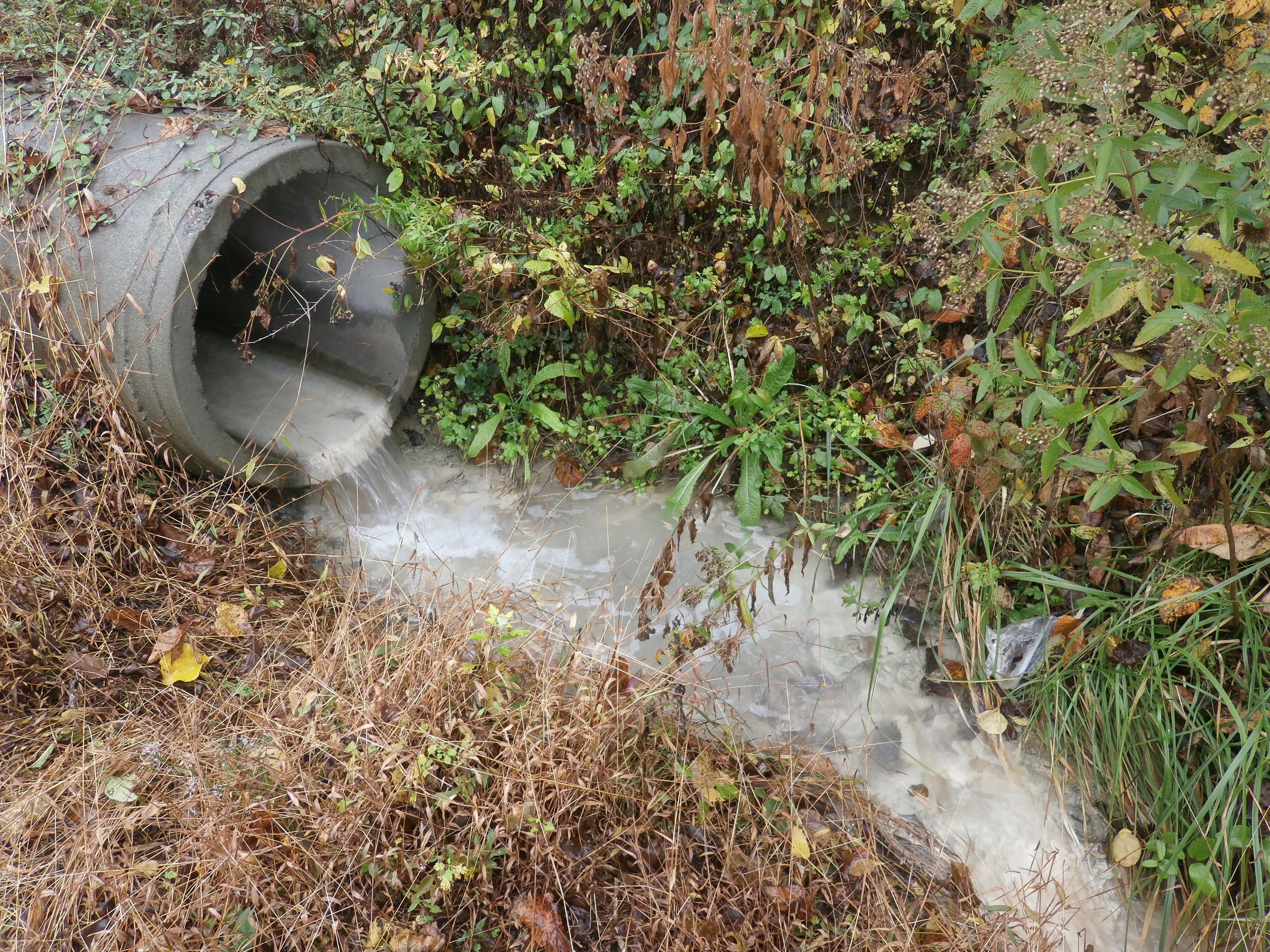
Which Parts of a Pennsylvania PPC Plan Your Team Can Write Itself, and Where Technical or Regulatory Expertise Helps
If your facility needs industrial stormwater permit coverage from the Pennsylvania Department of Environmental Protection (DEP), you've probably run into the term PPC Plan. It stands for Preparedness, Prevention, and Contingency Plan, and it's the written plan DEP expects to see when you apply for coverage under PAG-03, Pennsylvania's general permit for stormwater runoff from industrial sites. The plan describes how your facility keeps pollutants out of that runoff and what your people do when a spill happens. Plenty of facility managers want to know whether they can write it in-house, and the short answer is yes, with a few parts that go much easier with technical help.
Nothing in DEP's rules says a consultant has to write your plan, and a good share of it draws on knowledge your team already has about your site. Below we walk through what the plan has to include, which tasks your staff can handle, where drainage, permit, and engineering knowledge starts to make a real difference, and how to keep the plan accurate after it's written. If you'd rather hand it off, or you just want a second set of eyes on a draft, you can reach out to RMA anytime.
Table of Contents
TL;DR
Yes, you can write your own PPC Plan in Pennsylvania. DEP's guidance expects the plan to come from someone who knows your site's daily operations, and PAG-03 doesn't require a Professional Engineer to certify it. Most of the plan is work your team can do, like inventorying materials, naming emergency coordinators, and setting up inspections, training, and call lists. The parts that tend to need outside help are choosing the right permit path, mapping drainage areas and outfalls, evaluating non-stormwater discharges, picking stormwater controls, and designing containment. Either way, you own the plan afterward, since it has to be reviewed at least once a year and updated when your facility changes.
Does Pennsylvania Require a Consultant to Write a PPC Plan?
No. Pennsylvania doesn't require you to hire anyone to write a PPC Plan. The legal basis is a DEP regulation, 25 Pa. Code § 91.34, which covers activities that use or store pollutants, and DEP's guidance document for these plans (number 400-2200-001) lays out the format. That guidance says the plan should be developed by someone familiar with the day-to-day operations at the site. It also says that if a consultant is brought in, the consultant needs the authority to study how materials are stored, handled, and managed. In other words, DEP expects the plan to come from people who know the facility, with or without outside help.
You also don't need an engineer's stamp. DEP's older guidance document still mentions Professional Engineer certification for facilities that report under Section 313 of the Emergency Planning and Community Right-to-Know Act, which is the Toxic Release Inventory program. The PAG-03 permit itself stopped requiring that certification with the 2016 version, and it hasn't come back. That's a different situation from a federal SPCC Plan, which often does call for a Professional Engineer. If you want a side-by-side look at how Pennsylvania's plan compares to the SWPPP most other states use, our breakdown of SWPPPs versus PPC Plans for PAG-03 covers it.
Before you write anything, make sure PAG-03 is the permit you need. Some facilities qualify for a No Exposure Certification, which is a way to avoid permit coverage when all industrial materials and activities stay indoors or under a roof, and others can't use the general permit at all, for example because they discharge to High Quality or Exceptional Value waters. Older cities with combined sewers add another wrinkle, since runoff there can fall under the sewer authority instead of a DEP stormwater permit, so local rules may differ from what you read here. Our guide to which NPDES permit you need walks through the three paths.
One more boundary. This article is about the operational PPC Plan for an industrial facility. If you're building or expanding a site, construction-phase requirements such as PAG-02 coverage, erosion and sediment control plans, and conservation district approvals are a separate track, and RMA doesn't prepare them. Your engineer or contractor usually handles that piece. Once the facility is running, the operational permits and plans described here are where we can help.
What Does a Pennsylvania PPC Plan Have to Include for PAG-03?
DEP's guidance organizes the plan into five parts: a description of the facility, how your organization carries out the plan, spill and leak prevention and response, countermeasures, and an emergency spill control network. For industrial stormwater permittees, DEP adds a stormwater addendum that asks for more, including the activities exposed to rain, the drainage area for each outfall, the stormwater management practices you use, and an evaluation for non-stormwater discharges. The finished plan goes in with your Notice of Intent, the application form for permit coverage, and DEP's guidance says general permit applicants should have the plan completed and in use by the time they apply.
DEP also has a view on style. The guidance says a plan works best when it's simple and readable, with an index or tabs so the emergency sections can be found fast. A plan nobody can navigate during a spill isn't doing its job. The table below shows each part of the plan and who usually handles it.
| PPC Plan Part |
What DEP Asks For |
Who Usually Handles It |
| Facility description and materials |
Narrative of operations, inventory of materials and wastes with safety data sheets, pollution incident history |
Your team |
| Organization and emergency coordinators |
Named primary and alternate coordinators, their duties, and a chain of command |
Your team |
| Inspections, maintenance, housekeeping, and training |
Schedules, procedures, training dates, and attendance records |
Your team, working from your permit's requirements |
| Countermeasures and notification network |
Response steps, emergency equipment list, contractors, and agency call lists |
Your team |
| Site maps and drainage areas |
Topographic location map, site drawing, outfalls, and the drainage area for each outfall |
Often needs technical help |
| Pollutant sources and stormwater controls |
Assessment of what can reach runoff, a description of controls, and an evaluation for non-stormwater discharges |
Often needs technical or regulatory help |
| Containment and spill-risk design |
Containment sized for the largest container plus an allowance for precipitation |
Engineering judgment helps |
The first four rows are mostly knowledge your staff already holds. The last three are where self-written plans tend to go sideways, and we'll take those after the parts you can do yourself.
Which PPC Plan Tasks Can Your Own Team Handle?
Start with the parts nobody knows better than you. Describing what happens at the site, listing every material and waste you store along with its quantity and location, and attaching the safety data sheets are all jobs for your operations or environmental, health, and safety people. The incident history is the same kind of work. DEP's guidance asks for past pollution incidents with the date, the material, the approximate amount, and what you changed to keep it from happening again, and the stormwater addendum focuses on significant spills in areas exposed to rain over roughly the previous three years. If your facility keeps good records, this section mostly writes itself.
The organization section is also in-house work. DEP wants a named primary emergency coordinator plus alternates listed in the order they'd take over, with phone numbers, and at least one coordinator on the premises or on call at all times. You'll write down what each person does in an emergency and who gets called in what order. Use the people who work there now. A coordinator who left two years ago is one of the first things a reviewer notices, and it's the kind of gap that causes real trouble when a spill happens at night.
Most of the procedural sections fall to your team too. That includes your inspection program, preventive maintenance, housekeeping practices, site security, and a plan for outside factors like power outages, floods, and snowstorms. It also covers your emergency equipment list, with where each item is kept, plus the notification lists for your DEP regional office, county emergency management, local fire and police, and any downstream water users. Your permit sets the minimum inspection frequency, and DEP's guidance says your plan can't promise less than the regulations and permit require. Our post on how to do a stormwater visual inspection helps with the inspection piece.
Training is the last big internal job. The plan has to describe your training program and set periodic dates for it, and DEP's guidance says attendance records should be kept in personnel files. If you want a starting point, we cover whether stormwater training is required, and our online environmental training library has courses your team can take. If you've never written a plan like this, our post on writing your own SWPPP covers the same question for the version of the plan used in most other states, and much of it carries over.
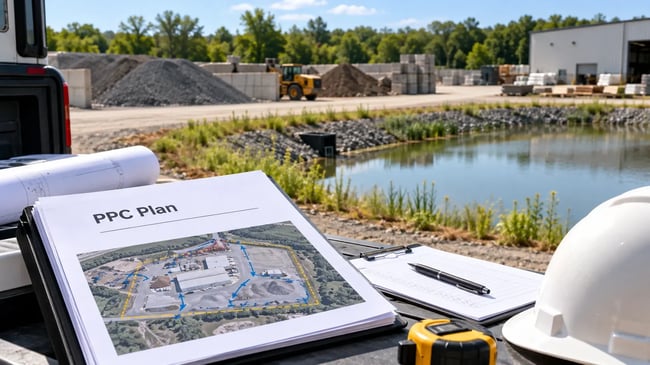
Where Does a Pennsylvania PPC Plan Need Technical or Regulatory Expertise?
Some parts depend less on knowing your facility and more on knowing how water moves across a site and how DEP reads the permit. These are the sections where self-written plans usually run into trouble, and they're also the parts a reviewer is most likely to question.
Drainage Areas, Outfalls, and Site Maps for Your PPC Plan
DEP's guidance asks for a topographic map showing your location, property boundaries, tank locations, the drainage courses leading away from the site, nearby streams, and any downstream water intakes. It also asks for a site drawing that marks storage areas, loading areas, high-risk spill spots, drains, pipes, channels, and the outfalls where water leaves. The stormwater addendum adds one more item: an outline of the drainage area for each outfall. Finding your outfalls and drawing those boundaries means tracing where water goes, through storm drains, roof leaders, swales, and grading that doesn't always send it where you'd expect. Plenty of managers who know their site cold have never mapped it, and walking the property during or right after a rain is the best way to see what the grading is really doing.
The addendum also asks for a certification that your discharge has been tested or evaluated for non-stormwater discharges, along with the method you used, the date, and the drainage points you observed. Knowing what counts as non-stormwater and how to check for it is a technical task, and our post on the difference between stormwater and process water is a good place to start if you're trying it yourself.
Permit Eligibility, BMP Selection, and Containment Design
PAG-03 has sector-specific appendices tied to your industrial activity, and the sector you land in affects which pollutants you monitor and which practices apply. Picking the wrong one means a plan that doesn't match the permit. From there, you have to assess each source of pollutants at the site, consider the toxicity and quantity of what's there and how likely it is to touch rainwater, and choose controls that fit. Best management practices, or BMPs, are the physical and procedural controls that keep pollutants out of runoff, and our explainer on stormwater BMPs shows what the options look like. The choices you make here get tested later by your sampling, which we cover in our guide to PAG-03 stormwater samples.
Containment is the other spot that calls for engineering judgment. DEP's guidance says liquid storage areas need containment that can hold the largest single container or tank plus a reasonable allowance for precipitation, that the containment has to be impervious enough to hold spilled material until it's removed, and that containers have to be compatible with what's stored in them. If you store oil, a separate SPCC Plan has its own rules, and DEP's guidance lets you attach an existing SPCC Plan to the PPC Plan as an appendix instead of rewriting it. Facilities that report under Section 313 of the Emergency Planning and Community Right-to-Know Act also face additional stormwater control requirements in the guidance, so read that section closely or get help with it.
Finally, there's the review itself. DEP can come back with questions once your plan is in, and those questions can be technical. Our post on common NPDES permit problems covers the kinds of issues we see.
How Do You Keep a Self-Written PPC Plan Accurate Over Time?
Writing the plan is the first half of the job. Under PAG-03, you have to review the PPC Plan at least once a year and update it when needed, and the annual report you send to DEP asks whether that review happened. Beyond the annual review, DEP's guidance says the plan has to be updated when applicable regulations are revised, when the plan fails in an emergency, when your design, operations, or maintenance change in a way that raises the risk of a release or changes the response you'd need, when your list of emergency coordinators or emergency equipment changes, or when DEP requires it. A new tank, a moved loading area, or a new hire in the coordinator role all count.
The mistakes we see in self-written plans are usually small and avoidable. A template gets filled in with the company name and little else. The plan describes containment that isn't there, or that was removed during a facility change. The drainage drawing doesn't match where water goes. Phone numbers go stale. Training happens but nobody writes down who attended. And sometimes the plan says one thing while the sampling results say another, such as a plan that promises tight controls on a storage area whose runoff keeps coming back above benchmark values. If you want to understand that connection, our explainer on benchmark values versus effluent limits is worth a read.
Plan for ownership, too. Give one person the job of keeping the review calendar and a backup who can take over, and keep a simple change log so you can show what was updated and when. If you want to know what to expect when DEP walks your site, our post on what happens during a PA DEP stormwater inspection covers it.
What Does a PPC Plan Cost When You Write It Yourself Versus Hiring Help?
Writing it yourself costs staff time instead of an invoice, and the amount of time depends on your site. The number of outfalls, how many materials you store, how much of the documentation already exists (an SPCC Plan, safety data sheets, a drainage map), and how much sampling your sector requires all push the effort up or down. A small site with one outfall and a tidy file of existing documents is a very different project from a multi-outfall site with several storage areas and no maps.
On the help side, the PPC Plan is one piece of a larger PAG-03 package. For a relatively straightforward facility, we list professional help with the full application, PPC Plan included, at roughly $5,000 to $10,000 on our Pennsylvania stormwater page. A middle path costs less than a full write: your team drafts the plan, and a professional reviews the maps, the control choices, and the non-stormwater evaluation. What that costs depends on how much you hand over. The calculator below gives a ballpark for RMA's help with your situation. It shows the cost of getting our help, not DEP's fees or the cost of the permit itself.
For a closer look at the cost side, see our post on how much a PAG-03 permit costs in Pennsylvania. If you're weighing the whole permit as a do-it-yourself project, our DIY versus consultant guide walks through every stage, and if you decide to hire, how to choose a PAG-03 consultant covers what to look for. We'd rather you spend your money where it helps. If your site is simple and someone on your team has the time, you may not need us for much.
How Can RMA Help With Your Pennsylvania PPC Plan?
We work with Pennsylvania facilities all the time on PPC Plans, and we can take as much or as little of the job as you want. That can mean writing the plan from scratch, reviewing a draft your team wrote, updating an existing plan that has fallen behind, or handling the pieces that tend to need technical help, like the site walk, drainage mapping, and non-stormwater evaluation. If you want the whole PAG-03 package handled, we do that too.
There's no pressure and no obligation. You can call us, send an email, or fill out the form on our website, and we'll talk through your facility and tell you what the plan would involve. If it turns out your team can handle it, we'll tell you that. Whenever you're ready, reach out to RMA and we'll help you sort out what applies to your site.