How to Tell Whether Your Pennsylvania Facility Needs Industrial Stormwater Coverage, and Which Permit Path Fits: PAG-03, Individual Permit, or NEC
Most business owners first hear about industrial stormwater permits when a customer, a lender, or an inspector from the Pennsylvania Department of Environmental Protection (DEP) brings one up. The questions come fast after that. Does our kind of business even need one? If it does, is it PAG-03, an individual permit, or something called No Exposure? And what happens if we pick the wrong one? This guide walks through how to check whether your facility is regulated and, if it is, which of the three paths fits your site.
We work with Pennsylvania facilities on this all the time, and most of the answer comes down to three facts about your site: what your business does, whether anything industrial sits out in the rain, and where your runoff ends up. Below we take each one in turn, with examples, and point out where the answer gets less straightforward. If you'd rather have someone look at your site with you, you can reach out to RMA at any point.
Table of Contents
TL;DR
Pennsylvania requires stormwater permit coverage for certain kinds of industrial facilities, based on what the business does and whether its materials sit out in the rain. Most of them use PAG-03, the state's general permit. A facility that keeps everything indoors or under roof can request a No Exposure Certification instead, and one that can't use either, such as a site discharging straight into a protected stream, needs an individual permit written for it. Start with your industry code, then check what's exposed and where your runoff goes.
Which Pennsylvania Businesses Need an Industrial Stormwater Permit?
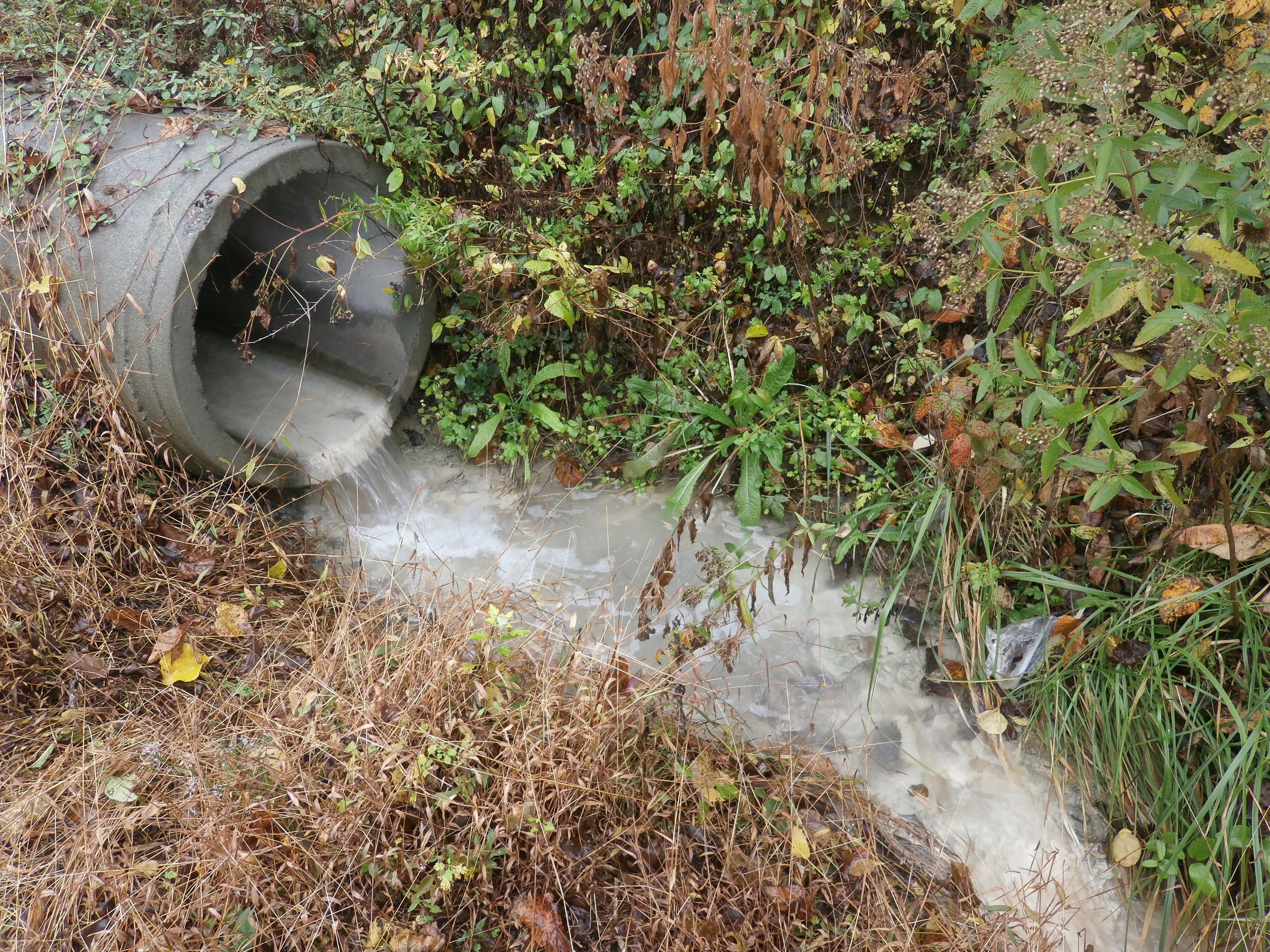
When rain or snowmelt runs across outdoor piles, equipment, loading areas, and waste containers, it can carry oil, metals, and sediment into storm drains and streams. Under the federal Clean Water Act, that runoff counts as a discharge, and discharges need a permit under the National Pollutant Discharge Elimination System (NPDES). In Pennsylvania, DEP runs the program. The rules call the runoff in question "stormwater associated with industrial activity," and our article on what stormwater associated with industrial activity means covers that definition in more detail.
Not every business is caught by this. The federal rules list specific kinds of industrial operations, and DEP can also require coverage for a facility that isn't on the list if its runoff is polluting a stream. Manufacturers, concrete plants, auto salvage yards, scrap recyclers, landfills, and certain transportation facilities are the usual examples. Offices, retail stores, restaurants, and schools generally aren't on the list. Even at a regulated site, the rule targets the industrial parts of the property. Picture a metal fabricator with steel stock stacked in the yard and a dumpster beside the loading dock. That yard drains industrial stormwater. The employee parking lot across the property doesn't count, as long as its runoff stays separate from the yard's. Our guide on who needs a stormwater permit goes further on who falls under the rules.
If you'd like a quick answer for your own facility, our Pennsylvania Stormwater Permit Tool is right below. It asks a few questions about what your business does, what's stored outside, and where your runoff goes, then tells you which permit path you're likely looking at. It's free to use and takes about 2 minutes. You don't have to give us your email or any other information, and you'll get an instant result.
How Do You Check Your SIC Code Against PAG-03?
The first check is your Standard Industrial Classification (SIC) code, a four-digit number that categorizes what your business does. OSHA hosts a free SIC code search where you can search by keyword and find the code that best matches your primary activity. DEP's forms also ask for a NAICS code, which is a newer system, but the SIC code is what ties you to the permit's industry sections.
Next, open DEP's industrial stormwater page and find the PAG-03 materials. PAG-03 is Pennsylvania's general permit for industrial stormwater, and its industry-specific rules sit in 21 appendices lettered A through U. Table 1 in DEP's PAG-03 Notice of Intent instructions lists the SIC codes that belong to each one. Compare your code, and what your facility does, against that table. These examples show how it works:
| Example facility |
Typical SIC code |
PAG-03 appendix |
| Ready-mix concrete plant |
3273 |
N (glass, clay, cement, concrete, and gypsum products) |
| Metal fabrication or machine shop |
3441 or 3599 |
U (fabricated metal products and machinery) |
| Bakery or beverage bottler |
2051 or 2086 |
I (food and kindred products) |
| Commercial printer |
2752 |
R (printing and publishing) |
| Plastic products manufacturer |
3089 |
S (rubber, plastics, and miscellaneous manufacturing) |
| Wood pallet maker |
2448 |
D (timber products) |
| Auto salvage yard |
5015 |
O (automobile salvage yards) |
| Scrap metal recycler |
5093 |
P (scrap and waste recycling) |
| Trucking company with its own repair shop |
4213 |
L (land transportation, covering maintenance, fueling, and washing areas) |
Use that table as a rough guide and confirm your exact code against Table 1 in DEP's current instructions, since DEP's version is the one that counts.
Why Can't You Rely on Your SIC Code Alone?
Some categories are defined by what a facility does, so read the descriptions in Table 1 as well as the numbers. Transportation is the clearest case. Trucking, bus, and rail operations are covered only for the areas used for vehicle maintenance, equipment cleaning, fueling, and deicing, not the whole property. A site with more than one kind of operation, such as a concrete plant that also runs a scrap yard, can fall under more than one appendix and has to follow all of them.
The list also isn't a wall. DEP can require coverage for a facility whose code isn't listed, and PAG-03 includes Appendix J for industrial activity that no other appendix describes. A facility that isn't listed but meets the other eligibility rules may be placed there, and if it isn't, it needs an individual permit. So not finding your exact business in Table 1 doesn't mean you're exempt. Mining is a separate track: quarries and similar operations generally go through DEP's mining program instead, though non-mining activities on a mine site, like a concrete plant, may fall under PAG-03. Concrete producers can read our guide to concrete plants and stormwater permits to see how this plays out.
Which Pennsylvania Stormwater Permit Fits: PAG-03, Individual, or No Exposure?
If your facility is regulated, Pennsylvania gives you three paths. Which one applies depends on what's exposed to the weather and where your runoff goes.
| Path |
What it is |
Usually fits when |
Doesn't fit when |
| PAG-03 |
DEP's general permit, with standard conditions you sign onto by filing a Notice of Intent |
Industrial materials or activities are exposed to rain and your site meets the permit's eligibility rules |
You discharge directly to High Quality or Exceptional Value waters, or another eligibility rule blocks you |
| No Exposure Certification |
A DEP approval that excludes your site from permit coverage |
Everything industrial across the whole site is indoors or under roof |
Anything industrial is exposed, or you discharge directly to High Quality or Exceptional Value waters |
| Individual NPDES permit |
A permit written for your specific facility |
You need coverage but can't use PAG-03 or No Exposure |
Your site qualifies for PAG-03 or No Exposure, which take less time and effort |
Picture three Pennsylvania facilities to see how this sorts out. A precast concrete plant keeps aggregate in outdoor bins and loads trucks in the open, so it's a PAG-03 candidate. A commercial printer runs every press and stores every material inside, with a covered dumpster out back, so it may qualify for No Exposure. A machine shop with outdoor metal storage that drains straight into a stream DEP classifies as High Quality can't use either one, so it needs an individual permit. The next three sections take each path in turn, and our article on which NPDES permit you need compares them in more general terms.
What Does PAG-03 Coverage Involve for a Pennsylvania Facility?
PAG-03 is a general permit, which means DEP wrote one set of conditions that many facilities can sign onto by filing a Notice of Intent (NOI) instead of negotiating a permit of their own. DEP reissued it for a five-year term that began March 24, 2023. It's built for facilities where rain can touch things like outdoor raw materials, scrap piles, waste containers, and loading and unloading areas.
To get coverage, you file the NOI with the DEP regional office that covers your county. A new discharge needs a complete NOI at least 60 days before it starts. The package includes a site plan and topographic map showing your outfalls (the points where stormwater leaves the property), a list of the streams those outfalls reach, and a Preparedness, Prevention and Contingency (PPC) Plan, which is DEP's name for the plan describing how you prevent and respond to pollution. A stormwater pollution prevention plan or an SPCC plan written for another program can serve as your PPC Plan if it matches DEP's guidance, and our comparison of SWPPPs and PPC Plans for PAG-03 explains how those plans differ. DEP charges a $500 fee with a new NOI.
The work continues after approval. Your appendix sets the best management practices, inspections, and stormwater sampling you'll follow, and the 2023 reissue added total nitrogen and total phosphorus monitoring to every appendix. You report results through DEP's eDMR system, file an annual report, and pay a $500 annual installment of the NOI fee. Our guides to PAG-03 stormwater sampling and eDMR reporting walk through those steps.

What Does a No Exposure Certification Mean for Your Facility?
No Exposure means all industrial materials and activities at your facility are stored and conducted indoors or under roof, so rain and snowmelt never touch them. When that's true, DEP can excuse the facility from PAG-03 coverage. It's an exclusion, not a lighter version of the permit, and it applies to your entire industrial site, not just the production building. A facility with every machine indoors and an open dumpster of industrial waste outside doesn't qualify.
Federal rules allow a few exceptions to the roof requirement: tightly sealed drums and tanks that aren't deteriorated or leaking, adequately maintained vehicles used for material handling, and final products that wouldn't be carried off in runoff (rock salt, for example, would be). Here's how that plays out on the ground:
| Usually acceptable |
Usually disqualifies |
| Sealed, non-leaking drums stored outside |
Open, deteriorated, or leaking drums or tanks |
| A covered, non-leaking dumpster |
An open dumpster holding industrial waste |
| Well-maintained vehicles used to move materials |
Outdoor loading, unloading, or material handling equipment |
| Final products that won't wash away |
Raw materials, scrap, or products stored outdoors |
| All machinery and processing indoors |
Spills or leaked material on the ground or in storm drains |
You apply with the same NOI form plus DEP's No Exposure Certification application, and you pay a $500 fee. DEP has to approve it, can inspect the site to confirm the conditions, and requires the certification to be renewed every five years. Existing facilities also provide recent stormwater sampling results with the application. A facility that keeps everything indoors still has to apply and get approval, so it doesn't get to do nothing. If operations change and something becomes exposed, you need permit coverage before the change, because discharging without it can bring enforcement. No Exposure also isn't available to facilities in High Quality or Exceptional Value watersheds.
The certification is all or nothing for the site. Under PAG-03, though, you can flag individual outfalls whose drainage areas have no exposure, and those outfalls don't have to be monitored for the pollutants listed in your appendix. Our article on what No Exposure means under an NPDES permit covers the concept in more detail.
When Does a Pennsylvania Facility Need an Individual NPDES Permit?
An individual NPDES permit is written for one facility, with conditions based on its operations, discharges, and receiving water. Facilities use it when they need stormwater coverage but can't use PAG-03 or No Exposure. DEP's application for it is form 3800-PM-BCW0403. Coverage generally lasts five years, and if you'll keep discharging, you submit a renewal application at least 180 days before it expires.
The most common reason is location. A facility that discharges directly to a stream classified as High Quality (HQ) or Exceptional Value (EV) under Chapter 93 of DEP's rules can't use PAG-03 or No Exposure, because those waters get extra protection. Other triggers include discharges to impaired streams where your runoff carries pollutants that could add to the impairment (our article on TMDLs and impaired waters explains that term), a facility that already needs an individual permit for process wastewater, since its stormwater gets folded into that permit, and sites subject to certain federal effluent guidelines. DEP can also decide a site needs an individual permit to protect water quality. Because the permit is custom, expect more detail in the application and a longer review than a PAG-03 NOI. If you're not sure whether a discharge counts as stormwater or process water, our explainer on the difference between stormwater and process water helps sort that out.
Why Does Where Your Runoff Goes Change the Answer?
Two otherwise identical machine shops can need different permits because of the streams they drain to. Check the Chapter 93 classification of each stream your outfalls reach. The existing use can be stricter than the designated use, so look at DEP's existing-use listings and its eMapPA mapping tool rather than guessing. The word "directly" matters too. A facility discharging upstream of an HQ or EV stream may qualify for PAG-03 if its discharge existed when DEP made the designation, but a new discharge proposed upstream after the designation needs an individual permit so DEP can complete a site-specific review.
Storm sewers add another layer. Sending runoff into a storm sewer doesn't remove the need for coverage, and a municipality's storm sewer permit doesn't cover your site, so you need your own. Runoff that goes to a sanitary or combined sewer doesn't need separate DEP stormwater permit coverage, but the sewer authority can set its own rules and fees. Local rules vary, so confirm yours before you assume anything.
What Happens When You Build, Expand, Lease, or Buy a Pennsylvania Facility?
New facilities start with timing. DEP wants a complete PAG-03 NOI at least 60 days before a new discharge begins, so permitting can't wait until the doors open, and our guide to how long PAG-03 coverage takes sets realistic expectations. Construction has its own stormwater rules, separate from everything above. Earth disturbance on a building site generally falls under Pennsylvania's construction stormwater program (the PAG-02 general permit and the erosion and sediment control rules in 25 Pa. Code Chapter 102), which runs through county conservation districts. PAG-03 doesn't cover construction discharges. We don't prepare construction-phase permits or approvals, and most owners handle that piece with their engineer, contractor, or an erosion and sediment control specialist. We can help you figure out what the construction phase needs and point you toward the right professionals.
Once the facility is running, the operational side begins, and that's where we help: deciding between PAG-03 and No Exposure, building the PPC Plan, and setting up sampling and reporting. Expansion matters too. Adding outdoor storage, new outfalls, or more paved area can require amending your PAG-03 coverage with a new NOI and a $500 fee, and DEP has to approve the change before you make it. If you're leasing or buying an existing site, don't assume its permit is yours. Coverage and No Exposure approvals generally have to be transferred, and DEP has a transfer form for that (3800-PM-BCW0041b).
What Does Pennsylvania Industrial Stormwater Coverage Cost?
The agency fees are small. DEP charges $500 with a new or amended PAG-03 NOI, another $500 each year as an installment fee, and $500 for a No Exposure Certification application, which has no annual installment. Renewal NOIs don't carry the application fee. Individual permits have their own fee schedule under 25 Pa. Code Chapter 92a.
The real cost is the preparation: the site evaluation, mapping, PPC Plan, and application package. For a relatively straightforward facility, professional help with the full PAG-03 application typically runs around $5,000 to $10,000, with ongoing support of roughly $3,000 to $6,000 per year depending on how much help you want. Individual permits take more work and can cost considerably more. No Exposure applications skip the PPC Plan, so the preparation is usually lighter. What moves the price is the number of outfalls, the size and complexity of the site, how much sampling data you already have, and whether a usable stormwater plan already exists. Our article on PAG-03 costs in Pennsylvania breaks these down further, and the pricing calculator below gives you an estimate for the help we'd provide on your site, with no email, sales call, or obligation.
Often, yes, and we'd rather tell you that than sell you something you don't need. DEP's instructions and Table 1 are public, and plenty of facility managers work through the check on their own:
- Find your primary SIC code, along with any secondary ones.
- Compare them, and what your facility does, against Table 1 and the appendix descriptions.
- Walk the site and list everything outdoors: materials, scrap, waste containers, loading areas, and equipment.
- Identify where each outfall leads and check the Chapter 93 classification of the stream.
- Match what you found to PAG-03, No Exposure, or an individual permit, and call your DEP regional office if you can't tell.
Help earns its keep in a few situations: your site falls under more than one appendix, you can't tell whether something counts as exposed, the stream classification is in question, or you have process wastewater alongside stormwater. Guessing wrong costs more than the fees, because discharging without coverage can draw enforcement. Under Pennsylvania's Clean Streams Law, DEP can assess civil penalties of up to $10,000 per day for each violation. If you're already facing an enforcement action, an environmental attorney may be the right first call. For the do-it-yourself route in detail, read our guide on whether you can get a PAG-03 permit yourself, and if you decide to hire help, our piece on choosing a PAG-03 consultant covers what to ask.
How Can RMA Help With Your Pennsylvania Stormwater Permit?
If you'd rather not work through this alone, we can review your activities, SIC codes, outdoor exposure, and drainage to figure out which requirements apply, then help prepare the right application, whether that's PAG-03, a No Exposure Certification, or an individual permit. After approval, we can keep helping with PPC Plans, sampling, eDMR reporting, and renewals. That's the operational side once your facility is running, and we don't handle construction-phase permits. There's no pressure and no obligation. You can call us, email us, or fill out the form on our website, and if it turns out you don't need help, we'll tell you so. Whenever you're ready, contact RMA and tell us what's happening at your facility. We work with Pennsylvania facilities all the time, and we're glad to talk it through.