Emergency Generators, Bulk Diesel Tanks, and Heating Oil Put Most Hospitals Over the Federal SPCC Threshold
If you run facilities at a New Jersey hospital, you probably think of your emergency generators as life safety equipment, not as oil storage. Federal law sees them differently. Once a campus stores more than 1,320 gallons of oil in aboveground containers of 55 gallons or more, it needs a written oil spill plan called an SPCC plan, short for Spill Prevention, Control, and Countermeasure. Between generator sub-base tanks, day tanks, bulk diesel, boiler fuel, transformers, and kitchen oil, most hospitals clear that number without trying.
This article covers what hospitals typically store, how the SPCC rule treats emergency power fuel, why containment and inspections are harder in a building that can't shut systems down, and how the rule sits next to Joint Commission, NFPA, and fire code expectations. We also cover New Jersey's own layer, including the Spill Act, DPCC and DCR plans for major facilities, and the underground tank rules. If you'd rather talk it through with a person, you can reach out to RMA at any point. We keep the healthcare-specific regulatory points general on purpose, because your accreditor, your insurer, and your local fire official have the final word on those.
Table of Contents
TL;DR
Yes, in almost every case. A New Jersey hospital that stores more than 1,320 gallons of oil in aboveground containers of 55 gallons or more needs a written SPCC plan, and generator tanks, day tanks, boiler fuel, and oil-filled equipment all count toward that total. The plan covers containment, inspections, fuel delivery procedures, training, and spill response, and it sits alongside emergency power testing and fire code requirements without replacing either. New Jersey adds its own spill reporting duty and, for very large storage, extra plans. The real work is building containment, inspections, and delivery procedures around systems that have to keep running.
Do Hospitals in New Jersey Need an SPCC Plan?
In plain terms, yes, in nearly every case. The federal SPCC rule lives in 40 CFR Part 112 and is enforced in New Jersey by EPA Region 2. It applies to a facility that stores more than 1,320 gallons of oil in aboveground containers of 55 gallons or more and could reasonably be expected to discharge oil to navigable waters. Capacity is what counts, not what's in the tank today. A 2,000-gallon generator tank that sits half full still counts as 2,000 gallons.
The "reasonably expected" test trips up a lot of hospital teams. A building in the middle of a city can feel sealed off from any creek or river. EPA's inspection guidance tells inspectors not to count on manmade structures like buildings, curbs, and walls when they judge that, because structures fail. The question is whether oil could travel through storm drains, ditches, or runoff to a waterway, and at most campuses it could.
The rule adds everything together. Every qualifying container across every building, parking structure, and outbuilding goes into one total. The plan itself is a written document, certified by a professional engineer for larger sites, that spells out your tank inventory, containment, inspections, spill response, and training. Our guide on everything you need to know about SPCC plans covers the basics if the term is new to your team. Skipping the plan carries real cost, too. Federal civil penalties for SPCC violations can reach tens of thousands of dollars per day, adjusted each year for inflation under 40 CFR Part 19, and our article on top SPCC plan violations and fines covers the common ones.
What Hospital Oil Storage Counts Toward the SPCC Threshold?
Hospitals hold oil in a lot of places. The generators get the attention, and the rest of the list can add up to hundreds or thousands of gallons nobody had been counting. The table shows where oil usually sits and how each source is treated.
| Oil Source |
Typical Setup |
How It Counts |
| Emergency generator fuel |
Sub-base tanks, belly tanks, or freestanding diesel tanks |
Bulk storage container, counted at full capacity |
| Day tanks |
Smaller tanks near the generator that feed the engine |
Counted when the capacity is 55 gallons or more |
| Bulk diesel storage |
Larger aboveground tanks that extend generator run time |
Bulk storage container |
| Boiler and heating oil |
Aboveground tanks for primary or backup heating |
Counted; buried tanks follow the underground tank rules |
| Transformers and switchgear |
Oil-filled electrical equipment |
Counted toward capacity, with different requirements than bulk tanks |
| Elevator hydraulics and lube oil |
Reservoirs, drums, and totes |
Counted when the container is 55 gallons or more |
| Used oil and kitchen oil |
Drums, totes, and cooking oil tanks |
Counted; vegetable oils fall under the rule too |
| Natural gas and propane |
Gas-fired generators, boilers, and cylinders |
Doesn't count, since it isn't oil |
A campus that runs entirely on natural gas with little else could land under the line, but that's the exception. If your kitchen stores used cooking oil, our article on SPCC plans for cooking oil explains how it gets counted.
How Does SPCC Treat Hospital Emergency Generator Fuel Tanks?
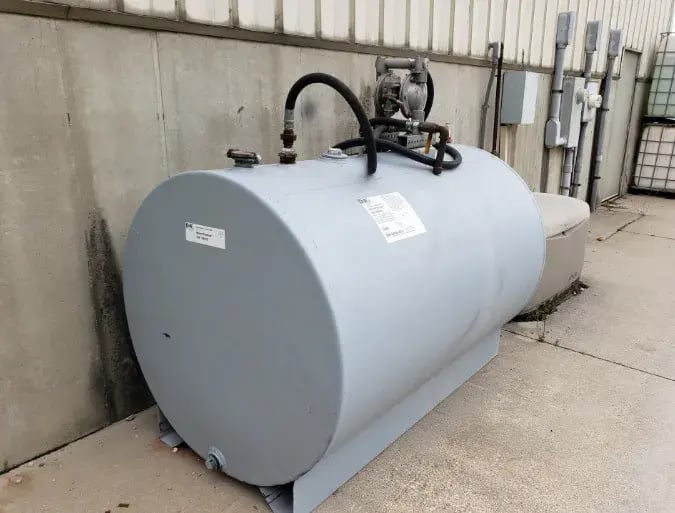
EPA treats emergency generator tanks and day tanks as bulk storage containers, the same category as any other aboveground oil tank of 55 gallons or more. That means the tank under your generator gets the full set of bulk storage requirements, not a lighter version because it's backup power. In practice that's sized secondary containment, overfill prevention, integrity testing, regular inspections, and attention to the piping that feeds the engine.
Sized secondary containment means a dike, wall, or other containment able to hold the entire capacity of the largest single container, plus extra room for rainfall where the containment is open to the weather. Our article on how big SPCC oil spill containment needs to be walks through the math.
Sub-Base Tanks, Indoor Day Tanks, and Rooftop Units
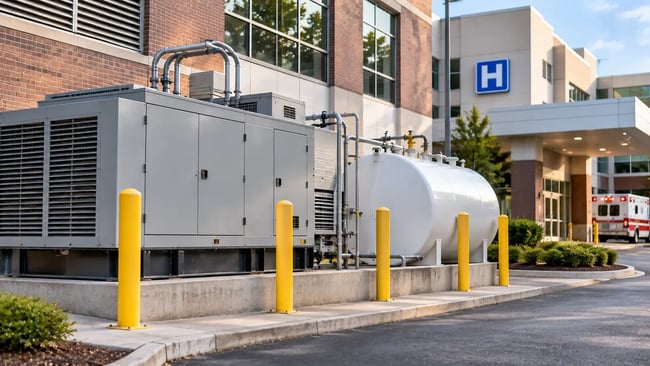
Hospitals rarely have the simple setup of one tank in one yard. Many generators sit on double-walled sub-base tanks with containment built in. A properly designed double-wall tank can serve as the secondary containment, though the plan has to document that and the design has to meet the rule. Day tanks and fuel piping inside the building are covered too, so a leak in a mechanical room still falls under the plan if oil could reach a floor drain, a doorway, or a loading area.
If you've seen how data center operators handle large generator fleets, a lot of this will look familiar, and our data center guide to SPCC plans covers the overlap. Generators also come with separate air permit questions, which we cover in our article on environmental permits for emergency backup generators.
Why Are SPCC Containment and Inspections Harder in a Hospital That Can't Shut Down?
The SPCC rule was written with ordinary industrial sites in mind, where a tank can come out of service for a few days if it needs work. A hospital doesn't have that option. The generator has to start on demand, and the fuel system behind it has to be ready every hour of every day.
Containment upgrades come first. If a generator tank sits without adequate containment, the fix might mean building a curb or pad around equipment that has to stay available. That work gets scheduled around testing windows, redundant units, and the hospital's own safety and infection control processes. A good plan states what's in place today, what's missing, and a realistic schedule for closing the gap.
Integrity testing is the second challenge. The rule calls for periodic testing and inspection of aboveground containers following industry standards, and the method and frequency depend on the tank's type and size. Some inspections can happen with the tank in service, while others call for moving fuel or isolating the tank, so a hospital needs a temporary fuel supply lined up first.
Fuel Deliveries During Storms and Extended Outages
A hospital takes more fuel deliveries exactly when conditions are worst: storms, flooding, and long grid outages. Drivers are unloading at night, staff are stretched, and the fill point may share space with ambulance routes. Without written transfer procedures, drain protection at the fill point, spill kits, and a named person who watches each delivery, those are the conditions that produce overfills. The plan should cover the delivery routine and your emergency fuel supplier, and the supplier should know what it says.
Inspections and training round out the picture. Hospitals already inspect generators weekly and exercise them regularly, and those rounds are a natural place to fold in SPCC checks like containment condition, drain valves, gauges, and fill ports. Our guide to the top 10 things to check during SPCC monthly inspections lists what to look at, and inspection records need to be kept for three years. Staff who handle oil also need discharge prevention briefings at least once a year, which is easier to manage with a short course. Our article on annual SPCC training explains what's required, and our online training library gives new hires and contractors a way to catch up.
Standard containment isn't always possible on a crowded campus. The rule lets a facility document why a measure is impracticable and put alternatives in the plan, but that route requires PE certification, a spill contingency plan, and written commitments of people and equipment. Treat it as a last resort, not a shortcut.
How Does SPCC Interact With Joint Commission, NFPA, and Fire Code Fuel Requirements?
These are separate sets of rules with separate goals, and a hospital has to satisfy all of them. SPCC is about keeping oil out of waterways. The emergency power requirements are about making sure the generators work when the grid fails, and fire code is about keeping stored fuel from starting or feeding a fire. The table shows who cares about what.
| Requirement |
Main Focus |
Who Checks |
| SPCC (40 CFR Part 112) |
Keeping oil out of waterways through containment, inspections, training, and spill response |
EPA Region 2 |
| Joint Commission and Medicare hospital requirements |
Emergency power that works when needed, including testing, maintenance, and fuel planning |
Accreditation surveyors, CMS, and state health officials |
| NFPA standards for emergency power |
How emergency power systems are installed, tested, and maintained |
Referenced by accreditors and code officials |
| New Jersey Uniform Fire Code |
Fire safety for fuel storage, including location, venting, and tank protection |
Local fire officials |
The overlap is where hospitals get tripped up. Routine generator testing burns fuel and triggers refills, and each refill is a spill risk the SPCC plan should address. Emergency power expectations also push toward larger fuel reserves, which raises your SPCC capacity. Fire code drives where tanks, vents, and access points go, so the containment design has to fit those layouts. A dike that satisfies SPCC but blocks access or ventilation the fire official expects won't survive an inspection, and the reverse is true too.
None of these replaces the others. A clean Joint Commission survey tells EPA nothing, and an SPCC plan doesn't cover your emergency power testing program. The practical approach is to build the SPCC plan around the emergency power routine you already run, with the same inspection rounds, shared logs where they fit, and the same people. Because healthcare-specific requirements vary by accreditor and by code edition, confirm those details with your compliance team and local fire official. Our article on who enforces SPCC plans covers the federal side.
Which New Jersey Spill Act, DPCC, and UST Rules Apply to Hospital Oil Storage?
New Jersey layers its own rules on top of the federal one, and they're stricter than what most states require. The first is the Spill Compensation and Control Act, known as the Spill Act. It covers petroleum and other hazardous substances, and it requires anyone responsible for a discharge to notify NJDEP immediately through its hotline at 1-877-WARNDEP (1-877-927-6337). If a spill creates a fire, health, or safety hazard, call 911 first. Narrow exceptions exist for certain small discharges that get cleaned up promptly under specific conditions, but don't assume yours qualifies, and call when you're unsure. The federal side has its own reporting trigger for oil that reaches a waterway, covered in our article on the sheen rule for reporting oil spills.
The second layer is N.J.A.C. 7:1E, which requires "major facilities" to submit a Discharge Prevention, Containment and Countermeasure plan (DPCC) and a Discharge Cleanup and Removal plan (DCR) to NJDEP. A facility generally becomes a major facility when its total storage capacity reaches 200,000 gallons of hazardous substances including petroleum, or 20,000 gallons of hazardous substances other than petroleum. Most hospitals fall under those numbers for oil alone, but the count includes every hazardous substance on site, not only fuel, and NJDEP has been revising the rule. A large campus with several bulk tanks and significant chemical storage should check the current text of N.J.A.C. 7:1E against its own inventory.
Underground tanks are a separate program under N.J.A.C. 7:14B, with registration, certified contractors, and release detection rules that depend on a tank's size, contents, and use. Whether a buried generator or heating oil tank is regulated, and whether it counts toward SPCC capacity, has to be answered tank by tank. Hospitals that store diesel and other chemicals above reporting thresholds often have Community Right to Know reporting as well, which is its own program. Our article on SPCC plans in New Jersey covers how the state and federal pieces fit together.
Spill Act liability is strict and can reach more than one party, and cleanup of oil that reaches soil or groundwater in New Jersey is generally led by a Licensed Site Remediation Professional (LSRP). After any significant discharge, an environmental attorney is a reasonable call to make early.
How Much Does a Hospital SPCC Plan Cost?
SPCC plans from RMA generally run from about $2,500 to $15,000, depending on the facility. Hospitals tend to carry more of the factors that push cost up. Those include total storage capacity, the number and type of containers, whether a PE certification is needed, and whether secondary containment needs a closer evaluation. The federal rule lets small facilities with a clean spill history self-certify, but that option stops at 10,000 gallons of total aboveground storage, which a larger hospital campus can exceed.
On the certification side, a professional engineer needs to review and certify the plan. Consultants handle that in different ways. Some have a PE on staff, and others work with a trusted outside PE, so ask who the engineer is and what they'll review. Our article on professional engineers and SPCC plan requirements explains when one is required. If you already have a plan that's old or was written by someone else, expect a conversation about rebuilding it so the person who signs it can stand behind it, not a quick edit. Our SPCC plan cost breakdown covers what drives the price, and the pricing calculator below shows what RMA's help would run for your facility.
What Happens to the SPCC Plan When a Hospital Builds or Adds Generators?
Hospitals are always building something, whether that's a new wing, a replacement generator, or another fuel tank. The federal rule expects the plan to be amended when a change at the facility materially affects the potential for a discharge, generally within six months, and a PE certifies technical amendments to PE-certified plans. The plan also needs a review at least every five years, even if nothing has changed. If your plan is approaching that mark, our article on what to do when your SPCC plan is over 5 years old lays out the options.
The construction side of a project is a separate track. Building and fire permits for tank installation, any underground tank work (which in New Jersey calls for NJDEP-certified contractors), and construction stormwater and soil erosion approvals go through your engineer, your contractor, and the local officials. RMA doesn't prepare those. Where we help is with the operational plans and permits a new or expanded facility needs once it's running, including the SPCC plan or amendment, a check on whether DPCC and DCR plans apply, spill reporting procedures, inspections, training, and often Community Right to Know reporting. We can also help you work out which construction-phase approvals your project is likely to need and point you toward the right professionals for them.
How Can RMA Help With a Hospital SPCC Plan in New Jersey?
We're a family-run environmental consulting firm based in New Jersey, and we've been helping facilities with SPCC plans and spill prevention since 1992. For a hospital, we'd start with your tank inventory and emergency power setup and tell you plainly whether you need a plan, what kind, and what it would take. If you already have a plan, we'll tell you whether it holds up or needs to be rebuilt. And if your plan is current and your team has it handled, we'll tell you that too.
There's no pressure and no obligation. You can call us, send an email, or fill out the form on our website, and a member of our team will follow up. If you're ready to talk about your campus, contact RMA and we'll take it from there.