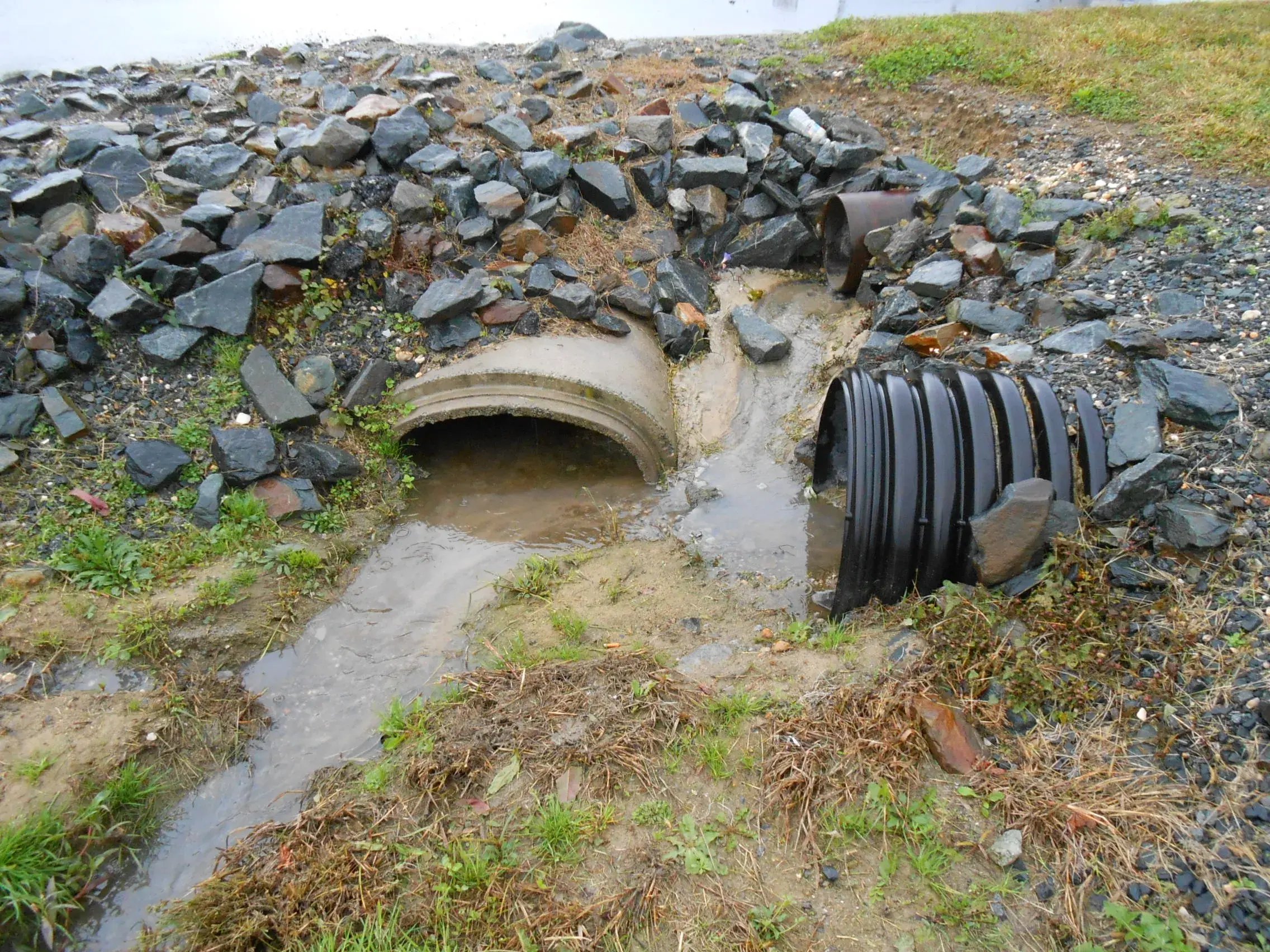
Why Business Size Doesn't Decide It, and How Your Industry Code and Outdoor Exposure Do
If you run a small shop, yard, or plant, rainwater probably isn't on your list of things the state cares about. But New Jersey does regulate the rain and snowmelt that runs off certain business properties, and the rules don't care how many people you employ or how much you sell. A two-person scrap yard can need a stormwater permit while a 200-person office never will. So the short answer is that some small businesses need one and many don't. What decides it is the type of business you run and whether your work, equipment, or materials sit out in the weather, not your size.
In this article, we'll walk through what New Jersey looks at instead of size, which small businesses usually end up needing coverage, which ones usually don't, and what the permit options look like when you do need one. We'll also cover what drives the cost and how to check your own site without guessing. If you'd rather have someone look at your situation directly, you can always reach out to RMA and we'll tell you where you stand, even if the answer is that you don't need anything from us.
Table of Contents
TL;DR
New Jersey has no small business exemption for industrial stormwater permits. Whether you need one depends on your industry code and whether your materials, equipment, or work are exposed to rain. Small scrap yards, auto recyclers, concrete and asphalt operations, quarries, and trucking or bus yards with their own maintenance often need coverage, while offices, retail stores, restaurants, and most repair shops usually don't. If you're in a regulated industry but keep everything indoors, you may only need a Permanent No Exposure Certification instead of a permit.
Does Business Size Matter for a New Jersey Stormwater Permit?
No. New Jersey's industrial stormwater rules have no small business exemption. There's no employee count, revenue cutoff, or minimum lot size that gets you out of them. The agency in charge is the New Jersey Department of Environmental Protection (NJDEP), and it regulates stormwater through NJPDES, the New Jersey Pollutant Discharge Elimination System. NJPDES is the state's permit program for anything discharged into New Jersey's waters, set up under the state's Water Pollution Control Act and the rules at N.J.A.C. 7:14A. Those rules follow the federal definition of "stormwater discharge associated with industrial activity" in 40 CFR 122.26(b)(14), which lists covered businesses by what they do, not by how big they are.
The only size threshold in stormwater applies to construction. Disturbing an acre or more of land during a building project triggers construction stormwater coverage through the local Soil Conservation District, which your engineer or contractor handles (we don't prepare construction permits). This article is about the operational permit a business needs once it's running, and that one has no acreage or headcount trigger.
Small businesses often have more exposure than big ones, since less building space means more gets stored outside, and the same patch of pavement may handle deliveries, equipment, fueling, and waste. They also rarely have anyone tracking environmental rules, so they tend to hear about stormwater from an inspector, a lender, or a buyer's due diligence. Stormwater is one item on a longer list, and our rundown of the top environmental requirements for small businesses covers the rest.
What Decides Whether a Small Business Needs a NJ Stormwater Permit?
Three questions decide it: what kind of business you are, whether anything industrial at your site gets rained on, and where your runoff ends up.
Your SIC Code and Industry Category
A Standard Industrial Classification (SIC) code is a four-digit number that describes a business's main activity. It's older than the NAICS codes on most business forms now, but New Jersey still uses SIC codes to decide who's in the industrial stormwater program. The federal list includes most manufacturing, recycling and salvage, mining and sand and gravel, asphalt and concrete production, landfills, hazardous waste facilities, warehousing, and transportation businesses that maintain or wash their own vehicles. A few categories are described in words rather than codes. If your code and activity aren't on the list, you generally aren't in the program at all. Our explainer on stormwater associated with industrial activity walks through the categories in more detail.
Whether Industrial Activity Is Exposed to Rain and Snow
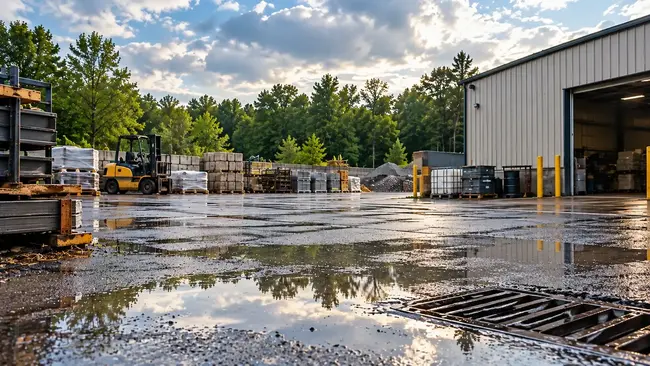
Being on the list doesn't automatically mean you need a full permit. The rules hinge on exposure, meaning whether rain, snow, or runoff can touch your industrial materials, equipment, or activities. Raw materials stacked outside, a dumpster without a lid, a forklift parked in the yard, or a parts washer under an open sky all count as exposure. A few things get a pass under the federal no exposure rules: tightly sealed drums that aren't leaking, well-maintained vehicles used for moving materials, and finished products that won't wash off into the runoff. If everything else is under a roof, you may qualify for an exclusion instead of a permit. Here's more on what no exposure means under a stormwater permit.
Where Your Stormwater Goes
Most New Jersey properties drain to a storm sewer, ditch, or stream, and that's the standard case NJPDES stormwater permits are written for. But parts of some older cities, such as Newark, Jersey City, Paterson, and Camden, have combined sewers, where rainwater and sanitary sewage share the same pipes and head to a treatment plant. If your site drains that way, your local sewerage authority's rules may apply instead of, or alongside, a state stormwater permit. Don't assume either way based on your town. Find out where your site's drains connect. NJPDES also covers discharges to groundwater, so a yard where runoff soaks into gravel instead of reaching a pipe doesn't get a free pass.
Which Small Businesses in New Jersey Usually Need Stormwater Permits?
The businesses that most often need coverage are the ones that do industrial work outdoors by nature. You can't easily put a scrap pile, a sand stockpile, or a concrete batch plant inside a building. Here are common small businesses that tend to need coverage and where they usually land.
| Small Business |
Why It's Covered |
Where It Usually Lands in New Jersey |
| Small scrap metal yard |
Recycling of scrap materials is a listed category, and scrap is almost always stored outside |
Scrap Metal (SM2) general permit |
| Auto recycler or used parts yard |
Salvage yards and used vehicle parts (SIC 5015) are listed, with fluids and parts exposed |
Vehicle Recycling (RVR) general permit |
| Small ready-mix or precast concrete plant |
Concrete products manufacturing is listed, with aggregate, cement, and washout outdoors |
Concrete Products Manufacturing (CPM) general permit |
| Small hot mix asphalt plant |
Asphalt production is listed, with stockpiles and liquid asphalt handling outdoors |
Hot Mix Asphalt (R4) general permit |
| Sand and gravel pit or small quarry |
Mining (SIC 10 through 14) is listed, and the whole operation is outdoors |
Sand and Gravel (RSG) or Mining and Quarrying (R13) general permit |
| Trucking company or bus yard with its own maintenance shop |
Transportation businesses are covered only for vehicle maintenance, fueling, equipment cleaning, and deicing areas |
Basic Industrial (5G2) permit if those areas can be covered, otherwise an individual permit |
| Small manufacturer or machine shop |
Most manufacturing codes are listed, even for very small shops |
Permanent No Exposure Certification if fully indoors, otherwise the 5G2 |
The trucking row is where small fleet owners get tripped up most. A trucking company that only parks trucks at its yard and sends them elsewhere for service generally isn't covered. Once you start changing oil, fueling, washing, or doing repairs on site, those areas fall under the program. Only the maintenance, fueling, washing, and deicing areas count, so the rest of the lot doesn't drag the whole property in.
For the industry-specific permits, the right category matters because each one has its own rules, and some include stormwater sampling, benchmarks, or limits that the basic permit doesn't. If you run a scrap operation, our breakdown of the New Jersey SM2 scrap metal permit is a good next read. Concrete producers can start with our producer's guide to concrete plants and stormwater permits.
Which Small Businesses Usually Don't Need a New Jersey Stormwater Permit?
Most small businesses in New Jersey don't need an industrial stormwater permit, and we'd rather you hear that from us than pay someone to file something you don't need. Offices, retail stores, restaurants, salons, medical and dental practices, and most service businesses aren't in the industrial categories at all. The same goes for a lot of businesses people assume are covered because they involve vehicles or oil. General auto repair shops, body shops, quick-lube shops, car dealerships, and gas stations generally aren't on the federal list. Construction contractors' offices and shops usually aren't either.
Even inside a regulated company, not every square foot counts. The federal definition carves out office buildings and their parking lots when their runoff doesn't mix with runoff from the industrial areas. That can shrink the area you're responsible for, but it won't get an industrial yard out of coverage.
Not needing a stormwater permit doesn't mean anything goes. Most towns prohibit washing or dumping anything other than rainwater into storm drains, your sewerage authority has its own rules, and programs like oil spill planning and hazardous waste management apply on their own triggers. Our guide to federal, state, and local environmental laws for small businesses sorts out who handles what.
Small Business Gray Areas: Warehouses, Shared Buildings, and Growing Shops
A few situations don't fit neatly in either column. General warehousing and storage is on the federal list, which surprises a lot of small warehouse operators. A small warehouse that keeps everything indoors usually ends up with a no exposure certification or the basic 5G2 permit rather than anything heavier, but it still has to answer the question. Multi-tenant buildings are another one. Coverage follows the industrial activity, so a tenant running a small fabrication shop may need its own coverage even if the other tenants in the building don't. And businesses change. A shop that starts storing materials outside, adds a fuel tank, or brings truck maintenance in-house can move from "not covered" to "covered" without anyone noticing. We've written about ways business growth can trigger new environmental requirements, and stormwater is one of the most common.
Which New Jersey Stormwater Permit Fits a Small Business?
If your business is in a covered category, New Jersey gives you four basic paths. Instead of one statewide permit for everyone, NJDEP uses a basic permit, a set of industry-specific permits, individual permits, and an exclusion for sites with no exposure. Which one fits depends mostly on what you do and how much of it happens outside.
| Option |
Who It Fits |
What Comes With It |
| Permanent No Exposure Certification |
Covered businesses with everything industrial inside or under permanent cover |
A signed certification filed with NJDEP every five years, and the site has to stay that way |
| Basic Industrial Stormwater General Permit (5G2) |
Covered businesses without their own industry permit that can get exposure out of the rain |
A stormwater plan, annual inspection and training, and annual certification, with no stormwater sampling |
| Industry-specific general permits (CPM, R4, R13, RSG, SM2, RVR, and others) |
Concrete, asphalt, mining, sand and gravel, scrap, vehicle recycling, and similar operations |
A stormwater plan plus requirements tailored to the industry, which can include sampling, benchmarks, or limits |
| Individual permit |
Sites that can't eliminate exposure and don't fit any general permit |
A permit NJDEP writes for that specific facility, often with monitoring |
The 5G2 is where most regulated small businesses without their own industry permit end up. NJDEP makes it available to facilities that have eliminated, or can eliminate within six months of authorization, all exposure of industrial materials and activities to stormwater. NJDEP often sums that up as "remove and cover," which means moving things indoors or putting them under a roof. That works well for a small manufacturer with a few drums and a dumpster outside. It's a much harder fit for a business whose work is outdoors by nature. Our 5G2 basic industrial stormwater permit explainer covers the details, and if you can't get there, here's when you'd need an individual NJPDES industrial permit.
Every permit option comes with a Stormwater Pollution Prevention Plan. You'll hear it called an SPPP, an SP3, or just a stormwater plan, but we call it a SWPPP. It maps your site, lists what could pollute runoff, and spells out the practices you use to keep that from happening. If you're new to the idea, start with what a SWPPP is and what goes in one. For the ongoing side, our guide to NJPDES stormwater permit requirements explains what you'll be doing each year. Training is part of that, and you can take your 5G2 training online through our online environmental training library.
The Permanent No Exposure Certification is the lightest option, but it isn't a loophole. You're certifying that nothing industrial is exposed, NJDEP can come out and check, and if a new company takes over the operation, it has to file its own certification. If conditions change and things end up outside, you need a permit before that happens, not after.
What Does a New Jersey Stormwater Permit Cost a Small Business?
The cost depends far more on which path you're on than on the size of your business. A Permanent No Exposure Certification is mostly a site walk and paperwork. The 5G2 adds a SWPPP and a yearly routine of inspection, training, and certification, but no sampling. The industry-specific and individual permits cost the most to maintain, because sampling means lab analysis, and NJPDES sampling data generally has to come from a laboratory certified by New Jersey. NJDEP also charges permit fees that vary by permit category, so it's worth checking the current fee schedule for the category you land in.
The other cost small businesses don't always plan for is the site itself. If you're going for the 5G2 or a no exposure certification, eliminating exposure might mean a roof over a storage area, covered dumpsters, a shed for drums, or moving work indoors. Sometimes that's cheap. Sometimes it's the most expensive part of the whole thing, and it's worth comparing against the cost of an industry permit before you commit.
Some small businesses can handle a simple filing on their own, and we'll tell you when that's the case. Our article on getting a stormwater permit yourself lays out where DIY works and where it tends to go wrong, and environmental compliance on a small business budget puts stormwater in context with everything else. If you'd like a ballpark for having us help with your permit, plan, or certification, you can use our pricing calculator below.
How to Check If Your Small Business Needs a NJ Stormwater Permit
You can get most of the way to an answer in an afternoon. Start by finding the SIC code that best describes the main activity at the site, not just the code on your tax paperwork, and see whether it falls in one of the industrial categories. If it doesn't, you're very likely done with this question. If it does, walk your property on a rainy day and look at everything outside: stored materials, equipment, dumpsters, fueling areas, wash areas, and anything left over from past operations. Then figure out where the water goes when it leaves your pavement.
| What You Find |
What It Usually Means |
| Your SIC code isn't in an industrial category |
You likely don't need an industrial stormwater permit |
| You're in a covered category, and everything industrial is inside |
A Permanent No Exposure Certification may fit |
| You're covered, and a few things outside could be moved or roofed |
The 5G2 basic permit is a likely fit |
| You're in concrete, asphalt, mining, scrap, or vehicle recycling |
Look at the industry-specific general permit first |
| Your work is outdoors and no general permit fits |
You may need an individual permit |
| Your site drains to a combined sewer |
Check with your sewerage authority, since its rules may apply too |
Whatever you conclude, write down how you got there: the SIC code you used, what you saw on site, and where your drains go. If an inspector, landlord, or buyer ever asks, a short note showing you looked at the question is worth a lot more than "we didn't think it applied." Also check whether anything else drains onto your site or whether wash water is mixing with your runoff, because stormwater and process water fall under different rules. If you do need coverage, here's how long it takes to get a New Jersey stormwater permit, and for a broader look outside New Jersey, see who needs a stormwater permit under the federal program.
How RMA Helps Small Businesses With New Jersey Stormwater Permits
We're a family-run firm based in New Jersey, and we've been helping small businesses sort out NJDEP's stormwater rules since 1992. We can look at your SIC code, your site, and where your water goes, and tell you whether you need a permit at all. If you don't, we'll say so. If you do, we'll help you figure out whether a no exposure certification, the 5G2, an industry permit, or an individual permit fits, and then handle the filing, the SWPPP, training, and the yearly requirements that keep you covered. Our senior staff does the work, and we don't use AI to write your plan.
There's no pressure and no obligation. Give us a call, send us an email, or fill out the form on our website, and tell us a little about what you do. If you're not sure where to start, just contact RMA and we'll help you work out what applies to your business and what doesn't.