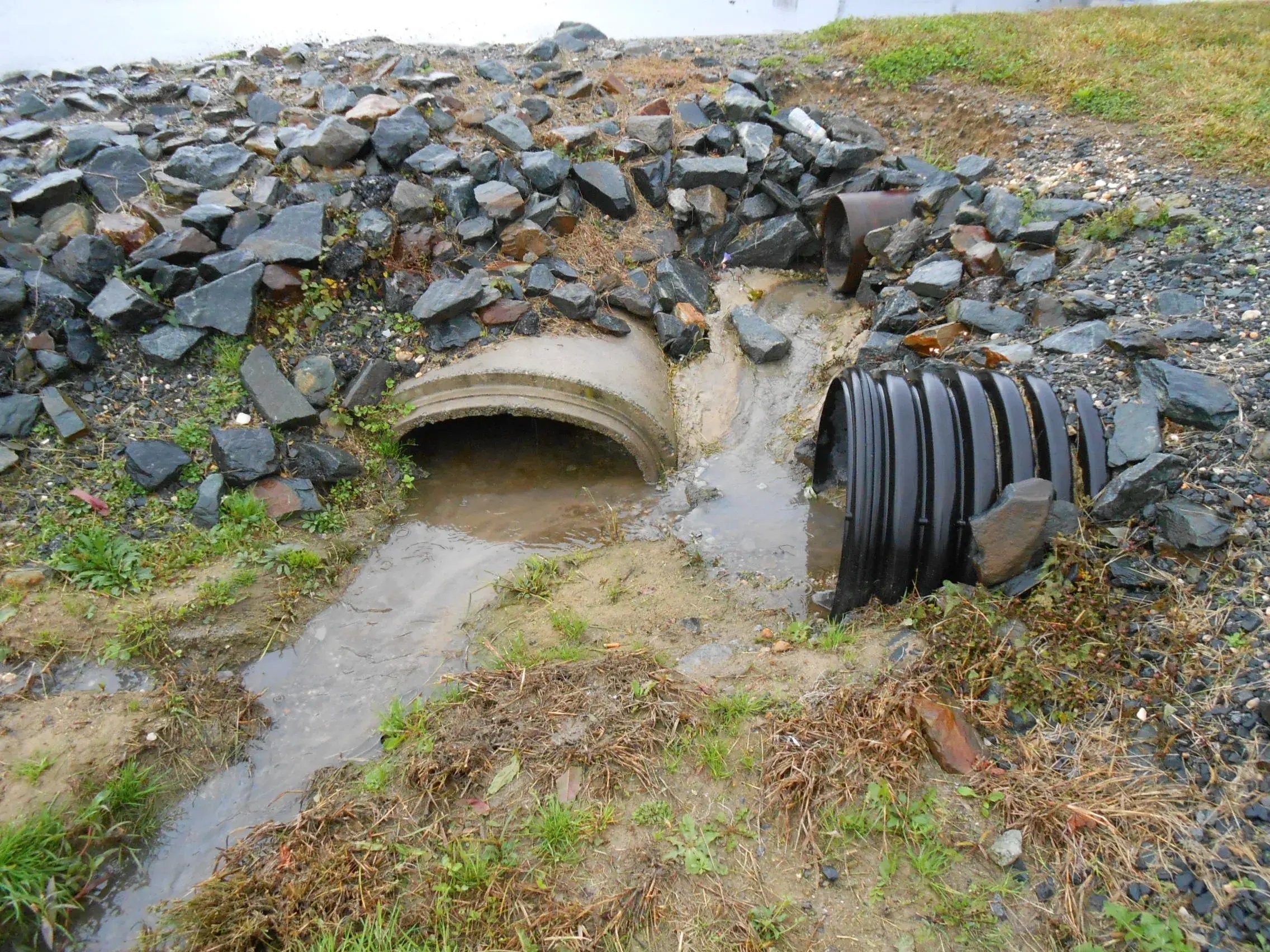
Your Town Is Starting a Stormwater Utility: What It Means for Your NJPDES Permit, Your Stormwater Plan, and the New Fee on Your Bill
When a New Jersey town announces a stormwater utility, facility managers tend to have the same reaction. A new fee is coming for the rain that runs off your roof and parking lot, and you already hold a permit from NJDEP that covers that same runoff. It's fair to wonder whether the two are connected, whether you're about to be regulated twice, or whether the new program quietly rewrites the rules you've been following for years.
The short answer is no. A stormwater utility is a local funding tool, and your NJDEP stormwater permit stays exactly as it is. Where the two can overlap is in fee credits, because utilities have to reduce the bill for some properties that maintain on-site stormwater controls, and some of those controls may also show up in your permit's stormwater plan. We'll walk through how the fee differs from your permit, how credits work, where they overlap with permit best management practices, and what to ask your town. If you'd like a second set of eyes on your own situation, you can reach out to RMA anytime.
Table of Contents
TL;DR
A town stormwater utility doesn't change your NJDEP stormwater permit. Your permit, your stormwater plan, and your inspections stay the same, and the utility fee is a separate local charge based on how much runoff your property produces. New Jersey law requires utilities to offer fee credits for certain on-site stormwater controls, so a basin or other control already described in your stormwater plan may earn a reduction if you apply. Ask your town how the fee is calculated, what credits it offers, and what documentation it wants.
What Is a Stormwater Utility and Why Is My Town Starting One?
Rain that falls on roofs, driveways, and parking lots doesn't soak into the ground the way it does on a field. It runs into catch basins, pipes, ditches, and detention basins, and someone has to build, clean, repair, and eventually replace all of that. In most New Jersey towns, the cost has historically been folded into the general budget and paid through property taxes. A stormwater utility changes that arrangement. It's a local government operation that bills property owners a dedicated fee for stormwater management, the same way a water or sewer utility bills for those services.
New Jersey's Clean Stormwater and Flood Reduction Act, signed on March 18, 2019, is what gave local governments this option. It lets counties and municipalities create a utility, and it also lets sewerage authorities, municipal utilities authorities, and county improvement authorities do the same. The Act authorizes utilities but doesn't require any town to form one, so you'll see them roll out one town at a time.
The fee has to be based on a fair and equitable approximation of how much stormwater runoff a property contributes. The Act doesn't mandate one formula, but that usually translates to the amount of roof and pavement on your parcel. A facility with a big paved yard and several buildings will generally see a larger fee than an office on a small lot. The fee can be charged to the owner or the occupant, or both, but the owner is the one liable for paying it. If it goes unpaid, interest builds up and the balance becomes a lien enforced much like delinquent property taxes. That matters if you lease your site, so check what your lease says about who pays.
Does a Stormwater Utility Change My NJPDES Stormwater Permit?
No. In New Jersey, industrial stormwater is regulated through NJPDES, the New Jersey Pollutant Discharge Elimination System. That's NJDEP's permit program for anything that leaves a facility in water, including rain that touches industrial activity. Depending on what your facility does, you may be covered by the Basic Industrial Stormwater General Permit (5G2), by an industry-specific general permit such as the one for Concrete Products Manufacturing, or by an individual permit, or you may qualify for a no exposure exclusion. If you're not sure which applies, our articles on NJPDES stormwater permit requirements and general, individual, and no-exposure permits are good places to start.
None of that changes when your town forms a utility. The Act is a funding law. It gives local governments a way to bill for stormwater management, and it doesn't amend the NJPDES rules at N.J.A.C. 7:14A or touch the terms of your authorization. It even says that setting up a utility doesn't change the municipality's own NJPDES obligations, so the same separation holds on the town's side. Your permit category, your stormwater pollution prevention plan (SWPPP, which NJDEP calls an SPPP and which you'll also hear called an SP3 or just the stormwater plan), your inspections and annual certification, your training, and any sampling your permit requires all stay on the schedule they were on before. If you want a refresher on the plan itself, we cover it in what a SWPPP is and what it has to include.
Two things can shift around the edges. First, the fee isn't tied to whether you hold a permit. The Act lets a utility bill the owner or occupant of any property whose runoff enters the stormwater system or state waters, so a facility with a no exposure exclusion, or one with no NJDEP stormwater permit at all, can still receive a bill. Second, utilities are allowed to spend fees on monitoring, inspection, and enforcement of local stormwater programs, along with maintenance and capital work. A town with a new dedicated budget may pay closer attention to whether private basins and outfalls are being maintained. That's a good reason to keep your own inspection records current, but it doesn't add a new state permit requirement.
How Is a Stormwater Utility Fee Different From NJPDES Permit Requirements?
The easiest way to keep the two straight is to remember that one is a state regulatory program and the other is a local service charge. They both involve rain running off your property, which is why they get confused, but they answer different questions.
| |
NJDEP Stormwater Permit (NJPDES) |
Local Stormwater Utility Fee |
| Who runs it |
NJDEP, under N.J.A.C. 7:14A |
Your county, municipality, or authority |
| What it is |
Permit coverage with conditions you have to follow |
A recurring charge for stormwater management services |
| Who it applies to |
Facilities with certain industrial activity, based on industry category and exposure to rain |
Properties whose runoff reaches the stormwater system or state waters, permitted or not |
| What it's based on |
What happens outdoors at the site and where the water goes |
A fair approximation of your property's runoff, usually tied to roof and pavement area |
| What you do |
Keep a SWPPP, inspect, certify, train, and sample if your permit requires it |
Pay the bill, and apply for credits if you qualify |
| If you fall short |
Permit violations and NJDEP enforcement |
Interest and a lien on the property, enforced like delinquent property taxes |
Paying the fee doesn't satisfy your permit, and holding a permit doesn't exempt you from the fee. Each one needs to be handled on its own track.
How Do Stormwater Utility Fee Credits Work in New Jersey?
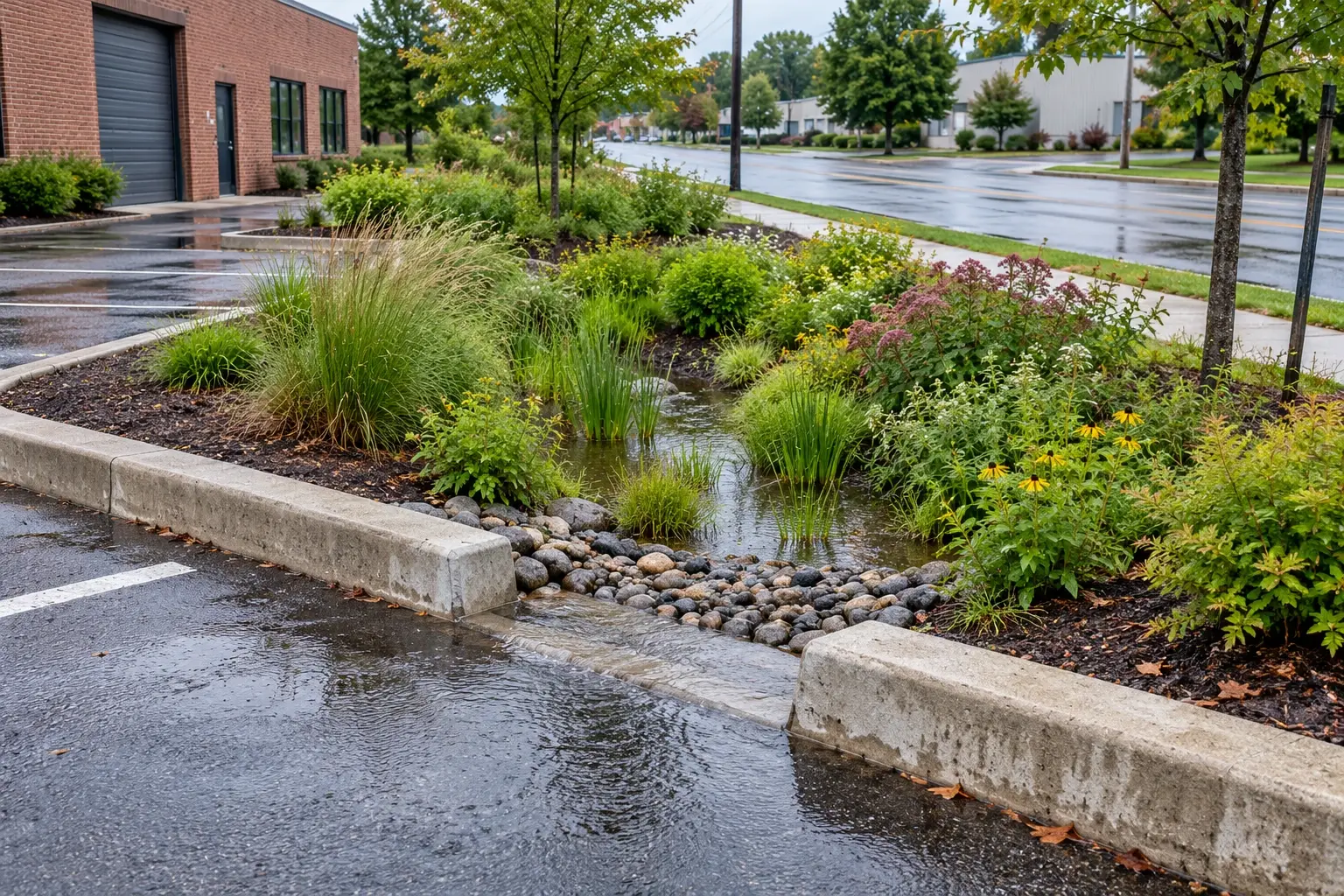
Credits are where the utility and your permit start to touch. Under the Act, every New Jersey utility has to provide, at a minimum, a partial fee reduction in a few situations. The first is for a property that maintains and operates a stormwater management system that met the state and local standards in place when it was approved, and that effectively reduces, retains, or treats stormwater on site. The second is an additional credit for a property that has installed, and is operating and maintaining, current best management practices that reduce, retain, or treat stormwater on site and that the utility has approved. The third is another additional credit for green infrastructure that goes beyond what NJDEP rules or the local stormwater ordinance require. Land in active farmland assessment is exempt from the fee altogether.
Look at the verbs in that list: maintains, operates, installed. Credits reward physical systems that are in place and working, not paperwork. The Act makes the credits partial, and each utility decides which types of controls it recognizes, how much each credit is worth, and the maximum a property can earn. NJDEP's own guidance says the Department can't set the dollar amount of fees or credits for any individual utility, so you can't predict your credit from the state law alone.
Published credit manuals give a sense of what to expect. Raritan Township's, for example, has owners submit an application with supporting drawings and an impervious coverage summary, certified by a New Jersey licensed professional engineer or surveyor, and it includes an application fee. Raritan also sets an annual application deadline, and an approved credit shows up on a later bill rather than the current one. Other utilities will write their own rules, but expect some version of an application, engineered documentation, ongoing maintenance, and a deadline.
You may have read that utilities give credits to facilities with industrial stormwater permits. Some do, in other states, and the terms vary a lot, from a flat percentage for any compliant industrial permit to small credits that depend on sampling results. The New Jersey credit programs we've looked at focus on physical stormwater systems rather than on holding an NJPDES permit by itself, so don't assume your permit earns a credit until the utility confirms it in writing.
Do Stormwater Utility Credits Overlap With SWPPP and NJPDES BMPs?
Partly. The best management practices (BMPs) in your SWPPP fall into two groups. Many are source controls and housekeeping, such as covering materials, sweeping, keeping spill cleanup supplies handy, and managing where vehicles are washed or fueled. Others are structural, such as detention basins, berms, filters, and oil/water separators. If you want the full picture, we've covered what stormwater BMPs are and how they work. Utility credits usually look at the second group: engineered systems that hold back, soak in, or treat runoff on your site.
That means a basin or infiltration system could appear in both places. In your SWPPP, it's a control you inspect and maintain to meet your permit. In a credit application, it's the reason for a fee reduction. The inspection and maintenance records you already keep for the permit can also support the application. The reverse doesn't hold, though. Sweeping and covering your material piles are required by your permit, but they typically don't earn a utility credit, and earning a credit doesn't excuse you from any housekeeping your permit requires.
One practical caution. A credit application is a statement to the town about the condition of your system, and your SWPPP and inspection reports are statements to NJDEP about the same system. If your inspection reports describe a clogged outlet or a basin that isn't draining and your credit application says it's working as designed, you've created a problem in both directions. Fix what's wrong first, then apply, and keep the two sets of documents consistent.
Many of these systems were designed and approved when the site was built or expanded, under N.J.A.C. 7:8 and local site plan approvals. As-built drawings from that work are often what a utility wants to see. Construction-phase stormwater approvals and the engineering design behind them aren't work RMA does, so your engineer or surveyor is the right person for that documentation. Where we help is on the operating side, once the facility is running.
What Should I Ask My Municipality About the Stormwater Utility Fee?
Utilities have to post an annual report on their website that includes their schedule of fees and credits, so that's a good first stop once the utility is established. Beyond that, a call or email to the town or authority usually gets you the details. These are the questions worth asking:
- Has the utility been formally established, and when will billing start?
- Is it run by the town, or by a sewerage authority or utilities authority?
- How is the fee calculated, and what impervious area is being used for my parcel? Is there a process to correct it if the number is wrong?
- Who gets billed, the owner or the occupant?
- What credits are offered, how much is each worth, and what's the maximum credit?
- What do I need to apply: engineer or surveyor certification, maintenance records, an application fee? What's the deadline, and how long does a credit last before renewal?
- Does the utility recognize an existing basin or other control that's already part of my stormwater plan, and does it treat an NJPDES permit or no exposure exclusion any differently?
Ask for the answers in writing when you can. Fee structures and credit rules often get revised in the first few years, and you'll want a record of what you were told and when.
How Can RMA Help With NJPDES Stormwater Compliance and Utility Fees?
You may not need us for the utility side. Reading a fee schedule, checking the impervious area on your bill, and filling out a credit application with your engineer or surveyor are things most facility managers can handle on their own. Where we come in is on the permit side, which is the part that doesn't change. We're based in New Jersey and work with NJDEP stormwater permits regularly, so we can help you confirm which NJPDES permit applies to your facility, keep your SWPPP and inspections current, handle annual certification and training, and make sure the way your plan describes basins and other controls matches what's on the ground. That last step makes a credit application much easier to support.
If you're not sure where your facility stands, or you'd just like to talk it through, there's no pressure and no obligation. You can call us, send an email, or fill out the form on our website, and you can contact RMA here to get started. If it turns out you don't need a consultant, we'll tell you.