How New Jersey's Water Pollution Control Act Drives NJPDES Stormwater Permits, NJDEP Enforcement, and Penalties for Industrial Runoff
If rain falls on your yard, your equipment, or your material piles and then runs off your property, New Jersey has a law that cares where that water ends up. It's called the Water Pollution Control Act, and most business owners have never heard of it, even though it's the legal foundation for the permits, inspections, and penalties NJDEP uses to police industrial runoff. The short answer to the title question is that the Act reaches every business in the state, because it governs what can leave a property and reach water. Whether you need a permit under it is a separate question, and that depends on what you do outdoors.
This article explains the Act in plain terms, shows how it connects to NJPDES permits, walks through the kinds of businesses that are and aren't pulled in, and lays out what the penalties look like if something goes wrong. We're keeping the legal descriptions general on purpose, because the details depend on your site and your industry. If you want a second opinion on your own situation, you can reach out to RMA and we'll tell you honestly whether you need help or not.
Table of Contents
TL;DR
The Water Pollution Control Act is New Jersey's main water pollution law, and NJDEP uses it to run the NJPDES permit program and to enforce against polluted discharges. Every business has to follow it, but only businesses with certain outdoor industrial activity need a stormwater permit, and some qualify for a no exposure exclusion instead. Penalties can reach $50,000 per violation per day, and each day a problem continues counts separately. If your site has uncovered materials, equipment, or waste that rain touches before leaving your property, it's worth confirming where you stand.
What Is the New Jersey Water Pollution Control Act?
The Water Pollution Control Act is a state law, found at N.J.S.A. 58:10A-1 and following, that makes it unlawful to discharge pollutants into the waters of the state without authorization. NJDEP, the New Jersey Department of Environmental Protection, administers it, and the detailed rules that put it into practice are in N.J.A.C. 7:14A. If you've ever seen a reference to the "NJPDES rules," that's the chapter we're talking about.
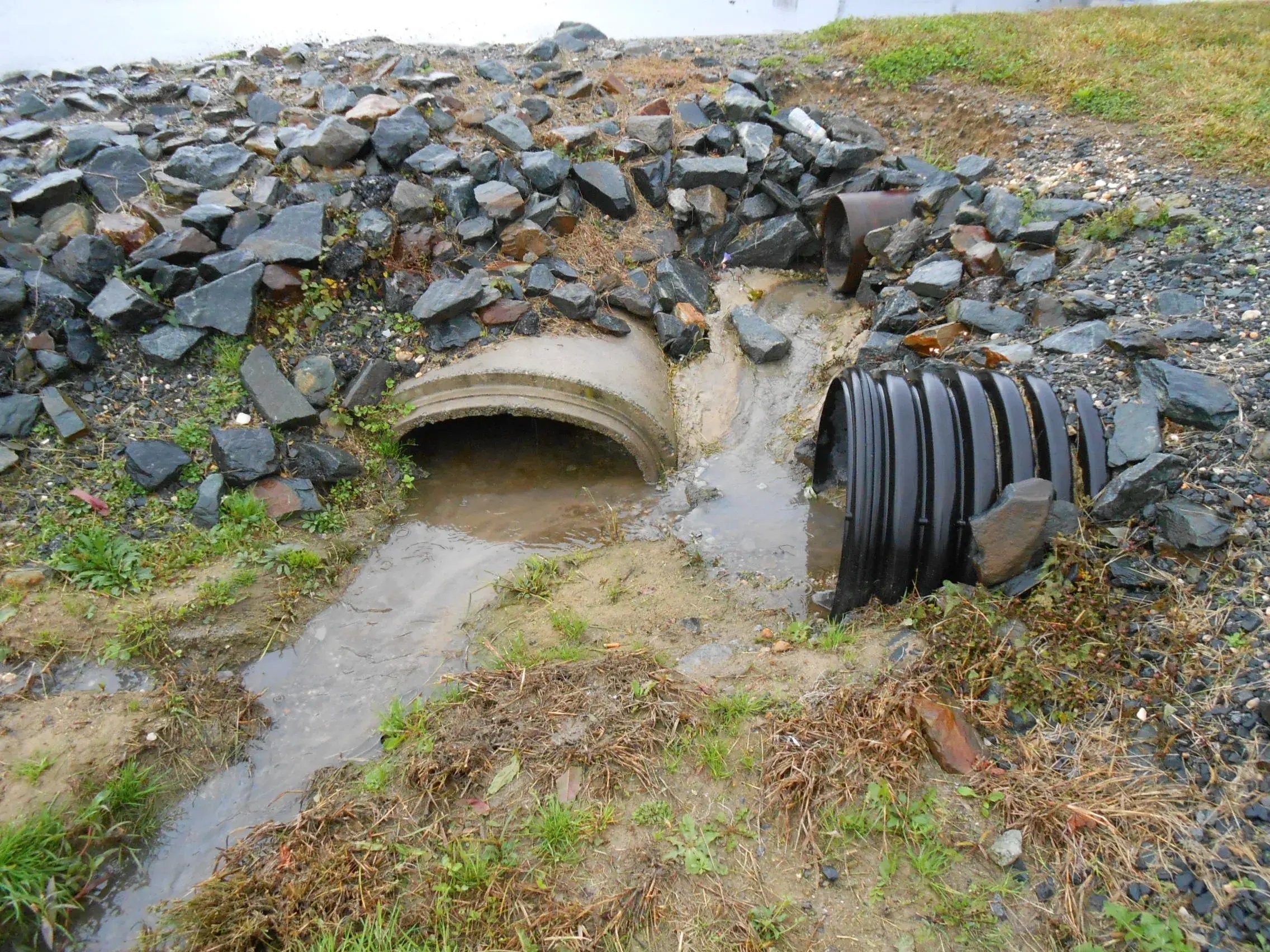
Two parts of that basic rule are wider than the name suggests. First, "waters of the state" isn't just the river down the road. It generally includes streams, lakes, wetlands, and groundwater, and it takes in the storm drains and ditches that carry water to them. Second, "pollutant" isn't limited to chemicals in a drum. Sediment, oil and grease, metals picked up off scrap or equipment, and water with a harmful pH from concrete or slurry can all qualify. A discharge doesn't have to look dramatic to count.
The Act also doesn't stop at stormwater. It covers wastewater discharges, discharges to groundwater, and wastewater sent to sewers under pretreatment rules. This article stays focused on the part that catches ordinary businesses off guard, which is rainwater that picks up industrial pollutants on your property and leaves.
How Does the Water Pollution Control Act Connect to NJPDES Permits?
NJPDES stands for the New Jersey Pollutant Discharge Elimination System. It's the permit program the Act creates, and it's New Jersey's version of the federal Clean Water Act permit system. Instead of dealing with EPA directly, New Jersey facilities get their permits and authorizations from NJDEP. When a business says it needs "a stormwater permit" in New Jersey, this is the program they mean.
For industrial stormwater, NJDEP generally sorts facilities into a few paths. The Basic Industrial Stormwater General Permit, known as the 5G2, is the catch-all. There are also industry-specific general permits for categories like Concrete Products Manufacturing (CPM), Hot Mix Asphalt (R4), Mining and Quarrying (R13), Sand and Gravel (RSG), Scrap Metal (SM and SM2), Vehicle Recycling (RVR), and Wood Waste Recycling and Leaf Composting (WRC). Facilities that don't fit a general permit may need an individual permit, and facilities that keep all industrial activity and materials protected from rain can sometimes claim a no exposure exclusion instead.
| Path |
Generally Fits |
| Basic Industrial Stormwater General Permit (5G2) |
Regulated industrial facilities that don't fall under a more specific industry permit |
| Industry-specific general permits (CPM, R4, R13, RSG, SM, SM2, RVR, WRC) |
Facilities in those specific industries, such as concrete plants, asphalt plants, quarries, scrap yards, and wood waste recyclers |
| Individual NJPDES permit |
Facilities that can't eliminate exposure and don't qualify for a general permit |
| No exposure exclusion |
Facilities where industrial materials and activities are fully protected from rain, snow, and runoff |
Most of these paths come with a written plan. We call it a SWPPP (a stormwater pollution prevention plan), though in New Jersey you'll also hear it called an SPPP, an SP3, or just a stormwater plan. It documents what's outside, where water goes, and what you're doing to keep pollutants out of it. If you want a closer look at how the permit paths differ, we cover them in our guide on which NPDES permit you need, and we go deeper on the most common New Jersey option in our article on the 5G2 Basic Industrial Stormwater Permit. For a first look at the plan itself, see what a SWPPP is and what goes in it.
Does the Water Pollution Control Act Apply to My Business and Its Industrial Runoff?
In the sense that matters most, yes. The ban on polluting state waters applies to every business, permitted or not. A bakery, a landscaper, a body shop, and a steel fabricator are all subject to it. You can violate the Act without ever having needed a stormwater permit, for example by washing equipment onto pavement that drains to a storm drain, or by letting a leaking container sit where rain carries the contents off site.
The permit question is narrower. Whether a facility needs NJPDES coverage generally comes down to its industrial activity (often tied to its SIC code), whether materials or activities are exposed to rain and snowmelt, and where the water goes after it leaves. The honest answer for plenty of businesses is that they don't need a permit. Offices, most warehouses, and operations that do everything indoors often fall outside the program. But a facility with outdoor storage, loading areas, equipment washing, or uncovered waste can easily be on the wrong side of that line without realizing it.
| Your Situation |
What It Generally Means |
| Everything is indoors, nothing industrial touches rain |
You may not be regulated at all, or you may qualify for a no exposure exclusion if you're in a regulated industry |
| Outdoor storage of raw materials, scrap, aggregate, or equipment in a regulated industry |
You likely need coverage under the permit that matches your industry |
| Runoff leaves your site and reaches a stream, ditch, or storm drain |
The Act applies directly to what's in that water, permit or not |
| Your site drains to a sewer instead of a stream |
A sewerage authority's rules may apply instead of, or alongside, an NJPDES stormwater permit, so it depends on where your site drains |
The sewer row trips up a lot of people in older parts of the state. Some cities have combined sewer systems, and we'd never tell you flatly that a facility in a particular city does or doesn't need a stormwater permit without looking at how that specific site drains. If you're not sure where your water goes, find out before you assume.
These articles help sort out where you land: who needs a stormwater permit, what counts as stormwater associated with industrial activity, and what no exposure really means. If you also have process water at your facility, our explanation of stormwater versus process water is worth a read, since the two are regulated differently.
What Are the Water Pollution Control Act Penalties in New Jersey?
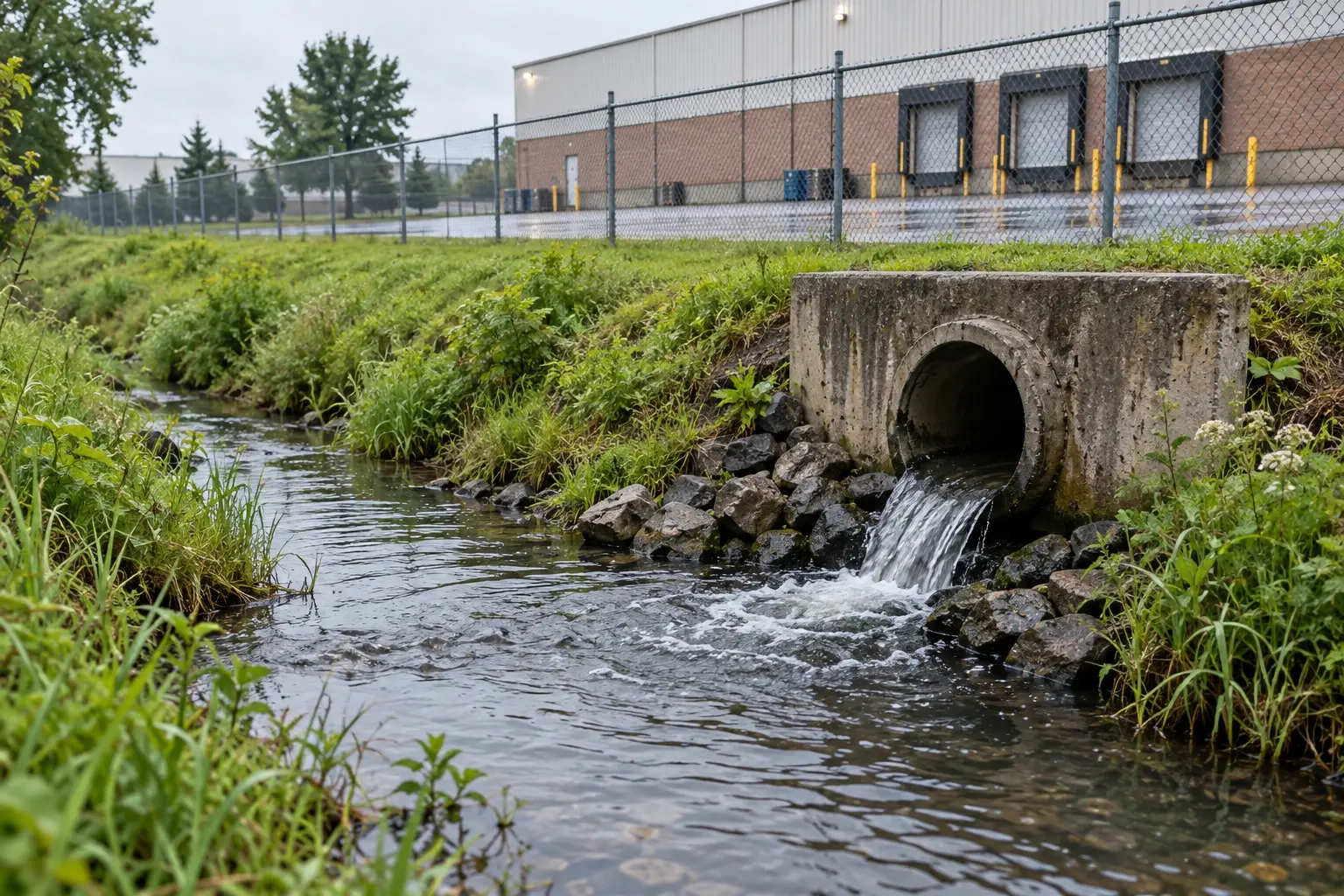
This is where the Act stops feeling abstract. As the statute currently reads, NJDEP can assess a civil administrative penalty of up to $50,000 per violation, and each day a violation continues counts as a separate offense. A problem that sits for 30 days can be treated as 30 violations. NJDEP can also go to court, where civil penalties can reach $50,000 per day, and the Act has criminal provisions for knowing or reckless conduct, with fines that climb to as much as $250,000 per day in the most serious cases and potential imprisonment.
| Type of Action |
Maximum Under the Act |
| Civil administrative penalty (assessed by NJDEP) |
Up to $50,000 per violation, with each day counted separately |
| Civil penalty (ordered by a court) |
Up to $50,000 per day of violation |
| Criminal penalties (knowing or reckless violations) |
Fines that can reach $250,000 per day in the most serious cases, plus possible imprisonment |
A few other features of the penalty system are worth knowing. The Act sets mandatory minimum penalties for certain violations, which means NJDEP doesn't have discretion to waive them. Missing or late monitoring reports fall into that group for permitted facilities. NJDEP also isn't allowed to compromise the part of a penalty that represents the money a violator saved by not complying, so "we'd have spent more fixing it" doesn't lower the number. And penalties are only part of the bill. NJDEP can also order cleanup and recover its costs.
Those figures are ceilings, not predictions. NJDEP assesses penalties under a uniform policy that weighs factors like the seriousness of the violation and how quickly a facility moves to correct it, so most enforcement doesn't land at the maximum. Still, a facility with a missing plan, skipped inspections, and an unpermitted discharge can stack several violations at once. If you're already facing a notice or an enforcement action, an environmental attorney may be appropriate alongside any technical help.
How Does NJDEP Enforce the Water Pollution Control Act?
Most enforcement starts quietly. NJDEP may inspect a facility, review the paperwork a permit holder submits, follow up on a complaint, or notice a business that appears to be operating in a regulated industry with no coverage on file. From there, the typical sequence runs from a notice of violation to an administrative order, then to a penalty assessment, and in more serious cases to a court action. The Act gives NJDEP several tools at once, and using one doesn't prevent it from using another.
Two details catch people off guard. First, a penalty notice comes with a short window to ask for a hearing, and if you let it pass, the notice can become a final order. Don't sit on one. Second, refusing to let an inspector in lawfully carries its own penalty under the rules, separate from whatever the inspector might have found. A cooperative, prepared facility almost always does better than one that stalls.
NJDEP isn't the only party that can act. Federal law and New Jersey law both give citizens and environmental groups ways to bring certain actions over discharges, and neighbors, lenders, and buyers tend to notice problems that show up in public records. Spills are a separate matter handled under a different New Jersey law. If you have one, put safety first, get the right emergency and NJDEP notifications made right away, and sort out the paperwork afterward.
How Can a Business Stay Compliant With the Water Pollution Control Act?
The practical path is shorter than the law makes it sound. Start by walking your site after a rain and looking at what the water touches: uncovered piles, stored equipment, waste containers, fueling areas, wash areas. Then follow the water. Where does it go when it leaves, and does it reach a stream, a storm drain, the ground, or a sewer? Those two answers tell you most of what you need to know about which path applies.
If your industry is regulated, the next step is getting the right authorization, whether that's a general permit, an individual permit, or a no exposure exclusion, and building a SWPPP that matches what's really on your site. After that, the work is mostly routine: doing the inspections your permit calls for, taking samples where it requires them, keeping records, and making sure someone on staff knows the plan. Sampling and reporting requirements vary a lot by permit category, and some permits require none, so check the current permit for your category rather than relying on a general rule. Our guide to NJPDES stormwater permit requirements walks through what New Jersey facilities generally need to keep up with, and how long it takes to get a New Jersey stormwater permit helps with planning if you're starting from scratch.
Plenty of facilities can handle part or all of this themselves, and we'll say so. Our article on whether you can get a stormwater permit yourself covers when that makes sense and when it doesn't, and our best ways to get and stay in compliance article is a good checklist for the ongoing work. If your team needs training, RMA's online environmental training library is available too.
How Does RMA Help With Water Pollution Control Act Compliance?
RMA is based in New Jersey, and we've been helping facilities work through NJDEP's permit categories since 1992. When a business isn't sure whether the Act reaches its operation, we start by figuring out which path fits: general permit, individual permit, no exposure, or nothing at all. If you do need coverage, we help with the authorization, build the plan, and set up the inspections and records so the program holds up when NJDEP asks to see it. Senior staff do the work, and we don't use AI to produce client deliverables.
We'll also tell you when you don't need us. If a simpler route works for your site, we'd rather point you to it than sell you more than you need. If you'd like to talk it through, you can call us, send an email, or fill out the form on our website, and there's no obligation. Whenever you're ready, contact RMA and we'll take a look at your situation.