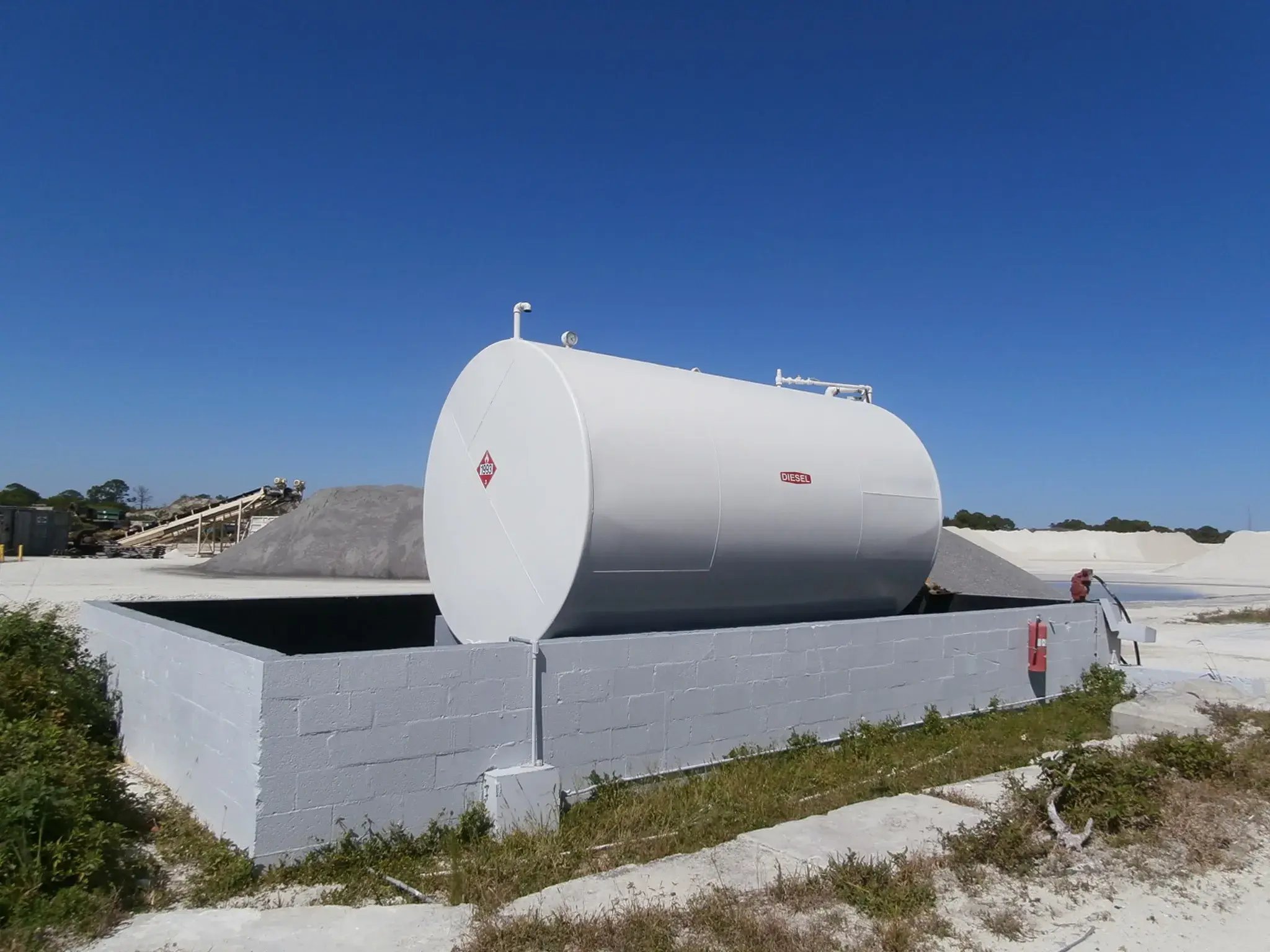
How an Emergency Generator and Its Fuel Tank Can Push an Office, Warehouse, or Retail Building Into Federal Oil Spill Rules
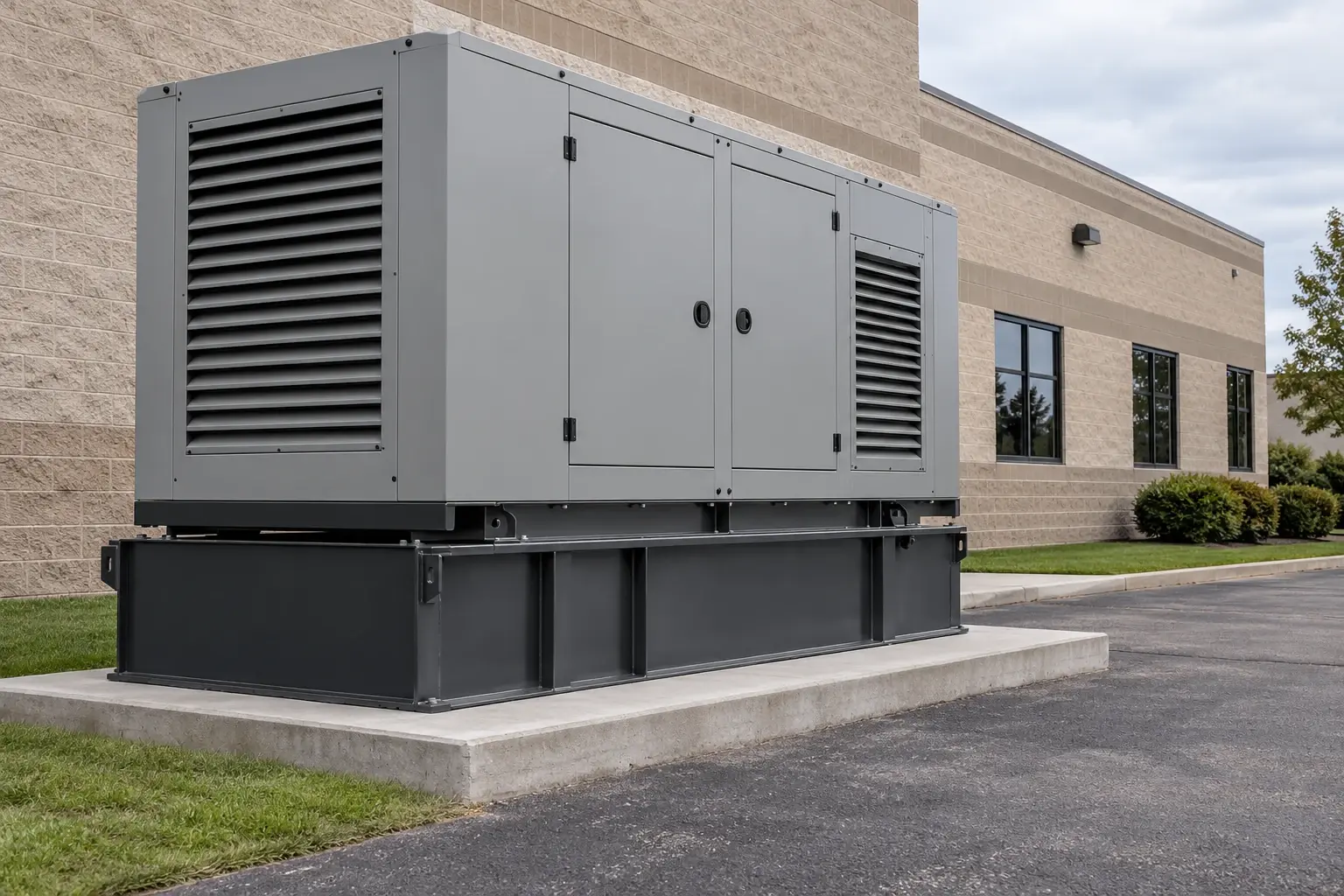
Most office, warehouse, and retail building owners don't think of themselves as running an oil storage facility. Then an emergency generator goes in with a diesel tank built into its base, maybe a separate day tank beside it, and the property has quietly picked up a federal oil spill rule. The question we hear is whether that generator, on its own or added to everything else stored on the property, crosses the line that requires a written oil spill plan.
The short answer is that a lone generator often doesn't, but it can, and it's far easier to run the numbers before installation than after an inspector asks. Below we walk through what counts toward the federal threshold, who's responsible when a building has an owner and tenants, what a plan looks like for a simple generator site, and the containment questions that come up most. If you'd rather hand the question off, you can reach out to RMA at any point.
Table of Contents
TL;DR
A building needs a federal oil spill plan, called an SPCC Plan, when it stores more than 1,320 gallons of oil aboveground in containers of 55 gallons or more and a spill could reasonably reach a waterway. A diesel generator tank and day tank count toward that total, along with other oil on the property like hydraulic elevator reservoirs and oil-filled transformers. One generator alone often falls short of the line, but it can push a building over. Most generator sites qualify for a Tier I plan that the owner or operator can self-certify, and the lease should spell out who handles it.
Does a Generator Fuel Tank Trigger SPCC Oil Spill Plan Rules?
The federal oil spill prevention rule is called SPCC, short for Spill Prevention, Control, and Countermeasure, and it lives in 40 CFR Part 112. It applies to a facility when its total aboveground oil storage capacity is more than 1,320 gallons, counting only containers of 55 gallons or larger, and a spill could reasonably be expected to reach navigable waters or adjoining shorelines. Diesel is oil under the rule, and so are lube oil and hydraulic oil. In Pennsylvania, EPA Region 3 is the agency that enforces it, and we cover how that works in our post on who enforces SPCC plans.
Two details trip up property managers. First, the rule counts capacity, not what's in the tank today. A 1,000-gallon sub-base tank that's half full counts as 1,000 gallons, and one that's sitting empty counts the same. Second, "could reach a waterway" is read broadly. A paved lot that drains to a storm sewer or a roadside ditch usually meets the test, so a building that's nowhere near a creek isn't automatically in the clear. Generators that run on natural gas or propane don't raise the oil total at all, which is one reason some owners pick them.
What Counts Toward the 1,320-Gallon Oil Storage Threshold at a Commercial Building?
A generator is rarely the only oil on a commercial property, and the total is what matters. We usually start by walking the site and listing every container, because the generator tank is often the item that pushes a building over after several smaller pieces of equipment have already added up. The table below shows what typically goes into the count.
| Counts toward the total |
Doesn't count |
| A diesel generator's sub-base or belly tank, if it's 55 gallons or larger |
Any single container under 55 gallons |
| A separate day tank of 55 gallons or more |
Natural gas or propane generator fuel |
| A diesel fire pump tank or other bulk fuel tank |
Permanently closed containers |
| Hydraulic elevator reservoirs and other oil-filled equipment |
Completely buried tanks that fall under the federal underground tank rules |
| Oil-filled transformers and switchgear the facility owns |
Containers that are empty but removed from the site |
| Drums and totes of oil of 55 gallons or more |
|
Warehouses tend to surprise owners here, because pallets of drummed or tote-stored oil add up quickly, and our post on whether 55-gallon drums are included in SPCC plans explains how that math works. Our walkthrough on four steps to figure out if you need an SPCC plan shows how to build that inventory yourself. If you land right around 1,320, the exact way containers are counted matters, so check the rule against your own list before deciding either way.
Who Is Responsible for the SPCC Plan, the Building Owner or the Tenant?
The rule puts the duty on the owner or operator of the facility, and in a multi-tenant building those can be different companies. Where the generator serves common areas and the landlord bought it, maintains it, and arranges fuel deliveries, the landlord is the natural party to prepare and carry out the plan. Where a tenant installs a generator for its own space, the tenant is usually the operator, but the property owner can still be viewed as an owner of the facility. It depends on who owns the equipment, who runs it, and what the lease says.
We'd rather see that settled in writing than left for an inspector to sort out. A good lease or generator agreement says who prepares the plan, who pays for it, who does the monthly inspections, who trains the people who fuel the tank, and what happens to the plan when a tenant leaves or a new tank goes in. Lenders and insurers also ask about these plans, which we cover in our post on why insurance companies ask about SPCC plans.
What Does a Tier I SPCC Plan Look Like for a Simple Generator Site?
Most buildings with a generator and not much else qualify for what EPA calls a Tier I qualified facility. To qualify, the total aboveground oil storage has to be 10,000 gallons or less, no single container can be larger than 5,000 gallons, and the facility can't have had a single spill over 1,000 gallons or two spills over 42 gallons within 12 months during the past three years. A facility that meets those tests can use EPA's Tier I template and self-certify the plan, so a Professional Engineer's stamp isn't required. Our post on what a Tier I self-certified SPCC plan is goes through the details, and our guide to the different types of SPCC plans shows where Tier II and PE-certified plans fit.
A Tier I plan is short compared to a full plan, but it isn't paperwork alone. The template commits you to doing things: inspecting the tank and piping, keeping containment in working order, securing the equipment, training the people who handle the fuel, and reviewing the plan at least every five years or when something changes, such as a new tank. If the site outgrows the Tier I limits, the plan has to move up to a Tier II or PE-certified version. Our post on SPCC plan five-year reviews explains what that review involves.
On cost, our SPCC plans run from about $2,500 to $15,000 depending on how complex the site is, and a single-generator building sits on the simpler side of that range. Our breakdown of SPCC plan costs covers what moves the number up or down.
What Containment and Pennsylvania Tank Rules Apply to a Generator Fuel Tank?
Containment is where generator sites run into practical trouble. For a bulk tank, the usual benchmark is containment that can hold the full capacity of the largest container plus room for rainfall. Many generator tanks are double-walled or sit in an integral basin, and whether that design satisfies the rule depends on how it's built and how it's evaluated, including how rainwater is handled in the basin. The fuel delivery spot deserves attention too, since spills often happen during filling, so overfill protection, a drip catch, and a plan for where a tanker truck parks all matter. Keep the pad away from storm drains, or protect them. Our post on how big SPCC oil spill containment needs to be explains the sizing.
The federal plan isn't the only layer. Pennsylvania DEP runs a storage tank program under the Storage Tank and Spill Prevention Act and 25 Pa. Code Chapter 245, with registration and DEP-certified installers and inspectors for tanks that fall under it. Whether a particular generator tank needs registration depends on its size, type, and use, so confirm yours against DEP's storage tank program. The generator is also an air emission source, and in Allegheny County and Philadelphia the county or city runs its own air program. Fire code requirements for tanks are set locally and vary by municipality. Diesel can also bring Tier II reporting once the amount on site at one time reaches 10,000 pounds, which for diesel works out to roughly 1,400 gallons, and Tier II counts what's in the tanks rather than their capacity. Our guide to emergency backup generators and environmental permits covers the broader picture, and our Tier II reporting resources cover that program.
If the generator is part of new construction or an expansion, the construction side is separate. Construction stormwater permits, erosion and sediment control approvals, building and fire permits, and tank installation itself (which may require a DEP-certified installer) are handled by your engineer, contractor, or a construction specialist, and RMA doesn't prepare them. Once the building is running, though, it almost always needs operational pieces like an SPCC Plan, tank registration where it applies, inspections, and training, and that's where we help. We can also help you work out what the construction phase needs and point you toward the right professionals for it.
How Can RMA Help With a Generator Oil Spill Plan?
We help building owners and property managers count their oil, figure out whether a plan is required, and prepare it if so. For a generator site that usually means walking through the tank inventory with you, confirming Tier I eligibility, and writing a plan that fits how the building operates, with senior staff doing the work. We also help sort out the owner and tenant question so the plan has a clear home, and we can set up online training for the people who fuel and inspect the equipment.
We'll also tell you when you don't need us. If you have one generator, a clean spill history, and a straightforward site, EPA's Tier I template is free and some owners complete it themselves. If you'd like a second set of eyes, a quote, or just an answer on whether the rule applies to you, you can call 888-RMA-0230, email info@rmagreen.com, or fill out the form when you contact RMA. There's no obligation, and we're happy to give you a straight answer.