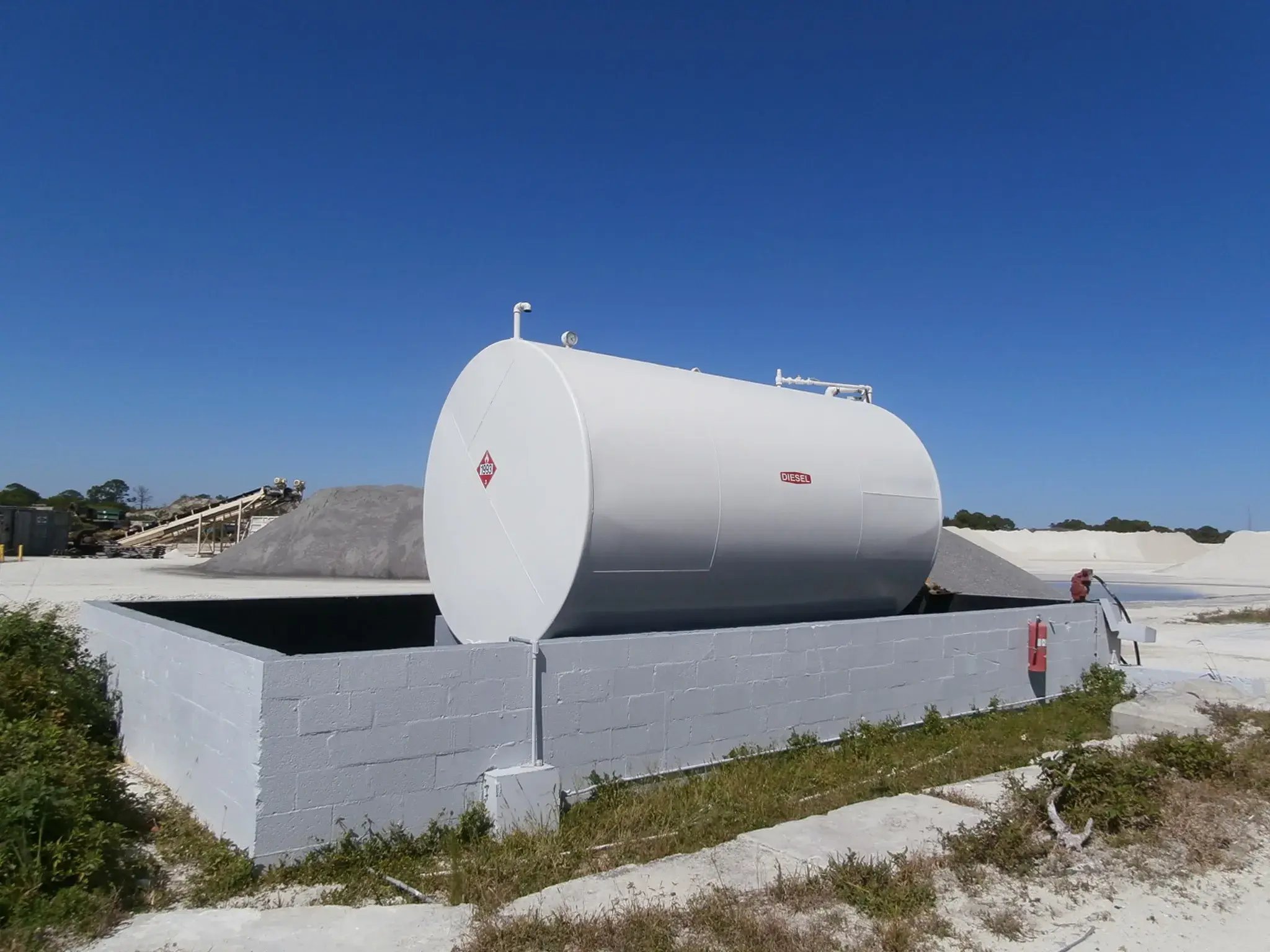
An SPCC Plan Covers Federal Spill Prevention. Pennsylvania's Tank Program, Tier II Reporting, and Stormwater Permits Are Separate Programs With Their Own Triggers.
If you store oil at a facility in Pennsylvania, you've probably run into the term SPCC. It stands for Spill Prevention, Control, and Countermeasure, and an SPCC Plan is a written oil spill prevention plan that a federal rule requires once your oil storage passes a certain size. Plenty of facility managers assume that once they have one, or once they find out they need one, the oil storage paperwork is handled. It usually isn't. Pennsylvania runs its own storage tank program, and chemical reporting and stormwater permits can land on the same diesel tank at the same time.
This article walks through when an SPCC Plan applies, what it has to include, and the other programs that commonly show up for Pennsylvania facilities with oil on site: PA DEP's storage tank registration rules, Tier II chemical reporting, and industrial stormwater permits. We're a family-run firm that helps facilities across Pennsylvania sort this out, so if you'd rather not untangle it yourself, you're welcome to reach out to RMA at any point.
Table of Contents
TL;DR
An SPCC Plan is only one piece of oil storage compliance in Pennsylvania. The federal rule applies when you have more than 1,320 gallons of aboveground oil storage in containers of 55 gallons or more, or over 42,000 gallons buried, and a spill could reasonably reach water. PA DEP's tank registration program, Tier II chemical reporting, and industrial stormwater permits are separate programs with their own triggers, and one facility can be subject to several of them at once. Which ones apply depends on your tank sizes, what you store, and what you do at the site.
Who Needs an SPCC Plan for Oil Storage in Pennsylvania?
SPCC is a federal program under 40 CFR Part 112, and EPA Region 3 enforces it in Pennsylvania. Pennsylvania doesn't have its own SPCC thresholds, so the same numbers apply here as in every other state. You generally need a plan when your facility has more than 1,320 gallons of aboveground oil storage capacity, or more than 42,000 gallons of qualifying buried capacity, and a spill could reasonably reach a waterway. That last part includes oil that would travel through a storm drain, ditch, or paved surface on its way to a creek.
The counting works differently than most people expect. For aboveground storage you add up only the containers that hold 55 gallons or more, and you count their full capacity, not how much oil is in them today. An empty 5,000-gallon tank counts. A container that's been permanently closed doesn't. Diesel, hydraulic oil, lubricating oil, and used oil all count, and so do vegetable oils and animal fats, which surprises food plants. Oil-filled equipment like transformers can count too. Propane and diesel exhaust fluid don't.
This isn't a rule that only applies to oil companies. A manufacturing plant, concrete facility, trucking operation, or commercial property with large diesel generators can cross the line. If your total comes in well under the threshold, you probably don't need a plan, and we'll tell you that. If you're close, or you're not sure how your containers should be counted, our post on how to work through the count shows each step, and our plain-English explanation of an oil spill plan is a good starting point if the terminology is new.
What Does a Pennsylvania SPCC Plan Have to Include?
If you do need an SPCC Plan, it has to explain how your facility prevents oil spills, how it keeps spilled oil from reaching the environment, and what employees do if something goes wrong. In practice that means secondary containment, which is a dike, berm, or double-walled tank that catches or controls oil if a container leaks. It also covers tank inspections, oil handling and transfer procedures, employee training, and spill response. A plan that exists but doesn't match how your site operates won't hold up in an inspection.
Who signs off on the plan depends on your storage. A facility with up to 10,000 gallons of total aboveground oil storage and a clean spill history over the past three years may be able to self-certify, which is the Tier I route. Larger facilities, or ones with a qualifying spill in their recent past, need a licensed Professional Engineer to review and certify the plan. We don't have an engineer on staff, so when a plan needs a PE's seal we work with an outside Professional Engineer. If you want the details on which category you fall into, see whether you can self-certify and when a Professional Engineer is involved.
The plan isn't a one-time document. You follow it, keep your inspection records, train the staff who handle oil, and amend it when changes at the facility affect your storage or spill prevention. The plan also gets a formal review at least every five years, which we cover in our post on the five-year review. Our compliance calendar lays out how those obligations spread across a year, and our online training library can cover the training piece.
How Does PA DEP's Storage Tank Program Differ From SPCC?
Pennsylvania regulates tanks separately under the Storage Tank and Spill Prevention Act and 25 Pa. Code Chapter 245. Regulated aboveground and underground tanks have to be registered with PA DEP, and the owner pays an annual registration fee. DEP's published fees start at $50 per tank per year for aboveground tanks up to 5,000 gallons and $125 per tank per year for tanks between 5,001 and 50,000 gallons. SPCC asks whether oil could reach water based on your total storage. DEP's program asks whether each individual tank meets state standards and is registered and permitted.
The two programs use different counting rules, so a tank can fall under one and not the other. In general, aboveground tank systems over 250 gallons are regulated by DEP, with exclusions for things like heating oil tanks and oil-filled operational equipment. Those exclusions are why a tank can count toward your SPCC total without needing DEP registration, or the reverse. Whether a specific tank needs to be registered depends on its size, type, and use, so it's worth checking each one against DEP's storage tank program before you assume either way.
DEP's program also controls who can do certain work. Installing, modifying, and removing regulated tanks, and inspecting some of them, has to be done by DEP-certified individuals. Our post on when a DEP-certified inspector is required explains where that comes up.
When Does a Large Oil Storage Facility Need a Spill Prevention Response Plan?
Facilities with large aboveground storage, generally a tank or a facility total past 21,000 gallons, also have to file a Spill Prevention Response Plan, or SPRP, with DEP. It's a separate document from an SPCC Plan with its own required contents, even though both draw on the same facility information. Most small and mid-sized facilities never reach that size, but bulk plants, large manufacturers, and some data centers can.
When Does Diesel Storage Trigger Tier II Chemical Reporting?
Tier II is an annual chemical inventory report under the federal Emergency Planning and Community Right-to-Know Act. It tells local emergency responders and the fire department what hazardous chemicals are stored at your facility. Pennsylvania facilities file through the state's online Tier II system, called PATTS, by March 1 each year, and the state charges a $10 fee per reported chemical. A Tier II report filed through any other electronic system doesn't satisfy the Pennsylvania requirement.
For most hazardous chemicals, including diesel fuel, the reporting threshold is 10,000 pounds present on site at any one time during the year. Diesel weighs roughly seven pounds per gallon, so the threshold works out to about 1,400 gallons. A 1,500-gallon diesel tank can trigger a report, and so can several smaller tanks that add up. Tier II looks at how much you have on site, while SPCC looks at storage capacity, so the two can land differently for the same facility. Pennsylvania also has a five-day initial reporting rule, which means a facility that first crosses a threshold has to report within five days instead of waiting for March.
Diesel isn't the only chemical to count. Batteries, antifreeze, and other products with safety data sheets add to your list, and each is measured against its own threshold. Exemptions exist, including higher thresholds for certain retail fueling facilities with underground tanks, so the answer depends on your site. Our overview of Tier II reporting covers the basics, and what Tier II reporting costs is there if you're budgeting.
Do You Need a PAG-03 Stormwater Permit if You Store Oil Outdoors?
Facilities that store oil often have outdoor operations or materials exposed to rain, and that can bring industrial stormwater permitting into the picture. In Pennsylvania there are three routes. Most covered facilities use the PAG-03 general permit, which PA DEP reissued with an effective date of March 24, 2023, for a new five-year term. Facilities that don't qualify for the general permit apply for an individual NPDES permit. And facilities that keep all industrial materials and activities indoors or under roof may qualify for a No Exposure Certification instead of permit coverage.
Having an oil tank doesn't automatically mean you need a stormwater permit. What matters is your industrial activity and whether materials are exposed to precipitation. A warehouse with a generator and nothing else outdoors is a very different case from a quarry or a truck yard. Our posts on which stormwater permit route fits and what No Exposure means help sort out which side you're on.
PAG-03 coverage also brings a Preparedness, Prevention, and Contingency (PPC) Plan, which covers every pollutant on site, not just oil. It's a different document from an SPCC Plan, and the two are enforced by different agencies. If you're wondering whether one plan can do both jobs, we compare them in SPCC vs. PPC plans.
What Other Programs Can Apply to Oil Storage in Pennsylvania?
A few more programs come up often enough to mention. Emergency and standby generators with diesel tanks can need an air quality permit or qualify for an exemption, and Allegheny County and Philadelphia run their own air programs separate from PA DEP. Fire code requirements for tanks are enforced locally and vary by municipality, so your local fire marshal is the person to ask. Facilities that generate or handle used oil have waste rules to follow as well. We cover how generators change your SPCC picture in adding a backup generator, and the air side in our post on emergency backup generator permits.
New tanks and facility expansions add a construction layer. Installing a tank in Pennsylvania may require DEP-certified installers, along with building and fire permits and construction-phase approvals like erosion and sediment control and construction stormwater. We don't prepare those, and most people work with their engineer, contractor, or an erosion specialist on that part. Where we help is what comes once the tank is in: updating or developing the SPCC Plan, getting the tank registered, setting up inspections and testing, training, and Tier II reporting. We can also help you figure out what the construction phase needs and point you to the right people. Our post on how new oil storage changes your SPCC plan covers the operational side.
How Do SPCC, DEP Tank Rules, Tier II, and PAG-03 Compare?
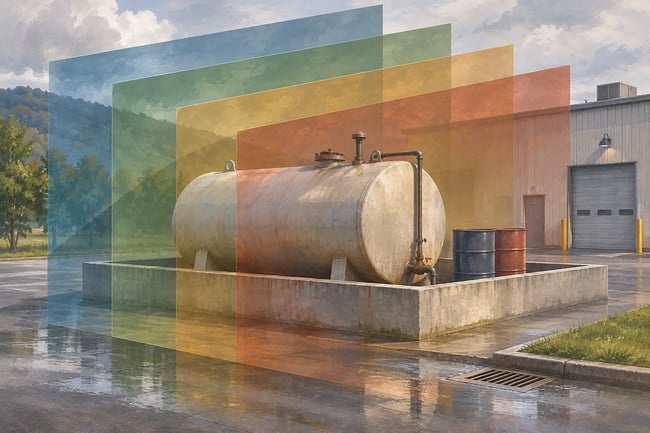
Here's how the four programs line up side by side. A single facility can be subject to all of them, to some of them, or to none, which is why checking each one separately matters.
| Program |
Who runs it |
What triggers it |
What it asks of you |
| SPCC Plan |
EPA (Region 3 in Pennsylvania) |
More than 1,320 gallons aboveground in containers of 55 gallons or more, or more than 42,000 gallons buried, plus a reasonable chance a spill reaches water |
Written plan, secondary containment, inspections, training, records, five-year review |
| DEP storage tank program |
PA DEP |
A regulated tank, which for aboveground tanks generally means a system over 250 gallons, with exclusions |
Registration and annual fees, tank standards, DEP-certified installers and inspectors, SPRP for large facilities |
| Tier II reporting |
Pennsylvania's Tier II system (PATTS) and local emergency planners |
10,000 pounds of diesel or most other hazardous chemicals on site at any one time, about 1,400 gallons of diesel |
Annual report by March 1, $10 fee per chemical, five-day initial report |
| PAG-03 stormwater permit |
PA DEP |
Industrial activity with materials exposed to stormwater |
Notice of Intent, PPC Plan, and monitoring, or a No Exposure Certification |
How Can RMA Help You Sort Out Oil Storage Requirements in Pennsylvania?
You can work through these requirements yourself if you know the rules. The thresholds are public, and for a facility with a couple of tanks it's a reasonable afternoon of reading. If you'd rather have someone else do it, we can review your oil storage and tell you whether SPCC applies. If it does, we develop the plan, with senior staff doing the work, and when a Professional Engineer's certification is needed we bring in an outside PE. We can also look at tank registration, Tier II reporting, and stormwater coverage so nothing gets missed. SPCC plans run about $1,500 to $15,000 depending on how much storage you have and how complex the site is (see our post on SPCC plan pricing), and Tier II reporting runs about $1,500 to $7,500.
If your storage turns out to be under every threshold, we'll say so, and you won't need us. If you want a second set of eyes, you can call, email, or fill out the form on our website, and there's no obligation. Just contact RMA and tell us what you've got on site.